|
Case Report
Intraoperative breakage of a laparoscopic needle holder confirmed by postoperative abdominal X-ray: A case report and literature review
1 MD, Department of Obstetrics and Gynecology, Kaizuka City Hospital, Osaka, Japan
2 MD, Department of Gynecology, Osaka International Cancer Institute, Osaka, Japan
3 MD, PhD, Department of Obstetrics and Gynecology, Kaizuka City Hospital, Osaka, Japan
Address correspondence to:
Yoshikazu Nagase
MD, Department of Obstetrics and Gynecology, Kaizuka City Hospital, 3-10-20 Hori, Kaizuka, Osaka 597-0015,
Japan
Message to Corresponding Author
Article ID: 100137Z08RH2023
Access full text article on other devices

Access PDF of article on other devices

How to cite this article
Hirose R, Nagase Y, Kurahashi H, Tanaka A, Masuda K, Yokoi T. Intraoperative breakage of a laparoscopic needle holder confirmed by postoperative abdominal X-ray: A case report and literature review. J Case Rep Images Obstet Gynecol 2023;9(1):17–20.ABSTRACT
Introduction: Intraperitoneal retention of surgical instrument fragments may lead to severe complications. Therefore, such foreign bodies must be detected before surgery completion. We present a case with intraoperative breakage of a laparoscopic needle holder confirmed by a routine postoperative abdominal X-ray and review the literature regarding intraoperative laparoscopic instrument breakage.
Case Report: A 58-year-old woman with stage IB1 cervical adenocarcinoma underwent a laparoscopic radical hysterectomy. Surgery was completed without major complications; however, an abdominal X-ray as a routine postoperative examination revealed a radiopaque shadow of approximately 3 mm corresponding to a broken part of the tissue-pad of the laparoscopic needle holder tip. It was successfully removed using laparoscopy with fluoroscopic guidance without further complications. According to the literature review, most of the instrument breakage were noticed during surgery as they were either obvious or impaired function. In our case, since the detached foreign body was extremely small and did not significantly affect needle holder function, it remained unnoticed until the postoperative X-ray was taken.
Conclusion: Postoperative abdominal X-rays identify instrumental fragments infrequently; however, they may help detect intraperitoneal retention of foreign bodies and avoid serious complications following laparoscopic surgery.
Keywords: Breakage, Foreign body, Laparoscopic surgery
Introduction
Laparoscopic surgeries comprise an increasingly higher proportion of all surgeries. Laparoscopic instruments are designed to enable minimally invasive and accurate procedures. Since these instruments contain many small parts, there is a risk of overlooking instrument fragments that break and are retained in the abdominal cavity. Intraperitoneal retention of foreign bodies—including small instrument pieces—may cause intra-abdominal abscesses and intestinal fistulas [1]. It is therefore critically important to detect this material before finishing surgery. We report a case with intraoperative breakage of a laparoscopic needle holder confirmed by a routine postoperative abdominal X-ray taken before awakening from anesthesia. We additionally review published literature regarding laparoscopic instrument breakage during surgery.
Case Report
A 58-year-old woman (Gravida 1, Para 0) with an unremarkable past medical history was diagnosed with stage IB1 cervical adenocarcinoma. She was presented with treatment options, including abdominal radical hysterectomy, laparoscopic radical hysterectomy, and concurrent chemoradiotherapy. After thorough discussion, she elected laparoscopic radical hysterectomy with transvaginal vaginal cuff closure and pelvic lymphadenectomy. Surgery was completed without major complications; however, an abdominal X-ray, taken before the patient awoke from anesthesia as a routine postoperative examination, showed a radio-opaque shadow of approximately 3 mm (Figure 1A). The surgical instruments were checked, at which time we realized the tissue-pad of the laparoscopic needle holder tip was broken (Figure 1B). Since laparoscopically detection of such a small foreign body in the abdominal cavity is challenging, we used a fluoroscopy in the operating room. After locating the broken part of the tissue-pad buried in the perivesical fatty tissue, it was successfully removed using laparoscopy with fluoroscopic guidance (Figure 1C). Although removing the fragment prolonged the operative time by about 30 minutes, no further complications occurred.

Discussion
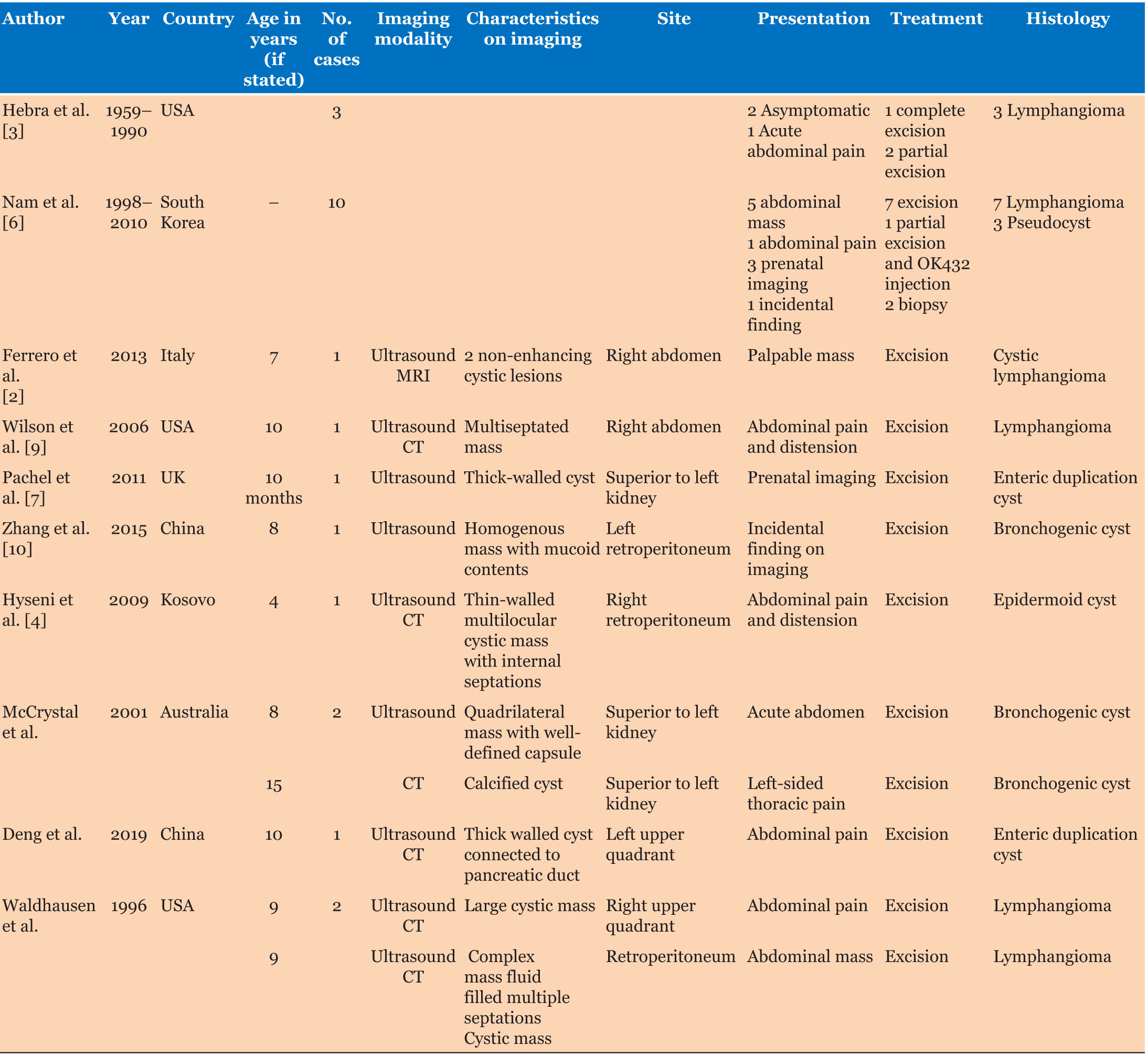
This was a rare case with intraoperative breakage of a laparoscopic needle holder confirmed by a routine postoperative abdominal X-ray. To discuss this rare condition, we reviewed the literature regarding laparoscopic instrument breakage using a PubMed database search conducted on June 6, 2022. The search strategy used the keywords: “break,” “broken,” “breakage,” “laparoscopic surgery,” and “robotic surgery” in various combinations. Although there were no restrictions on published dates, we excluded articles written in languages other than English. We identified nine published studies, including 13 cases that described intraoperative breakage of laparoscopic instruments; these studies are summarized in Table 1.
The reported instrument breakage sites were jaws of needle holder or grasper in 5 cases [1],[2],[3],[4], forceps tips in 2 cases [5], monopolar tips in 2 cases [5],[6], and tips of other devices in 4 cases [7],[8],[9]. In 12/13 cases, the instrument breakage was noticed during surgery as it was either obvious or impaired function [1],[2],[3],[4],[5],[7],[8],[9]. In the remaining case reported by Fukui et al., a retained foreign body was found incidentally on an abdominal X-ray taken 7 years after laparoscopic-assisted myomectomy [6]. In this case, the foreign body, the monopolar electrode tip of about 30 mm, was retained subcutaneously rather than intraperitoneally [6]. A postoperative abdominal X-ray was not performed and, despite its relatively large size, the breakage of electrode tip was not detected perioperatively [6]. In our case, the detached foreign body was extremely small at approximately 3 mm and did not significantly affect needle holder function. Therefore, the damaged equipment and retained foreign body remained unnoticed until the postoperative X-ray was taken. The surgical video was reviewed very slowly and confirmed that the tissue-pad broke when a needle was grasped by the laparoscopic needle holder. This moment of breakage was overlooked at normal playback speeds.
Our literature review demonstrates that there have been no reports of damage to a tissue-pad of the laparoscopic needle holder. In most laparoscopic needle holders, the tissue-pad is made of magnetic tungsten. Therefore, if its retention is overlooked, organ injury may be caused when the patient undergoes magnetic resonance imaging (MRI) at a later time.
As minimally invasive procedures like laparoscopic or robotic surgeries use instruments that contain small parts, compared to conventional open surgery, there is increased risk of missing a fragment and retention of foreign bodies in the abdominal cavity. Intraperitoneal retention of surgical instrument fragments can lead to serious complications such as intra-abdominal abscesses and intestinal fistulas [6],[10]. Such complications may develop into serious legal problems between medical institutions and patients, regardless of whether the patient is symptomatic or not [1],[10]. Therefore, to prevent such complications, we routinely perform postoperative abdominal X-rays before awakening the patient from anesthesia whether during open, laparoscopic, or robot-assisted surgery. We believe an abdominal X-ray as a routine postoperative examination is valuable to detect such extremely small foreign bodies and avoid serious complications following laparoscopic surgery. However, because retained surgical foreign bodies occur in approximately 0.1% of abdominal surgeries and are extremely uncommon, further research is needed to conclude the value of routine use of postoperative abdominal X-rays.
Conclusion
Our findings in this case and literature review suggest that postoperative abdominal X-ray may help detect intraperitoneal retention of foreign bodies and avoid serious complications following laparoscopic surgery.
REFERENCES
1.
Brahmbhatt S, Makhija A, Brahmbhatt J, Patel YV. Intra-abdominal breakage of laparoscopic needle holder tip and its retrieval under fluoroscopic guidance. J Obstet Gynaecol India 2021;71(4):452–5. [CrossRef]
[Pubmed]

2.
Park SY, Cho KS, Lee SW, Soh BH, Rha KH. Intraoperative breakage of needle driver jaw during robotic-assisted laparoscopic radical prostatectomy. Urology 2008;71(1):168.e5–6. [CrossRef]
[Pubmed]
3.
Kandioler-Eckersberger D, Niederle B, Herbst F, Wenzl E. A magnetic probe to retrieve broken metallic parts of instruments during laparoscopic procedures. Surg Endosc 2002;16(1):208–9. [CrossRef]
[Pubmed]
4.
Ostrzenski A. An intraoperative method of localizing a missing piece of a broken laparoscopic instrument. Am J Obstet Gynecol 1997;176(3):726–7. [CrossRef]
[Pubmed]
5.
Lata K, Panwar A, Kriplani I, Kriplani A. Intraoperative dislodgment and retrieval of broken parts of laparoscopic instruments: Arduous exercise and lessons gleaned. J Obstet Gynaecol India 2021;71(2):201–4. [CrossRef]
[Pubmed]
6.
Fukui A, Taima A, Fuchinoue K, Kamoi M, Funamizu A, Mizunuma H. Broken tip of mono-polar surgery probe located in the abdominal wall after laparoscopically assisted myomectomy: A case report. Gynecol Minim Invasive Ther 2017;6(1):46–8. [CrossRef]
[Pubmed]
7.
Katara AN, Bhandarkar DS, Shah RS, Udwadia TE. Breakage of fascial closure device during laparoscopic surgery. J Minim Access Surg 2005;1(2):79–81. [CrossRef]
[Pubmed]
8.
Salameh JR. Suture passer tip breakage during laparoscopic ventral hernia repair. Surg Laparosc Endosc Percutan Tech 2005;15(2):112–4. [CrossRef]
[Pubmed]
9.
Lynch CM, Powers AK. Management of a broken needle at the time of laparoscopic burch. JSLS 2000;4(3):275–6.
[Pubmed]
10.
Hariharan D, Lobo DN. Retained surgical sponges, needles and instruments. Ann R Coll Surg Engl 2013;95(2):87–92. [CrossRef]
[Pubmed]
SUPPORTING INFORMATION
Acknowledgments
The authors would like to thank Enago (www.enago.jp) for the English language review.
Author ContributionsRikuto Hirose - Conception of the work, Design of the work, Acquisition of data, Analysis of data, Drafting the work, Revising the work critically for important intellectual content, Final approval of the version to be published, Agree to be accountable for all aspects of the work in ensuring that questions related to the accuracy or integrity of any part of the work are appropriately investigated and resolved.
Yoshikazu Nagase - Conception of the work, Design of the work, Drafting the work, Revising the work critically for important intellectual content, Final approval of the version to be published, Agree to be accountable for all aspects of the work in ensuring that questions related to the accuracy or integrity of any part of the work are appropriately investigated and resolved.
Hiroki Kurahashi - Conception of the work, Design of the work, Drafting the work, Revising the work critically for important intellectual content, Final approval of the version to be published, Agree to be accountable for all aspects of the work in ensuring that questions related to the accuracy or integrity of any part of the work are appropriately investigated and resolved.
Asuka Tanaka - Conception of the work, Design of the work, Drafting the work, Revising the work critically for important intellectual content, Final approval of the version to be published, Agree to be accountable for all aspects of the work in ensuring that questions related to the accuracy or integrity of any part of the work are appropriately investigated and resolved.
Kumi Masuda - Conception of the work, Design of the work, Drafting the work, Revising the work critically for important intellectual content, Final approval of the version to be published, Agree to be accountable for all aspects of the work in ensuring that questions related to the accuracy or integrity of any part of the work are appropriately investigated and resolved.
Takeshi Yokoi - Conception of the work, Design of the work, Drafting the work, Revising the work critically for important intellectual content, Final approval of the version to be published, Agree to be accountable for all aspects of the work in ensuring that questions related to the accuracy or integrity of any part of the work are appropriately investigated and resolved.
Guarantor of SubmissionThe corresponding author is the guarantor of submission.
Source of SupportNone
Consent StatementWritten informed consent was obtained from the patient for publication of this article.
Data AvailabilityAll relevant data are within the paper and its Supporting Information files.
Conflict of InterestAuthors declare no conflict of interest.
Copyright© 2023 Rikuto Hirose et al. This article is distributed under the terms of Creative Commons Attribution License which permits unrestricted use, distribution and reproduction in any medium provided the original author(s) and original publisher are properly credited. Please see the copyright policy on the journal website for more information.