
  |

|
 |
|
Case Report
| ||||||
| Chronic renal failure secondary to diabetes mellitus | ||||||
| Mustafa Z. Mahmoud1, Omer A. Mahmoud2, Maram A. Fagiri3 | ||||||
|
1PhD, Associate Professor of Radiology and Ultrasonography, Radiology and Medical Imaging Department, College of Applied Medical Sciences, Prince Sattam bin Abdulaziz University, Al-Kharj, Al-Kharj, Saudi Arabia.
2MSc, Specialist of Medical Ultrasound Imaging, Medical Ultrasound Imaging department, Dr. Mohamed Abdel Mageed Ali Medical Complex, Alnohood, West of Kordofan, Sudan. 3MSc, Lecturer of Diagnostic Radiologic Technology Science, Radiology and Medical Imaging Department, College of Applied Medical Sciences, Prince Sattam bin Abdulaziz University, Al-Kharj, Al-Kharj, Saudi Arabia. | ||||||
| ||||||
|
[HTML Abstract]
[PDF Full Text]
[Print This Article]
[Similar article in Pumed] [Similar article in Google Scholar] 
|


| How to cite this article |
| Mahmoud MZ, Mahmoud OA, Fagiri MA. Chronic renal failure secondary to diabetes mellitus. Int J Case Rep Images 2017;8(2):124–128. |
|
Abstract
|
|
Introduction:
Diabetes mellitus is the most common cause of renal failure. Even when diabetes is controlled, the disease can lead to chronic renal failure (CRF). A patient with chronic renal failure always undergoes either dialysis or renal transplantation, which both are very expensive financially. Testing in patients with CRF typically includes a complete blood count (CBC), basic metabolic panel, and urinalysis, with calculation of renal function. Renal ultrasonography is the initial imaging modality in the diagnosis of CRF, where features of atrophied, echogenic kidneys with poor corticomedullary differentiation always observed. The aim of this case report is to focus on the role of ultrasound imaging in the workup of chronic renal failure.
Case Report: A 48-year-old male, with 22 years history of type 2 diabetes mellitus complains of CRF primarily due to diabetic nephropathy, was admitted to the hospital for dialysis. The patient had been undergoing hemodialysis three times per week. On physical examination he was in a fair condition. Laboratory investigations revealed an increased level of creatinine 6.9 mg/dl (normal value <1.5 mg/dl) and blood urea nitrogen (BUN) 49 mg/dl (normal value 10–20 mg/dl) were noted. Normal levels for sodium 140 mg/dl (normal value 136–145 mg/dl) was detected, but there was an increased level of potassium 7 mg/dl (normal value 3.5–5 mg/dl), calcium 11.9 mg/dl (normal value 9–10.5 mg/dl), and phosphorus 5.8 mg/dl (normal value 3–4.5 mg/dl). Abdominal ultrasound scanning presented sonographic features compatible with CRF as bilateral renal atrophy, poor corticomedullary differentiation, and increased renal echogenicity. Conclusion: Morphological parameters as bilateral renal size, parenchymal thickness, and renal echogenicity can influence further diagnostic and therapeutic interventions of CRF. | |
|
Keywords:
Blood urea nitrogen, Chronic renal failure, Creatinine, Diabetes mellitus, Ultrasonography
| |
|
Introduction
| ||||||
|
Diabetes mellitus has become the primary cause of end stage renal disease (ESRD) in the United States, and the incidence of type 2 diabetes mellitus continues to grow in the United States and worldwide [1] [2]. Type 2 diabetes has a more variable course. Patients often present at diagnosis with microalbuminuria because of delays in diagnosis and other factors affecting protein excretion. Some patients with microalbuminuria progressing to advanced renal disease. Without intervention, approximately 30% progress to overt nephropathy and, after 20 years of nephropathy, approximately 20% develop ESRD. Differential diagnosis of diabetic nephropathy is usually based on the history, physical examination, laboratory evaluation, and imaging of kidneys [2] [3]. An important step in the screening and diagnosis of diabetic nephropathy is to measure albumin in a spot urine sample, collected either as the first urine in the morning or at random. Screening should not be performed in the presence of conditions that increase urinary albumin excretion, such as urinary tract infection with the presence of hematuria, febrile illness, hyperglycemia, hypertension, heart failure, and after exercise [4]. Ultrasound has become an ideal imaging test for chronic renal failure (CRF) as well as a valuable tool in nephrology because of its safety, simplicity and low cost, as well as the ease visualization of the kidneys. In ultrasonography, finding an atrophied kidney with a thin, echogenic parenchyma or cortex indicates irreversible damage, and thus helps to avoid any further unnecessary workup, biopsy, immunosuppressive therapy, and allows for the optimal planning for renal replacement therapy [5] [6]. Increased renal echogenicity can be the consequence of not only sclerosis, but also of infiltration as well. The size of the kidneys varies with body size, which should be taken into account when diagnosing irreversible renal damage on the basis of kidney size and echogenicity [6]. In CRF, Doppler ultrasonography of intrarenal vessels can provide additional information about microvascular and parenchymal lesions, which is helpful in deciding for or against therapeutic intervention and timely planning for optimal renal replacement therapy option [7]. | ||||||
|
Case Report
| ||||||
|
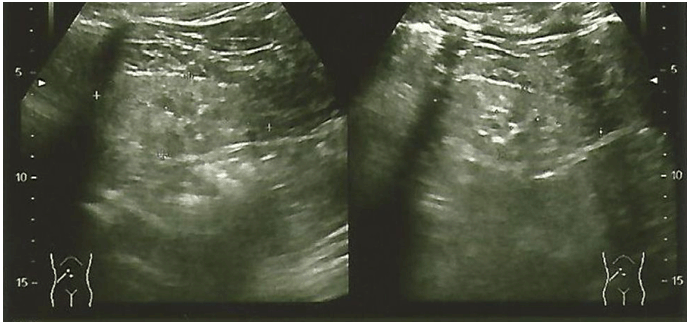
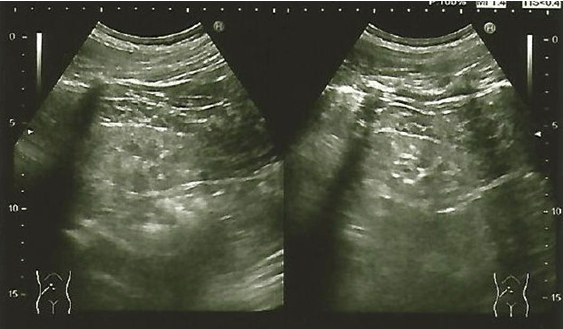
A 48-year-old male, with 22 years history of type 2 diabetes mellitus that require insulin, and with complications of CRF primarily due to diabetic nephropathy, was admitted to the hospital for dialysis. Since last year, he had been undergoing hemodialysis three times via an arteriovenous fistula for 2.5–3 hours for each time. His last dialysis was four days before the day of the admission. On physical examination the patient was in a fair condition, with no related distress, hydrate, and well oriented. The patient's blood pressure was 129/86 mmHg, heart rate was 79 beats per minute, body temperature was 36.9°C, and respiratory rate was 15 breaths/min. Due to the patient history of CRF secondary to diabetic nephropathy, laboratory investigation blood testing revealed that a hemoglobin of 14.1 g/dl (normal value 13.5–17.5 g/dl), platelets of 290×103/mm3 (normal value 150–350×103/mm3), leukocytes of 9×10³/mm3 (normal value 4.5–11×103/mm3), neutrophils of 65% (normal value 40–70%), and lymphocytes of 32% (normal value 22–44%). An elevated levels of creatinine 6.9 mg/dl (normal value <1.5 mg/dl) and blood urea nitrogen (BUN) 49 mg/dl (normal value 10–20 mg/dl) were noted. Normal levels for sodium 140 mg/dl (normal value 136–145 mg/dl) was detected, but there was an increased level of potassium 7 mg/dl (normal value 3.5–5 mg/dl), calcium 11.9 mg/dl (normal value 9–10.5 mg/dl), and phosphorus 5.8 mg/dl (normal value 3–4.5 mg/dl). Urine analysis demonstrates yellow urine, with a urine pH of 7 (normal value 4.5-8), and protein of 136 mg/d (normal value ≤ 150 mg/d). Also, there was no bacteria, yeasts, crystals, and RBCs were detected during the urine analysis. Abdominal ultrasound scanning presented both kidneys with decreased length and width measurements (Figure 1); atrophied (right kidney of 8.41×3.91 cm and left kidney of 8.06×3.34 cm for both length and width respectively), poor corticomedullary differentiation (Figure 2), and increased renal echogenicity; hyperechoic (Figure 3). The patient was discharged from the hospital after completing his regular check-up, and was also recommended to continue with hemodialysis, waiting for the availability of donor for kidney transplant. | ||||||
| ||||||
| ||||||
| ||||||
|
Discussion
| ||||||
|
This case report described a condition of CRF developed in a patient with 22 years history of type 2 diabetes mellitus that require insulin. Chronic renal failure has become a global epidemic, and one of the major causes of CRF is diabetes. Patients with diabetes and nephropathy commonly exhibit concurrent diabetic neuropathy [8]. Diabetic nephropathy is the most common cause of CRF. As stated more than 43.3% of new patients undergoing renal transplantation treatment program in the USA are mostly of type 2 diabetes mellitus [9]. As the progress of diabetic nephropathy, kidneys are shrinking in size and a progressive loss of renal function is occurring [7]. The prediction of renal function irreversibility in CRF has been often difficult on the basis of renal length or thickness of the renal parenchyma. Also, about 20% of diabetes mellitus patients can develop CRF as a result of non-diabetic renal pathologies, thus ultrasonography had the ability to show all the characteristics of CRF, as reduced in renal size and the atrophy of the renal parenchyma [10]. Blood tests as blood urea nitrogen (BUN) and serum creatinine are the simplest way to monitor renal function. A test can be done to measure the amount of urea nitrogen in the blood. In kidney disease, these substances are not excreted normally, and so they accumulate in the body, thus causing an increase in blood levels of urea [11]. The development of CRF as a consequence of diabetes mellitus was found to be related to disorders of vasodilatation and metabolic abnormalities that mediated by endothelial derived nitric oxide. Angiotensin II and aldosterone, interacting with pulse pressure and increased systolic blood pressure, activate NADPH oxidase, which acts as mediator of oxidative stress. Angiotensin II increases metabolism of nitric oxide to peroxynitrite, which further impairs endothelial-derived vasodilation [12]. In another mechanism, decrease in the ability to produce endothelial progenitor cells (EPCs), which derived from bone marrow, play a role in replacing damaged endothelium and are reduced in people with decreased endothelium-dependent vasodilation [13]. Ultrasonography examinations usually concern the ability to identify a pathological condition, to distinguish between different histopathological lesions, and to identify patients with CRF. The ultrasound brightness mode (B-mode) depends on morphological parameters to diagnose incidence of CRF. These morphological parameters are interpolar diameter, parenchymal thickness, and renal echogenicity. The right kidney mean length is 10.74±1.35 cm and the mean length of the left kidney is 11.10±1.15 cm, measured on a posterior oblique image as the longest diameter, with a lower limit of normality indicated as 9 cm. Where a renal length less than 8 cm is attributed to CRF. Also parenchymal thickness less than 15 mm and echogenicity identical to that of the renal sinus are strongly suggested a CRF condition [14]. | ||||||
|
Conclusion
| ||||||
|
B-mode ultrasonography is a valuable diagnostic tool and often required for the diagnostic workup of patients with chronic renal failure. Accurate description of bilateral renal size, parenchymal thickness, and renal echogenicity are needed because they can influence further diagnostic and therapeutic interventions in such malady. | ||||||
|
Acknowledgements
| ||||||
|
We would like to thank the staff of the Radiology and Medical Imaging Department, College of Applied Medical Sciences, Prince Sattam bin Abdulaziz University for their continuous support during writing this case report. | ||||||
|
References
| ||||||
| ||||||


|
[HTML Abstract]
[PDF Full Text]
|
|
Author Contributions
Mustafa Z. Mahmoud – Substantial contributions to conception and design, Acquisition of data, Analysis and interpretation of data, Drafting the article, Revising it critically for important intellectual content, Final approval of the version to be published Omer A. Mahmoud – Substantial contributions to conception and design, Acquisition of data, Analysis and interpretation of data, Drafting the article, Revising it critically for important intellectual content, Final approval of the version to be published Maram A. Fagiri – Substantial contributions to conception and design, Acquisition of data, Analysis and interpretation of data, Drafting the article, revising it critically for important intellectual content, Final approval of the version to be published |
|
Guarantor of submission
The corresponding author is the guarantor of submission. |
|
Source of support
None |
|
Conflict of interest
Authors declare no conflict of interest. |
|
Copyright
© 2017 Mustafa Z. Mahmoud et al. This article is distributed under the terms of Creative Commons Attribution License which permits unrestricted use, distribution and reproduction in any medium provided the original author(s) and original publisher are properly credited. Please see the copyright policy on the journal website for more information. |
|
|