Case Series
 
Respiratory failure in adults due to foreign body aspiration: A case series
Lycke R. Woittiez1,2, Elsbeth J. Wesselink1, Marcel A. de Leeuw1,3, Cornelis Slagt1,4
1Zaans Medical Center, Koningin Julianaplein 58, 1502 DV Zaandam, The Netherlands.
2Academic Medical Center, Department Internal Medicine, p.o. box 22660, 1100 DD Amsterdam.
3VU University Medical Center, Postbus 7057, 1007 MB Amsterdam, The Netherlands.
4Radboud University Medical Center, Department Anaesthesia, Pain and Palliative Medicine, Geert Grooteplein-Zuid 10, 6500 HB Nijmegen, The Netherlands.

Article ID: Z01201607CR10071LW
doi:10.5348/ijcri-201610-CS-10071

Address correspondence to:
Cornelis Slagt
Radboud University Medical Center
Department Anaesthesia, Pain and Palliative Medicine
Geert Grooteplein-Zuid 10, 6500 HB Nijmegen
the Netherlands

Access full text article on other devices

  Access PDF of article on other devices

[HTML Abstract]   [PDF Full Text] [Print This Article]
[Similar article in Pumed] [Similar article in Google Scholar]


How to cite this article
Woittiez LR, Wesselink EJ, de Leeuw MA, Slagt C. Respiratory failure in adults due to foreign body aspiration: A case series. Int J Case Rep Images 2016;7(6):422–426.


Abstract
Introduction: Foreign body aspiration (FBA) is rare in adults and its clinical presentation can be very diverse. Acute symptoms as dyspnea and choking are often immediately linked to FBA. However, mild or even asymptomatic chronic pulmonary symptoms can be presented as a result of FBA. Physical examination is usually nonspecific. Chest X-ray is often normal or shows nonspecific findings. Treatment and definite diagnosis can be accomplished using rigid or flexible bronchoscopy.
Case Series: We present two cases of foreign body aspiration. The first case was the aspiration of a broken tracheostomy tube leading to acute respiratory failure and the second case was the aspiration of a medication blister which initially presented as atypical chronic pulmonary symptoms but evolved to a medical emergency of acute respiratory failure.
Conclusion: These two cases show the broad range of symptoms and findings associated with FBA. When patients present with nonspecific pulmonary findings, FBA should be included in the differential diagnosis.

Keywords: Aspiration, Bronchoscopy, Chest X-ray, Foreign body, Pulmonary medicine, Respiratory failure

Introduction

Foreign body aspiration (FBA) occurs frequently in children, but rarely in adults [1]. In different series where both children and adults with FBA were included, children represented 46–92% of the total study group [2][3]. Most adult patients who experience FBA have predisposing conditions resulting in a decreased consciousness, such as cerebrovascular accidents, intracranial hemorrhage or septic encephalopathy. Other possible risk factors are tracheostomy handling, emergency intubation, cranioencephalic trauma, intravenous drug abuse, alcohol or sedative use and dental and medical procedures [4]. Furthermore, the occurrence of FBA is dependent on the region where people live. In Islamic countries, aspiration of headscarf pins is quite common. How often FBA in adults occurs in the Netherlands is unknown. In this article we describe two cases of FBA in adults. The first patient presented with acute respiratory failure. The second patient presented with atypical chronic pulmonary symptoms which evolved to acute respiratory failure.


Case Series

Case 1
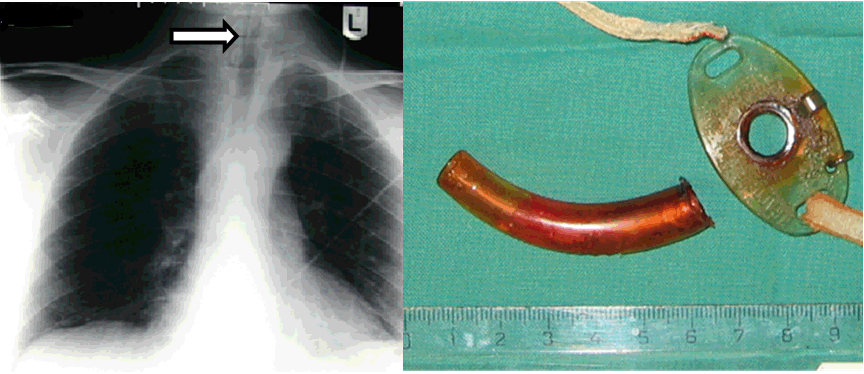
A 42-year-old male was presented to the emergency department. His medical history revealed brain surgery for a tumor in the posterior fossa. The surgery was performed years ago, but left him with swallowing disorders for which he needed a permanent tracheostomy tube. In retrospect, it became clear that he had withdrawn himself from the medical follow-up. When presented in the emergency department he was acutely dyspneic caused by a broken and dislocated tracheostomy tube ( (Figure 1), left panel). He had a respiratory rate of >50/min with a peripheral oxygen saturation of 70%, a blood pressure of 115/60 mmHg and a pulse of 165 bpm.

The patient rapidly deteriorated. Therefore, an attempt was made to remove the barely visible tracheostomy tube which was trapped in the larynx under local anesthesia. During this attempt the tube dislocated to more distal airways, which caused an improvement in the vital signs. After dislocation, the patient was alert without experiencing any dyspnea. The pulmonologist performed a flexible bronchoscopy and retrieved the tube from the left main bronchus ( (Figure 1); right panel). After this procedure the patient remained in good condition.

Case 2
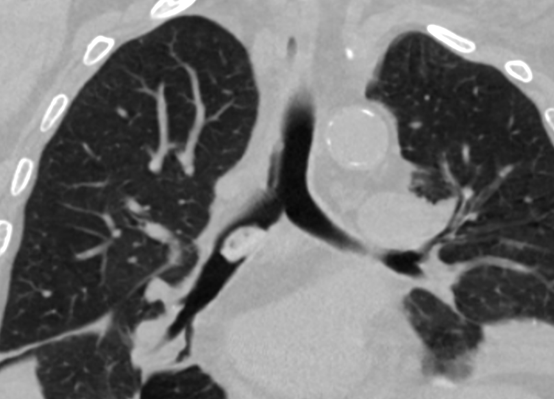
An 84-year-old male was admitted in our cardiac care unit with complaints of dyspnea and cough since several weeks. He had a history of chronic obstructive pulmonary disease (COPD), kidney and cardiac failure. At admission to the CCU he was tachypneic, his peripheral oxygen saturation with additional oxygen (>12 L/min) was 88% and bilateral crackles were heard. He had a high blood pressure of 229/103 mmHg, a rapid pulse of 102 bpm and a temperature of 38.0°C. Laboratory investigation showed high inflammatory values (CRP 120 mg/L), renal insufficiency (creatinine 210 µmol/L) and anemia (hemoglobin 7.1 mmol/L). The chest X-ray showed signs of congestive heart failure. The patient was treated with diuretics and amoxicillin/clavulanic acid. Although the patient's condition seemed to improve, five days after admission he suddenly developed respiratory failure with hemoptysis. The patient was transferred to the intensive care unit for mechanical ventilation. After hemodynamic and respiratory stabilization, a chest CT scan was performed which showed a foreign body in the right main bronchus (Figure 2). On bronchoscopy a medication blister pack surrounded by fibrin was identified. It was carefully removed and the patient's condition rapidly improved. When asked later, the patient remembered choking when taking his medication several months ago. His cough had developed afterwards.


Cursor on image to zoom/Click text to open image
Figure 1: Left panel: Chest X-ray on admission of patient the broken tracheostomy tube. Fractured tracheostomy tube is indicated by the arrow. Right panel: broken tracheostomy tube after removal by flexible bronchoscopy.


Cursor on image to zoom/Click text to open image
Figure 2: Computed tomography scan showing blister pack in the right main bronchus.


Discussion

The above mentioned cases show that FBA in the adult patient can present in very different ways and the diagnosis can be challenging.

Foreign Bodies
The types of foreign bodies (FB) that have been aspirated vary greatly among different published series. Most commonly described are bones, nutshells, metallic dentures, organic components and food particles. However, there are no limits to what can be retrieved from the airway; pen caps, needles, teeth, headscarf pins and even glass have been described [2] [3][4]. Aspiration of medication tablets has been described in case reports, and represented up to 16% of the total of aspirated foreign bodies [5]. Aspiration of a medication blister has not been described before. In a review in 1994, only 12 reports of synthetic tube fracture were found. A tracheostomy tube can fracture after prolonged use, probably due to a combination of prolonged wear, poor tracheostomy care and the formation of granulation tissue. When tracheostomy tubes fracture this usually occurs at the junction of the tube and neck plate. Patient A had not appeared at follow-up visits and his tracheostomy tube had not been changed for some time.

Symptoms
When patients are choking, FBA is often suspected. However, acute FBA is associated with choking in only 7–23% of patients [4] [6]. Symptoms are usually nonspecific and are dependent on the nature of the FB, the diameter, location and eventually the development of complications. Symptoms that are commonly seen are cough (22–94%), dyspnea (6–35%), chest pain (2–22%), hemoptysis (11–24%), fever (8–31%) and wheezing (2–28%) rare are recurrent or chronic pneumonia, cardiac arrest or no symptom at all (2–9%) [1][2] [4][6][7].

There can be a significant delay in the diagnosis as symptoms can be absent or atypical. The time from aspiration to clinical presentation is determined by the severity of the symptoms. In most studies, a minority of patients (19–53%) present within one week of aspiration [4] [6]. In 58–70% of the patients the delay in diagnosis was more than 1 month [1] [6]. Much longer delays (1–40 years) after aspiration have been described [4] [5] [6]. Twenty-five percent of the patients did not remember FBA, and only 22% remembered it on clinical suspicion [4]. In the geriatric population, only 30% could remember FBA at the first visit to the doctor [7]. Again, the physical examination is non-specific, clinical signs are absent in 39–87% of patients. Decreased breath sounds were noted in 13–47% of patients and respiratory distress was seen in only 5% [2].

Both our cases show that FBA can result in respiratory failure as a result of the aspiration itself or in a later stage due to dislocation of the FB. When respiratory failure develops and a FB is expected, rapid bronchoscopic removal is indicated.

Radiology
Not only the signs and symptoms of FBA are nonspecific, chest X-ray findings are atypical as well. The chest X-ray is completely normal in 10–32% of patients. The FB was visible on the chest X-rays in a fraction of cases (11–31%). Bones or needles are relatively easy to see, whereas radiolucent FB are only "seen" due to secondary changes. Common findings on chest X-ray are atelectasis (2–50%), air trapping, emphysema (1–17%) or pneumonia (2–37%). Other, less common findings are pneumomediastinum, lung abscess, pleural effusion, lobar collapse and bronchiectasis [1] [4] [5].

The sensitivity of computed tomography for diagnosing FBA ranges from 90–100%, its specificity from 75–100% [8]. The slice thickness of the CT scan has to be taken into account [7] [8]. Atypical findings, such as atelectasis (63%), hyperlucency (44%), thickened bronchial wall adjacent to the FB (44%), bronchiectasis (31%), pleural effusion (19%) and hilar lymphadenopathy (31%) can be found [5].

Virtual bronchoscopy, in which high resolution CT scan is used to depict the bronchi from an endoscopic viewpoint, has shown high sensitivity and specificity in the diagnosis of a foreign bodies in children. However, no studies were found for this indication in adult patients [9].

Treatment
When the patient is choking and acute FBA is suspected, the initial management should focus on maintaining the patency of the airway and stabilizing the vital signs. If necessary, securing the airway by intubation (or surgical if needed) should be performed promptly to reverse hypoxia. Ventilation strategy should be used with caution to prevent pressure associated lung injury. In acute asphyxiating FBA, rigid bronchoscopy, performed under general anesthesia, is the treatment of choice [1].

Bronchoscopy
In the case of a suspected chronic presence of a FB the history, physical examination and radiology findings are often inconclusive and a bronchoscopy should be performed. It is both diagnostic and therapeutic, as it shows 85% of the inhaled FB [1]. Removal of a FB can be performed by rigid or flexible bronchoscopy.

In the past, a rigid bronchoscopy was mostly used with a high success rate of 98%. However, for chronic aspiration flexible bronchoscopy is as effective as rigid bronchoscopy and causes fewer complications. Therefore, flexible bronchoscopy is now often used as first option. Flexible bronchoscopy can be performed under local anesthesia and has a success rate of 60–97% [1] [6]. Another advantage of flexible bronchoscopy is that it visualizes segmental airways to the third generation of branching, and rigid bronchoscopy only visualizes the trachea and proximal bronchi. Therefore, when the FB is impacted in distal airways, flexible bronchoscopy is the treatment of choice. Flexible bronchoscopy is also indicated in patients with cervicofacial trauma. Computed tomography scan can help distinguishing which technique should be used first [8].

When removal with flexible bronchoscopy is unsuccessful, a repeat procedure should be performed [4]. Usually a rigid bronchoscopy under general anesthesia [1]. Reasons for failure include entrapment of the FB in the bronchial wall, serious granulation with bronchial atresia or serious hemorrhage [6]. Complications after bronchoscopy are laryngeal edema, subcutaneous emphysema and pneumothorax [1]. The FB is usually located in the right lung, probably because the right main bronchus is more in line with the trachea [2] [5]. However, abnormalities on chest X-ray that are not right-sided should not lead to questioning the diagnosis since up to 25% of FB are located in the left bronchus and 6% in the trachea [4] [6].

Pathology
In 88% of the patients with chronic FBA of particulate matter, a cryptogenic organizing pneumonia (COP), which is a nonspecific reaction to toxic insults, was found. On biopsy, multinucleated giant cells were seen in 67%, granulomas in 33%, peribronchial fibrosis and chronic inflammation in 7%, and acute bronchiolitis in 5% [10]. When objects are aspirated, granulations form around them, which might first appear as a malignancy.

Complications
Complications associated with FBA are found in almost 80% of patients, and are often the presenting symptoms. The complications most commonly found are obstructive pneumonia (22%), bleeding (14.5%), atelectasis (10%) and endobronchial stenotic scarring (8%). Pneumonia can be complicated by empyema. The incidence of complications significantly increases from 32% when the FB is removed within three days after aspiration to 63–90% when it is removed later [1] [6]. After a difficult bronchoscopy, development of mediastinitis should be anticipated.


Conclusion

The presented cases show the different clinical presentations in patients presenting with foreign body aspiration (FBA), varying from chronic nonspecific to acute life-threatening clinical conditions. Importantly, chronic nonspecific presentations may evolve into acute life-threatening events. Maintaining the airway patency is essential in the acute setting. The diagnosis of FBA can be difficult, since history, physical examination and chest X-ray are often atypical. When suspicion is high, a bronchoscopy should be performed. Chest computed tomography scan can be helpful in distinguishing between flexible and rigid bronchoscopy. When patients present with nonspecific pulmonary findings, FBA should be included in the differential diagnosis.


References
  1. Goyal R, Nayar S, Gogia P, Garg M. Extraction of tracheobronchial foreign bodies in children and adults with rigid and flexible bronchoscopy. J Bronchology Interv Pulmonol 2012 Jan;19(1):35–43.   [CrossRef]   [Pubmed]    Back to citation no. 1
  2. Albirmawy OA, Elsheikh MN. Foreign body aspiration, a continuously growing challenge: Tanta University experience in Egypt. Auris Nasus Larynx 2011 Feb;38(1):88–94.   [CrossRef]   [Pubmed]    Back to citation no. 2
  3. Samarei R. Survey of foreign body aspiration in airways and lungs. Glob J Health Sci 2014 Sep 18;6(7 Spec No):130–5.   [CrossRef]   [Pubmed]    Back to citation no. 3
  4. Ramos MB, Fernández-Villar A, Rivo JE, et al. Extraction of airway foreign bodies in adults: experience from 1987-2008. Interact Cardiovasc Thorac Surg 2009 Sep;9(3):402–5.   [CrossRef]   [Pubmed]    Back to citation no. 4
  5. Zissin R, Shapiro-Feinberg M, Rozenman J, Apter S, Smorjik J, Hertz M. CT findings of the chest in adults with aspirated foreign bodies. Eur Radiol 2001;11(4):606–11.   [CrossRef]   [Pubmed]    Back to citation no. 5
  6. Dong YC, Zhou GW, Bai C, et al. Removal of tracheobronchial foreign bodies in adults using a flexible bronchoscope: experience with 200 cases in China. Intern Med 2012;51(18):2515–9.   [CrossRef]   [Pubmed]    Back to citation no. 6
  7. Lin L, Lv L, Wang Y, Zha X, Tang F, Liu X. The clinical features of foreign body aspiration into the lower airway in geriatric patients. Clin Interv Aging 2014 Sep 24;9:1613–8.   [CrossRef]   [Pubmed]    Back to citation no. 7
  8. Tuckett P, Cervin A. Reducing the number of rigid bronchoscopies performed in suspected foreign body aspiration cases via the use of chest computed tomography: is it safe? A literature review. J Laryngol Otol 2015 Jan;129 Suppl 1:S1–7.   [CrossRef]   [Pubmed]    Back to citation no. 8
  9. Jung SY, Pae SY, Chung SM, Kim HS. Three-dimensional CT with virtual bronchoscopy: a useful modality for bronchial foreign bodies in pediatric patients. Eur Arch Otorhinolaryngol 2012 Jan;269(1):223–8.   [CrossRef]   [Pubmed]    Back to citation no. 9
  10. Mukhopadhyay S, Katzenstein AL. Pulmonary disease due to aspiration of food and other particulate matter: a clinicopathologic study of 59 cases diagnosed on biopsy or resection specimens. Am J Surg Pathol 2007 May;31(5):752–9.   [CrossRef]   [Pubmed]    Back to citation no. 10

[HTML Abstract]   [PDF Full Text]

Author Contributions:
Lycke R. Woittiez – Substantial contributions to conception and design, Acquisition of data, Analysis and interpretation of data, Drafting the article, Revising it critically for important intellectual content, Final approval of the version to be published
Elsbeth J. Wesselink – Analysis and interpretation of data, Revising it critically for important intellectual content, Final approval of the version to be published
Marcel A. de Leeuw – Analysis and interpretation of data, Revising it critically for important intellectual content, Final approval of the version to be published
Cornelis Slagt – Analysis and interpretation of data, Revising it critically for important intellectual content, Final approval of the version to be published
Guarantor of submission
The corresponding author is the guarantor of submission.
Source of support
None
Conflict of interest
Authors declare no conflict of interest.
Copyright
© 2016 Lycke R. Woittiez et al. This article is distributed under the terms of Creative Commons Attribution License which permits unrestricted use, distribution and reproduction in any medium provided the original author(s) and original publisher are properly credited. Please see the copyright policy on the journal website for more information.


About The Authors

Lycke R. Woittiez is a Fellow in Internal Medicine and Infectious Diseases at the Academic Medical Center in Amsterdam, the Netherlands.


Elsbeth J. Wesselink is Doctor of o Pharmacy and Head of department clinical pharmacy at Zaans Medisch Centrum, Zaandam, the Netherlands. Her research interests include medication reconciliation and anesthetics. She has published 8 research papers in national and international academic journals and authored a Dutch anesthetics guideline.


Marcel A. de Leeuw is Consultant Anesthesiology at the VU University Medical Centre in Amsterdam the Netherlands. He is an experienced Helicopter Mobile Medical Team Doctor and besides acute care medicine, he is very interested in locoregional techniques (PhD thesis) and pediatric anesthesia.


Cornelis Slagt is Consultant Anesthesiologist at the Department of Anesthesiology, Pain and Palliative Care Medicine at the Radboud University Medical Center, Nijmegen, The Netherlands. Special interest are intensive care medicine (European diploma intensive care (2009) and PhD; measuring cardiac output in the critically ill 2014) and emergency medicine.