Case Report
 
Non-syndromic multiple keratocystic odontogenic tumors: An arduous challenge for oral and maxillofacial specialists
GV Reddy1, M Haranadha Reddy2, Garlapati Komali3, Rembers Anusha4, Pancha Venkat Bhagirath5, Raj Kumar Badam6, K. Sravan Kumar Reddy7
1MDS, Professor & Head of the Department, Oral and maxillofacial Surgery, Panineeya Mahavidyalaya Institute of Dental Sciences and Research Centre, Hyderabad,Telangana, India.
2MDS, Professor, Oral and Maxillofacial Surgery, Panineeya Mahavidyalaya Institute of Dental Sciences and Research Centre, Hyderabad, Telangana, India.
3MDS, Professor, Oral Medicine and Radiology, Panineeya Mahavidyalaya Institute of Dental Sciences and Research Centre, Hyderabad, Telangana, India.
4BDS, Post Graduate Student, Oral Medicine and Radiology, Panineeya Mahavidyalaya Institute of Dental Sciences and Research Centre, Hyderabad, Telangana, India.
5MDS, Professor & Head of the Department, Oral and Maxillofacial Pathology, Panineeya Mahavidyalaya Institute of Dental Sciences and Research Centre, Hyderabad, Telangana, India.
6MDS, Reader, Oral Medicine and Radiology, Panineeya Mahavidyalaya Institute of Dental Sciences and Research Centre, Hyderabad, Telangana, India.
7BDS, Post Graduate Student, Oral and Maxillofacial Surgery, Panineeya Mahavidyalaya Institute of Dental Sciences and Research Centre, Hyderabad,Telangana, India.

Article ID: Z01201606CR10652GR
doi:10.5348/ijcri-201664-CR-10652

Address correspondence to:
Dr. Rembers Anusha
Department of Oral Medicine and Radiology, Panineeya Mahavidyalaya Institute of Dental Sciences and Research Centre
Road No. 5, Kamala Nagar
Dilsukhnagar, Hyderabad - 500 060, Telangana
India

Access full text article on other devices

  Access PDF of article on other devices

[HTML Abstract]   [PDF Full Text] [Print This Article]
[Similar article in Pumed] [Similar article in Google Scholar]


How to cite this article
Reddy GV, Reddy MH, Garlapati K, Garlapati K, Bhagirath PV, RK Badam, Reddy KSK. Non-syndromic multiple keratocystic odontogenic tumors: An arduous challenge for oral and maxillofacial specialists. Int J Case Rep Images 2016;7(6):360–364.


Abstract
Introduction: Keratocystic odontogenic tumor (KOT) is a common developmental odontogenic cyst affecting the maxillofacial region. Multiple odontogenic keratocysts (OKCs) are usually seen in association with nevoid basal cell carcinoma syndrome but approximately only 5% of patients with keratocystic odontogenic tumor have multiple cysts without concomitant syndromic presentation. Only a few cases have been reported till date.
Case Report: This report emphasizes a unique case of a young 14-year-old female suffering since an early age and the role of multidisciplinary approach in the diagnosis and management of a case of multiple keratocystic odontogenic tumors in a non-syndromic patient.
Conclusion: The non-syndromic KCOTs are linked to the expression of a characteristic gene. They are associated with severe morbidity in the younger age group due to their multiple involvement of the jaws but their recurrence rate is less compared to that of syndromic type. The diagnosis and management of these tumors mandates multidisciplinary approach which can instill confidence and improve quality of life of the patients.

Keywords: Keratocystic odontogenic tumor, Benign neoplasm, Gorlin –Goltz syndrome, Tumor suppressor gene


Introduction

Keratocystic odontogenic tumor (KCOT/KOT) is a developmental cyst derived from the enamel organ or dental lamina. The definition "odontogenic keratocyst" was first proposed by Philipsen in 1956 [1]. The KCOTs are the most common form of cystic lesions affecting the maxillofacial region, with an incidence rate of about 12–14% of all odontogenic cysts, more frequent in males (M/F 2:1) [2]. Multiple KCOTs are associated with syndromes such as Nevoid basal cell carcinoma syndrome (NBCCS) /Gorlin–Goltz syndrome/ Bifid rib syndrome) usually in younger patients [3] [4]. Occurrence of multiple KCOT is rare and to date only a few cases have been reported in the literature. We report a rare case of multiple KOTs in a non-syndromic patient associated with impacted/partially erupted teeth.


Case Report

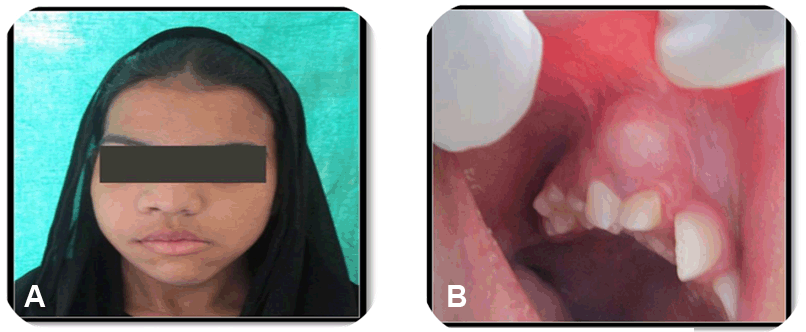
A 14-year-old female patient reported with a chief complaint of swelling in the right side of face (Figure 1A) since four months with a history of slowly progressing swelling.

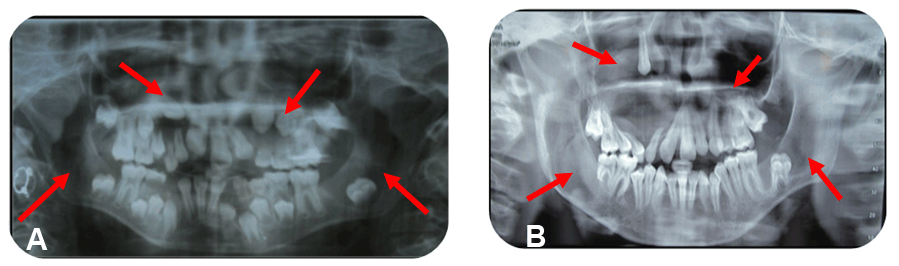
Her past history revealed that she was a diagnosed and surgically operated case of dentigerous cyst in relation to left deciduous maxillary teeth (C, D) at 6 years of age. At the age of 10 years, she was suspected for re-infection of the cyst with intra oral sinus opening and was advised an orthopantomogram (OPG) which revealed multiple radiolucencies involving maxilla and mandible (Figure 2A). Her personal history revealed mixed diet with no deleterious habits and family history was not contributory and there was no history of consanguineous marriage of her parents.

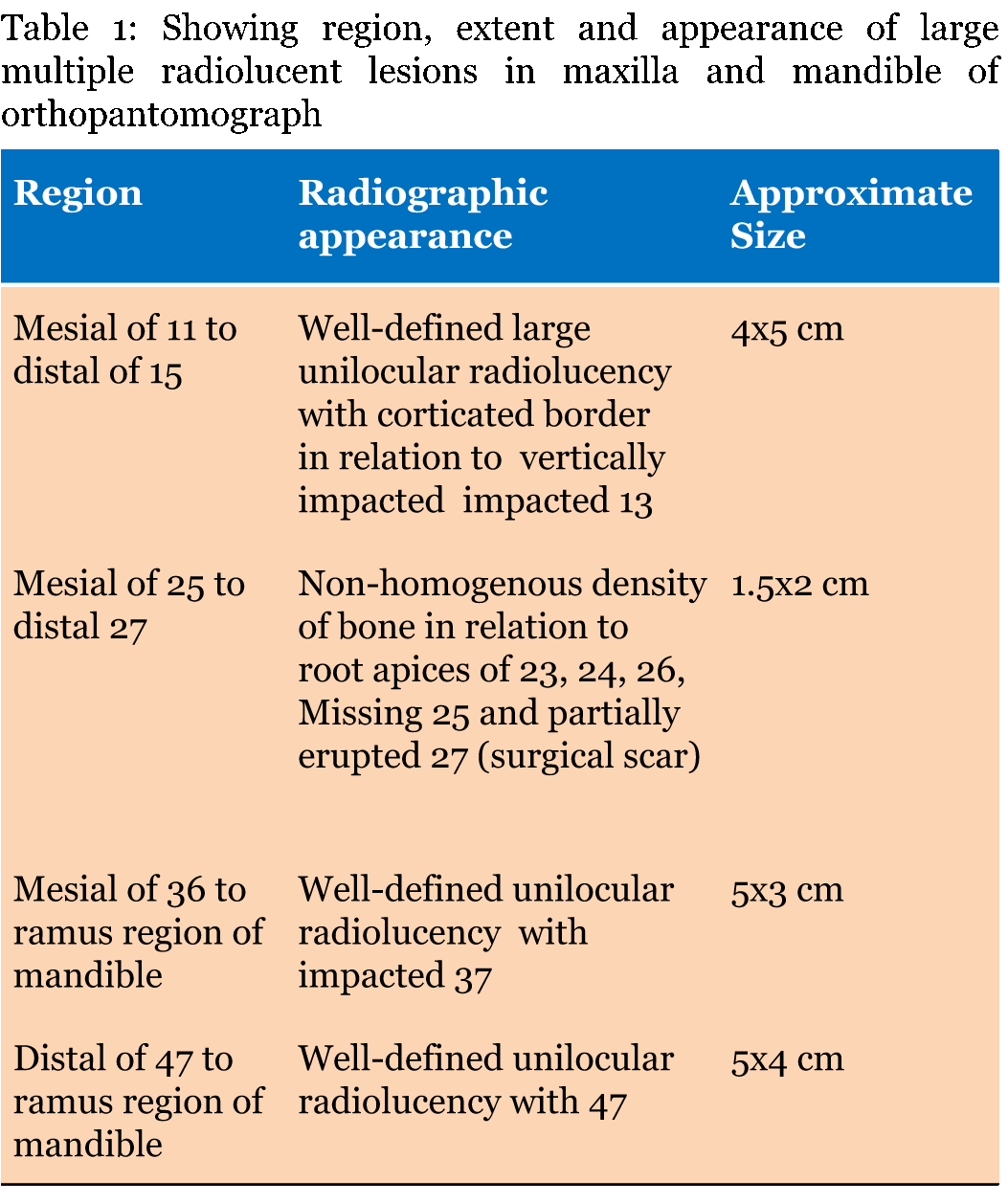
On extraoral examination, her face was asymmetrical due to diffuse swelling measuring 4x4 cm approximately in the right middle third of face with involvement of right ala of nose and upper lip associated with obliteration of nasolabial fold (Figure 1A) and it was non-tender, firm to hard in consistency with no local rise of temperature on palpation. Temporomandibular joint examination revealed tenderness on palpation on right side while opening with adequate mouth opening of 35 mm. Intraoral examination revealed missing 13, 25, 37 and an oval shaped swelling measuring 4x2 cm approximately in relation to right maxillary teeth (Figure 1B). It was soft in consistency, fluctuant, compressible, and tender. A panoramic radiograph was taken which revealed well defined unilocular multiple radiolucencies bilaterally in maxilla and mandible (Figure 2) and the radiolucencies are described in (Table 1).

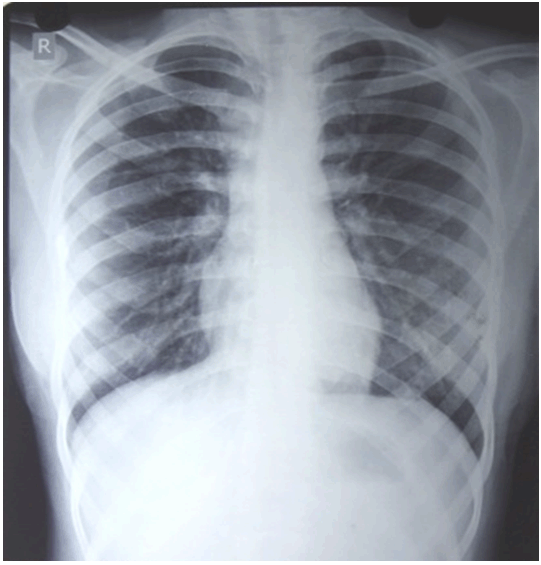
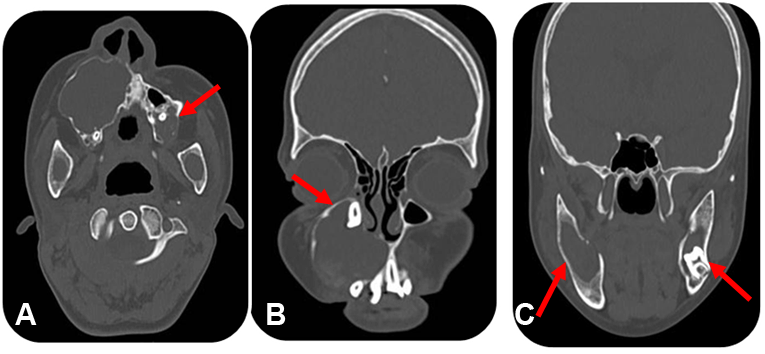
The patient was further evaluated to rule out any syndrome due to the presence of multiple cystic lesions. The patient's chest (Figure 3) and skull radiographs were unremarkable. Dermatological examination did not reveal any cutaneous abnormalities like palmar and plantar defects. Hematologic investigations were within normal limits. Computed tomography scan of maxillofacial region with axial (Figure 4A) and coronal (Figure 4B-C) sections revealed multiple hypodense lesions in the maxilla and mandible.

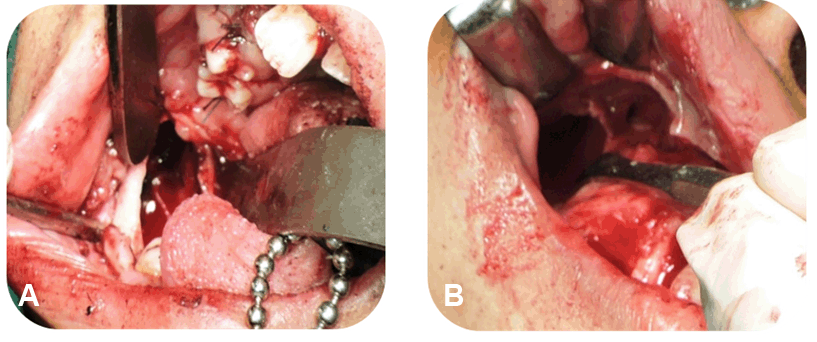
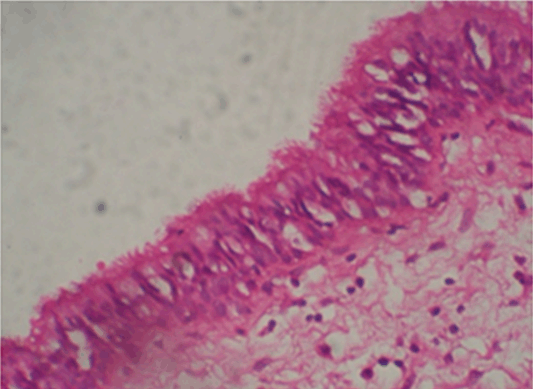
Aspiration of the cystic lesions showed white cheesy keratin like material. Incisional biopsy was done in relation to right and left maxilla and mandible and was subjected to histopathological examination which was suggestive of multiple KOTs. Under general anesthesia, four lesions were enucleated (Figure 5A-B) followed by chemical cauterization (Carnoy's solution) and tissue specimens were sent for histopathologic examination (Figure 6) which revealed "Parakeratinized Odontogenic Keratocyst" from all four quadrants which were of uniform epithelial lining 6–8 cells thick lacking rete ridges. The lumen was filled with keratin, cholesterol clefts and hyaline bodies and the connective tissue wall show 3–4 micro cysts, cholesterol clefts and inflammatory cells at few areas.

Follow-up was done on 1st, 2nd and 3rd months postoperatively. The postoperative period was uneventful without any complications. Patient is asymptomatic since then without any complaints.


Cursor on image to zoom/Click text to open image
Figure 1: A 14-year-old female girl presenting with asymmetrical face: (A) Clinical photograph of extraoral frontal view showing swelling on right of the face, (B) Clinical Intraoral photograph showing an oval shaped swelling measuring approximately 4x2 cm in size.


Cursor on image to zoom/Click text to open image
Figure 2: (A, B) Orthopantomograph showing large multiple radiolucent lesions in maxilla and mandible (Figure A 10 years of age).


Cursor on image to zoom/Click text to open image
Figure 3: Chest posteroanterior view reveals normal anatomic findings.


Cursor on image to zoom/Click text to open image
Figure 4: Computed tomography (CT) scans showing lesions in four quadrants (A) Axial section of CT scan showing well defined osteolytic lesion, predominantly hypodense measuring approximately 1x2 cm involving alveolar process of left maxilla in relation to 27.
(B) Coronal section of CT scan showing well defined osteolytic lesion, predominantly hypodense measuring approximately 4x4 cm involving alveolar and palatine process of right maxilla with impacted13 displaced superiorly, (C) Coronal section of CT scan showing well-defined osteolytic lesion, predominantly hypodense measuring approximately 2x2 cm involving left sided body and ramus of mandible in relation to impacted 37.


Cursor on image to zoom/Click text to open image
Figure 5: Excision of lesions (A) Bony cavity after cyst enucleation in the right ramus region, (B) Bony cavity after cyst enucleation in the right anterior maxilla.


Cursor on image to zoom/Click text to open image
Figure 6: Excisional biopsy specimens of four quadrants showing cystic lining with para keratinized stratified squamous epithelium of uniform 6–8-cell thickness (H&E stain, x400).


Cursor on image to zoom/Click text to open image
Table 1: Showing region, extent and appearance of large multiple radiolucent lesions in maxilla and mandible of orthopantomograph


Discussion

The KOT is a common developmental odontogenic cyst and its biologic behavior is similar to a benign neoplasm [5]. It occurs at any age with peak incidence during the second and third decades, with a slight male predominance [6]. In 25–40% cases, involvement of unerupted tooth has been reported [5]. Brahnon in his analysis of clinical features of 312 cases of OKC found that, 5.8% of patients with multiple OKC had no other features of syndrome [7].The KOT is locally destructive and recurrence rate is very high where published recurrence rates for keratocystic odontogenic tumors range from 5% to about 70%. The recurrence rate of KOT associated with NBCC is about 82% whereas for solitary KOT is ranging between 2.5% and 62.5% [6].

PTCH (patched), a tumor suppressor gene involved in both syndrome associated and sporadic KOTs, occurs on chromosome 9q22.3 – q31. Syndromes associated with multiple KOTs are Gorlin–Goltz syndrome/NBCCS, oro-facial-digital syndrome, Noonan syndrome, Ehler danlos syndrome [5]. There is no specific laboratory test to diagnose NBCCS, although the diagnosis is made clinically using the criteria suggested by Evans et al. [6] .

Evans et al. first published major and minor criteria for diagnosis of Gorlin–Goltz syndrome, later modified by Kimonis et al. and according to them the positive diagnosis of Gorlin–Goltz syndrome is when two major or one major and two minor criteria are satisfied [6] [7] .

The major criteria are:

  • Multiple Basal cell carcinomas (BCCs) or one occurring under the age of 20 years
  • Histologically proven KOTs of the jaws
  • Palmar or plantar pits (three or more)
  • Bilamellar calcification of the falx cerebri
  • Bifid, fused or markedly splayed ribs
  • First degree relative with NBCCS

The minor criteria are:

  • Macrocephaly (adjusted for height)
  • Congenital malformation: Cleft lip or palate, frontal bossing, coarse face, moderate or severe hypertelorism
  • Other skeletal abnormalities: Sprengel deformity, marked pectus deformity, marked syndactyly of the digits
  • Radiological abnormalities: Bridging of the sella turcica, vertebral anomalies such as hemivertebrae, fusion or elongation of the vertebral bodies, modeling defects of the hands and feet or flame shaped hands or feet
  • Ovarian fibroma
  • Medulloblastoma

However, there may be variations in the major diagnostic criteria for NBCCS in some populations due to genetic and geographic differences [8]. Our patient was apparently healthy and did not meet any of these diagnostic criteria for NBCCS, such as pits on the palms of the hands or soles of the feet, multiple basal cell skin cancers, skeletal (bone) changes, calcium deposits in the brain and developmental disability.

Histopathological examination in our case revealed parakeratinized stratified squamous epithelium with absence of rete pegs and palisaded basal cell layer, giving an appearance of tombstone or picket fence. The connective tissue revealed multiple daughter cysts and cystic lumen revealed keratin, giving a picture of KOT.

Treatments are normally classified as conservative or aggressive. Conservative treatment modalities include simple enucleation, with or without curettage, or marsupialization [8]. Aggressive treatment modalities includes peripheral ostectomy, chemical curettage with carnoy's solution, cryotherapy, or electrocautery and resection [9]. The goal is to choose the treatment modality that Carries the lowest risk of recurrence and the least morbidity. Voorsmit et al. [9] (1981) have observed a reduction in recurrence rate if enucleation followed by application of Carnoy's solution (2.5%) when compared with enucleation alone (13.5%). Therefore, enucleation followed by application of Carnoy's solution can result in a reasonably low recurrence rate with less morbidity when compared to other treatment modalities. Kuroyanagi et al. suggested the presence of Ki-67 expression in OKC, which might be helpful for considering the alternative surgical procedure to avoid recurrence and might be used as a prognostic indicator. In recent studies, the hypothesis that suppression of sonic hedgehog (SHH) signaling pathway might be effective for the treatment of OKC [10] .


Conclusion

"These lesions take a giant leap in its stride". It is the responsibility of the oral and maxillofacial specialists to do a comprehensive clinical examination and necessary investigations to not only diagnose but also rule out any associated syndromes and provide apt treatment. Since partial expression of the gene can result in non-syndromic multiple KOTs, the patient must be referred to a clinical geneticist for counseling. Long-term follow-up after treatment must be performed to detect any other features associated with NBCCS, a tendency for multiplicity and recurrence. Hence, apart from surgery even gene therapy can play a significant role in such patients.


References
  1. Chuong R, Donoff RB, Guralnick W. The odontogenic keratocyst. J Oral Maxillofac Surg 1982 Dec;40(12):797–802.   [CrossRef]   [Pubmed]    Back to citation no. 1
  2. Stoelinga PJ, Bronkhorst FB. The incidence, multiple presentation and recurrence of aggressive cysts of the jaws. J Craniomaxillofac Surg 1988 May;16(4):184–95.   [CrossRef]   [Pubmed]    Back to citation no. 2
  3. Blanchard SB. Odontogenic keratocysts: review of the literature and report of a case. J Periodontol 1997 Mar;68(3):306–11.   [CrossRef]   [Pubmed]    Back to citation no. 3
  4. Yucetas S, Cetiner S, Oygur T. Suspected familial odontogenic keratocysts related to Gorlin Goltz syndrome. Saudi Med J 2006 Feb;27(2):250–3.   [Pubmed]    Back to citation no. 4
  5. Rajendran R, Sivapathasundharam B. Shafer's Textbook of Oral Pathology. In: Shafer WG, Hine MK, Levy BM eds. Cysts and Tumors of Odontogenic Origin. 7ed. New Delhi: Elsevier; 2012. p. 1099–110.    Back to citation no. 5
  6. Evans DG, Ladusans EJ, Rimmer S, Burnell LD, Thakker N, Farndon PA. Complications of the naevoid basal cell carcinoma syndrome: results of a population based study. J Med Genet 1993 Jun;30(6):460–4.   [CrossRef]   [Pubmed]    Back to citation no. 6
  7. Kimonis VE, Goldstein AM, Pastakia B, et al. Clinical manifestations in 105 persons with nevoid basal cell carcinoma syndrome. Am J Med Genet 1997 Mar 31;69(3):299–308.   [CrossRef]   [Pubmed]    Back to citation no. 7
  8. Manfredi M, Vescovi P, Bonanini M, Porter S. Nevoid basal cell carcinoma syndrome: a review of the literature. Int J Oral Maxillofac Surg 2004 Mar;33(2):117–24.   [CrossRef]   [Pubmed]    Back to citation no. 8
  9. Voorsmit RA, Stoelinga PJ, van Haelst UJ. The management of keratocysts. J Maxillofac Surg 1981 Nov;9(4):228–36.   [CrossRef]   [Pubmed]    Back to citation no. 9
  10. Hammannavar R, Holikatti K, Bassappa S, Shinde N, Reddy M, Chidambaram YS. Multiple, multifocal odontogenic keratocysts in non-syndrome patient: a case-report. Oral Health Dent Manag 2014 Jun;13(2):189–93.   [Pubmed]    Back to citation no. 10

[HTML Abstract]   [PDF Full Text]

Author Contributions
GV Reddy – Conception and design, Acquisition of data, Analysis and interpretation of data, Drafting the article, Critical revision of the article, Final approval of the version to be published
Haranadha Reddy M. – Analysis and interpretation of data, Drafting the article, Critical revision of the article, Final approval of the version to be published
Komali Garlapati – Conception and design, Acquisition of data, Analysis and interpretation of data, Drafting the article, Critical revision of the article, Final approval of the version to be published
Anusha Rembers – Conception and design, Acquisition of data, Analysis and interpretation of data, Drafting the article, Critical revision of the article, Final approval of the version to be published
Venkat Bhagirath Pancha – Conception and design, Acquisition of data, Analysis and interpretation of data, Drafting the article, Critical revision of the article, Final approval of the version to be published
Raj Kumar Badam – Conception and design, Acquisition of data, Analysis and interpretation of data, Drafting the article, Critical revision of the article, Final approval of the version to be published
K. Sravan Kumar Reddy – Conception and design, Acquisition of data, Analysis and interpretation of data, Drafting the article, Critical revision of the article, Final approval of the version to be published.
Guarantor of submission
The corresponding author is the guarantor of submission.
Source of support
None
Conflict of interest
Authors declare no conflict of interest.
Copyright
© 2016 GV Reddy et al. This article is distributed under the terms of Creative Commons Attribution License which permits unrestricted use, distribution and reproduction in any medium provided the original author(s) and original publisher are properly credited. Please see the copyright policy on the journal website for more information.