| |
|
|
|
Case Report
| ||||||
| Anaphylaxis and Kounis syndrome after using amoxicillin and clavulanic acid | ||||||
| Gokhan Eyupoglu1, Mehmet Tatli1, Kerem Dost Bilmez2, Ozlem Guneysel2 | ||||||
|
1MD, Emergency Medicine, Dr. Lutfi Kirdar Kartal Education and Research Hospital, Istanbul, Turkey.
2MD, Associate Professor, Emergency Medicine, Dr. Lutfi Kirdar Kartal Education and Research Hospital, Istanbul, Turkey. | ||||||
| ||||||
|
[HTML Abstract]
[PDF Full Text]
[Print This Article]
[Similar article in Pumed] [Similar article in Google Scholar] 
|
| How to cite this article |
| Eyupoglu G, Tatli M, Bilmez KD, Guneysel O. Anaphylaxis and Kounis syndrome after using amoxicillin and clavulanic acid. Int J Case Rep Images 2015;6(4):207–210. |
|
Abstract
|
|
Introduction:
Kounis syndrome is the fortuitous occurrence of acute coronary syndrome consisting of hypersensitivity reactions related to allergic or hypersensitivity activation of inflammatory cells.
Case Report: An 84-year-old male admitted to our emergency department with anaphylaxis symptoms after his intake of a 1000 mg amoxicillin and clavulanic acid (ACA) tablet. Diabetes, coronary artery disease and hypertension had been encountered in the patient's medical history. During the physical examination, uvula edema, wheezing, rales and rhonchi were present. Adrenaline, pheniramine and methylprednisolone were given to the patient with a diagnosis of anaphylaxis. During his observation, ECG changes and troponin elevation were detected and he was diagnosed as type 2 Kounis syndrome. After 24 hours follow-up, he was discharged without any complication. Conclusion: A single dose of ACA can cause anaphylaxis and may result in Kounis syndrome. It should be taken into consideration in all types of allergic reactions which treated by adrenaline. | |
|
Keywords:
Anaphylaxis, Clavulanic acid, Coronary syndrome, Drug allergy, Kounis syndrome
| |
|
Introduction
| ||||||
|
Allergic reactions due to use of drugs may be seen as situations ranging from simple urticaria to severe angioedema. The admission rate to the emergency service because of anaphlaxis comprise 0.4–1% in various studies. Medications comprise 7.7–34.6% of anaphylaxis. Amoxicillin has the highest proportion (40%) in those drugs that cause severe anaphylaxis [1] [2]. Kounis syndrome is the coincidental occurrence of acute coronary syndromes with hypersensitivity reactions involving activation of interrelated and interacting inflammatory cells and including allergic or hyper-sensitivity and anaphylactic oranaphylactoid insults [3] . To date, three types Kounis syndrome have been described. Type 1 includes allergic mediators-induced coronary vasospasm in patients without coronary artery disease oratherosclerotic risk factors. Type 2 includes vasospasm, plaque erosion or rupture inpatients with coronary artery disease. After the investigation of thrombi on drug-elutingstents demonstrate the presence of eosinophils and mast cells, this situation is referred to type 3 [4]. Herein, diagnosis and treatment of a patient related to allergic reaction and type 2 Kounis syndrome after single dose of amoxicillin and clavulanic acid (ACA) are discussed. | ||||||
|
Case Report
| ||||||
|
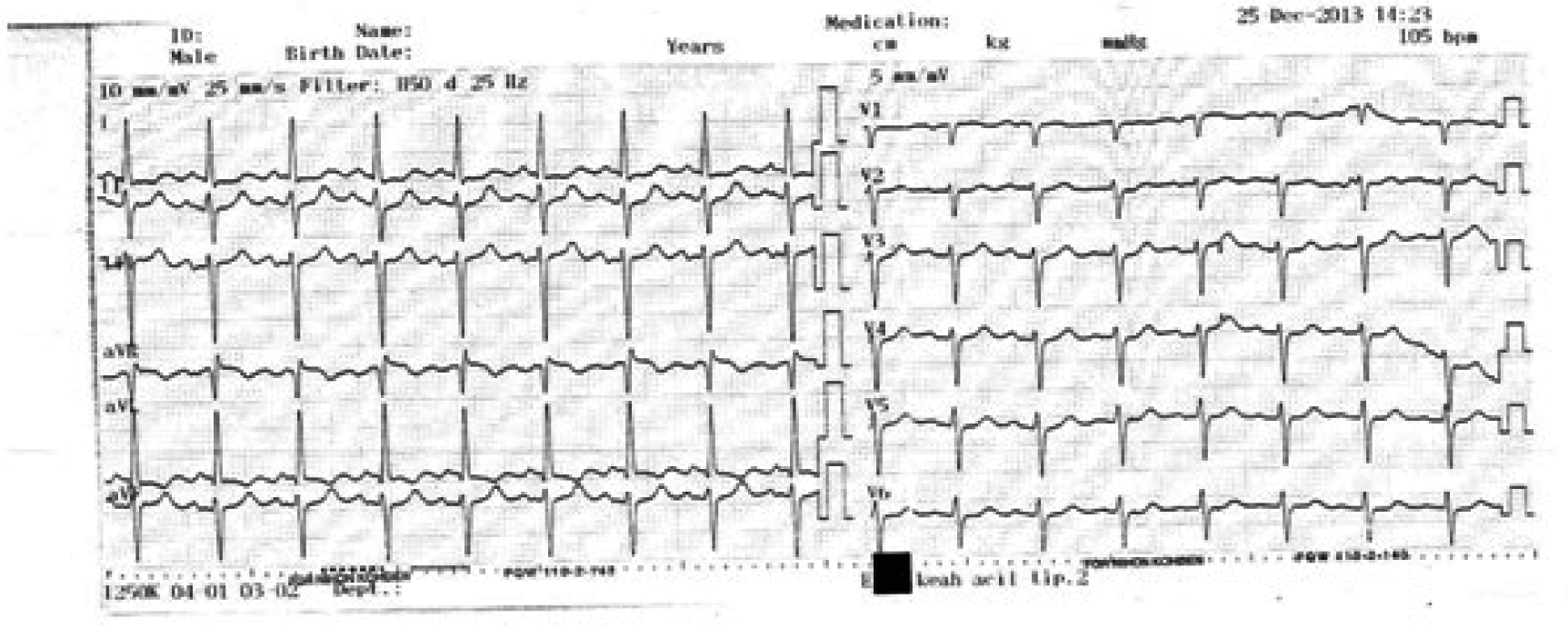
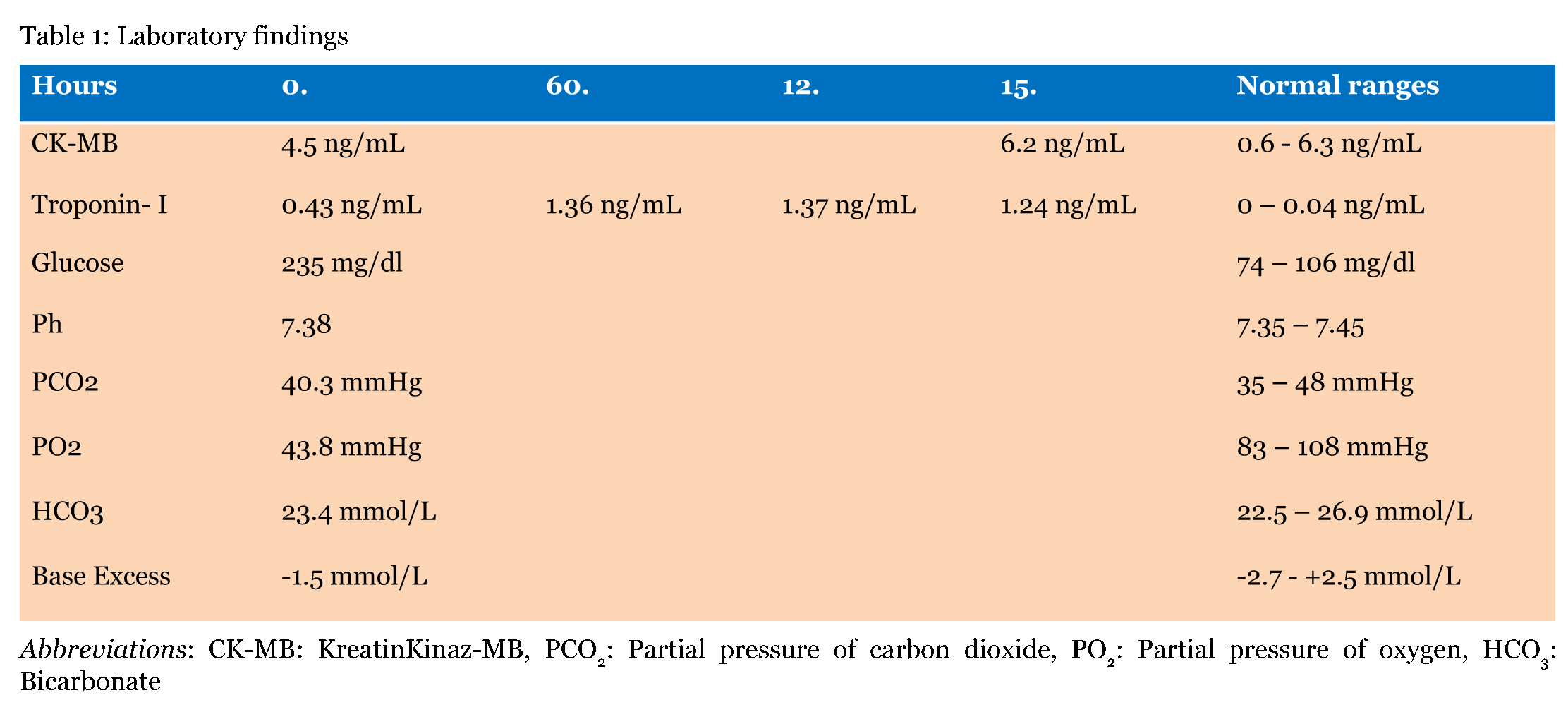
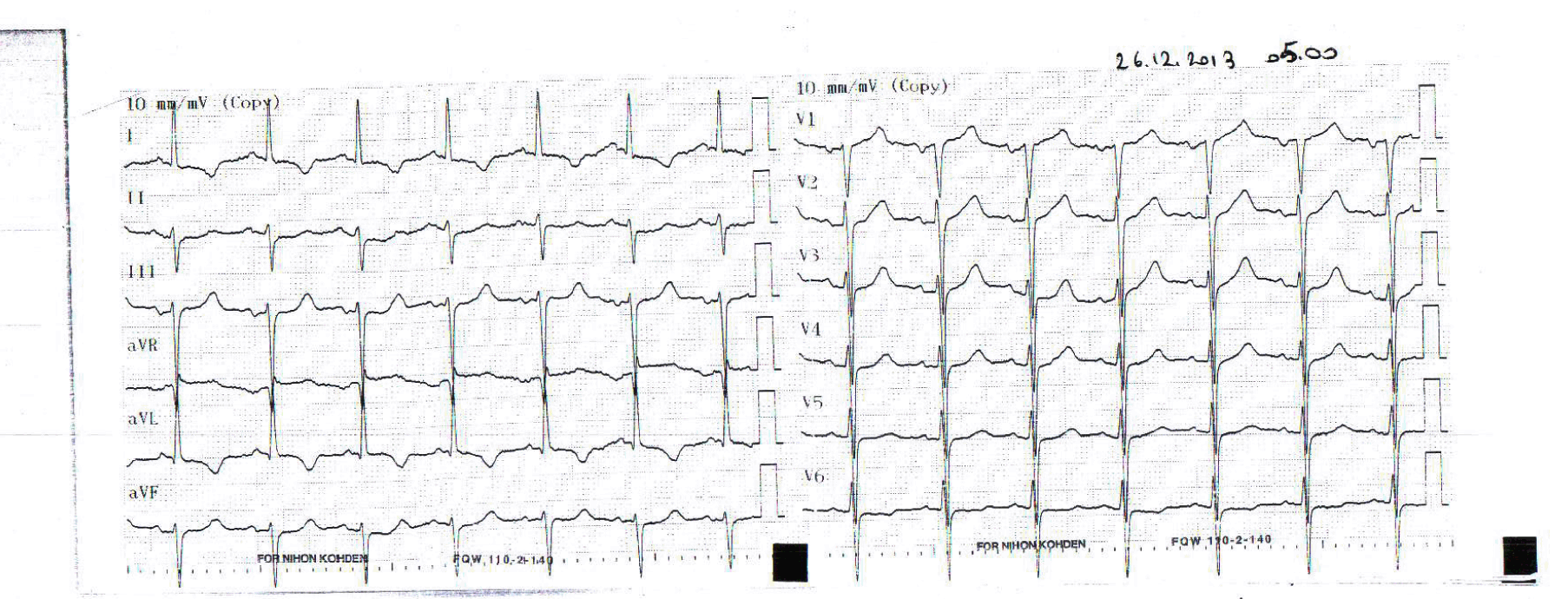
An 84-year-old male admitted to emergency department after intake of a 1000 mg ACA tablet, which had been recommended for upper respiratory infection, with shortness of breath and numbness in the throat complaints ongoing for 30 minutes. Past medical history revealed diabetes, coronary artery disease and hypertension. On admission, TA 110/50 mmHg, pulse rate : 105/min, fever 38.9°C and blood glucose 224 mg/dL. On physical examination, uvula edema, wheezing, rales and rhonchi were present and other systematical examinations were normal. The 12-lead electrocardiogram (ECG) revealed sinusal tachycardia and negative T wave on lead aVL (Figure 1). We administered 0.5 mg adrenaline intramuscularly, 45.5 mg pheniramine, 80 mg methylprednisolone intravenously to the patient, concerning the diagnosis of anaphylaxis. Paracetamol 1 g used for fever management. For bronchoconstriction, 2.5 mg salbutamol was given to him via nebulizer. Laboratory findings are given in Table 1. During follow-up, increase in troponin levels and changes in ECG (Figure 2) were observed and the patient was consulted to cardiologist with a pre-diagnosis of Kounis syndrome. Echocardiographic examination revealed normal left ventricular systolic function, diastolic dysfunction grade 1 and EF %60. Troponin levels were lower at follow-up, was not planned coronary angiographic intervention. Uvula edema regressed, no fever or ECG changes detected and Troponin levels decreased and patient was discharged after a 24-hour follow-up without any complication. | ||||||
| ||||||
| ||||||
| ||||||
|
Discussion
| ||||||
|
In developed countries, cardiovascular diseases are the central cause of death. And this stuation is not expected to change significantly by 2020 [5]. Acute coronary syndromes (ACS) are the acute manifestation of cardiovascular diseases that can lead to death. Kounis syndrome is one of the rare causes of ACS. Kounis syndrome is also called and known Allergic angina or Allergic myocardial infarction in different sources. The main pathophysiology of Kounis syndrome is the activation of mast cells by allergic stimulation and release of biological amines, neutral proteases, arachidonic acid derivatives and platelet activating factor. Histamine increase thrombocyte activation, coronary vasoconstriction and tissue factor synthesis. Neutral proteases cause plaque erosion and rupture as a result of matrix metalloproteinase activation. And also they increase vasoconstriction by raising angiotensin-2 levels [3]. A wide variety of allergens was reported in the course of Kounis syndrome. Drugs that have been reported to induce Kounis syndrome were antibiotics, contrast media, antineoplastics, intravenous anesthetics, NSAIDs, thrombolytics and anticoagulants, skin disinfectants and some other drugs including allopurinol, enalapril, esmolol, insulin. Antibiotics have been reported to date are ampicillin, amoxicillin, amikacin, cefazolin, cefoxitin, cefuroxime, cephradine, cinoxacin, lincomycin, penicillin, sulbactam/cefoperazone, sulperazone, trimetophrim/sulfamethoxazole and vancomycin. Almost all of the cases related with ACA have been reported as type 1 Kounis syndrome (rarely type 2 or type 3) [3]. The contribution of assays for serum histamine, specific IgE antibodies, tryptase, complement proteins (C4- and C1- esterase inhibitor) and evaluation of eosinophilia to diagnosis is not certain. Negativity does not exclude diagnosis because of the short half-life of these mediators, [6]. There are no certain information and guide regarding the treatment of Kounis syndrome coming from case reports and case series [7]. Kounis [6], Cevik [7], Biteker [6] and Ridella [8] make offers treatment for Kounis syndrome. The review by Ridella et al. demonstrated that steroid, H1 blocker, nitroglycerin, adrenaline and acetyl salicylic acid were administered [8]. We got a very positive response after use of adrenaline, H1 blocker, steroid and hydration. Troponin levels decreased and symptoms of anaphylaxis improved after this treatment. So, this treatment method can be used at similar conditions. Cevik et al. emphasized whether or not all medications may be useful. Nevertheless pharmacological management should be considered individually [6] . | ||||||
|
Conclusion
| ||||||
|
Even if typical chest pain or coronary artery disease history does not exist, yet anaphylaxis and Kounis syndrome should be taken into account. | ||||||
|
References
| ||||||
| ||||||
|
[HTML Abstract]
[PDF Full Text]
|
|
Author Contributions
Gokhan Eyupoglu – Conception and design, Acquisition of data, Analysis and interpretation of data, Drafting the article, Critical revision of the article, Final approval of the version to be published Mehmet Tatli – Conception and design, Acquisition of data, Analysis and interpretation of data, Drafting the article, Final approval of the version to be published Kerem Dost Bilmez – Conception and design, Drafting the article, Critical revision of the article, Final approval of the version to be published Ozlem Guneysel – Conception and design, Acquisition of data, Analysis and interpretation of data, Drafting the article, Critical revision of the article, Final approval of the version to be published |
|
Guarantor of submission
The corresponding author is the guarantor of submission. |
|
Source of support
None |
|
Conflict of interest
Authors declare no conflict of interest. |
|
Copyright
© 2015 Gokhan Eyupoglu et al. This article is distributed under the terms of Creative Commons Attribution License which permits unrestricted use, distribution and reproduction in any medium provided the original author(s) and original publisher are properly credited. Please see the copyright policy on the journal website for more information. |
|
|
|
About The Authors
| |||
| |||
| |||
| |||
| |||