
  |

|
 |
|
Case Report
| ||||||
| Lupus associated hepatitis in active lupus nephritis patient: A case report | ||||||
| Sham Sunder1, Satyanand Sathi2, Himanshu Mahapatra3, Rajesh J2, Anurag Gupta2, Prabhu K2 | ||||||
|
1Professor, Department of Nephrology, PGIMER & Dr. Ram Manohar Lohia Hospital, New Delhi, India.
2DM Student, Department of Nephrology, PGIMER & Dr. Ram Manohar Lohia Hospital, New Delhi, India. 3Associate Professor, Department of Nephrology, PGIMER & Dr. Ram Manohar Lohia Hospital, New Delhi, India. | ||||||
| ||||||
|
[HTML Abstract]
[PDF Full Text]
[Print This Article]
[Similar article in Pumed] [Similar article in Google Scholar] 
|


| How to cite this article |
| Sunder S, Sathi S, Mahapatra H, Rajesh J, Gupta A, Prabhu K. Lupus associated hepatitis in active lupus nephritis patient: A case report. Int J Case Rep Images 2014;5(8):581–585. |
|
Abstract
|
|
Introduction:
Systemic lupus erythematosus and autoimmune hepatitis (AIH) both are autoimmune disease causing inflammation of the liver. It is important to differentiate lupus hepatitis from AIH for diagnosis, treatment and prognosis of the disease.
Case Report: Herein, we report a case of a 17-year-old female with a two-year history of multiple joint pain, six-month history of swelling, rash, mouth ulcers and a 15-day history of jaundice. An investigation revealed positive antinuclear antibody, positive anti-DsDNA, low serum C3, C4, very high serum bilirubin, high SGOT/SGPT and nephrotic range proteinuria. Antibody tests for autoimmune hepatitis were negative. Renal biopsy showed focal proliferative lupus nephritis. Liver biopsy was suggestive of lupus-hepatitis. Jaundice responded to steroid therapy dramatically. Conclusion: Lupus associated hepatic disease must be differentiated from hepatitis caused by drugs, toxins, viral and other autoimmune diseases. Liver histology may be necessary to confirm a diagnosis. | |
|
Keywords:
Lupus nephritis, Lupus associated hepatitis, Autoimmune hepatitis
| |
|
Introduction
| ||||||
|
Systemic lupus erythematosus (SLE) and autoimmune hepatitis (AIH) both are autoimmune disease causing inflammation of the liver. Prior treatment with potentially hepatotoxic drugs or viral hepatitis is usually responsible for the main cause of liver disease in SLE patients. If we exclude all the possible causes of liver disease in a patient of active SLE, primary liver disease may have autoimmune association or may be presentation of active SLE itself. It is necessary to know whether the autoimmune hepatitis and lupus hepatitis are the spectrum of same disease or both are different entities. In this case report, we present lupus associated hepatitis in active lupus nephritis patient. | ||||||
|
Case Report
| ||||||
|
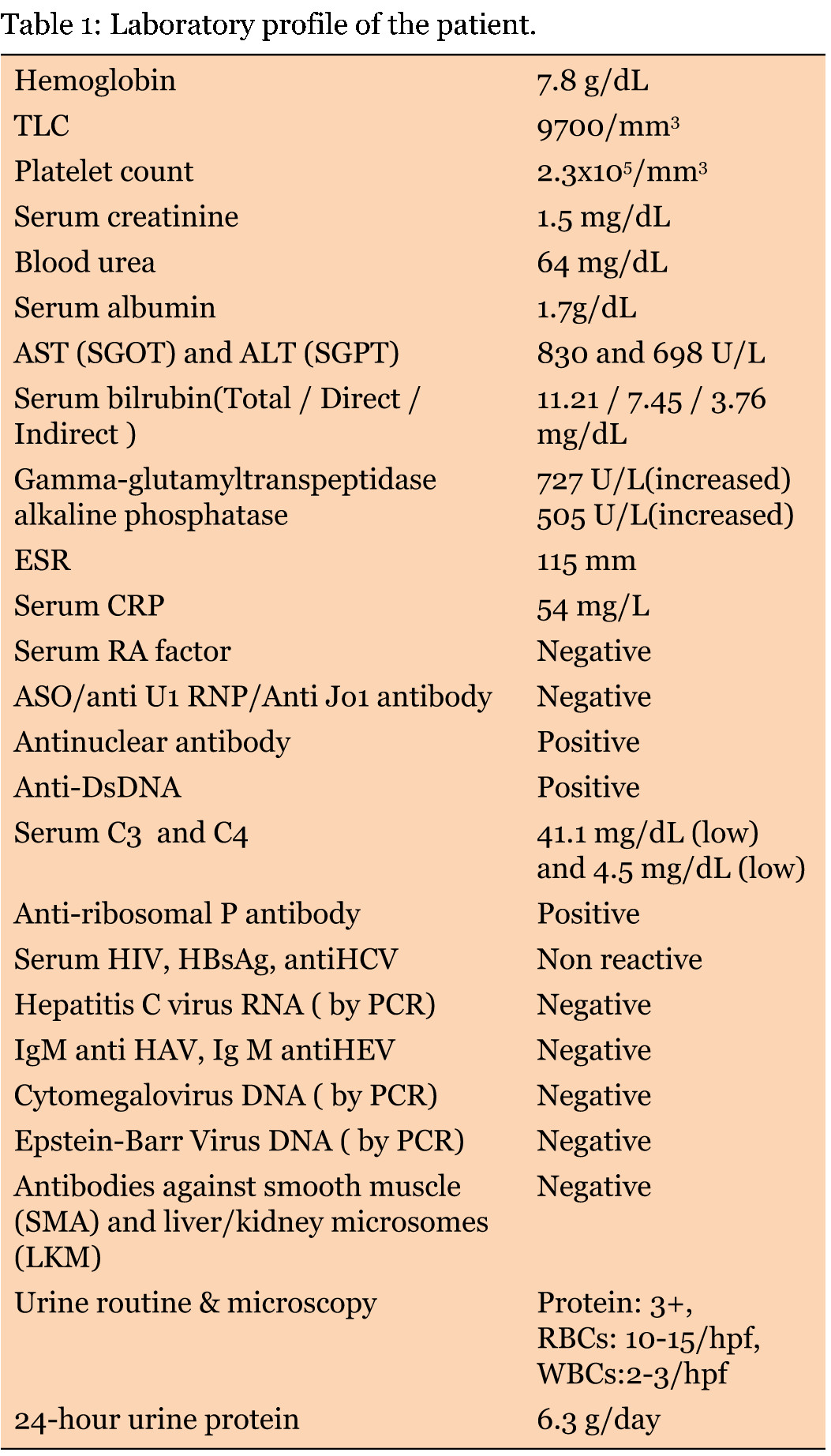
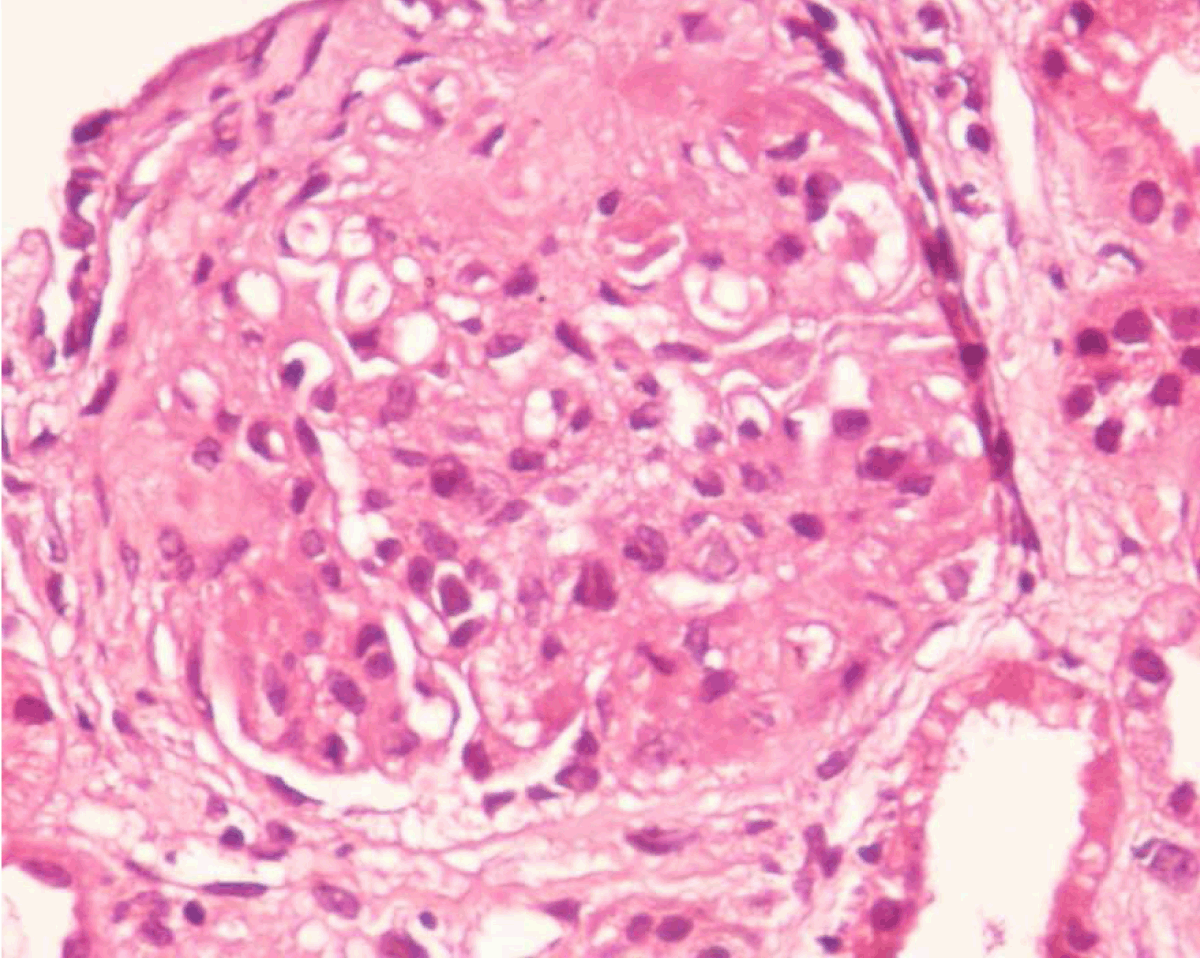
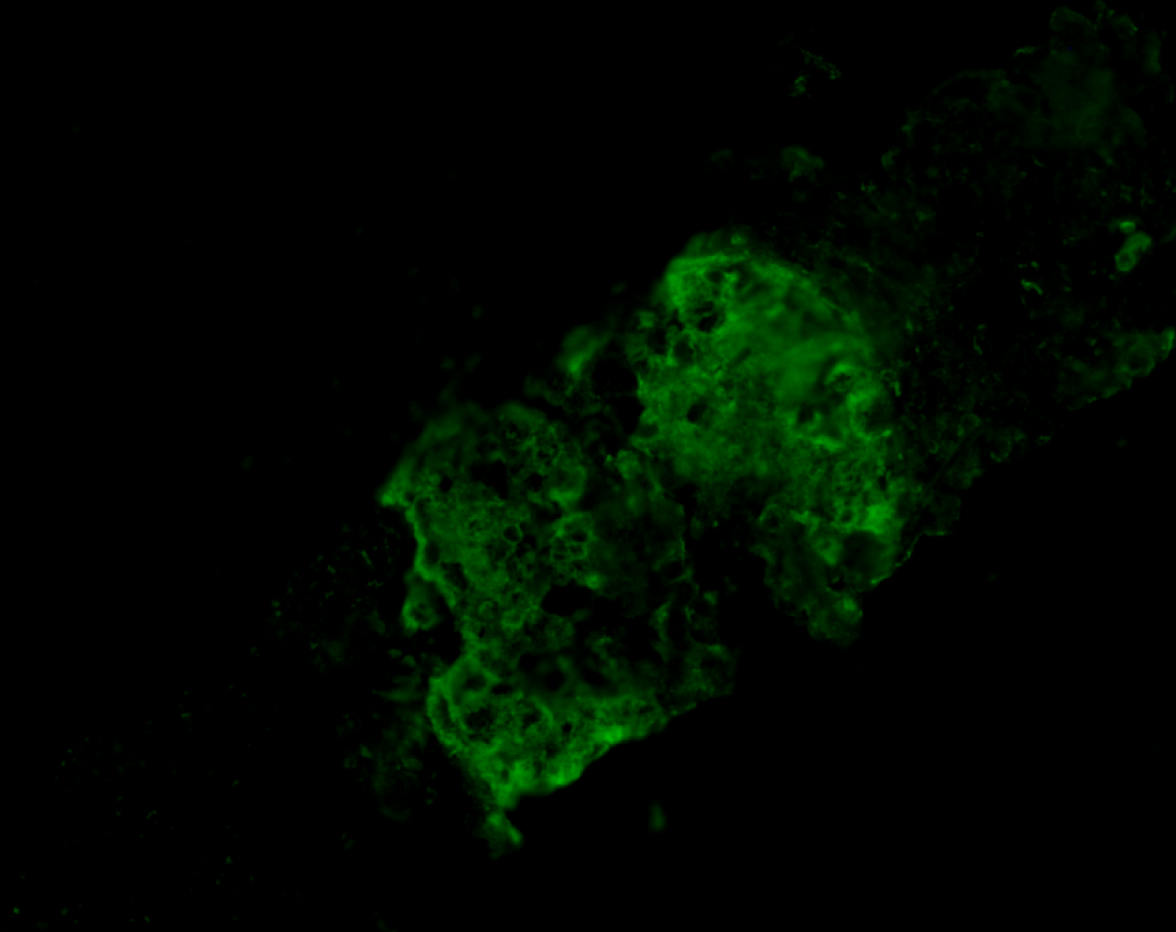
A 17-year-old unmarried female presented with a two-year history of multiple joint pain, six-month history of on and off swelling of whole body, mouth ulcers and characteristic butterfly rash over face and a 15-day history of jaundice. She had been treated on and off with tramadol hydrochloride for joint pain since last six months. No other new medications were reported. She denied any sick contacts, recent travels, or new diet. Her laboratory profile is given in Table 1. Wilson's disease was excluded because of normal serum ceruloplasmin, normal 24-hour urinary cooper levels and negative Kayser Fleischer ring on slit lamp microscopy. Serum immunoglobulin G and M levels were increased 3608 and 152 mg/dL, respectively. The patient showed 6 out of 11 American College of Rheumatology (ACR) criteria for SLE which classified her as definite SLE [1]. Renal biopsy revealed class IIIA (focal proliferative) kidney disease according to the International society of nephrology and renal pathology society 2004 classification. Renal biopsy, on light microscopy (Figure 1) showed 6/14 (42.8%) glomeruli with segmental increase in endocapillary cellularity with mesangial expansion and mild neutrophilic infiltration, focal tubular atrophy and necrosis, mild chronic inflammatory infiltrate in interstitium, focal fibrosis and unremarkable vessels. Immunofluorescence showed full house pattern (deposition of IgG, C3, IgA, IgM, C1q and fibrinogen) of immunoglobulin deposition both in mesangium and capillary walls (Figure 2). Liver biopsy showed maintained lobular architecture with mild chronic inflammatory infiltrate in portal tracts with predominantly lobular inflammation and mild cholestasis (Figure 3). Patient was diagnosed to be having lupus nephritis class IIIA with nephrotic syndrome with lupus hepatitis. In the view of class IIIA lupus nephritis with lupus hepatitis, methyl prednisolone 500 mg/day for three days was given followed by 30 mg/day oral prednisolone. Liver function tests (serum bilirubin and SGOT/SGPT) normalized within two weeks. After two weeks, she was managed on the line of lupus nephritis according to Euro-Lupus regimen [2]; cyclophosphamide was given 500 mg intravenously every two weeks for six doses as induction therapy and azathioprine 2.0 mg/kg/day was used as maintenance therapy after two weeks of last cyclophosphamide injection. After six months her serum creatinine was 0.9 mg/dL, 24-hour urine protein was 160 mg/day and liver enzyme levels were with in normal limit. After one year follow-up, her serum creatinine was 0.8 mg/dL, 24-hour urine protein was 86 mg/day and liver enzyme levels were with in normal limit. | ||||||
| ||||||
| ||||||
| ||||||
|
| ||||||
|
Discussion
| ||||||
|
One to four percent patients of SLE have jaundice, and it is usually secondary to hemolysis, hepatitis or pancreatitis [3]. Ten to thirty-one percent patients of SLE have hepatomegaly [3]. Elevated liver enzyme levels greater than three times normal are rare in case of active lupus [3]. Infections, salicylates or NSAIDS are responsible for most of the cases [3]. In this case, the patient had active lupus nephritis, hepatomegaly, markedly elevated serum bilirubin and liver enzymes. The incidence of SLE associated hepatitis is difficult to ascertain. Piga et al. reported 5.8% incidence of lupus hepatitis in their study of 242 patients of SLE during a mean follow-up of 72.2 months [4]. Efe et al. reported 4.7% incidence of autoimmune liver disease in SLE patients [5]. Literature shows that anti-ribosomal P- proteins are strongly associated with "lupus hepatitis", while these antibodies are found in only 10% of patients with SLE without liver disease [6]. This test was found to be positive in our case patient. No drug, alcohol, or other cause is found in approximately one-third of patients with abnormal liver tests in SLE [3]. The biopsy picture of lupus hepatitis shows predominantly lobular inflammation with maintained lobular architecture and mild chronic infiltrate in portal tracts [3]. There is paucity of lymphoid infiltrates and absence of plasma cells in liver biopsy of lupus hepatitis [7]. Liver biopsy of our case patient showed features suggestive of lupus hepatitis. There are three subclasses of AIH in literature. Type 1 AIH is the most common type worldwide (80% cases) and is associated with ANA and/or smooth muscle antibodies (SMA) [8]. Anti-liver/kidney microsomal 1 (Anti-LKM1) antibodies are positive in Type 2 AIH [8]. Type 3 is the least common type of the disease. Anti-soluble liver/liver pancreas antigen (anti-SLA/LP) is present in serum of the patients of Type 3 AIH [8]. The criteria for the diagnosis of AIH in adult patients have been given by the International Autoimmune Hepatitis Group (IAIHG) [9]. Both laboratory and liver histology features are required for the diagnosis and conditions that resemble AIH should be excluded [7] (Table 2). Atsumi et al. reported two cases of severe hepatic involvement without inflammatory changes in systemic lupus erythematosus and found that corticosteroid therapy is effective in lupus hepatitis [10]. | ||||||
| ||||||
|
| ||||||
|
Conclusion
| ||||||
|
Lupus associated hepatic disease must be differentiated from hepatitis caused by drugs, toxins, viral and other autoimmune diseases. Liver histology may be necessary to confirm a diagnosis of lupus hepatitis or autoimmune hepatitis if liver enzymes are increased in the scenario of active systemic lupus erythematosus. | ||||||
|
References
| ||||||
| ||||||


|
[HTML Abstract]
[PDF Full Text]
|
|
Author Contributions
Sham Sunder – Substantial contributions to conception and design, Acquisition of data, Drafting the article, Revising it critically for important intellectual content, Final approval of the version to be published Satyanand Sathi – Substantial contributions to conception and design, Analysis and interpretation of data, Drafting the article, Revising it critically for important intellectual content, Final approval of the version to be published Himanshu Mahapatra – Substantial contributions to conception and design, Revising it critically for important intellectual content, Final approval of the version to be published Rajesh J – Substantial contributions to conception and design, Drafting the article, Final approval of the version to be published Anurag Gupta – Substantial contributions to conception and design, Revising it critically for important intellectual content, Final approval of the version to be published Prabhu K – Substantial contributions to conception and design, Drafting the article, Final approval of the version to be published |
|
Guarantor of submission
The corresponding author is the guarantor of submission. |
|
Source of support
None |
|
Conflict of interest
Authors declare no conflict of interest. |
|
Copyright
© 2014 Sham Sunder et al. This article is distributed under the terms of Creative Commons Attribution License which permits unrestricted use, distribution and reproduction in any medium provided the original author(s) and original publisher are properly credited. Please see the copyright policy on the journal website for more information. |
|
|