
  |

|
 |
|
Case Report
| ||||||
| A rare association of polyglandular autoimmune endocrinopathy type II with hypoparathyroidism | ||||||
| Manish Gutch1, Sukriti Kumar2, Syed Mohd Razi1, Sanjay Saran1, Keshav Kumar Gupta2 | ||||||
|
1MD, Senior Resident, Dept of Endocrinology, L.L.R.M Medical College Meerut, UP, India.
2MBBS, Junior Resisdent, Department of Radiodiagnosis, S.G.P.G.I, Lucknow, UP, India. 3DM, Prof. & Head, Dept of Endocrinology, L.L.R.M Medical College Meerut, UP, India. | ||||||
| ||||||
|
[HTML Abstract]
[PDF Full Text]
[Print This Article]
[Similar article in Pumed] [Similar article in Google Scholar] 
|


| How to cite this article |
| Gutch M, Kumar S, Razi SM, Saran S, Gupta KK. A rare association of polyglandular autoimmune endocrinopathy type II with hypoparathyroidism. Int J Case Rep Images 2014;5(8):542–545. |
|
Abstract
|
|
Introduction:
Polyglandular autoimmune (PGA) syndromes are uncommon condition characterized by presence of one or more organ-specific autoantibodies directed against specific antigen of organ involved. Polyglandular autoimmune syndrome type II is also known as Schmidt's syndrome and found to be associated with autoimmune Addison's disease with autoimmune thyroid diseases and/or type 1 diabetes mellitus.
Case Report: A previously diagnosed primary hypothyroid 35-year-old female admitted with a 15-day history of general malaise. She complained of polyuria, polydipsia, weight loss, abdominal pain and vomiting. She was diagnosed diabetic ketoacidosis due to previously undiagnosed type I diabetes (capillary blood glucose >500mg/dL, pH 7.20) and intravenous fluids and intravenous insulin infusion was started. After four hours, despite of appropriate fluid resuscitation and normalization of blood glucose, her condition had deteriorated, she became more tachycardic and hypotensive. At this time, the patient was reassessed and a short Synacthen test was carried out then hydrocortisone was administered immediately after the short Synacthen test. Test result showed hypocortisolemia (Addison's disease). During the course of hospital stay she developed tetany then on further investigations hypoparathyroidism was also diagnosed. Herein, we report a rare case of report Ppolyglandular autoimmune endocrinopathies type II with simultaneous involvement of parathyroid gland. Conclusion: Patients presented with an autoimmune disease should be screen for other autoimmune conditions as early detection of other organs specific autoantibody may reduce morbidity and mortality associated in patients with autoimmune polyglandular syndrome. | |
|
Keywords:
Type II polyglandular autoimmune syndrome, Diabetes, Schmidt's syndrome, Addison's disease, Hypothyroidism, Hypoparathyroidism
| |
|
Introduction
| ||||||
|
Polyglandular autoimmune syndrome type II (PGA type II) is a very uncommon endocrine condition characterized by one or more organ specific autoantibodies directed against specific antigen which occurs with a frequency of 1.4–2.0/100, 000 in general population. Females are affected more commonly than males. Various other endocrine organs are involved beside adrenal (adrenal insufficiency), pancreas (T1DM), and thyroid (hypothyroidism), these are gastric parietal cells (pernicious anemia), melanocytes (vitiligo), other less common associations are hypergonadotropic hypogonadism, chronic autoimmune hepatitis, coeliac disease, autoimmune diabetes insipidus and rarely lymphocytic hypophysitis, stiff-person syndrome and myasthenia gravis [1]. T1DM is the first presentation in about 60% of patients; while adrenal insufficiency is the first presentation in about 30% of cases and both present simultaneously in 8–10% of cases. Carpenter noticed the association of Schmidt's syndrome (Addison's disease and hypothyroidism) and diabetes mellitus in his case review in 1964, in this review, 20% of Schmidt's syndrome cases also had diabetes mellitus and the triad is sometimes referred to as Carpenter's syndrome [1]. The separate disorders usually present over a number of years. Here a very unusual association of PGA type II with hypoparathyroidism is seen and it highlights the importance of checking parathyroid function while dealing with constellation of endocrine disorders. | ||||||
|
Case Report
| ||||||
|
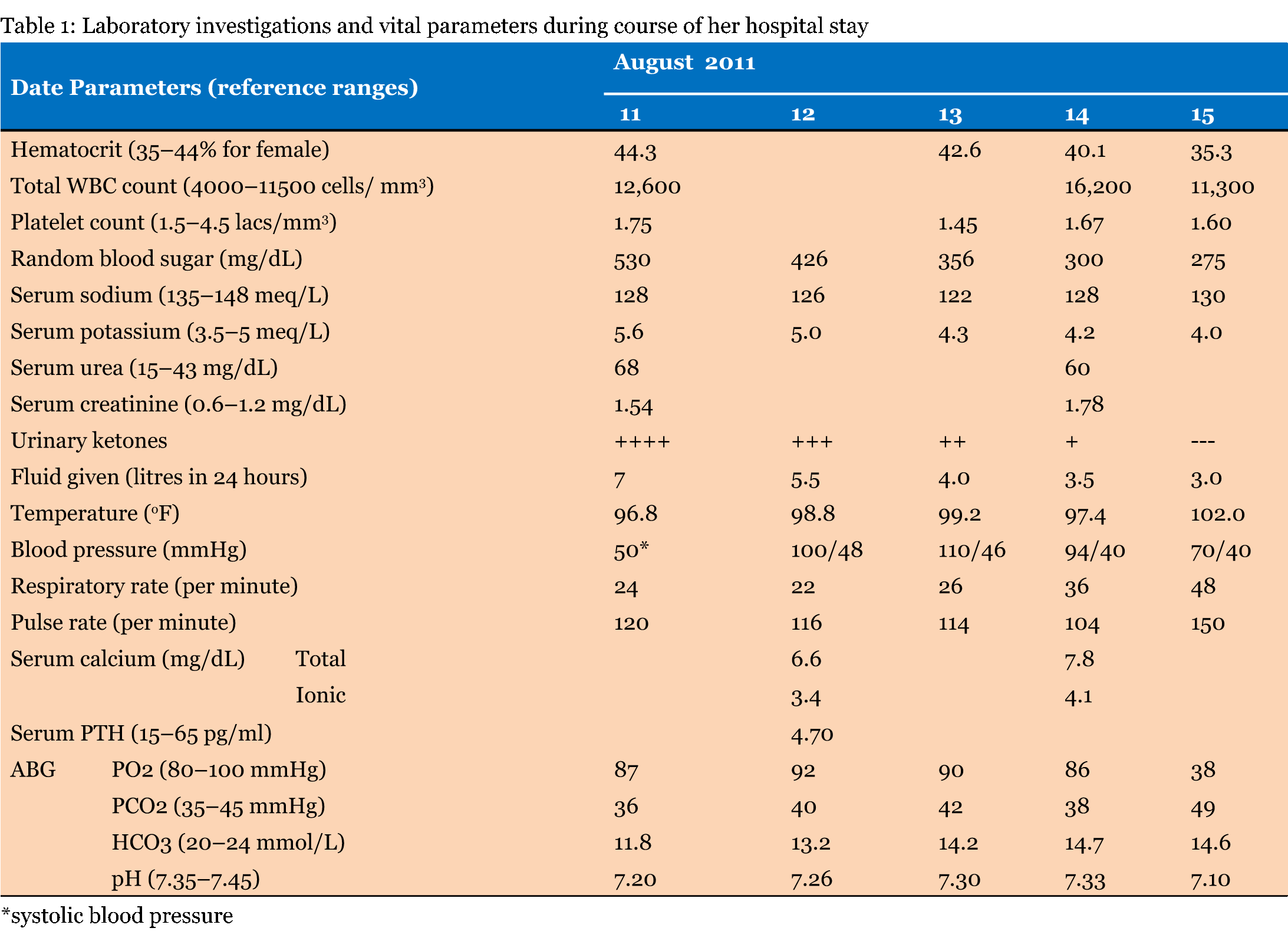
A 35-year-old female presented at emergency with a 15-day history of malaise, tiredness and feeling faint. She had also noticed increased thirst, drinking more than 3L/day, urinary frequency, leg cramps and reduced exercise tolerance. For the preceding week, she had been troubled by nausea and vomiting to the extent that she was unable to eat but had been able to drink. The day prior to admission, she had developed abdominal pain. She was a non-smoker and non-drinker housewife. On examination, she was a bit obese, dehydrated and anxious. Her temperature was 96.8oF, pulse 120/minute and blood pressure 50 mmHg systolic. Cardiovascular and respiratory examination were normal and her abdomen was soft but tender to light palpation with normal bowel sounds and no rebound or guarding. A capillary blood glucose was >500 mg/dL. Arterial blood gases were normal (pH 7.20, pCO2 36 mmHg, pO287 mmHg, BE -2.6 mmol/L, HCO3 -11.8). Urine dipstick was positive for ketones (+++) and glucose (+++). After the initial assessment the impression was that the patient was newly diagnosed diabetes and had developed diabetic ketoacidosis (DKA), she was dehydrated and her abdominal symptoms may have been related to her diabetes but a polyendocrine syndrome should be considered. She was treated with standard protocol for DKA (Normal saline and Regular Insulin drip) and broad spectrum antibiotics (ceftriaxone and metronidazole). Routine investigations (glucose, urea, creatinine, electrolytes, calcium and liver function), and serum amylase were carried out (Table 1). The patient was reviewed four hours later. At this time despite her glucose normalizing and fluid resuscitation having occurred her pulse had increased and her blood pressure had not improved (Table 1). She looked worse and did not feel any better despite appropriate treatment. Base line serum cortisol and thyroid function tests, and a short Synacthen test were carried out then hydrocortisone 100 mg was started immediately. Her pulse became palpable and blood pressure gets improved. Thyroid stimulating hormone (TSH) 8.34 uIU/mL (normal range 0.4–5.0), antithyroid peroxidase 5077.1 IU/mL (normal range 60), free thyroxine 0.8 ng/dL (normal range 0.7–2.0 mg/dL), the patient had been taking levothyroxine 100 µg/day for the past 4 years, and we made her continue that as such. During second day of hospital stay patient suddenly developed tetany and immediate serum calcium and PTH samples was withdrawn and patient put on intravenous calcium infusion (37.5 mg elemental calcium per hour in 5% dextrose). Patient tetany improved after two hours of calcium infusion. Subsequent result revealed low serum calcium (total-6.6 mg/dL and ionic 3.4 mg/dL) and PTH level was 4.67 pg/mL (normal range 8–51 pg/mL) and her protein and albumin were 6.6 g/dL (normal range 6.7–8.8 g/dL) and 3.8 g/dL (normal range 3.5–5.5g/dL) respectively, while serum magnesium was 2.1 mg/dL. General condition of the patient was improving till day 4. On day 5, the patient developed severe breathlessness, restlessness, along with right sided pleuritic chest pain, and found to have developed type 1 respiratory failure then she was immediately intubated and puts on mechanical ventilator but patient expired on day 5 of admission due to cardiorespiratory arrest. | ||||||
| ||||||
|
Discussion
| ||||||
|
Autoimmune hypoparathyroidism is present in 80–85% of patients with autoimmune polyendocrine syndrome type I and in up to 5% of patients with autoimmune polyendocrine syndrome type II. The autoantigens were unknown until the extracellular domain of the calcium-sensing receptor was identified as a potential target. Thus, it has been found that calcium-sensing receptor autoantibodies are relevant markers of autoimmune hypoparathyroidism [2] . Patient's relatives of PGA II found to have increasing tendency towards other autoimmune condition [1]. Human leukocyte antigens (HLA) region II (i.e., major histocompatibility complex) is most commonly associated with PGA II and that too mainly with HLA haplotypes DR3 (DQB*0201) and DR4 (DQB1*0302) regions [3]. Various types of organ specific antibodies can be found in patients with PGA II these are 21 hydroxylase autoantibodies (21OHAb) directed against adrenal cortex, thyroperoxidase (TPOAb), thyroglobulin (TGAb) and TSH receptor autoantibodies (TRAb) directed against thyroid; insulin (IAA), and glutamic acid decarboxylase autoantibodies (GADAb) directed against the endocrine pancreas [4]. Our patient was a previously known case of hypothyroidism admitted with symptoms of DKA and undiagnosed T1DM which get unveiled here. She was treated appropriately for DKA but in the mean time she was also found to have hypotension that was not responding to intravenous fluid which was initially suspected to be due to hypocortisolemia. Later on investigations as well as response of blood pressure to hydrocortisone confirmed the Addison's disease. When considering a diagnosis of Addison's disease in the acute situation it is useful to remember that a short Synacthen test can be done at any time of day and that a 30-minute cortisol level has diagnostic significance. Measuring the ACTH before giving the Synacthen and any steroids also confirmed primary adrenal failure. Although a rare situation, Addison's disease does co-present with diabetes and fortunately in this situation the lack of response to appropriate treatment triggered the review of the patient and the diagnosis was established. When further investigating this group of patients, it is important to remember that glucocorticoid deficiency through feedback mechanisms causes an increase in TSH so minor elevations in TSH may not be due to hypothyroidism and should be monitored for improvement with treatment of the Addison's disease. Although uncommon, this case provides a useful reminder of the clustering of endocrinopathies that can occur and that it is important to screen for them on presentation and at follow-up. Polyglandular autoimmune can present with varied forms general rule is to give cortisol replacement first then thyroxine and others. If patient of PGA syndrome presents with primary hypogonadism, appropriate hormone replacement therapy should be given in the form of testosterone or HRT. If patient presents with celiac disease, gluten free diet is advisable. | ||||||
|
Conclusion
| ||||||
|
This case highlights the importance that, if a patient fails to respond to appropriate treatment for their uncontrolled T1DM or its acute complications, other possible endocrine abnormalities should also be considered besides known factor such as sepsis. | ||||||
|
Acknowledgements
| ||||||
|
We owe thanks to patient and her relatives for having patience and their contribution to this undertaking. | ||||||
|
References
| ||||||
| ||||||

|
[HTML Abstract]
[PDF Full Text]
|
|
Author Contributions
Manish Gutch – Substantial contributions to conception and design, Acquisition of data, Analysis and interpretation of data, Drafting the article, Revising it critically for important intellectual content, Final approval of the version to be published Sukriti Kumar – Substantial contributions to conception and design, Acquisition of data, Analysis and interpretation of data, Drafting the article, Revising it critically for important intellectual content, Final approval of the version to be published Syed Mohd Razi – Substantial contributions to conception and design, Acquisition of data, Analysis and interpretation of data, Drafting the article, Revising it critically for important intellectual content, Final approval of the version to be published Sanjay Saran – Substantial contributions to conception and design, Acquisition of data, Analysis and interpretation of data, Drafting the article, Revising it critically for important intellectual content, Final approval of the version to be published Keshav Kumar Gupta – Substantial contributions to conception and design, Acquisition of data, Analysis and interpretation of data, Drafting the article, Revising it critically for important intellectual content, Final approval of the version to be published |
|
Guarantor of submission
The corresponding author is the guarantor of submission. |
|
Source of support
None |
|
Conflict of interest
Authors declare no conflict of interest. |
|
Copyright
© 2014 Manish Gutch et al. This article is distributed under the terms of Creative Commons Attribution License which permits unrestricted use, distribution and reproduction in any medium provided the original author(s) and original publisher are properly credited. Please see the copyright policy on the journal website for more information. |
|
|