
  |

|
 |
|
Case Report
| ||||||
| Gastric malignancy presenting as adrenal insufficiency: A case report | ||||||
| Harsh Vardhan Tevethia1, Baskaran S2, Tony Mathew Kadavanu1, Riyaz M Panchbhaya3, Sunny DAN1, Siva PK3 | ||||||
|
1M.B.B.S, Resident, Department of Internal Medicine, Mahatma Gandhi Medical College and Research Institute, Puducherry, Puducherry, India.
2M.B, D.N.B, Consultant physician, Department of Internal Medicine, Mahatma Gandhi Medical College and Research Institute, Puducherry, Puducherry, India. 3M.B, M.D, Assistant Professor, Department of Internal Medicine, Mahatma Gandhi Medical College and Research Institute, Puducherry, Puducherry, India. | ||||||
| ||||||
|
[HTML Abstract]
[PDF Full Text]
[Print This Article]
[Similar article in Pumed] [Similar article in Google Scholar] 
|


| How to cite this article: |
| Tevethia HV, Baskaran S, Kadavanu TM, Panchbhaya RM, Dan S, Siva PK. IGastric malignancy presenting as adrenal insufficiency: A case report. International Journal of Case Reports and Images 2013;4(12):705–708. |
|
Abstract
|
|
Introduction:
Carcinomas in the lung, breast, and lymphomas are known to metastasize to the adrenal gland. However, these metastases initially do not present with signs and symptoms of adrenal insufficiency leading to a decreased chance of adrenal insufficiency being diagnosed. We report a case of adrenal insufficiency due to bilateral adrenal metastases as the presenting manifestation of gastric carcinoma.
Case Report: A 72-year-old male was admitted to our hospital due to altered mental status, weakness, anorexia, hematemesis and urinary incontinence for three days. Hyponatremia, hyperkalemia, anemia, and mild metabolic acidosis were detected. A diagnosis of gastric carcinoma along with bilateral metastases of the adrenal glands was made after biopsy computed tomography and positron emission tomography scans. Initiation of mineralocorticoid replacement therapy, improved the condition of patient. Conclusion: There are only a few reports of adrenal insufficiency or true Addisonian crisis being the presenting manifestation of underlying malignant tumors of the lung, colon, or lymphomas. One should also consider the possibility of malignancy as a differential in such cases. | |
|
Keywords:
Adrenal insufficiency, Gastric malignancy, Hyponatremia, Addison’s disease
| |
|
Introduction
| ||||||
|
Carcinomas in the lung, breast, and lymphomas are known to metastasize to the adrenal gland. [1] However, in most cases they do not attain clinical significance since these are diagnosed at autopsy. We report a case of adrenal insufficiency due to bilateral adrenal metastases as the presenting manifestation of gastric carcinoma. | ||||||
|
Case Report
| ||||||
|
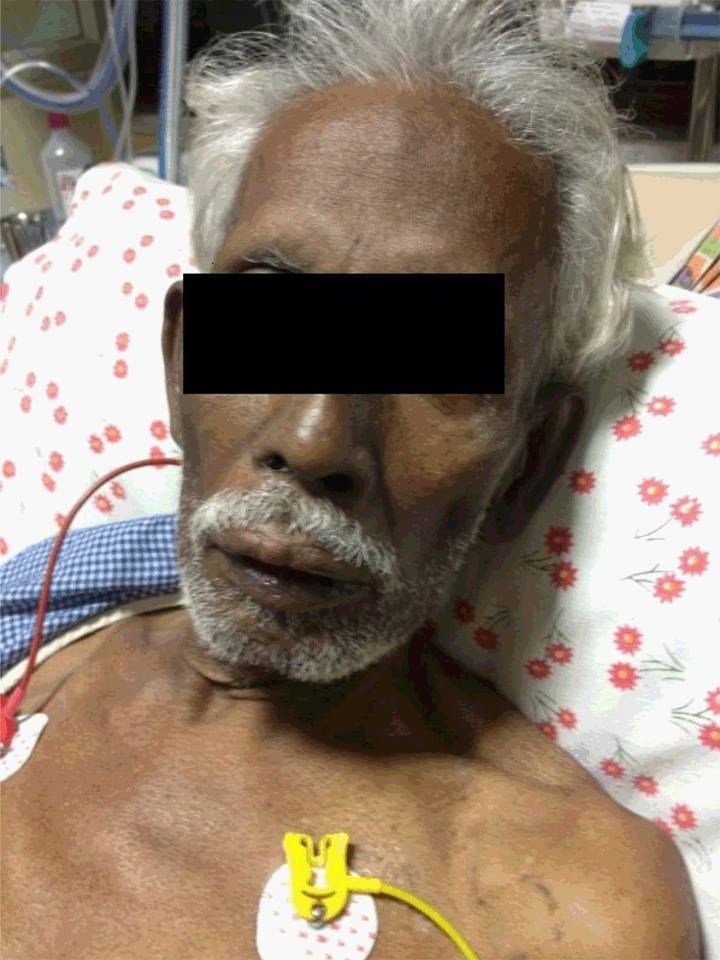
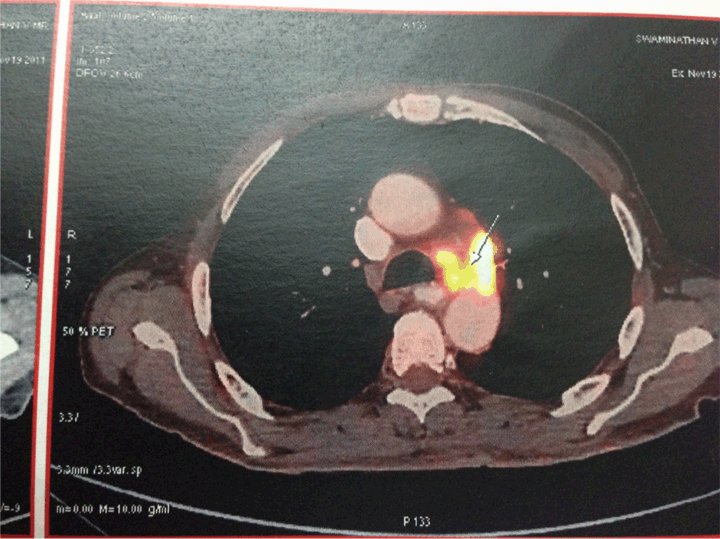
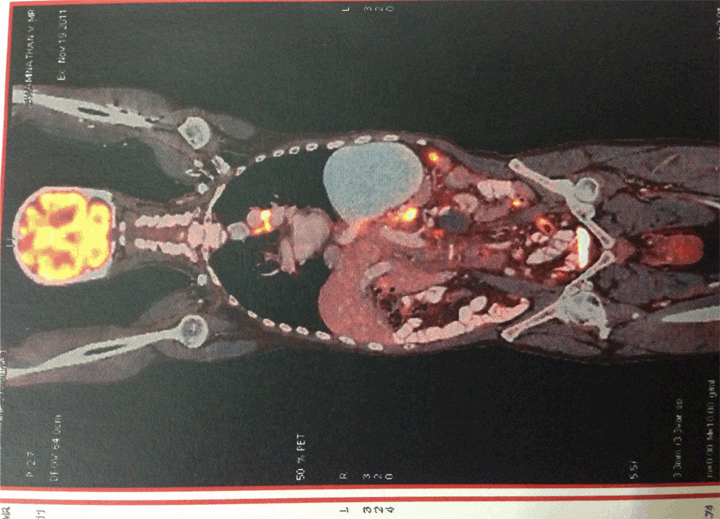
A 72-year old male, without any known comorbidities, was admitted to our hospital due to altered mental status, weakness, anorexia, hematemesis and urinary incontinence for three days. He complained of abdominal distension and dyspepsia for the last two years. There was a loss of appetite and weight of about 10 kg. At the time of admission to hospital, physical examination revealed blood pressure 110/80 mmHg, tachycardia 120 bpm with no other specific systemic finding. The patient was severely dehydrated, presented with decreased reflexes and his skin showed hyperpigmentation. (Figure 1) Laboratory tests demonstrated hyponatremia (serum sodium 125 mEq/L), hyperkalemia (serum potassium 5.6 mEq/L), anemia (Hb 7.3 g/dL) and mild metabolic acidosis (pH 7.25). The electrocardiogram showed normal QRS complexes. There was a mild rise in serum urea 47 mg/dL and normal serum creatinine levels 0.8 mg/dL. After ruling out tuberculosis and drug induced adrenalitis, computed tomography (CT) scan of chest and abdominal was done. Gastric carcinoma with perigastric, periceliac and para aortic lymphadenopathy along with bilateral metastases of the adrenal glands was found. (Figure 2) We performed a whole body positron emission tomography (PET) scan which further validated the CT findings. (Figure 3) The biopsy showed a moderate to poorly differentiating adenocarcinoma in the gastric antrum. Based on the patient’s clinical status and the laboratory test results, in addition to the magnitude of the adrenal masses, we decided to perform a high dose cosyntropin stimulation test. The serum cortisol level was 420 nmol/L before the intramuscular administration of cosyntropin (250 µg), and 61,438 nmol/L 60 minutes after the administration. These results combined with the elevated levels of adrenocorticotropic hormones (ACTH) 165.7 pg/mL before the administration, and the diagnosis of adrenal insufficiency had been established. After fluid substitution, administration of glucose/insulin, calcium gluconate, sodium bicarbonate, salbutamol, furosemide, cation exchange resin, and initiation of replacement therapy with glucocorticoids and fludrocortisone, the patient improved within a few days. Sodium and pH levels normalized after two days. The patient returned to normal life activity under methylprednisolone administration and was able to undergo chemotherapy for his primary disease. | ||||||
| ||||||
| ||||||
| ||||||
|
Discussion
| ||||||
|
Addison’s disease refers to partial or complete adrenal insufficiency. According to recent series, its prevalence is estimated at 93 to 117 per million. [2] [3] [4] When this ‘disease of the suprarenal capsules’ was originally described by Thomas Addison, tuberculosis was the main cause of adrenal insufficiency. Today, autoimmune adrenalitis is responsible for Addison’s disease in 69–93% of the cases, while the rest are caused by tuberculosis, drugs, infections, adrenal hemorrhage, infarction, or thrombosis. [5] [6] [7] [8] Metastatic infiltration of the adrenal glands is a common finding in malignant tumors, especially in adenocarcinomas. The most common primary tumors sites are breast, lung, esophagus, kidney, colon, rectum, liver and bile ducts. They are also observed in lymphomas and melanomas. [9] [10] In this patient, the primary lesion was in the gastric antrum. Unfortunately, adrenal insufficiency is characterized by nonspecific clinical features. Usually, patients complain of vague constitutional symptoms such as generalized weakness, fatigue, malaise, and weight loss. Many patients may present with hypotension, dehydration, postural hypotension and in case of adrenal crisis, syncope, or shock. Hyperpigmentation is evident in nearly all patients, especially over the extensor surfaces of the body and the mucosa. Laboratory tests often reveal hyponatremia, hyperkalemia, mild metabolic acidosis, hypoglycemia, anemia, and lymphocytosis. In most of these cases, the metastases are unilateral without clinical significance. In this patient, bilateral adrenal metastases were present at the time of the initial diagnosis, being responsible for clinical evident adrenal insufficiency. There are only a few reports of adrenal insufficiency or true Addisonian crisis being the presenting manifestation of underlying malignant tumors of the lung, colon, or lymphomas. [11] One also needs to be aware of the possibility of malignancy as a differential in cases presenting as adrenal insufficiency. | ||||||
|
Conclusion
| ||||||
|
There are only few reports of adrenal insufficiency or true Addisonian crisis being the presenting manifestation of underlying malignant tumors of the lung, colon, or lymphomas. One should also consider the possibility of malignancy as a differential in such cases. | ||||||
|
References
| ||||||
| ||||||

|
[HTML Abstract]
[PDF Full Text]
|
|
Author Contributions
Harsh Vardhan Tevethia – Acquisition of data, Critical revision of the article, Final approval of the version to be published Bhaskaran S – Conception and design, Critical revision of the article, Final approval of the version to be published Kadavanu Tony Mathew – Conception and design, Acquisition of data, Drafting the article, Critical revision of the article, Final approval of the version to be published Panchbhaya Riyaz – Analysis and interpretation of data, Drafting the article, Final approval of the version to be published Sunny DAN – Conception and design, Drafting the article, Critical revision of the article, Final approval of the version to be published SIva P K – Conception and design, Critical revision of the article, Final approval of the version to be published |
|
Guarantor of submission
The corresponding author is the guarantor of submission. |
|
Source of support
None |
|
Conflict of interest
Authors declare no conflict of interest. |
|
Copyright
© Harsh Vardhan Tevethia et al. 2013; This article is distributed the terms of Creative Commons Attribution License which permits unrestricted use, distribution and reproduction in any means provided the original authors and original publisher are properly credited. (Please see Copyright Policy for more information.) |
|
|