| |
|
|
|
Review Article
| ||||||
| Effect of Crocus sativus and its active compounds for the treatment of several diseases: A review | ||||||
| Rafie Hamidpour1, Soheila Hamidpour2, Mohsen Hamidpour3, Mina Shahlari4 | ||||||
|
1PhD, President, Pars Bioscience, Leawood, Kansas, United States.
2MD, Pars Bioscience, Leawood, Kansas, United States. 3PhD, Pars Bioscience, Leawood, Kansas, United States. 3BA, Pars Bioscience, Leawood, Kansas, United States. | ||||||
| ||||||
|
[HTML Abstract]
[PDF Full Text]
[Print This Article]
[Similar article in Pumed] [Similar article in Google Scholar] 
|
| How to cite this article: |
| Hamidpour R, Hamidpour S, Hamidpour M, Shahlari M. Effect of Crocus sativus and its active compounds for the treatment of several diseases: A review. International Journal of Case Reports and Images 2013;4(12):666–670. |
|
Abstract
|
|
The purpose of this article is to use literature search engines such as PubMed and SciFinder to locate scholarly journal articles pertaining saffron, its preparation, analysis, and its use in cancer treatments. Saffron comes from the dried red stigmas of the Crocus sativus L. flower. Along with its use in cooking and in traditional medicine, it has numerous applications as an antitoxic, anti-oxidant, and anti-cancer agent, due to its secondary metabolites and their derivatives are safranal, crocins, crocetin and dymethyl-crocetin. This study demonstrate that Crocus sativus extract (CSE) and its major constituents, crocin, and crocetin, significantly inhibited the growth of certain cancer cells while not effecting normal cells. Crocus sativus L. extract should be investigated further as a viable agent in the treatment of prostate, pancreatic or other types of cancer.
| |
|
Keywords
Crocus sativus L., Tumor inhibitor, Saffron components, Nutritional supplements
| |
|
Introduction
| ||||||
|
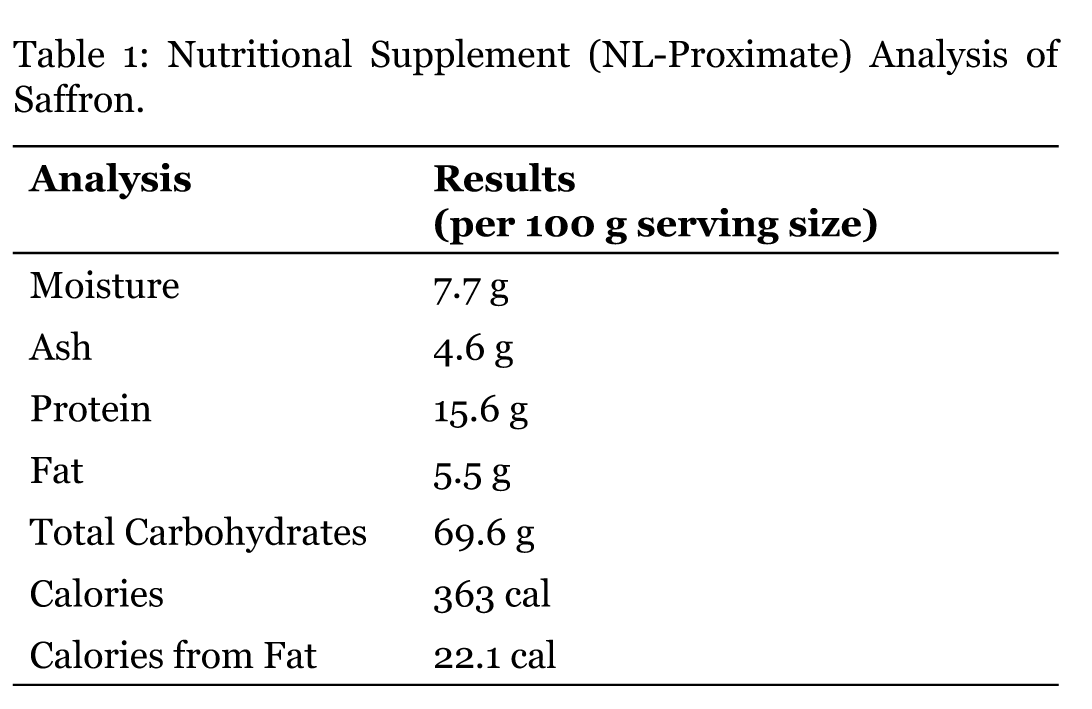
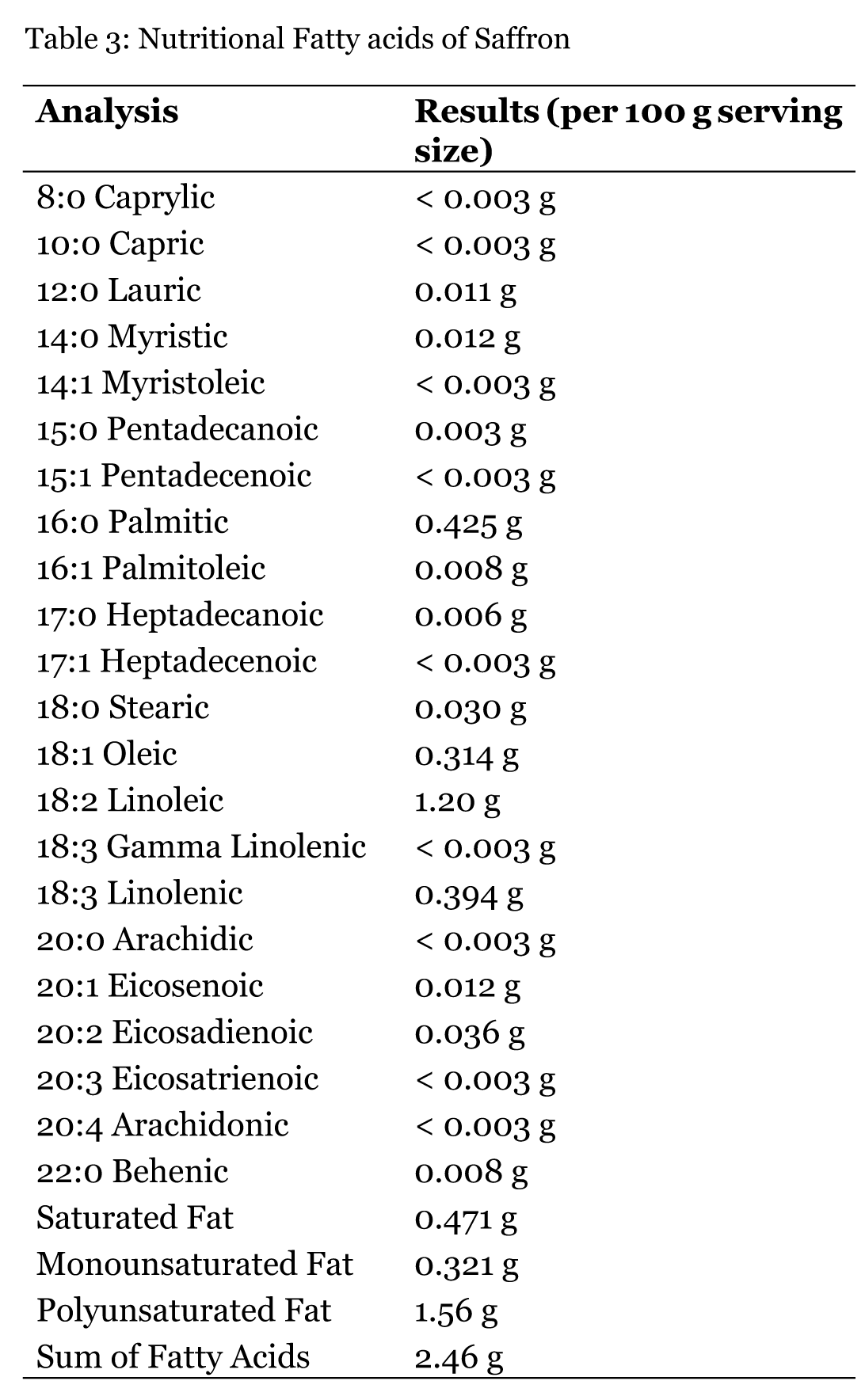
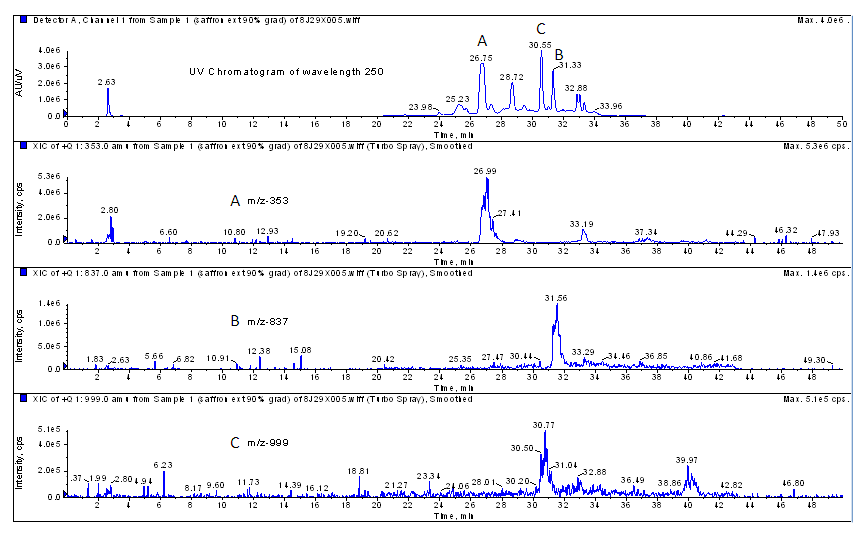
Saffron is one of the most expensive spices in the world, derived from the dry stigmata of Crocus sativus L. —a member of the Iridaceae (Iris) family. Saffron is hand-harvested during the flowering season. This process is very time consuming which involves picking the stigmata by hand and then carefully drying the stigmata to produce a quality product. One stigma of saffron weighs about 2 mg and each flower has three stigmata. In order to obtain 1 kg of spice 150,000 flowers must be picked. [1] Saffron (Crocus sativus L. ) is mostly cultivated in Spain, Iran, India, Greece, China and some other European and Asian countries. The quality and chemical composition of saffron are affected by the region in which saffron is grown, the drying process, the conditions of packaging, storage of saffron and the analytical extraction methods which have been used. [1] [2] The nutritional supplement value of saffron (Crocus sativus L.) which was provided by pars bioscience LLC in powder form, to Covance, Madison. WI laboratory was analyzed and shown to include the following contents: NL-Proximate (moisture, ash, protein, fat, total carbohydrates, calories, and calories from fat), results of these analyzes are given in Table 1 . Vitamins (vitamin A, vitamin C, and folic acid), and minerals (calcium, copper, iron, magnesium, manganese, phosphorus, potassium, sodium, and zinc) are detailed in Table 2. The results of analysis of saffron fatty acid profile are given in Table 3. The analysis of the saffron was conducted by grinding and extracting saffron, and analyzing the extract using HPLC/UV-MS analysis to identify the major components of saffron Figure 1. To date, the following components have been identified in saffron: safranal which is the principal substance responsible for the aroma of saffron, dimethyl-crocetin, crocetin esters (cis-crocetin and trans-crocetin), picrocrocin is the substance responsible for bitter taste of saffron, [1] crocin which are the major components responsible for the color of saffron, trans-crocin-2, trans-crocin-2’, trans-crocin-3, trans crocin-4, cis-crocin-1, cis-crocin-2, cis-crocin-3, cis-crocin-4, cis-crocin-5, anthocyanin, carotene, and lycopene. [1] [2] [3] [4][5] [6] [7] [8] [9] [10] The main uses of saffron are in cooking, food coloring, in perfume and cosmetics. [1] [11] Saffron has also traditionally been regarded as a highly valued medicinal plant to treat wide variety of ailments such as depression, respiratory problems, colds, asthma and heart diseases. [12] More recently, as the current culture has been changing, more researches have been done analyzing the effects of traditional herbs and spices as treatment for the severe diseases. [11] Several studies have been performed on the use of saffron or its constituents in the treatment of a variety of cancers including colorectal cancer cells (HCT-116, SW-480, and HT-29), [4] breast cancer cells (MCF-7 and MDA-MB-231), [7] non-small cell lung cancer (NSCLC) cells, [4] lung adenocarcinoma cells (A549), lung fibroblasts cells (WI-38), VA-13 cells (WI-38 cells transformed in vitro by SV40 tumor virus), [12] [13] [14] lung cancer-bearing mice, [15] skin carcinogenesis in mice, [16] [17] leukemia cells (HL-60), [4] [9] osteosarcoma, [4] [12] fibrosarcoma, [4] [12] ovarian carcinoma, [4] [12] and cervical epithelioid carcinoma cells (HeLa). [12] [14] [18] Saffron significantly inhibited the growth of colorectal cancer cells while not affecting normal cells. [4] Saffron showed a dose-dependent inhibitory response on breast cancer cells. [7] Crocetin inhibited the three malignant human cell lines (HeLa, A549, and VA13). [14] Overall, saffron inhibits tumor growth in vivo and in vitro and could be used for the treatment of cancer, either alone or in combination with other treatments. [10] [19] | ||||||
| ||||||
| ||||||
| ||||||
|
| ||||||
| ||||||
|
Discussion
| ||||||
|
Saffron is a very valuable spice with many traditional medicinal usages. The high amount of carotenoids in saffron including crocin, crocetin and dimethyl-crocetin are responsible for some biological functions of saffron. Most of the studies on the effect of saffron, indicates the significant inhibitory effects of the Crocus sativus components on the synthesis of nucleic acids in different human cancer cell lines. [24] As the studies have shown, diets rich in antioxidants will lower the risk of several chronic diseases and protect the body against the development and growth of tumor cells. Therefore, saffron and its constituents with their antioxidant properties can act as a protecting agent for the prevention of some serious diseases like cancer. [25] Crocus sativus L. extract used in several studies were prepared from stigmas of Crocus sativus. It contains several pharmacologically active constituents. Saffron has antioxidant properties; these have been showed in humans, where saffron (50 mg, twice a day) decreases the lipoprotein oxidation susceptibility. [20] Also crude methanol extract of saffron and its compound crocin have been exhibited high antioxidant and scavenging properties. [21] The oral administration of the saffron ethanolic extract (200 mg/kg body wt) increased the life span of Swiss albino mice intraperitoneally transplanted with sarcoma-180 (S-180) cells, Ehrlich ascites carcinoma (EAC) or Dalton’s lymphoma ascites (DLA) tumors, [22] and it has an inhibitory effect on chemical carcinogenesis in mice using two stage assay system. [16] Crocetin protects body against free radicals and the studies have shown its role as an antitumor agent [15] The effect of crocetin on two different types of animal tumors, skin papillomas and Rous sarcoma have been studied and shown that crocetin decreased the number of tumor cells and delayed the onset of the tumors as well. [23] A recent study showed that crocetin (20 mg/ kg) reverted the level of lipid peroxidation induced by Benzo (a) pyrene(B(a)P), also increased the activities of the enzymic antioxidants and glutathione metabolizing enzymes. Showing that crocetin is a scavenger of free radicals and a potent antitumor agent. [15] Crocin inhibits the growth of HeLa cells and suggested apoptosis induction and showed important inhibitory effects on skin-tumor initiation and promotion induced by 7, 12-dimethylbenz[a]anthracene (DMBA) and 12-0-tetradecanoylphorbol-13-acetate (TPA), respectively. [18] Many studies during the last decade, demonstrated the inhibitory effect of saffron and its components in vitro, on several cancer types such as carcinoma, leukemia, prostate, pancreatic, and several other tumor cells. [26] SAFETY: The toxicity of saffron has been studied by many researchers and the levels of toxicity found to be very low. The studies showed that the concentration of 0 to 5 g/kg was non-toxic to mice. [7] Also hematological and biochemical studies on the toxicity of saffron extract indicates that there are no severe toxicological sign found in kidney, liver or bladder within the normal range of use. [22] | ||||||
|
Conclusion
| ||||||
|
In summary, our study suggests that crocin and crocetin found in Crocus sativus L. may be efficacious in treating several or certain type of cancer. Considering the popularity of locally used chemical drugs in cancer patients, Crocus sativus L. should be investigated further as a natural viable option in the treatment of prostate, pancreatic, or other types of cancer. | ||||||
|
References
| ||||||
| ||||||
|
[HTML Abstract]
[PDF Full Text]
|
|
Author Contributions
Rafie Hamidpour – Conception and design, Analysis and interpretation of data, Critical revision of the article, Final approval of the version to be published Soheila Hamidpour – Analysis and interpretation of data, Critical revision of the article, Final approval of the version to be published Mohsen Hamidpour – Analysis and interpretation of data, Critical revision of the article, Final approval of the version to be published Mina Shahlari – Conception and design, Critical revision of the article, Final approval of the version to be published |
|
Guarantor of submission
The corresponding author is the guarantor of submission. |
|
Source of support
None |
|
Conflict of interest
Authors declare no conflict of interest. |
|
Copyright
© Rafie Hamidpour et al. 2013; This article is distributed the terms of Creative Commons Attribution License which permits unrestricted use, distribution and reproduction in any means provided the original authors and original publisher are properly credited. (Please see Copyright Policy for more information.) |
|
|