|
|
|
|
Case Report
| ||||||
| Postherpetic spinal segmental paralysis | ||||||
| Lee Hui Jean1, Pranav Kumar2 | ||||||
|
1Medical Registrar, Redcliffe Hospital
2Staff Specialist, Mackay Base Hospital | ||||||
| ||||||
|
[HTML Abstract]
[PDF Full Text]
[Print This Article] [Similar article in Pumed] [Similar article in Google Scholar] 
|
| How to cite this article |
| Jean LH, Kumar P. Postherpetic spinal segmental paralysis. Int J Case Rep Images 2017;8(8):538–540. |
|
ABSTRACT
| ||||||
|
Introduction: Herpes zoster is a common viral infection, which is frequently seen in elderly or immunocompromised patients. It usually presented with painful neuropathy. However, it can rarely manifest as motor weakness. An 82-year-old male presented with L2–L4 myotomal weakness two-week post shingles. Diagnosis was made based on only history taking and physical examination. Other possible differential diagnoses were rule out through imaging and blood tests at that time. The patient made good recovery through analgesia and physiotherapy. Postherpetic spinal segmental paralysis is a rare complication arising from shingles. There was no consensus on diagnostic criteria and the underlying pathophysiology is still poorly understood. The main treatment modality of this condition is intensive physiotherapy and pain management. Keywords: Herpes zoster, Myotome, Postherpetic spinal segmental paralysis | ||||||
|
INTRODUCTION
| ||||||
|
Herpes zoster is a common viral infection and occurs in the sensory ganglia due to varicella zoster virus. It usually manifests with radicular pain and vesicular cutaneous eruptions along a single dermatome. It is a disease of sensory ganglia but motor involvement is rare and transient paresis can develop. Herpes zoster is frequently seen in elderly patients or those with compromised immune systems. Despite the advent of the zoster vaccine, an estimated 50% of those living to the age of 85 years will experience an episode of the disease [1]. This occurs in 3–5% of cases [1][2][3] . | ||||||
|
CASE REPORT
| ||||||
|
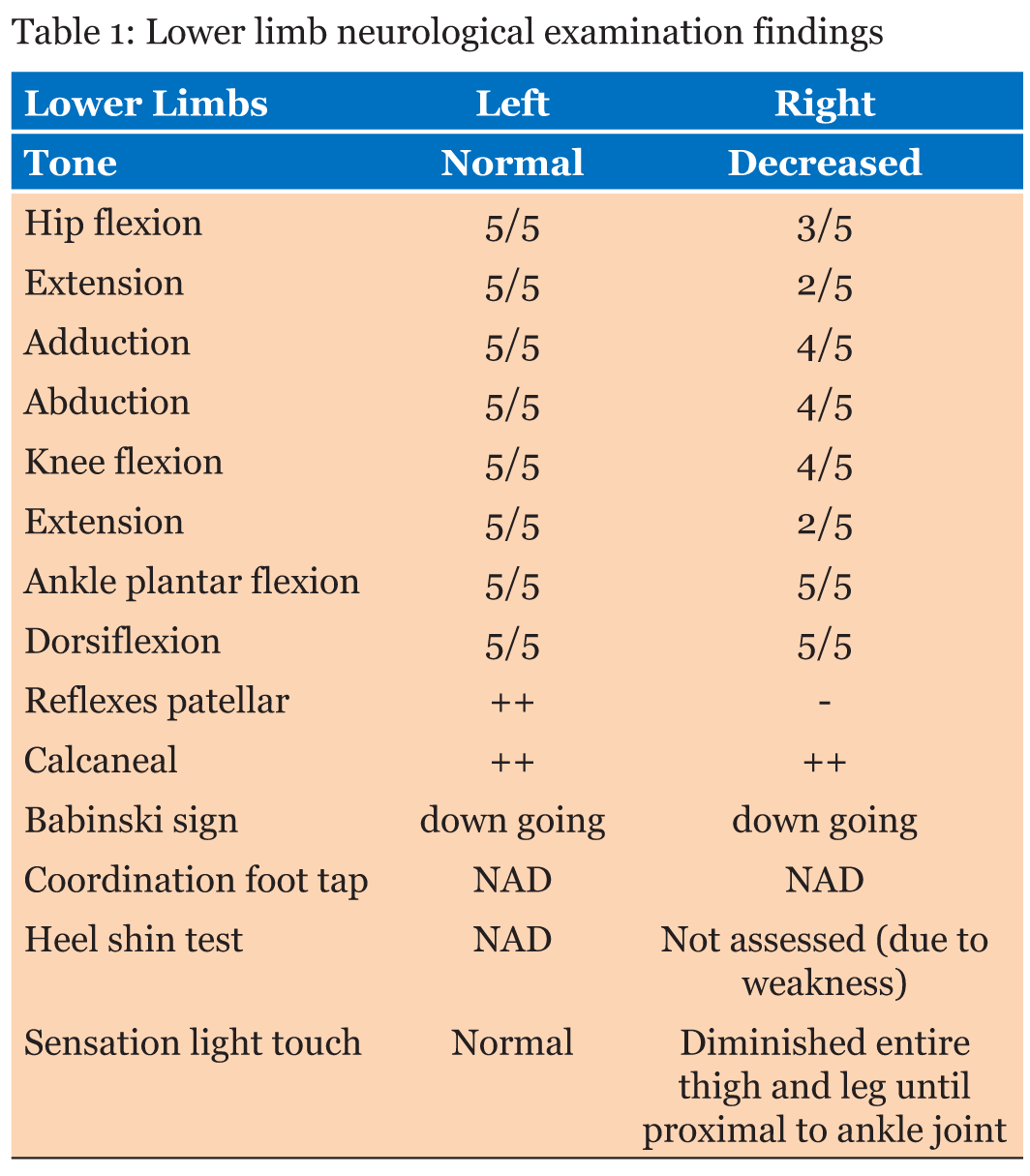
An 82-year-old male presented to a regional hospital with right leg numbness and weakness resulting recurrent mechanical falls. Two weeks ago, he was diagnosed with shingles by his general practitioner, involving L2 to L4 dermatome of his right lower limb. His significant past medical history includes non-metastatic prostate adenocarcinoma under remission, of which radiotherapy treatment was completed one year ago. He was not on any chemotherapy or immunosuppressive medications. On systemic review, there were no sign and symptom suggestive of spinal cord compression, abscess or stroke. The patient was active with no physical limitation prior to hospitalization. Physical examination revealed crusting vesicles over the left lower back, left posterior and anteromedial thigh in L2 to 4 dermatomal distribution. He had normal vitals and afebrile. Lower limb neurological examination findings are given in Table 1. Plain films and MRI scans did not report any evidence of transverse myelitis, spinal or nerve root compression. Bloods test was unremarkable, white cell count was normal and no further inflammatory marker was ordered at that time. The patient was started on pregabalin and amitriptyline for neuropathic pain management, and was referred to rehabilitation program. Two weeks later, the patient mobility had significantly improved and he was discharged home with community follow-up. | ||||||
| ||||||
|
DISCUSSION
| ||||||
|
Herpes zoster is a neurocutaneous condition caused by the reactivation of the varicella zoster virus. This commonly presents in people over 60 years of age as neuropathic pain follow by blister formation, which follows a dermatomal pattern. Postherpetic neuralgia is the most common chronic condition arising from shingles, which may last from weeks to months after the blisters have healed. Herpes zoster ophthalmicus, bacterial super infection of the lesions, and cranial nerve or peripheral nerve palsies are less common sequela that could present post infection. Postherpetic motor neuropathy is a rare complication of shingles which predominantly affects the facial nerves, followed by upper limbs, then lower limbs in incidence. As of the patient presentation, he elicited myotomal weakness of his right lower limb. This pattern of presentation therefore termed postherpetic spinal segmental paralysis, which is the subgroup of postherpetic motor neuropathy. In a case series of herpes zoster infection, Cohen reported only 0.8% of the patients had lower motor neuron paralysis [4]. Latency period of limb paralysis post initial onset of vesicular formation can range from one day to four months. The underlying pathophysiology of this condition is still poorly understood. Some literature postulates that the underlying pathophysiology is due to inflammatory demyelinating process and post infectious immune mediated motor root damage [5]. Some described this could due to hypervascularity in the perineural structure or disruption of blood nerve barrier secondary to inflammation [6][7] . There was no consensus on the diagnostic criteria of this condition although multiple case reports in the literature had performed further investigations, such as inflammatory marker, CSF serology, nerve conduction study and electromyogram as part of their diagnostic workup. A Spanish retrospective study had collectively recruited patients who suffered from segmental motor paralysis analyzing the clinical findings, complementary investigations and their functional prognosis. Fifty percent of the patients have positive plasma or CSF varicella zoster serology and neurophysiological study showed denervation of the myotomes involved [8]. As of our case, neurophysiology facilities were unavailable in our hospital. We diagnosed the patient with postherpetic spinal segmental paralysis purely base on history and physical examination. In general, 90% of the cases were just like the patient, who had motor weakness of the affected myotome corresponds to the dermatomal distribution of skin eruption [8]. However, we acknowledge there were existing literature suggest there could be no correlation between involved dermatome and myotome [9]. This might impose diagnostic challenge to the treating clinicians. In our case, the affected myotome was L2 to L4 and associated with patchy sensory loss of which did not follow any dermatomal distribution. However, we acknowledge sensory loss in neurological examination can be highly subjective and easily skewed by his underlying painful neuropathy. To date, there is not enough evidence in the literature suggesting commencement of steroid or antivirals therapy to promote functional recovery for established radiculopathy. Although, there is case series suggested the use of anti-viral could possibly prevent occurrence of paresis [10]. As of our case, the patient showed significant improvement in his mobility after having only intensive rehabilitation activities and pain management. The differential diagnosis of lower limb polyradiculopathy is extensive. A thorough history taking and physical examination is warranted to establish the diagnosis. | ||||||
|
CONCLUSION
| ||||||
|
Postherpetic spinal segmental paralysis is a rare complication of herpes zoster infection. Thorough history taking and physical examination are essential in establishing diagnosis for this rare condition. Clinicians need to be aware not all patients have motor paralysis corresponds to dermatomal distribution of blisters. There is no evidence suggests antiviral therapy or steroid promotes functional recovery for patients who suffered from postherpetic spinal segmental paralysis. | ||||||
|
REFERENCES
| ||||||
| ||||||
|
[HTML Abstract]
[PDF Full Text]
|
|
Author Contributions
Hui Jean Lee – Substantial contributions to conception and design, Acquisition of data, Drafting the article, Revising it critically for important intellectual content, Final approval of the version to be published Pranav Kumar – Substantial contributions to conception and design, Acquisition of data, Drafting the article, revising it critically for important intellectual content, Final approval of the version to be published |
|
Guarantor
The corresponding author is the guarantor of submission. |
|
Source of support
None |
|
Conflict of interest
Authors declare no conflict of interest. |
|
Copyright
© 2017 Hui Jean Lee et al. This article is distributed under the terms of Creative Commons Attribution License which permits unrestricted use, distribution and reproduction in any medium provided the original author(s) and original publisher are properly credited. Please see the copyright policy on the journal website for more information. |
|
|