|
|
|
|
Case Report
| ||||||
| A case of pulmonary artery aneurysm | ||||||
| Aniket S. Rali1, Tyler Buechler2, Steven Whitfield3 | ||||||
|
1Department of Cardiovascular Diseases, University of Kansas Medical Center
2Department of Internal Medicine, University of Kansas Medical Center 3Department of Cardiology, Kansas City Veterans Affairs Medical Center | ||||||
| ||||||
|
[HTML Abstract]
[PDF Full Text]
[Print This Article] [Similar article in Pumed] [Similar article in Google Scholar] 
|
| How to cite this article |
| Rali AS, Buechler T, Whitfield S. A case of pulmonary artery aneurysm. Int J Case Rep Images 2017;8(7):454–457. |
|
ABSTRACT
| ||||||
|
Introduction:
The natural history of pulmonary artery aneurysm (PAA) is poorly understood due to the limited number of cases diagnosed ante-mortem. Aneurysms of the proximal pulmonary artery are found in approximately 1 in 14000 postmortem examinations. The pulmonary artery trunk is considered aneurysmal when the diameter exceeds 4 cm. Keywords: Aneurysms, Pulmonary artery, Pulmonary hypertension | ||||||
|
INTRODUCTION
| ||||||
|
The natural history of pulmonary artery aneurysm (PAA) is poorly understood due to the limited number of cases diagnosed ante-mortem [1]. Aneurysms of the proximal pulmonary artery are found in approximately 1 in 14000 post-mortem examinations [2]. The pulmonary artery trunk is considered aneurysmal when the diameter exceeds 4 cm [3]. They have been associated with structural heart disease, with 50% of the postmortem cases associated with congenital heart defects, as well as, structural vascular defects, vasculitides, pulmonary hypertension, infections, trauma, and a few cases of idiopathic pulmonary artery aneurysms have been reported [3]. Advances in diagnostic imaging have made earlier identification of PAAs easier, and allows for appropriate intervention prior to aneurysmal rupture. Here, we report a case of a patient with multiple co-morbidities and incidental pulmonary artery aneurysm. | ||||||
|
CASE REPORT
| ||||||
|
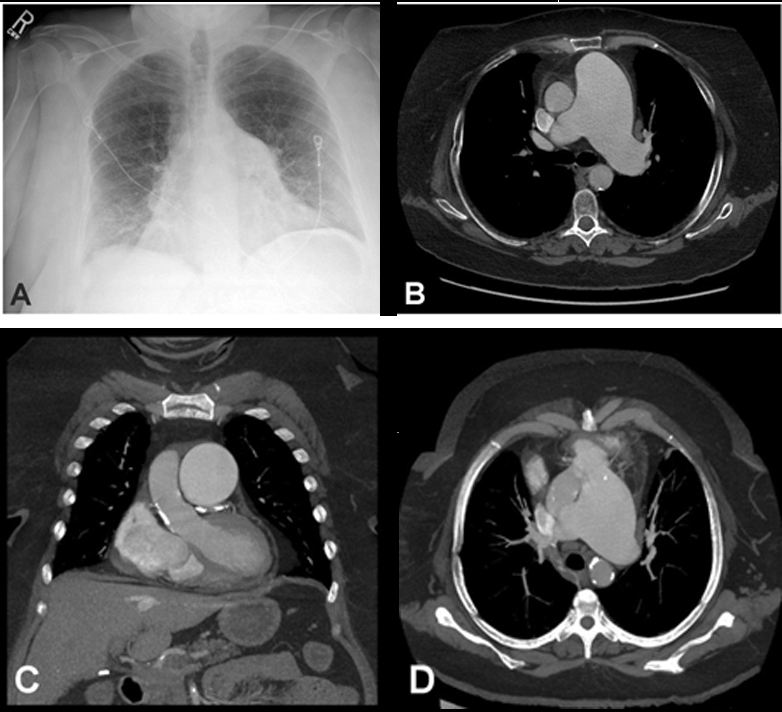
A 62-year-old female with rheumatoid arthritis, moderate COPD (requiring supplemental oxygen), untreated obstructive sleep apnea, moderate pulmonary hypertension (mean pressure of 40 mmHg), 90 pack years smoking history and heart failure with preserved ejection fraction (HFpEF) presented to the hospital with acute on chronic hypoxemic respiratory failure. Chest X-ray was unremarkable except for prominent pulmonary vasculature (Figure 1A). A computed tomography (CT) scan showed no acute pulmonary embolism, pulmonary fibrosis or rheumatoid pleurisy. However, a 6.0-cm dilation of the main pulmonary artery was noted (Figure 1B – D. Right heart catheterization performed two days after the CT scan demonstrated mean right atrial pressure of 10 mmHg, right ventricle pressure of 57/12 mmHg, pulmonary artery pressure of 59/31 with mean pressure of 40 mmHg. The mechanism of patient’s pulmonary artery aneurysm was believed to be multi-factorial including pulmonary hypertension, chronic emphysematous changes, untreated obstructive sleep apnea and heart failure. Due to poor pulmonary reserve, the patient is not considered a good candidate for surgical intervention and conservative management was opted in her case. | ||||||
| ||||||
|
DISCUSSION
| ||||||
|
Pulmonary artery aneurysms are infrequently diagnosed ante-mortem and are a rare entity in general with less than 200 cases reported [4]. Congenital heart diseases are most commonly associated with PAA. Two studies, looking at proximal PAAs at autopsy found the incidence of congenital heart disease to be around 56% [3]. The most common congenital defects include patent ductus arteriosus, ventricular septal defects and atrial septal defects [5]. These entities increase the sheer stress on the pulmonary artery due to left to right shunt, causing weakness in the vascular wall. The remaining causes of PAA include infectious, traumatic, iatrogenic and idiopathic causes. Of the acquired causes, pulmonary hypertension was noted in 66% of patients [3]. It has been proposed that structural changes in elastin and collagen secondary to increased pulmonary artery pressure leads to pulmonary artery dilatation and subsequent aneurysm [5]. We believe this to be the mechanism of PAA in our patient as well. Infectious etiologies have classically been associated with syphilis and tuberculosis [6]. When pulmonary tuberculosis is the cause, patients develop a Rasmussen aneurysm, which is an inflammatory pseudo-aneurysmal dilatation of a pulmonary artery branch adjacent to a tubercular cavity [6]. Iatrogenic causes include Swan-Ganz catheter insertion, chest tube insertion, surgical resection, and catheter based pulmonary angiography [5]. While the natural history of PAA is poorly understood, PAAs represent a life-threatening disease if they progress to rupture or dissection. However, not all aneurysms progress to the rupture stage [5]. The risk of rupture is proportional to the stress placed on the aneurysm which is affected by pressure, wall thickness, and radius of the vessel [3]. In one systemic review, out of 66 case reports on pulmonary artery dissection and rupture, 62% of cases were associated with high pressure [4]. Furthermore, the duration of elevated pulmonary artery pressure is also an important consideration. Aneurysms seen in conjunction with congenital heart defects show the most unexpected deaths and most pulmonary artery dissections [4]. In the absence of elevated pulmonary pressures from pulmonary valve defects, pulmonary hypertensions, or left to right shunt, the risk of aneurysmal rupture appears to be very small [3]. A pulmonary artery diameter greater than 5.5 cm in conjunction with high pulmonary artery pressure was associated with more sudden unexpected death [4]. The systemic review by Duijnhouwer et al., classify high risk aneurysms for rupture or dissection as aneurysms with: diameter >7.5 cm, pulmonary artery pressure of 50 mmHg, and aneurysmal growth rate >2 mm/year [4]. Although our patient did not have any of these high risk features, her on-going contributors of increased stress on the aneurysm, including untreated sleep apnea, COPD and moderate pulmonary hypertension, placed her at an increased risk of PAA rupture or dissection. Optimal treatment for PAAs remains unclear and treatment guidelines have not been established because of low disease incidence. Treatment can be either surgical intervention, management of underlying pulmonary hypertension or conservative management [3]. One study recommended surgical repair if aneurysms were larger than 6.0 cm [3]. Surgical interventions include aneurysmorrhaphy or arterioplasty, pericardial patch reconstruction, and interposition grafting [3]. Improvement in endovascular techniques have allowed for less invasive approaches that produce less damage to the lung parenchyma; recently, steel coil embolization and balloon embolization have been reported [5]. Patients with pulmonary hypertension should be treated appropriately directed at the underlying cause to lower pulmonary artery pressures and subsequently the sheer stress on the pulmonary arterial wall. Given her co-morbidities and poor lung reserve, our patient was not deemed to be a surgical candidate and hence after discussion with the patient and her family, we opted for conservative management. | ||||||
|
CONCLUSION
| ||||||
|
Pulmonary artery aneurysm (PAA) continues to remain a poorly understood disease entity. Treatment options are often limited by late/acute presentations and multiple co-morbidities. However, advances in imaging and higher degree clinical suspicion allow for earlier identification of PAAs and allow for appropriate intervention. We hope that our case report will allow medical providers to be on the look-out for PAAs in patients with above mentioned risk factors. | ||||||
|
REFERENCES
| ||||||
| ||||||
|
[HTML Abstract]
[PDF Full Text]
|
|
Author Contributions
Aniket S. Rali – Substantial contributions to conception and design, Acquisition of data, Analysis and interpretation of data, Drafting the article, Revising it critically for important intellectual content, Final approval of the version to be published Tyler Buechler – Analysis and interpretation of data, Revising it critically for important intellectual content, Final approval of the version to be published Steven Whitfield – Analysis and interpretation of data, Revising it critically for important intellectual content, Final approval of the version to be published |
|
Guarantor
The corresponding author is the guarantor of submission. |
|
Source of support
None |
|
Conflict of interest
Authors declare no conflict of interest. |
|
Copyright
© 2017 Aniket S. Rali et al. This article is distributed under the terms of Creative Commons Attribution License which permits unrestricted use, distribution and reproduction in any medium provided the original author(s) and original publisher are properly credited. Please see the copyright policy on the journal website for more information. |
|
|