

|
 |
|
Case Report
| ||||||
| Alcohol septal ablation through an anomalous dominant septal artery in hypertrophic cardiomyopathy patient: With separate ostium from right coronary sinus | ||||||
| Neelima Katukuri1, Tjuan Overly1, Raj Baljepally1 | ||||||
|
1MD, Division of Cardiology, University of Tennessee, Knoxville, Tennessee, USA
| ||||||
| ||||||
|
[HTML Abstract]
[PDF Full Text]
[Print This Article] [Similar article in Pumed] [Similar article in Google Scholar] 
|


| How to cite this article |
| Katukuri N, Overly T, Baljepally R. Alcohol septal ablation through an anomalous dominant septal artery in hypertrophic cardiomyopathy patient: With separate ostium from right coronary sinus. Int J Case Rep Images 2017;8(7):448–450. |
|
ABSTRACT
| ||||||
|
Introduction:
Hypertrophic cardiomyopathy (HOCM) is a genetic disease characterized by left ventricular hypertrophy that has variable morphologic and hemodynamic manifestations. Alcohol septal ablation (ASA) has emerged as a widely accepted alternative to surgical myomectomy for the management of HOCM. In this percutaneous, procedure, pure ethanol is injected into the septal perforator Septal perforator of left anterior descending that supplies the hypertrophied myocardium, leading to infarction and thinning of the myocardium thinning of the hypertrophied. Keywords: Aberrant septal artery, Alcohol septal ablation, Hypertrophic cardiomyopathy | ||||||
|
INTRODUCTION
| ||||||
|
Hypertrophic cardiomyopathy (HOCM) is a genetic disease characterized by left ventricular hypertrophy that has variable morphologic and hemodynamic manifestations. Alcohol septal ablation (ASA) has emerged as a widely accepted alternative to surgical myomectomy for the management of HCM. The septum is usually supplied by septal arteries arising from the proximal left anterior descending (LAD) and distal right coronary artery (RCA). Septal coronary branches arising from the proximal right coronary artery (RCA) or the right coronary sinus, known as descending septal artery (DSA) or Bonapace’s branch, have rarely been described. However, the DSA plays an important role in certain situations like patients with hypertrophic cardiomyopathy, highlighting the need for its proper identification and evaluation [1][2]. | ||||||
|
CASE REPORT
| ||||||
|
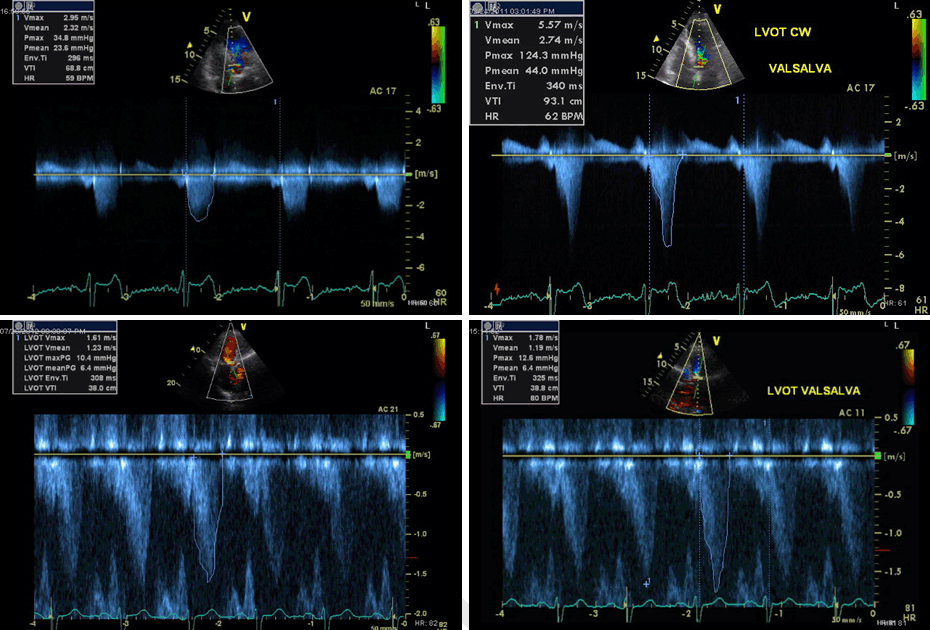
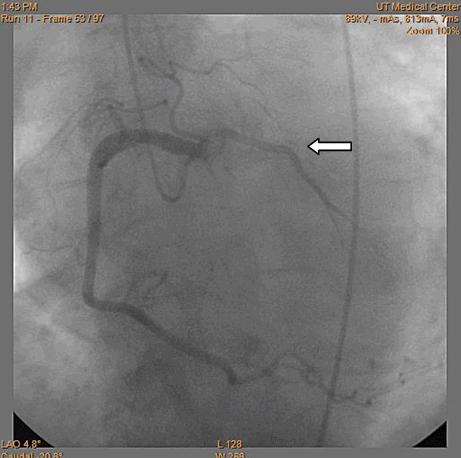
A 62-year-old female with known history of hypertrophic cardiomyopathy, hypertension and hypothyroidism referred to clinic with worsening dyspnea despite high doses of metoprolol and cardizem. Echocardiography revealed asymmetric septal hypertrophy with septal thickness of 16–19 mm, systolic anterior motion of the anterior mitral leaflet and a resting LVOT gradient of 35–40 mmHg, which increased to 124 mmHg with Valsalva (Figure 1A). Subsequently, she underwent cardiac catheterization as her symptoms were worsening and she had elevated cardiac biomarkers which showed origin of anomalous septal artery from separate ostium of right coronary sinus (Bonapace’s artery) and no significant coronary artery disease (Figure 2) (Video 1). Computed tomography scan of her chest for pulmonary embolus showed incidental right subclavian artery originating from descending thoracic aorta and no pulmonary embolus. Elevated cardiac biomarkers were assumed to be secondary to hypertensive urgency and her antihypertensive medications were adjusted. After six months, she returned to office with worsening dyspnea despite adequately controlled blood pressure. Electrocardiogram showed normal sinus rhythm with no interventricular conduction delays. Alcohol septal ablation of septal artery was planned as she refused to undergo surgery. Bonapace’s artery fed the hypertrophic basal septum and was a suitable target for alcohol septal ablation. A temporary trans venous pacemaker was placed through the right internal jugular vein and AR modified guide was utilized to engage the septal artery. A extra sport wire was used to cross the septal artery. Echocardiogram was obtained to confirm localization of contrast in the basal septum (Video 2). Then 0.2 cc increments of alcohol was injected to a total of 1 ml over a period of 10 minutes. Subsequently, there was reduction in gradient from peak of 40 mmHg to 15 mmHg. The temporary pacemaker wire was removed after 48 hours without any evidence of heart block. Two months post ablation, her gradient on resting echo remained low with LVOT gradients both at rest (10.5 mmHg) and with Valsalva (13 mmHg) (Figure 1B). This corresponded with symptomatic improvement, increase exercise tolerance and quality of life improvement for the patient. | ||||||
| ||||||
Video 1: Coronary angiogram showing separate origin of septal artery from right coronary sinus. The supplemental motion image also shows right coronary artery. Video 2: Still and supplemental motion image of coronary angiogram showing sport wire crossing anomalous septal artery. | ||||||
|
DISCUSSION
| ||||||
|
On review of literature there was case of dominant septal artery originating from right coronary artery first described in 1995 [2]. This anomaly when present can be safely and successfully utilized for alcohol septal ablation [3]. Kurita et al. [4] performed a percutaneous septal alcohol ablation through a DSA, preceded by the demonstration of its contribution to the perfusion of the basal interventricular septum. It is also important to understand the technical aspects concerning the evaluation of the DSA which can sometimes be missed. Deep cannulation of the RCA may prevent its identification and in some cases a DSA arising from an independent ostium was accidentally identified while attempting to find the RCA as in our case. Also, contrast back-flow during injections in the RCA might reveal its presence [1][5]. | ||||||
|
CONCLUSION
| ||||||
|
In this report, we describe a rare case of clinically important Bonapace’s artery, which has a separate ostium on right coronary sinus. Additionally, this artery was utilized to perform successful alcohol septal ablation to achieve gradient reduction and relief of symptoms in hypertrophic cardiomyopathy. The presence and clinical importance of an anomalous septal artery which should be sought in HOCM patients with lack of dominant septal artery from the left coronary system. | ||||||
|
REFERENCES
| ||||||
| ||||||

|
[HTML Abstract]
[PDF Full Text]
|
|
Author Contributions
Neelima Katukuri – Substantial contributions to conception and design, Acquisition of data, Analysis and interpretation of data, Drafting the article, Revising it critically for important intellectual content, Final approval of the version to be published Tjuan Overly – Analysis and interpretation of data, Revising it critically for important intellectual content, Final approval of the version to be published Raj Baljepally – Analysis and interpretation of data, Revising it critically for important intellectual content, Final approval of the version to be published |
|
Guarantor
The corresponding author is the guarantor of submission. |
|
Source of support
None |
|
Conflict of interest
Authors declare no conflict of interest. |
|
Copyright
© 2017 Neelima Katukuri et al. This article is distributed under the terms of Creative Commons Attribution License which permits unrestricted use, distribution and reproduction in any medium provided the original author(s) and original publisher are properly credited. Please see the copyright policy on the journal website for more information. |
|
|