
  |

|
 |
|
Case Report
| ||||||
| Electrical storm: Is right ventricular pacing dangerous? | ||||||
| Daniel Mark Cooper1, Kathleen M. Kennedy2 | ||||||
|
1MD, FACC, Assistant Professor of Cardiology and Medicine, Department of Clinical Sciences Florida State University College of Medicine, Sarasota, Florida, USA, Past Director, Electrophysiology Catheterization Laboratory, Sarasota Memorial Hospital.
2MD Clinical Professor of Medicine, Department of Clinical Sciences, Florida State University College of Medicine, Sarasota, Florida, USA. | ||||||
| ||||||
|
[HTML Abstract]
[PDF Full Text]
[Print This Article]
[Similar article in Pumed] [Similar article in Google Scholar] 
|


| How to cite this article |
| Cooper DM, Kennedy KM. Electrical storm: Is right ventricular pacing dangerous? Int J Case Rep Images 2017;8(3):191–195. |
|
Abstract
|
|
Introduction:
Electrical storm is commonly defined as the occurrence of three or more episodes of ventricular tachycardia (VT) or ventricular fibrillation (VF) in 24 hours. Patients with an implantable cardiac defibrillator (ICD) are at increased risk of electrical storm due to history of decreased ejection fraction and/or sustained VT/VF. In addition to medical treatment of electrical storm in ICD patients, special consideration should be given to ICD reprogramming to optimize hemodynamics by increasing basic pacing rate and maintaining atrioventricular as well as interventricular synchrony. If possible, anti-tachycardia pacing rather than repeated shocks can reduce sympathetic tone. Unnecessary right ventricular pacing may worsen left ventricular function by desynchronizing the ventricles and is generally avoided.
Case Report: We present a case of a 67-year-old white male with severe electrical storm due to polymorphic ventricular tachycardia (PMVT) that was dramatically brought under immediate control by forced right ventricular pacing. Subsequent continuous right ventricular pacing helped suppress any ventricular tachycardia recurrence until catheter ablation was performed eight months later. Conclusion: When confronted with patients with refractory electrical storm, we propose programming a faster right ventricular pacing rate. | |
|
Keywords:
Electrical storm, Implantable cardiac defibrillator, Polymorphic ventricular tachycardia, Right ventricular pacing, Ventricular desynchronization
| |
|
Introduction
| ||||||
|
Electrical storm is commonly defined as the occurrence of three or more episodes of ventricular tachycardia or ventricular fibrillation in 24 hours [1]. Patients with an implantable cardiac defibrillator (ICD) are at increased risk of electrical storm due to history of decreased ejection fraction and/or sustained VT/VF. In addition to medical treatment of electrical storm in ICD patients, special consideration should be given to ICD reprogramming to optimize hemodynamics by increasing basic pacing rate and maintaining atrioventricular as well as interventricular synchrony. If possible, anti-tachycardia pacing rather than repeated shocks can reduce sympathetic tone. Unnecessary right ventricular pacing may worsen left ventricular function by desynchronizing the ventricles and is generally avoided. We present a case of severe electrical storm due to PMVT that was dramatically brought under immediate control by forced right ventricular pacing. | ||||||
|
Case Report
| ||||||
|
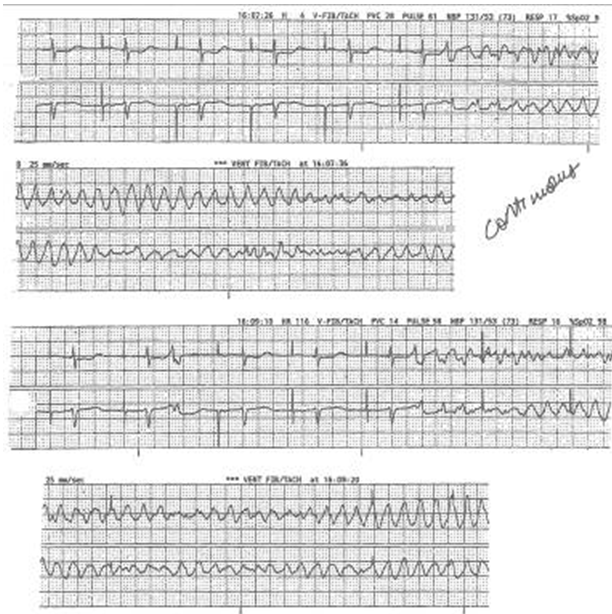
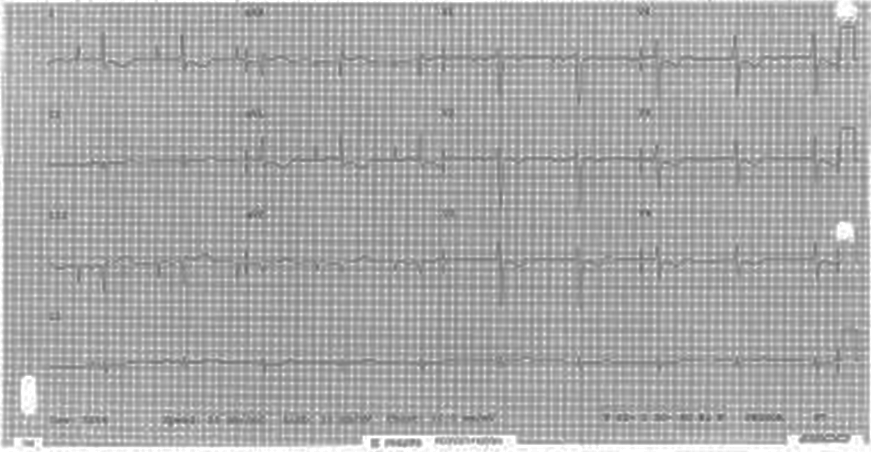
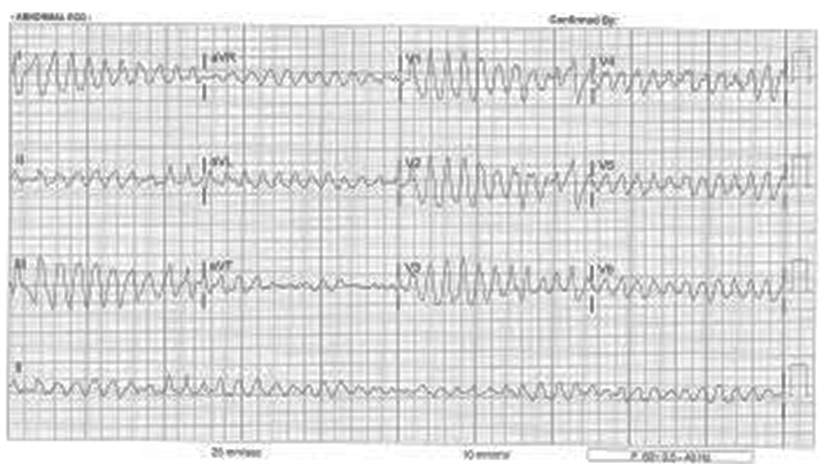
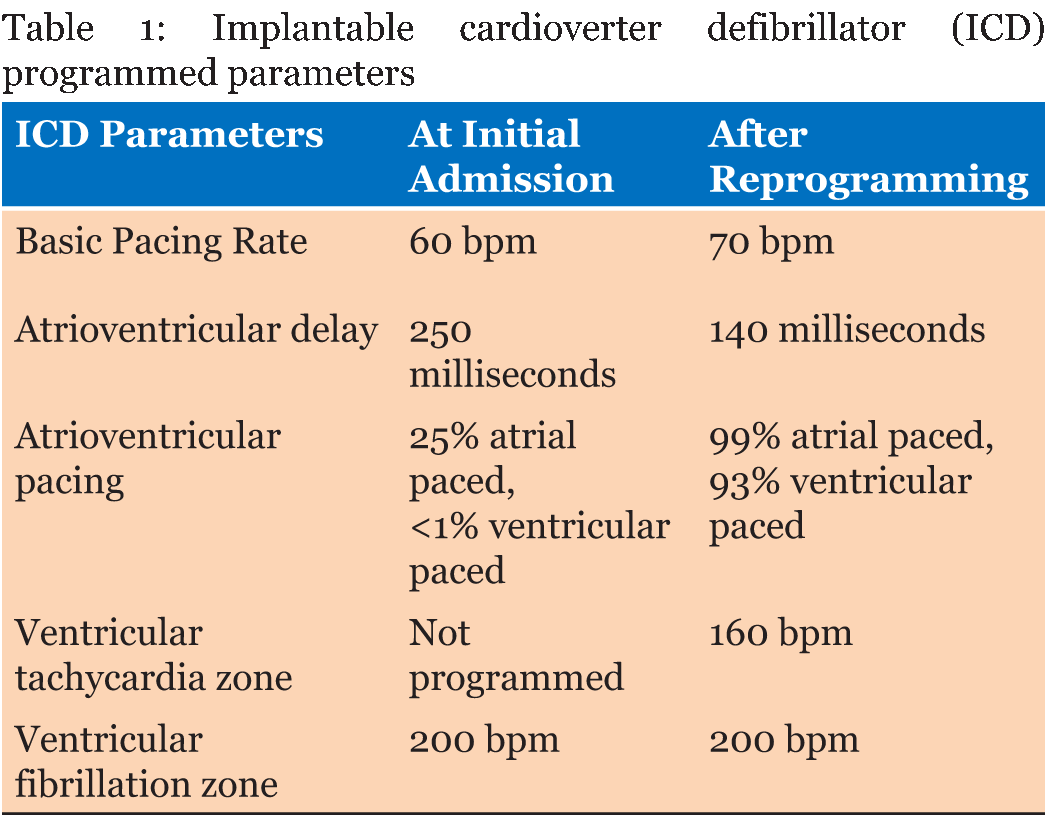
A 67-year-old white male was admitted to a community hospital after developing syncope while driving. Previous history of myocardial infarction three years before, with subsequent coronary artery bypass graft x3 (internal mammary artery bypass to the left anterior descending artery, vein grafts to right coronary and circumflex). One year after, he was hospitalized for congestive heart failure (CHF) with 25% ejection fraction prompting the placement of a dual chamber ICD. Coronary angiography showed patent grafts, with distal native vessel disease. He remained on carvedilol, ramipril, aspirin, eplerenone, bumetanide. Patient experienced no shocks for two years until this syncopal episode. Initial evaluation in the emergency room showed episodes of polymorphic ventricular tachycardia (PMVT), (Figure 1). Blood pressure was 157/68 mmHg, respirations 16, pulse 60 bpm, oxygen saturation 95% on room air. Electrocardiogram showed atrial pacing at 60 bpm with atrioventricular delay of 240 msec and intrinsic R wave with deep inferior Q waves T wave inversions in leads 1, L, V3-V6. QTC interval was 440 msec with subsequent tracings unchanged (Figure 2). Chest X-ray showed no CHF. Interrogation of ICD revealed seventeen episodes of ventricular tachycardia with rates from 240–300 bpm, correctly detected and shocked. Laboratory included potassium 3.7 (normal value 3.5–5.3 mmol/L), magnesium 1.9 (normal value 1.6–2.3 mg/dL), BUN 40 (normal value 5–25 mg/dL) and creatinine 1.3 (normal value 0.5–1.4 mg/dL). BNP was 132 (normal value <100 pg/mL). Initial troponin was 0.20, at two hours 0.60 and a 12 hour peak of 3.4 (normal value < 0.08 ng/mL). Management included a bolus of 300 mg IV amiodarone followed by another 150 mg and a subsequent 1 mg/min drip. Lidocaine IV was given in boluses and titrated up to 4 mg/min drip. A total of 10 mg IV metoprolol was administered (in addition to his oral carvedilol). Four milligrams of magnesium and 20 mEq of potassium were given intravenously and sedation with IV lorazepam 0.5 mg in repeated doses. Respiratory status remained stable. Patient denied angina pectoris. Despite all measures, rapid PMVT continued. Six hours after admission, the patient was transferred by helicopter to our hospital. Upon arrival to our Cardiac Unit, IV midazolam was given for sedation and lidocaine was stopped. Potassium and magnesium levels were 3.9 and 2.5 respectively. The episodes of PMVT persisted (Figure 3). Echocardiogram revealed a moderate size left ventricular posterior aneurysm and an ejection fraction of 25%. Implantable cardiac defibrillator was interrogated revealing 71 episodes of ventricular tachycardia correctly detected and shocked since his syncope. Implantable cardiac defibrillator was reprogrammed from a rate of 60 to 70 bpm, however PMVT reoccurred. Between PMVT episodes, he remained atrial paced with ventricular sensed rhythm. Subsequently, within approximately ten minutes, the atrioventricular delay was shortened from 250–140 msec (Table 1) which resulted in right ventricular pacing with an atrial and ventricular paced rhythm (Figure 4). PMVT immediately ceased. Electrical storm completely subsided and the next steps taken within the first hour were an esmolol drip titrated up to 100 mg/kg/min, and continuation of intravenous amiodarone. The next day, cardiac catheterization showed patent grafts with distal small vessel disease and extensive collateral circulation from septal branches. No culprit vessels were found. A noninvasive electrophysiology study showed no inducible ventricular tachycardia. Medications at discharge included amiodarone, carvedilol, ramipril, eplerenone, furosemide, potassium and dabigatran. Follow-up at two months revealed a stable status, NYHA class 2 and unchanged ejection fraction 25% despite right ventricular pacing 100%. Implantable cardiac defibrillator interrogation demonstrated no ventricular tachycardia and amiodarone was reduced to 100 mg daily. Eight months after the admission, elective radiofrequency ablation with substrate modification of the left ventricular posterior scar was performed successfully. 3D bipolar and unipolar voltage maps within posterior basal wall scar, guided the radiofrequency ablation of the fractionated potentials using a Biosense Webster Navistar Thermocool catheter. Subsequently, right ventricular pacing was discontinued by extending atrioventricular delay. A two year follow-up confirmed the patient remained free of ventricular tachycardia. | ||||||
|
| ||||||
| ||||||
| ||||||
|
| ||||||
| ||||||
|
Discussion
| ||||||
|
Electrical storm is estimated to occur in approximately 10% of ICD patients and is associated with unfavorable long-term prognosis [2]. Acute treatment of electrical storm in ICD patients includes beta blockers, amiodarone, benzodiazepines, and electrolyte management. Potential causes of recurrent ventricular tachycardia in patients with an ICD include myocardial ischemia, drug and electrolyte induced QT prolongation. It is essential to rule out device malfunction from acute lead dislodgement, sensing of electrical noise triggering anti-tachycardia pacing or shocks. Furthermore, VT/VF in ICD patients may be a pacing related phenomenon where short-long-short sequences may initiate reentry and indicate a need for a change in pacing mechanism [3]. Catheter ablation of an arrhythmogenic focus has been used for treatment of electrical storm in ICD patients [4] . However, most of the experience is with monomorphic ventricular tachycardia [5]. Furthermore, ablation for hypotensive polymorphic ventricular tachycardia can be challenging. Thus, alternative options for acutely ceasing an incessant PMVT must be sought. Recently, a multicenter randomized trial has compared elective ventricular tachycardia ablation versus escalated medical therapy in patients with ICD, ischemic cardiomyopathy and recurrent ventricular tachycardia. The findings showed a significant lower rate of death and ventricular tachycardia in the catheter ablation group [6]. In patients with left ventricular dysfunction with an ejection fraction < 35% and a wide QRS, left ventricular pacing can improve clinical status by optimizing hemodynamics with interventricular synchrony. Even though resynchronization and early left ventricular depolarization has helped improve ventricular function in patients with heart failure and left ventricular delay, changing the activation sequence of the ventricle by pacing also has potential electrophysiological effects which can be proarrhythmic [3]. We hypothesize, in our patient with incessant PMVT and a left ventricular aneurysm, that early depolarization by pacing the right ventricle was beneficial. Right ventricular pacing may delay activation of the left ventricular aneurysm, which may have rendered the surrounding ventricle refractory or less susceptible to activation from the aneurysmal region. Override of the left ventricular arrhythmogenic focus, which we believed to be the left ventricular aneurysm, redirected depolarization and essentially desynchronized his ventricles. Unnecessary right ventricular pacing has been shown to diminish cardiac function over time and exacerbate heart failure in patients with structural heart disease [7] [8]. This case however, raises the question of whether right ventricular pacing can in fact be therapeutic for a subset of patients with ICD and left ventricular aneurysm as the focus of ventricular tachycardia. During the eight month period from our patient's original presentation until his therapeutic catheter ablation, he remained consistently atrioventricular pacing (right ventricular activation) and clinically stable with a NYHA Class 2 functional status. Although it is unclear whether permanent right ventricular pacing is a long-term solution, early success with no recurrent ventricular tachycardia and a stable ejection fraction would suggest it can at least be utilized for temporary stabilization. In our patient, ventricular tachycardia ablation was successful eight months after the electrical storm and after stabilization with right ventricular pacing. However, if ablation had not initially been successful, management could have included left ventricular aneurysm resection or even cardiac transplantation [9]. Given the patient's history of ischemic cardiomyopathy, congestive heart failure, and low ejection fraction, consideration could also have been given to upgrade his ICD to a biventricular device. However, if our hypothesis of left ventricular depolarization as the trigger for the PMVT was correct, biventricular pacing might result in aggravation of the tachyarrhythmia [10]. This case is an example of how the counterintuitive notion of ventricular desynchronization by forced right ventricular pacing and late left ventricular depolarization can be therapeutic in the acute suppression of electrical storm. The prevention of short to medium term electrical storm recurrence in the subset of patients with PMVT and left ventricular arrhythmogenic focus can also be postulated. PMVT may have been mediated by chronic ischemia and reentry circuits in the aneurysmal infarct region. The fact that the episodes were suppressed by forced right ventricular pacing would support some contribution of reentry within the aneurysm as opposed to just ischemia, although it is not possible to sort this out definitely. | ||||||
|
Conclusion
| ||||||
|
We hypothesize that altering the electrical depolarization and ventricular activation sequence by right ventricular pacing prompted 'electrophysiological isolation' of the aneurysm and immediate resolution of the incessant polymorphic ventricular tachycardia (PMVT), as if suddenly turning off a switch. Therefore, when confronted with patients with refractory electrical storm, we propose programming a faster right ventricular pacing rate. | ||||||
|
Acknowledgements
| ||||||
|
We would like to thank William G. Stevenson, MD, FACC from the Arrhythmia Service Brigham and Women's Hospital, Professor of Medicine, Harvard Medical School for his valuable review of this manuscript. The authors also express their gratitude for the assistance of Loren Farley, MD; Brittany Jackson, MD and Mr. Chip Orth from Florida State University College of Medicine. | ||||||
|
References
| ||||||
| ||||||
|
Suggested Reading
| ||||||
| ||||||


|
[HTML Abstract]
[PDF Full Text]
|
|
Author Contributions
Daniel M. Cooper – Conception and design, Acquisition of data, Analysis and interpretation of data, Drafting the article, Critical revision of the article, Final approval of the version to be published Kathleen M. Kennedy – Conception and design, Acquisition of data, Analysis and interpretation of data, Drafting the article, Critical revision of the article, Final approval of the version to be published |
|
Guarantor of submission
The corresponding author is the guarantor of submission. |
|
Source of support
None |
|
Conflict of interest
Authors declare no conflict of interest. |
|
Copyright
© 2017 Daniel M. Cooper et al. This article is distributed under the terms of Creative Commons Attribution License which permits unrestricted use, distribution and reproduction in any medium provided the original author(s) and original publisher are properly credited. Please see the copyright policy on the journal website for more information. |
|
|