
 |

|
 |
|
Case Report
| ||||||
| Medullary thyroid carcinoma: Management and complexities of postoperative follow-up | ||||||
| Mirza Faraz Saeed1, Nida Fatima Sakrani2, Isam Mazin Juma3, Abbas Ali4 | ||||||
|
1MBBS, FMAS, FICS, MS General Surgery (Edin), Registrar General, Surgery, King Hamad University Hospital.
2MBBCh, BAO, King Hamad University Hospital. 3MBCHB, CABS, MRCS, Senior Registrar General Surgery, King Hamad University Hospital. 4BSc, MbBchBAO, Intern King Hamad University Hospital. | ||||||
| ||||||
|
[HTML Abstract]
[PDF Full Text]
[Print This Article]
[Similar article in Pumed] [Similar article in Google Scholar] 
|


| How to cite this article |
| Saeed MF, Sakrani NF, Juma IM, Ali A. Medullary thyroid carcinoma: Management and complexities of postoperative follow-up. Int J Case Rep Images 2017;8(3):171–174. |
|
Abstract
|
|
Introduction:
Medullary thyroid cancer is one of the less common types of thyroid malignancies as compared to the more frequent papillary and follicular types and constitutes 4% of thyroid cancer. Serum tumors markers are a significant part of diagnosis and postoperative follow-up. Although calcitonin is an apparent marker, levels of carcinoembryonic antigen (CEA) can also be used. In patients that are surgically managed, calcitonin levels can begin to rapidly decline within the first postoperative hour.
Case Report: This paper presents a case of 37-year-old Indian female treated for medullary thyroid carcinoma and followed-up over a year. Fine-needle aspiration cytology (FNAC) biopsy was reported as highly suspicious of malignancy. The patient underwent a near total thyroidectomy and the following histopathology report confirmed medullary carcinoma. Conclusion: This paper highlights the importance of biochemical follow- up of calcitonin level, following surgical resection in cases of medullary thyroid carcinoma as a part of postoperative care. | |
|
Keywords:
Calcitonin, Fine-needle aspiration cytology (FNAC), Medullary thyroid carcinoma, Postoperative care
| |
|
Introduction
| ||||||
|
The thyroid tissue is known to be one of the most radiation-sensitive tissues in the body, with excess cancers occurring at doses as low as 100 mGy [1] [2]. Of note, American statistics report that medical radiation accounts for nearly half of the radiation exposure experienced by the population [2]. Medullary thyroid cancer is one of the less common types of thyroid malignancies as compared to the more frequent papillary and follicular types [3] and constitutes 4% of thyroid cancer [1]. Chances of survival are much improved and notably optimistic when the malignancy is detected early. This subtype of cancer is a neuroendocrine tumor and comprises the parafollicular C cells. The malignant C cells release an increased level of calcitonin that is medically useful as a tumor marker used in diagnosis and follow-up [1]. Medullary cancer is infamous due to its involvement in the multiple endocrine neoplasia type 2 (MEN2) syndromes. However, the sporadic, nonhereditary type is actually responsible for 80% of cases [1]. The tumor can present as a neck mass and this is most common, or with symptoms pertaining to increased hormone levels similar to other tumors composed of neural crest cells. Tumor secretion of calcitonin, calcitonin gene related peptide can cause diarrhea or facial flushing in patients with advanced disease, while occasionally the secretion of ACTH (corticotropin) can manifest as Cushing's syndrome [1]. When present as part of the MEN2 combination the patient may suffer accordingly with hyperparathyroidism, a pheochromocytoma or a marfanoid habitus, mucosal neuromas, and intestinal ganglioneuromatosis [1]. This report pertains to a case of early stage medullary thyroid carcinoma that developed in a lady with previous radiation exposure and was successfully operated upon. In this discussion, we dissect the process of postoperative follow-up and the dilemma of the increasing tumor marker, calcitonin following such definitive treatment. | ||||||
|
Case Report
| ||||||
|
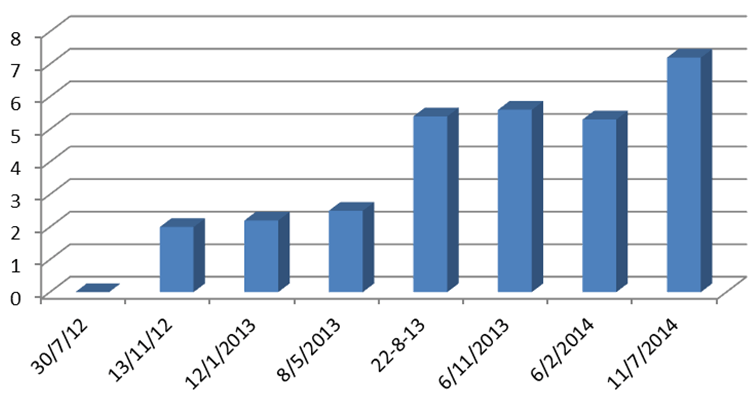
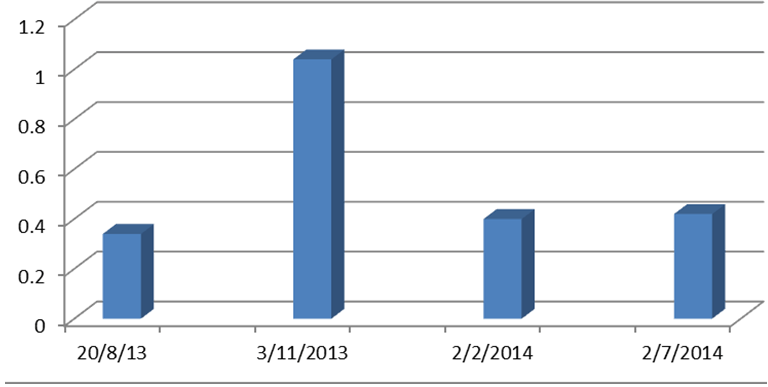
A 37-year-old Indian female nurse, with a five-year history of without any radiation exposure while working as orthopedic surgical staff, presented to our surgical clinic in July 2012 with a self-discovered nodule in the right lobe of her thyroid gland. Further questioning revealed weight loss, a history of gestational hypothyroidism treated with levothyroxine and a significant family history with a father currently in remission after treatment for an oropharyngeal malignancy. Following appropriate examination, appropriate investigations were undertaken including a fine-needle aspiration cytology (FNAC) biopsy. The FNAC was reported as highly suspicious of malignancy. FNAC features showed several small and large clusters of elongated spindle-shaped cells. Hyperchromatic, pleomorphic nuclei with scant cytoplasm. Glassy pink amyloid-like material was also present, suggestive of medullary thyroid carcinoma. Consequently, the patient underwent a near total thyroidectomy on 24th July 2012 and the histopathological diagnosis confirmed our suspicions of malignancy and further diagnosed a containing medullary carcinoma, staged as T1N0M0 with no nodular involvement. Computer tomography scans of the chest, abdomen and pelvis were done after the surgery ruled out any metastasis. Between 2013 and 2014, the patient was seen at regular follow-up visits and neck ultrasounds, as well as calcitonin and CEA levels were repeated. The increasing size of the small residual thyroid tissue left from 1 cm in 2013 to 1.8 in 2014 was noted along with rising CEA and calcitonin levels as depicted in the (Figure 1) and (Figure 2). | ||||||
| ||||||
| ||||||
|
Discussion
| ||||||
|
Initial Steps Following pathological confirmation, serum tumor markers become significant, and while calcitonin is the apparent one, carcinoembryonic antigen (CEA) is also of significance. Advanced imaging techniques discussed above are also to be employed when the basal preoperative calcitonin level is >400 pg/mL since this implies a high risk of metastatic disease [1] Postoperatively, these results allow the clinician to decide on the prognosis and postoperatively indicate biochemical cure. To complete the process, the patient must be screened for the other manifestations of the MEN2 syndromes with measurement of calcium levels for hyperparathyroidism and plasma fractionated metanephrines for pheochromocytoma, 4-urinary fractionated metanephrines and catecholamine's [1] [4]. Appropriate imaging can be additionally used if any of these are suspected. As with all neoplasms treatment varies according to the stage of disease. Table 1 gives the details on the TNM staging adopted by The Union for International Cancer Control (UICC) and the American Joint Committee on Cancer (AJCC) [1]. Our patient was classified as Stage 2 and the optimum treatment was offered through a subtotal thyroidectomy. The Evasiveness of Follow-Up Kebebew et al, followed a 104 patients over an average of eight years and found through multivariate analysis that age and stage of disease are independent prognostic factors, meaning that younger age and an earlier stage of disease allow greater survival [6]. Pelizzo discovered the same after a 37-year follow-up of a 157 patients but also add extent of surgery as a prognostic factor [7]. This implies that a more advanced tumor requires more extensive surgery and both relate to poor prognosis. Furthermore, Kebebew et al., report that patients with postoperative hypercalcitoninemia without clinical or radiologic evidence of residual tumor after apparently curative surgery may enjoy long term survival, but elevated calcitonin can be attributed to occult disease [6]. The recommended method of postoperative follow-up is through measurement of serum calcitonin and CEA after two to six months, and normal serum level of these hormones indicates a biochemical cure [4] [8]. Successful surgery and a biochemical cure have been associated, with less than 4% risk of recurrence during follow-up [3]. In patients that are surgically cured, calcitonin levels begin to rapidly decline within the first postoperative hour [8]. However, it is important to correctly time the measurement since calcitonin levels in some patients can sometimes take several months to normalize [8]. If a high calcitonin level is detected six or more months following surgery than residual disease should be suspected [8] . However, considering the risks and difficulty of further and sometimes-radical neck surgery, it is then required to decide the degree of residual disease. Calcitonin values which are detectable but less than 150 pg/mL indicate persistent loco-regional disease in the neck [8]. To locate this disease, neck ultrasound and further imaging including CT scan and MRI scan should be used [8]. High-resolution ultrasonography is preferred because it is noninvasive, sensitive, and relatively inexpensive, and moreover, it can be used in acquiring a cytological diagnosis through FNAC [4]. It is recommended that in non-specialized institutions, only cases of overt disease without metastasis should undergo neck surgery [8]. If, on the other hand, macroscopic disease is not found through imaging and the calcitonin level remains constant then annual follow-up is required. This is done through a neck ultrasound and calcitonin measurement at sixth month intervals, with particular emphasis on determining the doubling time, which is a strong indicator of survival [3] [4]. The American thyroid association states that when there is no anatomic evidence of disease, despite detectable serum creatinine, the best option is observation [4]. Furthermore it recommends that, in the case of nonhazardous loco-regional disease, immediate intervention is of unknown benefit and such lymph nodes may be observed or undergo re-operative compartmental dissection of image or biopsy-positive compartments [4]. Further when calcitonin levels are higher than 150 pg/mL, distant metastasis is more likely and extensive imaging including neck and chest CT scan, liver MRI scan, bone scan, spine and pelvis MRI scans or PET/CT scan are required [4]. Although it is not the focus of this report, a brief mention regarding the treatment options for metastatic disease is necessary. Palliative treatments include surgery, hepatic embolization, external beam radiation therapy, and percutaneous interventions. Active treatment is recommended for lesions in vital locations, such as brain metastases, impending or active central nervous system compression, airway compromise, symptomatic lesions, hormonal secretion, and impending or active fracture of a weight bearing bone [4]. The management of patients with metastatic disease outside the neck remains controversial [9]. | ||||||
| ||||||
|
| ||||||
|
Conclusion
| ||||||
|
Postoperative follow-up and further management consist of measuring calcitonin levels, with the key number being at 150 pg/ml. Elevated biochemical levels of calcitonin should be correlated with evidence of macroscopic disease. Further management would range from follow-up in cases of elevated biochemical levels only to implementation of palliative care in cases of evidences of metastatic disease in addition raised calcitonin levels. | ||||||
|
References
| ||||||
| ||||||


|
[HTML Abstract]
[PDF Full Text]
|
|
Author Contributions
Mirza Faraz Saeed – Substantial contributions to conception and design, Acquisition of data, Analysis and interpretation of data, Drafting the article, Revising it critically for important intellectual content, Final approval of the version to be published Nida Fatima Sakrani – Analysis and interpretation of data, Revising it critically for important intellectual content, Final approval of the version to be published Isam Mazin Juma – Analysis and interpretation of data, Revising it critically for important intellectual content, Final approval of the version to be published Abbas Ali – Analysis and interpretation of data, Revising it critically for important intellectual content, Final approval of the version to be published |
|
Guarantor of submission
The corresponding author is the guarantor of submission. |
|
Source of support
None |
|
Conflict of interest
Authors declare no conflict of interest. |
|
Copyright
© 2017 Mirza Faraz Saeed et al. This article is distributed under the terms of Creative Commons Attribution License which permits unrestricted use, distribution and reproduction in any medium provided the original author(s) and original publisher are properly credited. Please see the copyright policy on the journal website for more information. |
|
|