
  |

|
 |
|
Case Report
| ||||||
| A child with fulminant acute myocarditis rescued with extracorporeal membrane oxygenation | ||||||
| Colaco Sylvia M.1, Raghavan Subramanyam2, Anto Sahayaraj R.3, Cherian K.M.4 | ||||||
|
1Fellow in pediatric cardiology, Frontier lifeline hospital, Chennai.
2Head of Dept of pediatric cardiology, Frontier lifeline hospital, Chennai. 3Consultant Surgeon, Frontier lifeline hospital, Chennai. 4Director and Head surgeon, Frontier lifeline hospital, Chennai. | ||||||
| ||||||
|
[HTML Abstract]
[PDF Full Text]
[Print This Article]
[Similar article in Pumed] [Similar article in Google Scholar] 
|


| How to cite this article |
| Colaco SM, Subramanyam R, Sahayaraj AR, Cherian KM. A child with fulminant acute myocarditis rescued with extracorporeal membrane oxygenation. Int J Case Rep Images 2017;8(2):143–146. |
|
Abstract
|
|
Introduction:
Fulminant acute myocarditis (FAM) occurs rapidly, causes pump failure or lethal arrhythmias, sometimes leading to death by cardiogenic shock.
Case Report: We hereby present a three-year-old girl, previously asymptomatic, who developed rapid onset tachycardia, hypotension and cardiorespiratory arrest following an episode of respiratory tract infection. The patient was treated with anti-arrhythmic drugs, inotropes, and cardioversion after being diagnosed as atrial tachycardia, but the rhythm did not revert to sinus rhythm. Due to deteriorating condition patient was put on extra corporeal membrane oxygenation (ECMO) and supported for 131 hours along with supportive and IVIG treatment. After improvement in ejection fraction, patient was weaned off ECMO. The rhythm reverted to sinus after three days of admission and antiarrhythmics were gradually tapered. Patient was discharged on 17th day of admission in a stable condition with an ejction fraction of 58%. Conclusion: Timely extracorporeal membrane oxygenation (ECMO) support in fulminant acute myocarditis (FAM) with refractory atrial tachycardia and shock due to myocarditis, along with medical treatment could prevent lethal outcomes. | |
|
Keywords:
Child, Extracorporeal membrane oxygenation (ECMO), Fulminant acute myocarditis (FAM)
| |
|
Introduction
| ||||||
|
Myocarditis is an inflammatory process of the myocardium that can have multiple etiologies such as infection, systemic disease and/or exposure to medications and toxins [1]. Fulminant acute myocarditis (FAM) presents with rapid onset of cardiac manifestations, which typically manifest after nonspecific flu-like symptoms and rapidly progresses to severe hemodynamic deterioration and severe heart failure, cardiogenic shock and potentially fatal arrhythmias [2]. In pediatric patients, FAM accounts for 30–40% of cases of myocarditis and has a mortality rate of up to 48% [3]. Cases have been reported in literature of severe myocarditis being treated successfully with extra corporeal membrane oxygenation (ECMO) both in adults and children, but none in India. We present a case of FAM with heart failure and refractory atrial tachycardia in a child where life support with ECMO was effective. | ||||||
|
Case Report
| ||||||
|
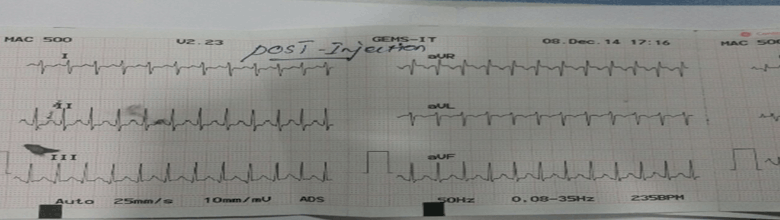
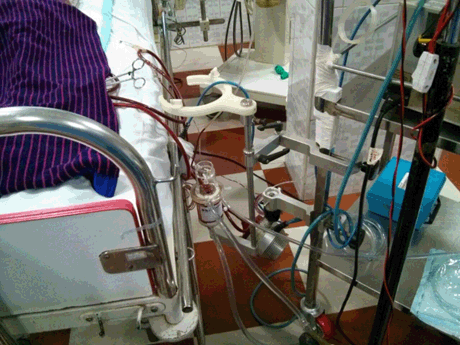
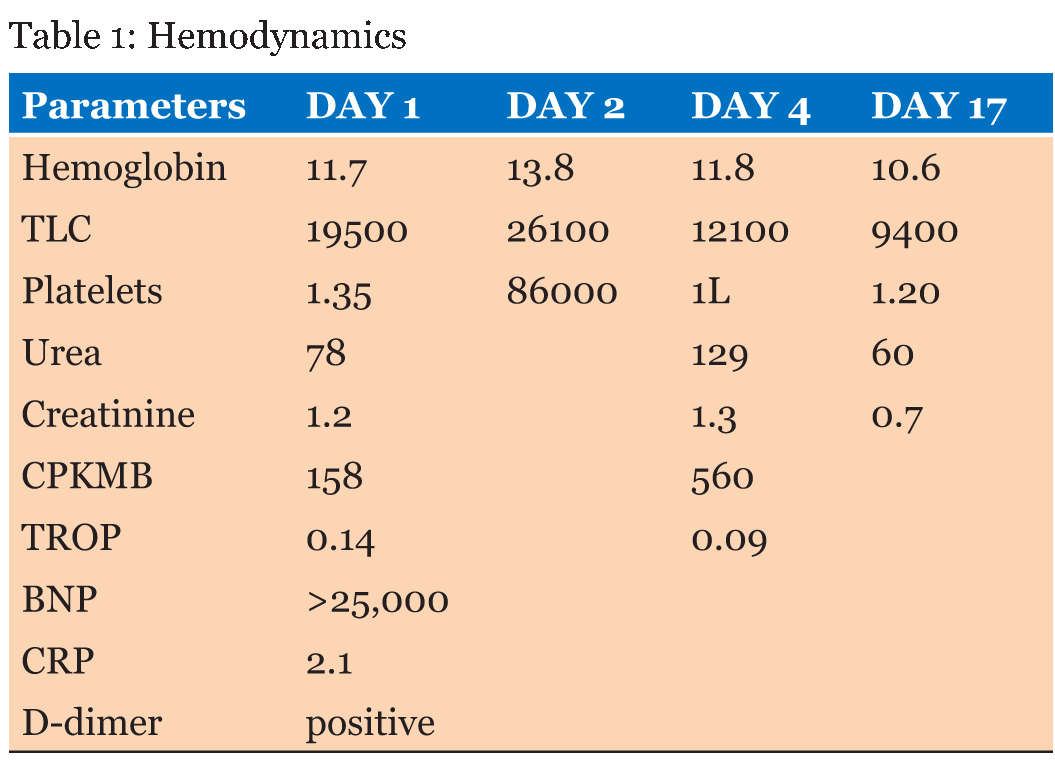
A three-year-old girl, previously asymptomatic, with completed vaccination and no history of receiving any viral vaccines developed cold and cough without any recorded fever. Due to worsening symptoms, the child was taken to a pediatric hospital and diagnosed to have supraventricular tachycardia. Two doses of injection adenosine failed to control the tachycardia. The child was then referred to our centre. On examination the child had cold peripheries, feeble pulses, and a heart rate of 235/minute. The child was started on inotropic supports and again an injection adenosine (5 mg) was given in vain. Injection amiodarone (5 mg/kg) was infused rapidly and continued at 15 mics/kg/min. Two shocks of cardioversion with energy of 0.5 J/Kg and 2 J/kg were tried but were unsuccessful in reverting the rhythm to sinus rhythm (Figure 1). On the same day the child had an episode of cardiorespiratory arrest but was successfully resuscitated. Bedsides echocardiogram showed an ejection fraction of 15% with generalized left ventricular hypokinesia. The basic investigations are summarized in Table 1. In view of the refractory arrhythmia, falling pressures and ventricular dysfunction a decision was made to support the child on ECMO. Extracorporeal membrane oxygenation insertion was taken through the left iliac arterial and venous cannulations followed by distal femoral cannulation to perfuse the left lower limb. The ECMO circuit used was an indigenously prepared circuit (Figure 2). All the tubings were heparin coated, and activated clotting time (ACT), which is a test to monitor heparin therapy in clinical situations where intensive anticoagulation needed was maintained between 180–200 s. Extracorporeal membrane oxygenation was started on high flow at 2 L/min and a total of 131 hours ECMO support was provided. Patient was also treated with intravenous immunoglobulin, (2 g/kg over 48 hours), pulse therapy of methylprednisolone, anti-failure medications (frusemide, spironolactone and digoxin) and IV antibiotics. The tachycardia was identified as ectopic atrial tachycardia. Since the tachycardia did not respond to higher doses of amiodarone, flecainide was started with mild reduction in the rate. Carvedilol was introduced once the blood pressure was stable. The rhythm was reverted to sinus rhythm on the third day of admission following which patient was gradually weaned off ECMO and then ventilator. After 48 hour observation in the PICU, the patient remained hemodynamically and neurologically stable, was shifted to the ward on the eighth day. The child had an unremarkable course in the ward and was discharged on day-17. | ||||||
| ||||||
| ||||||
| ||||||
|
Discussion
| ||||||
|
Fulminant acute myocarditis (FAM) carries a high mortality, ranging from 50–75%, without immediate mechanical circulatory support [4]. Prompt diagnosis, as well as proper mechanical circulatory support, improves survival [5]. Our patient presented in an emergency situation with a past history of flu-like illness for seven days and no improvement with antibiotics and sudden onset refractory arrhythmia. This was followed by rapid development of severe heart failure, cardiogenic shock, refractory atrial tachycardia, and cardiac arrest. The diagnosis of FAM was initially made on clinical grounds supported by echocardiographic evidence of severe left ventricular impairment. This was later corroborated by elevated cardiac enzymes and BNP levels. Echocardiography is an important tool in the diagnosis of myocardial dysfunction and is able to exclude other anatomical causes of heart failure and helps to identify the fulminant course of the disease. Classical findings include global hypokinesia, with or without pericardial effusion, variable degree of myocardial dilation, and atrioventricular regurgitation [6]. Our patient had severe left ventricular systolic dysfunction, an ejection fraction of 15% and severe mitral regurgitation. Ejection fraction of 15%, severely raised BNP levels (> 25,000), cardiogenic shock and refractory arrhythmias indicated severe and rapidly worsening condition; hence the decision of mechanical circulatory support was taken. There are many case reports and some studies which have show the usefulness of ECMO in FAM in children [2] [5] [7][8]. These treatment methods have been applied to patients under conditions as refractory cardiac arrest or lethal arrhythmias, and circulatory failure by low output syndrome. The assisted circulation used a 10 F tube for blood inflow and a 12-F tube for blood outflow which were sufficient for securing the blood volume and proper placement without causing any damage to the vessels. A problem with arterial cannulation was the inadequate perfusion of the lower limb below the site of cannulation. For this a 4-F catheter was introduced into the iliac vessel distally. The left lower limb pulses, calf girth and color of the toes and limbs were monitored during the entire ECMO duration. No vascular complications were observed in our patient. The mean duration for ECMO support varies from 20–126 hours, [8] our patient was weaned off support after 131 hours. Invasive mechanical ventilation is often required in cases of fulminant myocarditis with cardiogenic shock. Mild to moderate hyperventilation may help to correct acidemia in initial phases [9]. Since myocarditis is an immune-mediated inflammatory myocardial damage, targeting that process may improve outcome. Immune modulation with intravenous immunoglobulin (IVIG) in high dose (2 g/kg) has been reported to be beneficial in children with improved survival [10]. It has multiple effects including neutralization of pathogens, reduction in inflammatory cytokines and antiviral action [11]. However, a major randomized control studies have been conducted which concluded that these therapies may alter the course of the disease but the results are statistically not significant [12]. The Cochrane database review concluded that IVIG therapy did not conclusively improve the outcome. Immunesuppression with methylprednisolone has been used with a view to suppress cytokine production inflammation and myocardial damage especially in severely ill patients [13]. However, RCT have not proved a definite benefit with steroid therapy and may potentially cause side-effects [8]. Both immune modulation and immunesuppression are presently considered adjuvants to hemodynamic support. Extracorporeal membrane oxygenation is a labor-intensive and expensive modality with an estimated total hospital cost of $20,000 to $90,000 per patient in developed countries [14]. Similarly, in a developing country like ours where the hospital cost burden is borne mainly by the patient as compared to insurance coverage in the west, ECMO support is a financial exhausting treatment. With our indigenous circuit, where the basic set up cost of the machine and tubings was around 1,00,000 Indian rupees ($2000) and the ECMO ongoing cost was 35,000 Indian rupees/day (700 $). Early recognition of the clinical picture and prompt ECMO support along with immunomodulation treatment may provide better chances of recovery for patients with FAM but the major problem in our country is the cost associated with ECMO. | ||||||
|
Conclusion
| ||||||
|
Timely extracorporeal membrane oxygenation (ECMO) support in fulminant acute myocarditis (FAM) with refractory atrial tachycardia and shock due to myocarditis, along with medical treatment could prevent lethal outcomes. | ||||||
|
References
| ||||||
| ||||||

|
[HTML Abstract]
[PDF Full Text]
|
|
Author Contributions
Colaco Sylvia M. – Substantial contributions to conception and design, Acquisition of data, Analysis and interpretation of data, Drafting the article, Revising it critically for important intellectual content, Final approval of the version to be published Raghavan Subramanyam – Analysis and interpretation of data, Revising it critically for important intellectual content, Final approval of the version to be published Anto Sahayaraj R. – Analysis and interpretation of data, Revising it critically for important intellectual content, Final approval of the version to be published Cherian K.M. – Analysis and interpretation of data, Revising it critically for important intellectual content, Final approval of the version to be published |
|
Guarantor of submission
The corresponding author is the guarantor of submission. |
|
Source of support
None |
|
Conflict of interest
Authors declare no conflict of interest. |
|
Copyright
© 2017 Colaco Sylvia M. et al. This article is distributed under the terms of Creative Commons Attribution License which permits unrestricted use, distribution and reproduction in any medium provided the original author(s) and original publisher are properly credited. Please see the copyright policy on the journal website for more information. |
|
|