|
|
|
|
Case Series
| ||||||
| Childbearing at very advanced maternal age, the challenges and complications: A report of two cases | ||||||
| Felix Mwembi Oindi1, Evan Sequeira2, Steve Kyende Mutiso1 | ||||||
|
1BSc. (Hons) Medical Physiology, MBChB, Resident, Department of Obstetrics and Gynaecology, Aga Khan University, Nairobi, Kenya
2M.B.B.S., D.G.O., M.D., F.I.C.O.G, Senior Consultant Obstetrician and Gynaecolo–gist, Aga Khan University, Nairobi, Kenya | ||||||
| ||||||
|
[HTML Abstract]
[PDF Full Text]
[Print This Article] [Similar article in Pumed] [Similar article in Google Scholar] 
|
| How to cite this article |
| Oindi FM, Sequeira E, Mutiso SK. Childbearing at very advanced maternal age, the challenges and complications: A report of two cases. Int J Case Rep Images 2017;8(11):692–697. |
|
ABSTRACT
| ||||||
|
Introduction: The desire for childbearing at very advanced maternal age (maternal age =45 years at the time of delivery) is becoming increasingly common. This has resulted in increased demand and utilization of assisted reproductive technologies to counteract the declining fecundity associated with the advanced maternal age. However, the older gravidas are at increased risk of having various medical conditions with potential adverse impact on their pregnancies making such pregnancies be considered as high risk pregnancies. Keywords: Anti-mullerian hormone (AMH), Assisted reproductive technology (ART), In vitro fertilization (IVF), Very advanced maternal age (VAMA) | ||||||
|
INTRODUCTION
| ||||||
|
The desire for childbearing at very advanced maternal age (defined as maternal age =45 years at the time of delivery) is becoming increasingly common [1][2][3]. This is partly due to better access to safe, effective and reversible contraception, longer education, higher career goals, later marriage, desire for financial stability and the advances in reproductive technology [3] [4][5]. The increased maternal age is associated with a non-linear decline in fecundity increasing the need for reproductive assistance. Indeed, advances in reproductive technology such as oocyte donation and fertility preservation through oocyte cryopreservation, to counteract the age related decline in fertility has made pregnancy possible even at very advanced maternal age [6]. The older gravidas are more likely to have medical conditions such as obesity, hypertension and diabetes mellitus which could complicate their pregnancies [7][8]. In addition, they are at increased risk of adverse pregnancy outcomes with resultant increase in maternal and perinatal mortality and morbidity [7]. These include ectopic pregnancy, spontaneous miscarriage, fetal chromosomal abnormalities, placenta praevia, gestational diabetes, preeclampsia, multiple births, preterm delivery and cesarean section [2][6]. Moreover, unlike previous trends where mothers at VAMA were of high gravidity, current mothers are more likely to be of lower gravidity but with a higher socio-economic status and as such can access any possible health care of their choice [2]. Health care providers need to equip themselves for this upcoming challenge of VAMA to help meet the maternal need of having a baby. | ||||||
|
CASE SERIES
| ||||||
|
Case 1 | ||||||
|
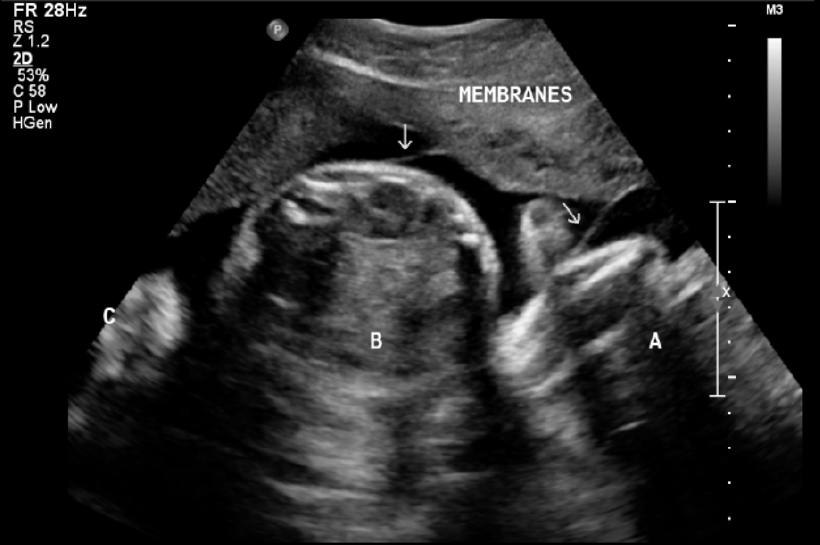
A 49-year-old female, para 0+1 lady had presented with a five-year history of subfertility. Her past history was significant for multiple uterine fibroids for which she had undergone two open myomectomies with the most recent being two years prior to her presentation. She had also been successfully medically managed for hyper-prolactinemia three years prior. There was a remote history of an elective pregnancy termination during her early twenties with no associated complications. She had no history of hypertension and her initial blood pressure was 110/65 mmHg. Her fertility assessment was as follows. A hysterosalpingogram showed an irregular endometrial cavity with an endometrial polyp for which she underwent a hysteroscopic polypectomy. The fallopian tubes were patent bilaterally. The rest of her fertility workup was as follows: a normal seminalysis (volume: 3 ml, concentration: 70 million/ml, total motility: 35%, vitality: 65% and >14% normal forms) and an anti-Mullerian hormone (AMH) level of 0.6 ng/ml (low fertility range). The patient had a natural conception which ended in a complete miscarriage at six week gestation followed by an unsuccessful in vitro fertilization (IVF) attempt during her assessment period. A second IVF cycle (with donor eggs) was successful with a triplet (triamniotic trichorionic) pregnancy (Figure 1). Her antenatal profile was essentially normal as follows: hemoglobin 12.5 g/dl, hepatitis-B surface antigen (HBsAg) negative; HIV negative; venereal disease research laboratory (VDRL) Negative with blood group O and positive Rhesus factor. The anomaly ultrasound scan done at 21st week detected no fetal anomalies. A subsequent growth scan at 27 weeks gestation revealed normal growth in all three fetuses. The patient developed a progressively worsening generalized edema and painful edematous vulvar swelling from 23 weeks gestation and severe pre-eclampsia at 28th week with an admitting blood pressure of 160/110 mmHg. The investigations done revealed an elevated urine albumin creatinine ratio of 64.5 mg/mmol (macroalbuminuria range) with elevated liver transaminases (aspartate aminotransferase (AST) 122 units/liter; Alanine aminotransferase (ALT) 99 units/liter). The full blood count revealed normal parameters with hemoglobin of 11.6 g/dl and a platelet count of 157,000/ml. The patient received magnesium sulfate for seizure prophylaxis (4 g slow intravenous infusion followed by 1 g per hour maintenance dose until 24 hours post-delivery) and oral labetatol 200 mg thrice daily for blood pressure control. Two doses of betamethasone 12 mg were administered intramuscularly 24 hours apart for fetal lung maturation after which delivery was performed via cesarean section. The babies weighed 1.60 kg, 1.07 kg and 1.22 kg at birth and were admitted to the neonatal high dependency unit. The liver function tests gradually improved post-delivery normalizing by the fifth day (AST: 34 units/liter, ALT: 28 units/liter) with normalization of blood pressure. Labetalol was stopped two weeks post-delivery and patient encouraged to continue having daily blood pressure monitoring at home. The painful vulval swelling and the elevated blood pressure resolved by two weeks post-partum. The blood pressure at the six week post-natal review was 110/70 mmHg. The babies did well in the nursery and were allowed home at 2 kg body weight as per the hospital guidelines for preterm babies and are currently doing well. The mother remained normotensive during her post-natal follow-up to the last review six months post-delivery. | ||||||
| Case 2 | ||||||
|
A 54-year-old female, para 0+1 presented with a four-year history of subfertility. She previously had a missed miscarriage for which she underwent a manual vacuum aspiration about 20 years prior to her presentation. There were no previous hospitalizations or other surgical procedures. The blood pressure on initial assessment was 110/70 mmHg. Fertility assessment of the patient was as follows; the HSG showed bilateral tubal blockage, the hormonal profile was in the post-menopausal range (AMH level of below 0.3 ng/ml and FSH level of 60.14 µIU/ml) while the seminalysis was essentially normal. She achieved a successful singleton pregnancy following an IVF cycle with donor eggs. Her antenatal profile was unremarkable (Hb 12.5 g/dl, HBsAg Negative, HIV Negative, VDRL Negative and blood group O and Rhesus factor positive). The trisomy (18 and 21) and neural tube defect screening classified her as low risk with a normal anomaly ultrasound scan at 19 weeks gestation. At 34th week, the patient developed severe gestational hypertension (blood pressure 180/110 mmHg), and the growth scan showed severe fetal growth restriction (FGR) necessitating her delivery. She received a 20 mg intravenous bolus of labetalol after which her blood pressure dropped to 160/90 mmHg after which it was controlled on oral labetalol 200 mg thrice daily. The laboratory tests revealed no proteinuria (urine albumin creatinine ratio of 1.5 mg/mmol), with normal full blood count and liver function tests. In addition, she received antenatal steroids for fetal lung maturation (2 doses of betamethasone 12 mg administered 24 hours apart). Induction of labor was commenced with dinoprostone 3 mg administered per-vaginally every six hours after the second dose of betamethasone. The patient subsequently underwent an urgent cesarean section after a failed induction having had no cervical changes after the second dose of dinoprostone. The outcome was a live infant with a birth weight of 1.46 kg. The baby was transferred to the neonatal high dependency unit for further management till discharge. The baby did well and weighed 4.8 kg at the 10th week postnatal review. The mother’s blood pressure settled by sixth week post-delivery (measured value of 110/60 mmHg). The patient has remained normotensive during her follow-up post-delivery and is currently on lifestyle measures to maintain her normotensive state. | ||||||
| ||||||
|
DISCUSSION
| ||||||
|
The number of women seeking to achieve a pregnancy at very advanced maternal age (VAMA) is progressively increasing [1][2]. This is due to various factors [4][5][9] making delayed childbirth possible and desirable at such ages. Some of these factors include better access to contraception, higher career goals and the advances in reproductive technology. In Tanzania for instance, the number of women giving birth after the age of 35 increased from 10.3% to 14.5% over a seven-year period (2005–2011) [10]. This has similarly been observed in the India, USA, Norway and South Africa where there is a general increase in the number of women giving birth at an advanced age (maternal age >35) [2][4][11][12]. Very advanced maternal age is uncommon in communities where earlier marriages is the norm. In these communities, pregnancies at VAMA most often represent the final or one of the final births for women who continue to child-bear until menopause for social or cultural reasons. Such women are more likely to be of a lower socioeconomic status and of a high parity. This is in contrast to the picture in many countries where advanced and even very advanced maternal age is notably on the rise. Women presenting at VAMA from these communities are more likely to be of a lower parity and of a higher socio-economic status and hence have access to high standards of healthcare and interventions. As such, they are more likely to use ART and generally have more favorable pregnancy outcomes with less still births [7]. Both our clients fall in this latter category. They were of a lower parity and of a high socio-economic status and were willing to incur whatever costs necessary to enable them get a baby. The very advanced maternal age is associated with a decline in fecundity [6]. This is due to in part the declining ovarian reserve as evidenced by low levels of anti-Mullerian hormone (AMH) and antral follicular counts (AFC) which are proxy indicators of the ovarian reserve [13]. Both of our patients had AMH levels in the low fertility range. Moreover, there is a greater occurrence of uterine and tubal anomalies with greater maternal ages. The uterine pathologies include endometrial polyps and uterine fibroids whose occurrence is greater with advancing maternal age [14]. Fibroids, especially those with a sub mucosal or intramural component are associated with low fertility. Myomectomy would result in uterine scarring and synechiae further worsening the subfertility. This can be ruled out through hysteroscopy which is useful for diagnosis and treatment of the intrauterine adhesions [15]. One of our clients had undergone two previous myomectomies and was found to have an endometrial polyp which was hysteroscopically resected after which she was able to conceive through ART. This was possibly contributing to her inability to conceive. Tubal factors are another major cause of subfertility accounting for up to 50% of the subfertility causes [16]. Their occurrence has been shown to be equally high in the VAMA group [7] possibly due to a greater lifetime chance for genital infections to occur, a major cause of tubal blockage [17]. One of our clients had bilateral tubal blockage on HSG potentially making natural conception difficult. Other contributory factors for low fecundability at VAMA is the reduced coital frequency owed to declining sexual desire, lubrication difficulties and the constitutional decline in male fertility with increased age [18]. Such factors worsen the subfertility burden and necessitate early intervention whenever a clinician encounters women at VAMA. The sexual concerns should be addressed as much as the subfertility. Various ART interventions have resulted in many women at VAMA achieving pregnancies bringing forth the continued challenge of managing them to achieve a live birth [7][8]. Some of the ART interventions in use include fertility preservation through oocyte or embryo cryopreservation and oocyte donation [6]. Both our patients had conception challenges necessitating the use of donor eggs to achieve a pregnancy. Another viable intervention offered to the subjects was surrogacy though their determination to carry their own baby made it less favored. This option was however to be considered had the IVF cycles failed. The fertility challenge has been shown to cause significant psychological distress and should necessitate not delaying the ART interventions [3]. Very advanced maternal age is associated with an increase in various medical conditions which have a negative impact on pregnancy. Some of these include obesity, diabetes mellitus and hypertension [7]. Unlike this expected general trend, none of our patients had a pre-existing condition like diabetes mellitus or hypertension and both had normal body mass indices (BMI). However, larger numbers might have proven us otherwise. This would be attributable to the higher socioeconomic status of our subjects as suggested by Caloran (2013) [2] making them more conscious of their general wellbeing hence better health seeking behavior. The better health seeking behavior has moreover resulted in many women of VAMA having better pregnancy outcomes just like our clients. With ART comes the challenge of multiple pregnancies which increases pregnancy complications [19] independent of the maternal age. Low birth weight and preterm birth are higher with multiple pregnancies. This is also the case for pregnancies following oocyte donation independent of the other factors such as age and number of fetuses [20]. This was the case in our clients who were both delivered preterm. Moreover, both our patients had a greater occurrence of pregnancy complications resulting in preterm deliveries [4][6]. One client had severe gestational hypertension with IUGR at 32nd week while the other had severe pre-eclampsia and a rare occurrence of vulvodynia at 28th week. The risk of preeclampsia is two to three times greater than that in women under the age of 35 years [2]. This necessitates close follow-up and interventions to reduce severe pre-eclampsia such as Ascard-75 (junior aspirin) which our patients were on [21]. Other common complications at VAMA include gestational diabetes though none of our patients screened positive for gestational diabetes [4][11]. Moreover, the hospitalization rates during pregnancy have been reported to be high due to these pregnancy complications. Both our patients were hospitalized in the third trimester due to the pregnancy complications. Important during the antenatal follow-up is the aneuploidy screening as the risk of chromosomal anomalies has been shown to increase with age [22]. This is a known cause of early miscarriages. These complications have resulted in a greater occurrence of preterm births among VAMA potentially increasing the perinatal morbidity and mortality [23]. The risk of operative delivery is also increased partly due to the multiple gestation and the so called precious baby syndrome [24]. However, the overall risk of perinatal mortality is low when the pregnancies are optimally managed and many of these women are able to have their babies as discerned. | ||||||
|
CONCLUSION
| ||||||
|
Childbearing at very advanced maternal age is challenging from conception to delivery. Most of these women are subfertile requiring assisted reproductive technology (ART) and are more likely to have adverse pregnancy outcomes principally resulting from preterm births with a resultant greater maternal and perinatal mortality and morbidity. With increasing trend towards delayed child bearing, the society needs to equip itself for the increased demand for ART and the need for sophisticated prenatal, perinatal and postpartum care with the goal of meeting the maternal need of having a baby. | ||||||
|
REFERENCES
| ||||||
| ||||||
|
[HTML Abstract]
[PDF Full Text]
|
|
Author Contributions
Felix Mwembi Oindi – Substantial contributions to conception and design, Acquisition of data, Analysis and interpretation of data, Drafting the article, Revising it critically for important intellectual content, Final approval of the version to be published Evan Sequeira – Substantial contributions to conception and design, Acquisition of data, Revising it critically for important intellectual content, Final approval of the version to be published Steve Kyende Mutiso – Substantial contributions to conception and design, Revising it critically for important intellectual content, Final approval of the version to be published |
|
Guarantor
The corresponding author is the guarantor of submission. |
|
Source of support
None |
|
Conflict of interest
Authors declare no conflict of interest. |
|
Copyright
© 2017 Felix Mwembi Oindi et al. This article is distributed under the terms of Creative Commons Attribution License which permits unrestricted use, distribution and reproduction in any medium provided the original author(s) and original publisher are properly credited. Please see the copyright policy on the journal website for more information. |
|
|