| |
|
|
|
Case Report
| ||||||
| A case report of acute mesenteric ischemia post coronary artery bypass graft with concomitant aortic valve replacement | ||||||
| Karthigesu Aimanan1, Yee Ling Tan2, Saravana Kumar Karupiah3, Muhammad Nor3, Mohamad Arif3, Chew Loon Guan2, Balaji Padmanaban3 | ||||||
|
1Department of General Surgery, National University of Malaysia, Malaysia.
2Department of Vascular and General Surgery, Serdang Hospital, Selangor, Malaysia. 3Department of Cardiothoracic Surgery, Serdang Hospital, Selangor, Malaysia. | ||||||
| ||||||
|
[HTML Abstract]
[PDF Full Text]
[Print This Article]
[Similar article in Pumed] [Similar article in Google Scholar] 
|
| How to cite this article |
| Aimanan K, Tan YL, Karupiah SK, Nor M, Arif M, Guan CLPadmanaban B. A case report of acute mesenteric ischemia post coronary artery bypass graft with concomitant aortic valve replacement. Int J Case Rep Images 2016;7(6):392–396. |
|
Abstract
|
|
Introduction:
The incidence of post-cardiac surgery gastrointestinal emergencies ranges between 0.4–2.9% and are often of varying diagnoses. Although acute mesenteric ischemia is infrequent, it represents 10–67% of these complications and carries an overall mortality rate of almost 95% of non-surgically treated patients compared to approximately 57% of surgically treated patients. The high number of mortalities is mainly due to its protean clinical presentations resulting in a delay in diagnosis.
Case Report: We report a case of acute mesenteric ischemia in a patient who had undergone coronary artery bypass graft (CABG) with concomitant aortic valve surgery. Progressive abdominal distention and rising lactate level were the features pointed towards diagnosis of mesenteric ischemia in this patient. Based on a literature search and review, we discuss on the pearls and pitfalls in the management of this case; with aim to improve the outcome of such similar case in future. Conclusion: Gastrointestinal complications post cardiac surgery should be treated aggressively. Routine utilization of risk assessment tools such as GICS scoring model; timely intervention such as lower the threshold for diagnostic laparoscopy and selective mesenteric angiography may improve the outcome of this group of patients. | |
|
Keywords:
Acute mesenteric ischemia, Mesenteric angiography, Diagnostic laparoscopy
| |
|
Introduction
| ||||||
|
Mesenteric ischemia post-cardiac surgery is a rare event with incidence rate ranging from 0.2–0.4%. Despite the rare occurrence it carries an overall mortality rate of almost 95% of non-surgically treated patients, compared to approximately 57% of surgically treated patients [1]. The causes of acute mesenteric ischemia can be divided into: acute embolism to the superior mesenteric artery, acute thrombosis of an atherosclerotic plaque, splanchnic vasoconstriction leading to regional ischemia that is called non-occlusive mesenteric ischemia (NOMI), and mesenteric venous thrombosis. Most often intestinal ischemia after cardiac surgery is due to an NOMI. Arterial emboli as in this patient is less commonly seen, however, the principle of management of bowel ischemia remains same despite the aetiology. Diagnosing this condition in the intensive care setting is difficult due to its subtle presentation. Surgeons and trainees should be well accustomed to the heterogeneous presentation and appropriate diagnostic modalities to aim for an early intervention. | ||||||
|
Case Report
| ||||||
|
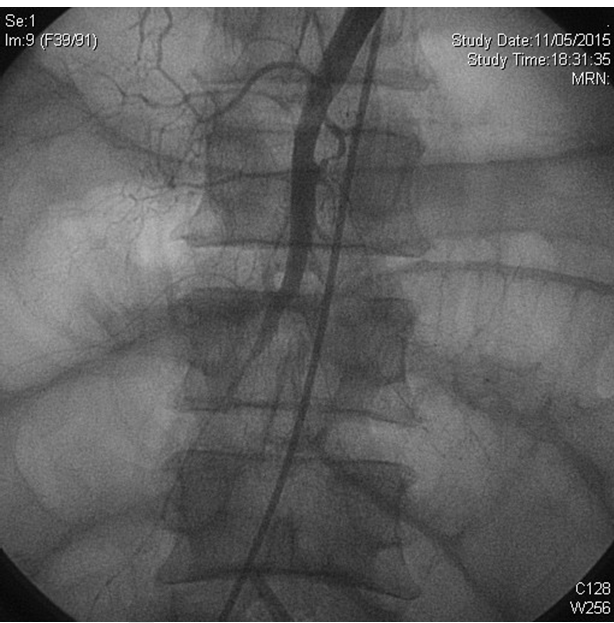
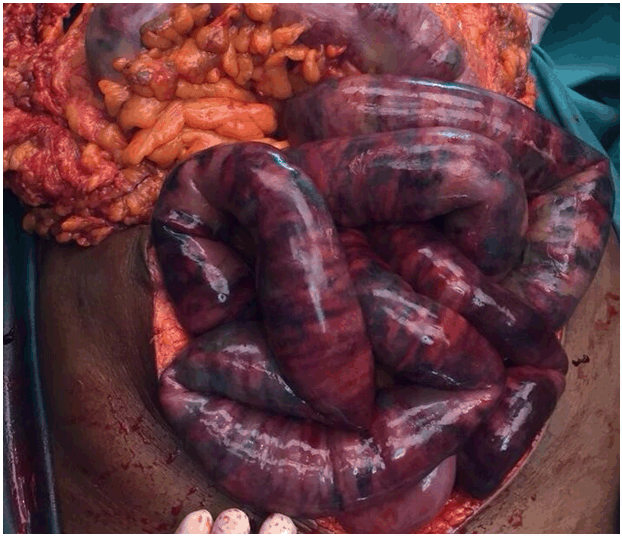
A 68-year-old male with two vessel disease involving left main stem coronary artery and severe aortic regurgitation was electively admitted for CABG. He has underlying hypertension, dyslipidemia and diabetes mellitus on treatment. Upon admission, he complained of chest pain on moderate activity (CCS 2) and paroxysmal nocturnal dyspnea. Otherwise denied orthopnea and leg swelling. Cardiovascular examination revealed a grade 3 mid-diastolic murmur at left second intercostal space radiating to the axilla. Respiratory and abdominal examinations were unremarkable. His coronary angiogram was dated three months ago showed distal left main stem coronary artery stenosis (LMS) of 50–70%, proximal and distal left anterior descending coronary artery stenosis of 30–40%, proximal left circumflex stenosis of 50% and normal right coronary artery. An echocardiogram performed three months ago revealed good left ventricular function, moderate aortic regurgitation with aortic valve annulus 1.8 cm2. Preoperative blood investigations were unremarkable. Initially, this patient was planned for coronary artery bypass graft. Perioperative discussion with cardiologist suggested for concomitant aortic valve replacement given moderate aortic regurgitation in left main stem coronary artery disease. Surgery was performed in the usual manner, distal anastomosis of conduits followed by valve replacement and later proximal anastomosis. Pedicled left internal mammary artery grafted to diagonal branch, saphenous vein graft anastomosed to left anterior descending artery and obtuse marginal with good distal runoff. The aortic annulus was calcified with a thickened valve size of 19 mm perimount tissue. Bioprosthesis valve was replaced via aortotomy. Intraoperative transoesophageal echocardiogram revealed well-functioning valve with no perivalvular leakage. The patient was transferred to ICU with stable hemodynamics. On day-1 postoperative, the patient was extubated and started on routine post-operative medications such as metoprolol, aspirin, and subcutaneous fondaparinux. On day-3 postoperative, he became more tachypneic, and the chest X-ray showed atelectasis of left lower zone. A 12-lead ECG showed atrial fibrillation and he was started on amiodarone. Shortly after that he was intubated given impending respiratory collapse due to hypoxemia, rising CO2, and lactate level. Transoesophageal echocardiogram post intubation showed good left ventricular contractility and excluded cardiac tamponade. The patient was referred to general surgery on the same day due to worsening abdominal distention and coffee ground bleeding from Ryle's tube. Urgent esophagoduodenoscopy performed by general surgical team noted Forrest 3 ulcer at antrum otherwise no active bleeding. An abdominal X-ray revealed dilated small bowel 4 cm in size, with no thickening of the bowel wall (Figure 1). Progressive abdominal distention, rising lactate level, and negative esophagoduodenoscopy prompted us towards further imaging to rule out mesenteric ischemia. Mesenteric angiography was done after few hours showed occluded superior mesenteric artery. Emergency exploratory laparotomy revealed ischemic bowel extending from segment two of duodenum until rectum (Figure 2). Abdomen was closed, and patients' poor prognosis was explained to family members. The patient became more unstable later on the same day (day-3 postoperative) and passed away despite on inotropic support. | ||||||
| ||||||
| ||||||
|
Discussion
| ||||||
|
The causes of acute mesenteric ischemia can be divided into: acute embolism to the superior mesenteric artery, acute thrombosis of an atherosclerotic plaque, splanchnic vasoconstriction leading to regional ischemia that is called non-occlusive mesenteric ischemia (NOMI), and mesenteric venous thrombosis. Most often intestinal ischemia after cardiac surgery is due to an NOMI. Arterial emboli as in this case is less commonly seen, however, the principle of management of bowel ischemia remains same despite the aetiology. The causes of acute mesenteric ischemia can be divided into: acute embolism to the superior mesenteric artery, acute thrombosis of an atherosclerotic plaque, splanchnic vasoconstriction leading to regional ischemia that is called non-occlusive mesenteric ischemia (NOMI), and mesenteric venous thrombosis. Most often intestinal ischemia after cardiac surgery is due to an NOMI. Arterial emboli as in this case is less commonly seen, however, the principle of management of bowel ischemia remains same despite the aetiology. Angiography remain a better imaging option for visualization of the vessels and a therapeutic intervention. However, angiography is an invasive, time consuming and potentially nephrotoxic procedure. Its routine use is controversial in emergency situations, and therefore, it is employed only in selected patients. Klotz et al. has suggested few indications for selective mesenteric angiography as a :
These features should guide the primary team to arrange for an early selective angiography, thus facilitate a timely intervention. When used in the absence of peritonitis signs, angiography has been shown to improve the survival rate [3]. Computed tomography scan is another alternative but it is of limited use in the diagnosis of AMI. A normal CT finding in a patient with high suspicion of mesenteric ischemia should prompt an angiography without delay [4]. Early intervention of mesenteric ischemia in the initial 6–8 hours resulted in a good postoperative outcome. The low rate of morbidity, as well as the easy availability and repeatability of laparoscopy in principle, favor the use in urgent diagnosis for mesenteric ischemia over time-consuming imaging modalities. Diagnostic laparoscopy reports a high sensitivity (94%) for the correct diagnosis of intra-abdominal complications after major cardiac surgery [5]. Another mode of investigation been described in literature is diagnostic peritoneal lavage. Lee and colleague in their retrospective study have concluded diagnostic peritoneal lavage is associated with reduced operative intervention yet improved survival, when compared with patients evaluated with either CT or no diagnostic modality. These data support that, for critically ill intensive care patients suspected of harbouring intra-abdominal pathology such as acute mesenteric ischemia, diagnostic peritoneal lavage should be a mainstay in the preoperative diagnostic evaluation. The conventional intraoperative method of determining bowel ischemia is by visual evaluation of the bowel based on arterial pulsations, intestinal peristalsis, and color, although these findings are not specific. Laparotomy without a preoperative imaging always has a risk of underestimating the extent of ischemia by failing to remove the bowel segments with affected mesenteric vessels. An alternative reliable technique to determine the hypoxic damage of bowel wall is by detecting intravenously injected sodium fluorescein using a wood lamp [6]. In patients with arterial occlusive AMI, when significant length of bowel is potentially viable, establishing blood flow before resection of the infarcted bowel may improve the survival. Although surgical revascularization is the standard procedure, embolectomy, thrombectomy, endarterectomy, as well as endovascular stenting provide appealing alternatives with a good short-term outcome. Contraindications to revascularization include apparent infarction of the bowel supplied by the affected artery, patient's instability hinder further resection, and mesenteric vein thrombosis. | ||||||
|
Conclusion
| ||||||
|
Post-cardiac surgery gastrointestinal complications should be treated aggressively to ensure a good outcome. The outcome of mesenteric ischemia post operatively can be improved with the utilization of GICS scoring model, lower the threshold for diagnostic laparoscopy or laparotomy and timely mannered selective mesenteric angiography. | ||||||
|
References
| ||||||
| ||||||
|
[HTML Abstract]
[PDF Full Text]
|
|
Author Contributions
Karthigesu Aimanan – Substantial contributions to conception and design, Acquisition of data, Analysis and interpretation of data, Drafting the article, Revising it critically for important intellectual content, Final approval of the version to be published Yee Ling Tan – Analysis and interpretation of data, Revising it critically for important intellectual content, Final approval of the version to be published Saravana Kumar Karupiah – Analysis and interpretation of data, Revising it critically for important intellectual content, Final approval of the version to be published Muhammad Nor – Analysis and interpretation of data, Revising it critically for important intellectual content, Final approval of the version to be published Mohamad Arif – Analysis and interpretation of data, Revising it critically for important intellectual content, Final approval of the version to be published Chew Loon Guan – Analysis and interpretation of data, Revising it critically for important intellectual content, Final approval of the version to be published Balaji Padmanaban – Analysis and interpretation of data, Revising it critically for important intellectual content, Final approval of the version to be published |
|
Guarantor of submission
The corresponding author is the guarantor of submission. |
|
Source of support
None |
|
Conflict of interest
Authors declare no conflict of interest. |
|
Copyright
© 2016 Karthigesu Aimanan et al. This article is distributed under the terms of Creative Commons Attribution License which permits unrestricted use, distribution and reproduction in any medium provided the original author(s) and original publisher are properly credited. Please see the copyright policy on the journal website for more information. |
|
|