| |
|
|
|
Case Report
| ||||||
| Disseminated varicella zoster in an immunocompromised patient: A case report | ||||||
| Raymond E. Kennedy1, Narpinder Dhanoa2, Kevin Frey3 | ||||||
|
1BS, MD Candidate, Northeast Ohio Medical University, Rootstown, Ohio, USA.
2MD, Canton Medical Education Foundation, Canton, Ohio, USA. 3MD, Assistant Program Director, Canton Medical Education Foundation, Canton, Ohio, USA. | ||||||
| ||||||
|
[HTML Abstract]
[PDF Full Text]
[Print This Article]
[Similar article in Pumed] [Similar article in Google Scholar] 
|
| How to cite this article |
| Kennedy RE, Dhanoa N, Frey K. Disseminated varicella zoster in an immunocompromised patient: A case report. Int J Case Rep Images 2016;7(3):154–157. |
|
Abstract
|
|
Introduction:
Human herpes virus 3 (HHV-3) is a human-specific virus known to be the cause behind chicken pox and varicella zoster. Presentation of this virus can vary depending on the immune status of the host. Typically, a uniform rash in a single dermatomal distribution is all that manifests. Alternatively, as in our case, a widespread and painful vesicular rash can erupt causing significant impairment requiring hospitalization.
Case Report: An HIV-positive immunocompromised male presented with disseminated varicella zoster (VZV) despite adequate compliance with HAART therapy. The painful vesicles sporadically covered all areas of the body (feet, abdomen, back, face, etc.)and did not present in the classic dermatomal distribution found in immune competent hosts. Despite adequate therapy with a new combination HIV medication, the patient's CD4 count had diminished and he was admitted for suspected disseminated varicella zoster. Polymerase chain reaction (PCR) was later able to confirm the diagnosis. Conclusion: Varicella zoster can have varying presentations depending on the immune status of the host. In an immunocompromised state, such as in our patient, the presentation can be widespread and more severe. Early diagnosis with polymerase chain reaction (PCR) and treatment with anti-virals and analgesics is a top priority for the patient's well-being and clinical outcome. In our case, early detection and treatment allowed only for a minimal duration of the disseminated virus with prompt recovery and discharge from the hospital. Further investigation of the virus' interaction with medications, such as HAART therapy, that potentially alters the expression of the virus despite vaccination, as some studies suggest, could be beneficial. | |
|
Keywords:
Anti-viral, Acyclovir, Disseminated, HAART, Herpes Zoster, HHV, Immunocompromised, Varicella zoster, VZV, Varicella
| |
|
Introduction
| ||||||
|
Human herpes virus 3 (HHV-3) of the Herpesviridae family is an exclusively human virus that causes chicken pox and varicella zoster (also referredto as shingles) [1]. A single serotype of a virus can have varying presentations depending on the immune status of the host. In immunocompromised hosts, varicella demonstrates a disseminated presentation ratherthan the classic dermatomal distribution. In our case, a young male with HIV presented with a wide-spread, disseminated case of VZV despite treatment with newer combination HIV multi-drug therapy. The patient's CD4 count had dropped significantly since his diagnosis, and start of the multi-drug medication, increasing his susceptibility to opportunistic infections. A 2013 study showed that HAART therapy might have different effects on VZV depending on the duration of the treatment, which could potentially explain the presentation in our patient [2]. | ||||||
|
Case Report
| ||||||
|
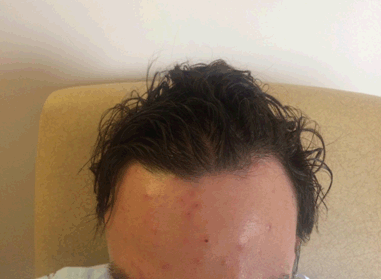
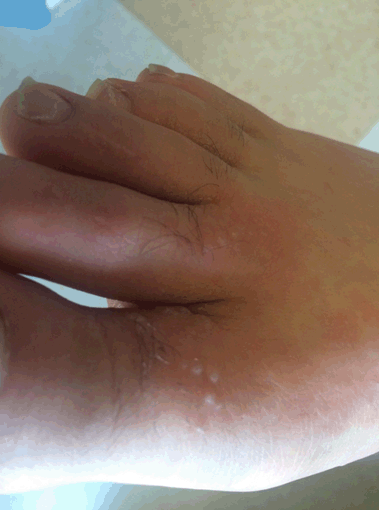
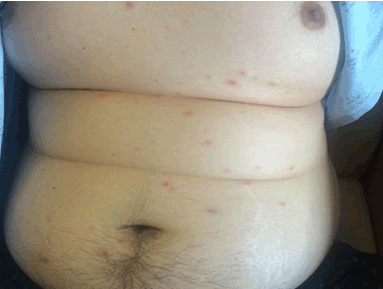
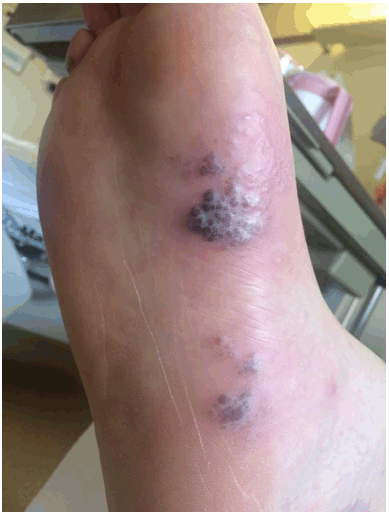
A 30-year-old male presented to the emergency department complaining of a painful rash. He was diagnosed with HIV three months prior to his admittance and was compliant at the time with HAART therapy taking Stribild (a combination of elvitegravir, cobicistat, emtricitabine and tenofovir). In addition, he was compliant with azithromycin and bactrim for prophylaxis. The rash started on his forehead and, within 48 hours, had spread down his to neck, upper chest, and lower extremities. His latest CD4 count (obtained three months ago upon diagnosis) was 132 cells/mm3 and viral load was 36 copies/mL. He had no recent sick contacts, and denied any tick bites, recent travel, fever, chills or nausea/vomiting. Upon admission, laboratory findings showed: blood pressure 125/74 mmHg and pulse 91 bpm 1 Resp:18 breaths/min, SaO2 98% on room air, temperature 36.4C, white blood cell count 3×10⁹/L, platelet 122×103/µL, absolute neutrophil count 1.5, CD4 count 65 cells/mm3, viral load 1639 copies/mL. On physical examination, the rash was composed of small vesicles with surrounding erythema, and was painful to the touch. It was located mainly on the forehead (Figure 1), between the patient's toes (Figure 2) and plantar aspect of the foot (Figure 3), with scattered lesions on his legs, back (Figure 4), and abdomen (Figure 5). The vesicular lesions appeared to be in varying stages with no umbilication. The patient was immediately started on intravenous acyclovir 10 mg/kg IV q8hr [3], placed in isolation, and was monitored for progression of the lesions into the mouth or eyes. Within 24–36 hours, half of the body lesions had begun to crust over with no newly forming lesions. After 48 hours of treatment, all of the lesions crusted without further vesicle progression. | ||||||
| ||||||
| ||||||
| ||||||
| ||||||
| ||||||
|
Discussion
| ||||||
|
Normally, VZV is a clinical diagnosis; however, laboratory diagnosis becomes necessary in cases of infection control, or immunocompromised patients such as this case [4]. Several days after admission and initial treatment, polymerase chain reaction (PCR)---the diagnostic treatment of choice-confirmed the presence of varicella zoster. Varicella Zoster (VZV) is a member of the herpesviridae family (HHV-3) known to affect humans [5]. Depending on age, its presentation varies causing chicken pox in the young and shingles in the elderly. Once infected, the virus remains dormant in the dorsal root ganglion of nerves, only to be re-activated at a later time (typically along the dermatome for which it lay dormant). In aging adults, or immunocompromised individuals, the body cannot suppress the virus and a reactivation of zoster can present as a widespread rash-referred to as disseminated. The level of the absolute CD4 count can also alter the severity of presentation in an immunocompromised state [6]. When this occurs, the painful lesions are diffuse, at varying stages of development, and affect all parts of the body. Treatment is aimed at minimizing the patient's pain and shortening the duration of the episode. Over-the-counter pain medications are typical first line treatment, but the use of anti-virals such as acyclovir and its derivatives may be necessary. In an immunocompromised patient, anti-virals can be used as primary treatment in the acute setting, as well as prophylaxis to prevent recurrent episodes. | ||||||
|
Conclusion
| ||||||
|
Varicella zoster virus (VZV), a member of the Herpesviridae family, can vary in presentation depending on the patient's age and immune status. Early detection and treatment with analgesics and antivirals is important to limit the pain and duration of each episode. In an immunocompromised patient, early treatment is even more imperative as the presentation is typically more severe. In our case, the clinical outcome was excellent due to the rapid diagnosis and treatment by the medical team. | ||||||
|
Acknowledgements
| ||||||
|
Paloma Kennedy - Technical assistance and editing. | ||||||
|
References
| ||||||
| ||||||
|
[HTML Abstract]
[PDF Full Text]
|
|
Author Contributions
Raymond Kennedy – Substantial contributions to conception and design, Acquisition of data, Analysis and interpretation of data, Drafting the article, Revising it critically for important intellectual content, Final approval of the version to be published Narpinder Dhanoa – Substantial contributions to conception and design, Acquisition of data, Analysis and interpretation of data, Drafting the article, Revising it critically for important intellectual content, Final approval of the version to be published Kevin Frey – Substantial contributions to conception and design, Acquisition of data, Analysis and interpretation of data, Drafting the article, Revising it critically for important intellectual content, Final approval of the version to be published |
|
Guarantor of submission
The corresponding author is the guarantor of submission. |
|
Source of support
None |
|
Conflict of interest
Authors declare no conflict of interest. |
|
Copyright
© 2016 Raymond Kennedy et al. This article is distributed under the terms of Creative Commons Attribution License which permits unrestricted use, distribution and reproduction in any medium provided the original author(s) and original publisher are properly credited. Please see the copyright policy on the journal website for more information. |
|
|