| |
|
|
|
Case Series
| ||||||
| Differential reversibility in heart failure due to hypothyroidism: A series of contrasting cases with review of literature | ||||||
| E. Samuel Roberto1, Thein Aung2, Ajay Agarwal3, Roberto J. Colón4 | ||||||
|
1M.D., Medical Resident, Wright State University, Boonshoft School of Medicine, Dayton, OH.
2M.D., Cardiovascular Disease Fellow, Wright State University, Boonshoft School of Medicine, Dayton, OH. 3M.D., FACC, Associate Professor of Medicine, Wright State University, Boonshoft School of Medicine; Department of Cardiology, Veteran Affairs Medical Center, Dayton, OH. 4M.D. FACP, Associate Professor of Medicine, Wright State University, Boonshoft School of Medicine, Dayton, OH. | ||||||
| ||||||
|
[HTML Abstract]
[PDF Full Text]
[Print This Article]
[Similar article in Pumed] [Similar article in Google Scholar] 
|
| How to cite this article |
| Roberto ES, Aung T, Agarwal A, Colón RJ. Differential reversibility in heart failure due to hypothyroidism: A series of contrasting cases with review of literature. Int J Case Rep Images 2016;7(1):1–6. |
|
Abstract
|
|
Introduction:
Ranking third as a leading cause of heart failure in the United States, dilated cardiomyopathy (DCMP) affects 5 in 100,00 adults with an eight-year mortality rate between 70–80%. In the setting of hypothyroidism, DCMP is unique due to its potential reversibility with medical therapy. Thyroid hormone affects cardiac physiology and intracellular calcium regulation via SERCA2 and phospholamban, with concentrations of phospholamban most numerous in the ventricles. Administration of thyroid hormone can restore contractile function. However, the relationship between disease timeline and reversibility in DCMP due to hypothyroidism has not been previously described.
Case Series: A 65-year-old Caucasian male presented with new onset severe dyspnea and fatigue. Thyroid-stimulating hormone was markedly elevated. Following levothyroxine therapy, his dilated cardiomyopathy reversed and returned to normal within six months. LVEF improved from 15–45% with decreased chamber dilation. A 60-year-old Caucasian female presented minimally responsive in overt heart failure due to myxedema coma. History revealed chronically uncontrolled hypothyroidism. TSH was significantly elevated. Following prolonged hospitalization and intravenous levothyroxine therapy, her clinical status began to reverse. LVEF improved from 10–25%, with decreased chamber dilation. Conclusion: Once the underlying mechanism of heart failure was addressed, the cases displayed varying recovery of contractility following thyroid hormone replacement. This may suggest that with longer duration of uncontrolled disease and consequent cardiac structural remodeling, the reversibility diminishes into irreversibility. These cases underscore the need to identify and treat early any contributing hypothyroidism in the setting of new onset dilated cardiomyopathy, as reversibility may be at stake. | |
|
Keywords:
Dilated cardiomyopathy, Heart failure, Hypothyroidism, Reversibility
| |
|
Introduction
| ||||||
|
Ranking third as a leading cause of heart failure in the United States [1], dilated cardiomyopathy affects 5 in 100,00 adults with an eight-year mortality rate between 70–80% [2] [3]. The financial burden of heart failure-related hospitalizations is over $15 billion annually in the United States, an important share of which is attributable to various forms of cardiomyopathy [4]. Dilated cardiomyopathy is a disease of the myocardium characterized by chamber dilation and reduced left ventricular systolic function in the absence of abnormal cardiovascular loading conditions [5] [6]. Although in many cases no cause is identified, DCMP can be attributed to etiologies such as infectious disease, chemotherapy side effects, alcohol abuse, pregnancy, and endocrine diseases including hyperthyroidism and hypothyroidism [6] [7]. It is well known that cardiac tissue structure and function are profoundly influenced by thyroid hormone. Cellular receptors for thyroid hormone are numerous in the myocardium and cardiac myocytes are especially responsive to fluctuations in thyroid hormone levels [8] [9]. Contractility is directly influenced by intracellular free calcium concentrations, in which thyroid hormone plays an important regulatory role [10]. Amidst its widespread cellular effects, two central targets of thyroid hormone influence calcium ion concentration and ultimately contractility: the sarcoplasmic reticulum calcium ATPase (SERCA2) and phospholamban (PLB) [11] [12]. Their dysregulation contributes significantly to the impaired contractility and left ventricular dysfunction that is seen in hypothyroid cardiomyopathy. In the vast majority of cases DCMP is irreversible. Heart failure precipitated by dilated cardiomyopathy due to hypothyroidism is unique for its potential reversibility following thyroid hormone supplementation. Administration of thyroid hormone can restore contractile function. However, the scope and extent of reversibility remains unknown. The following cases describe dilated cardiomyopathy and heart failure due to hypothyroidism, with different timelines and varying degrees of reversibility. The relationship between disease timeline and reversibility giving way to irreversibility in dilated cardiomyopathy due to hypothyroidism has not been previously described. | ||||||
|
Case Series
| ||||||
|
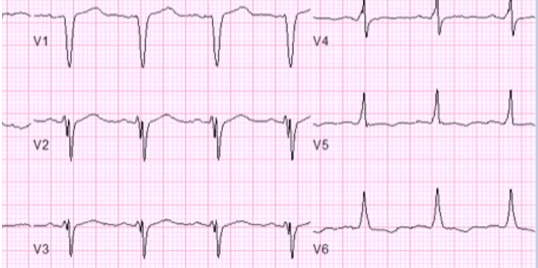
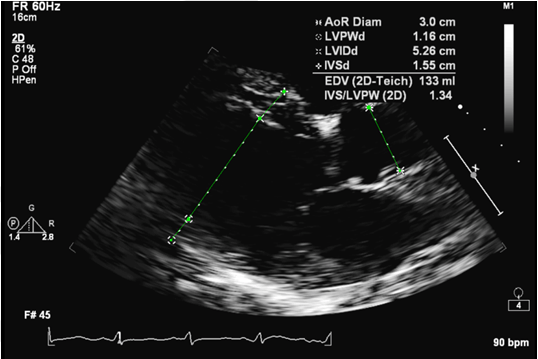
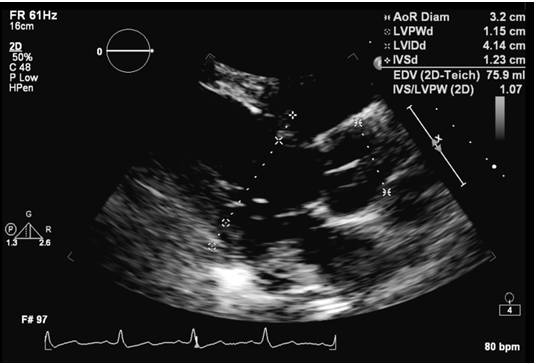
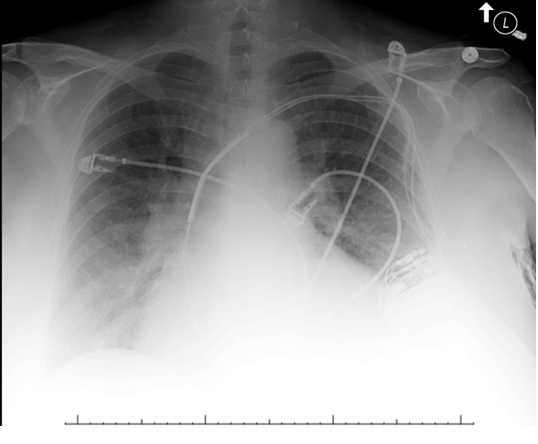
Case 1 On physical exam, the patient had a body mass index (BMI) of 31 kg/m2, temperature of 35.5°C, pulse of 103 beats/min, respiratory rate of 20 breaths/min, and blood pressure at 108/72 mmHg. The patient appeared tired; he had decreased air entry and mild wheezing across both lung fields. His cardiac examination was unremarkable without murmurs, rubs or gallops. The point of maximal impulse was non-displaced, and there was no jugular venous distension and minimal lower extremity edema bilaterally. Chest X-ray was clear with no infiltrates, consolidations or effusion. Electrocardiogram (Figure 1) showed sinus rhythm, an inter ventricular conduction delay (QRS duration 126 ms), non-specific ST changes and T wave inversions V5-V6. Clinical laboratory findings were significant for an elevated creatinine at 1.6 mg/dL, an elevated creatinine phosphokinase of 1158 IU/L, and minimally elevated aspartate transaminase of 55 IU/L. Other lab studies were unremarkable including brain natriuretic peptide, cardiac enzymes, serum electrolytes, coagulation studies, alanine transaminase, alkaline phosphatase, and D-Dimer levels within normal ranges. Echocardiography revealed a severe left ventricular systolic dysfunction [left ventricular ejection fraction 15%] and severe global hypokinesis (Figure 2). Patient was started on guideline-directed medical therapy and admitted for further investigation. Myocardial ischemia was excluded following nuclear stress testing that revealed no reversible scintigraphic abnormalities. On day 2 of admission, a review of the patient's history revealed inconsistent adherence to thyroid hormone supplementation, and the patient admitted to not taking his medication. Thyroid stimulating hormone and free T4 levels were ordered, revealing a markedly elevated TSH (150.20 µIU/mL), and low free T4 (0.3 ng/dL). Following the discovery of these findings, oral levothyroxine was restarted with an initial dose of 50 µg, titrated to 112 µg/day. The patient reported starting to feel an improved constitution within 48 hours. Outpatient follow-up at 6 weeks showed an improving thyroid profile (TSH 17.28 µIU/mL, FT4 1.0 ng/dL), at which time the levothyroxine dose was increased to 150 µg/day. Final thyroid profile at 4 months evidenced sustained improvement (TSH 1.00 µIU/mL, FT4 1.2). Repeat echocardiography at sixth month showed a marked recovery of cardiac contractility with an ejection fraction of 45% on continued adherence to levothyroxine therapy (Figure 3). On follow-up visit his functional status had markedly improved and returned to normal. Case 2 On admission the patient was minimally responsive with a temperature of 36.1°C, and hypopnea. Respiratory rate was 10 breaths/min, blood pressure 100/54 mmHg with a pulse of 74 beats/min. Breath sound decreased bilaterally. Cardiovascular examination revealed distant heart sounds and diffuse non-pitting edema; no jugular venous distention was noted. Her BMI was 38.7 kg/m2. The patient's lips were purple. The remaining examinations was unremarkable. Chest X-ray (Figure 4) showed cardiomegaly and fluid overload with bilateral pleural effusions. Electrocardiogram showed sinus rhythm, an intraventricular conduction delay (QRS duration of 190 ms), and a left bundle branch block that was noted in prior studies as well. TSH on admission was 132.3 µIU/mL, free T4 <0.10 ng/dL, BNP 1937 ng/L, ALT 6025 IU/L, AST 3710 IU/L, and creatinine of 2.5 mg/dL. Troponins were minimally elevated at 0.17 µg/L. Remaining laboratory workup was within normal ranges including erythrocyte sedimentation rate, C-reactive protein, anti-nuclear antibody testing, negative blood cultures, and negative serum viral antibody titers. Echocardiography confirmed a dilated cardiomyopathy with severe left ventricular dilation and systolic dysfunction. Ejection fraction was 10% with diffuse hypokinesis (Figure 5). The end-diastolic diameter of the left ventricle was abnormally dilated at 7.6 cm. To rule out ischemic cardiomyopathy, the patient underwent coronary catheterization that showed no obstructive coronary artery disease. Her profound hypothyroidism was treated with intravenous levothyroxine. She was transitioned to oral regimen and titrated upwards to 200 µg/day by discharge. The patient was transferred to a skilled facility for continued medical care. At four-week follow-up, she demonstrated an improved functional status. Her levothyroxine dose had been titrated to 300 µg daily, and TSH was improved to 22.5 µIU/mL. During that time repeat echocardiography revealed a mild improvement in LV function, EF 25%. She was discharged from the facility in improved and stable clinical condition. | ||||||
| ||||||
| ||||||
| ||||||
| ||||||
|
| ||||||
| ||||||
|
Discussion
| ||||||
|
This case series contributes to a small but growing body of evidence that confirms the reversibility of dilated cardiomyopathy due to hypothyroidism [7] [13]. Thyroid hormones regulate a wide range of effects on the heart through genomic and non-genomic pathways. Thyroid hormone binds to intracellular thyroid hormone receptors (TR), which then bind to thyroid hormone response elements (TRE) in regulatory regions of specific genes [14]. Of the numerous receptor isoforms TR-alpha1 is the isoform most significantly expressed in the heart, regulating genes corresponding to contractility, conduction, pacemaker automaticity, and cellular growth [14]. In a relative absence of thyroid hormone, as in hypothyroidism, TRs act along with co-repressors to silence genetic expression and shut off transcription. Genetic expression and transcription of cardiac proteins within the myocyte principally involve the sarcoplasmic reticulum calcium ATP-ase (SERCA2), phospholamban (PLB), myosin heavy chains alpha and beta, as well as various ion channels including the Na/K ATPase, Na/CA exchanger and voltage-gated K [15]. Hypothyroidism alters the contractile parameters of the heart through a variety of mechanisms and can precipitate a dilated cardiomyopathy. Reduced availability of intracellular calcium results in a dysfunctional systole and diastole, leading to poor contractility and ventricular filling [11]. Other possible hemodynamic changes include an increased systemic vascular resistance, pericardial effusion, endothelial dysfunction, impaired relaxation and increased ventricular filling time, ventricular asynchrony, QT prolongation with risk of Torsades de Pointes, heart failure, and cardiogenic shock [13] [16] [17] [18] . The development of overt heart failure is rare, however, owing to decreased oxygen consumption in cardiac myocytes during the hypothyroid state [14]. In the hypothyroid state, the resultant effects on cardiac myocytes include decrease in the transcription of the sarcoplasmic reticulum Ca2+ ATPase (SERCA2), decreased phosphorylation, thus activation, of phospholamban (PLB), which is an inhibitory regulator of SERCA2 [19]. The end result is reduced intracellular availability of calcium with diminished LV contractility and relaxation [10]. Phospholamban is differentially expressed in the heart, with highest PLB concentrations in ventricular muscle, lower PLB levels expressed in the atria, and the smallest significant amount in the aortic smooth muscle [12]. This discovery has aided understanding the development of left ventricular chamber failure in hypothyroidism, and possible reversal of the condition. Restored levels of thyroid hormone increase PLB phosphorylation leading to inhibition, and the return of the cardiac myocytes to a higher quantity and function of the SERCA2 calcium transporter [11]. Alterations in these biochemical processes appear most responsible for the impairment of contractility and relaxation in hypothyroid cardiomyopathy, as well as the resolution of the condition following treatment. Additional mechanisms have been proposed for the pathogenesis of hypothyroid cardiomyopathy, such as the decreased expression of a-myosin heavy chain. This was described in a similar human case of dilated cardiomyopathy and hypothyroidism [20], with a-MHC mRNA levels assessed by end myocardial biopsy. It is conceivable that reduced levels of alpha-myosin heavy chains could further correlate with the decreased contractile state. However, since the beta-myosin heavy chain is the predominant fiber in humans, the correlation with reduced levels of alpha-MHC is most likely minor. Oliveros-Ruiz et al. found in 2013 that the reversibility of dilated cardiomyopathy due to hyperthyroidism was associated strongly with the duration of a patient's disease prior to receiving treatment [21]. Although this association is still speculative in the case of hypothyroidism, the contrasting recovery between our cases supports that reversibility in hypothyroid cardiomyopathy is variably influenced by timely and sustained treatment. Diagnostic testing of thyroid function is a now class I indication of the ACCF/AHA guidelines for the management of heart failure [22]. Earlier identification and intervention for this form of cardiomyopathy will work to reduce the financial costs of hospitalizations and readmissions in heart failure. These cases highlight the connection between thyroid dysfunction and the development of a dilated cardiomyopathy. Moreover, the importance of prompt treatment in affecting reversibility. The first case demonstrated a short time course with marked improvement. The second case was more chronic in nature and displayed a less prominent recovery. Once the underlying mechanism of heart failure was addressed, the cases displayed varying degrees of reversibility following thyroid hormone replacement. This was quantified by differential restoration of contractile function. The varying degrees of recovery in these cases suggest a temporal association between uncontrolled disease and extent of reversibility. | ||||||
|
Conclusion
| ||||||
|
In conclusion, the differential reversibility between our cases may suggest that with a longer duration of uncontrolled disease and consequent cardiac structural remodeling, the possibility and extent of reversibility diminishes into irreversibility. We therefore strongly emphasize the need to identify and treat early any contributing hypothyroid dysfunction in the setting of new onset dilated cardiomyopathy, as reversibility may be at stake. | ||||||
|
Acknowledgements
| ||||||
|
We are grateful to Dr. Ronald Markert (PhD) for his help in editing the manuscript. | ||||||
|
References
| ||||||
| ||||||
|
[HTML Abstract]
[PDF Full Text]
|
|
Author Contributions:
Edward Samuel Roberto – Substantial contributions to conception and design, Acquisition of data, Analysis and interpretation of data, Drafting the article, Revising it critically for important intellectual content, Final approval of the version to be published Thein Aung – Analysis and interpretation of data, Revising it critically for important intellectual content, Final approval of the version to be published Ajay Agarwal – Acquisition of data, Revising it critically for important intellectual content, Final approval of the version to be published Roberto J. Colon – Acquisition of data, Revising it critically for important intellectual content, Final approval of the version to be published |
|
Guarantor of submission
The corresponding author is the guarantor of submission. |
|
Source of support
None |
|
Conflict of interest
Authors declare no conflict of interest. |
|
Copyright
© 2016 Edward Samuel Roberto et al. This article is distributed under the terms of Creative Commons Attribution License which permits unrestricted use, distribution and reproduction in any medium provided the original author(s) and original publisher are properly credited. Please see the copyright policy on the journal website for more information. |
|
|