| |
|
|
|
Case Report
| ||||||
| An interesting presentation of progressive multifocal leukoencephalopathy in apparently immunocompetent individual | ||||||
| Doungporn Ruthirago1, Parunyou Julayanont1, Jongyeol Kim2 | ||||||
|
1MD, Resident Physician, Department of Neurology, Texas Tech University Health Sciences Center, Lubbock, Texas.
2MD, Associate Professor, Department of Neurology, Texas Tech University Health Sciences Center, Lubbock, Texas. | ||||||
| ||||||
|
[HTML Abstract]
[PDF Full Text]
[Print This Article]
[Similar article in Pumed] [Similar article in Google Scholar] 
|
| How to cite this article |
| Ruthirago D, Julayanont P, Kim J. An interesting presentation of progressive multifocal leukoencephalopathy in apparently immunocompetent individual. Int J Case Rep Images 2016;7(1):18–24. |
|
Abstract
|
|
Introduction:
Progressive multifocal leukoencephalopathy (PML) is a very uncommon disease in immunocompetent individual. There are only rare case reports of PML in immunocompetent hosts over the past 15 years. Almost all presented with neurological deficits that progressed over a few months to years. Frontal lobe-related behavioral change is an uncommon presentation and the rapid progression within two weeks has never been reported.
Case Report: We report a 64-year-old immunocompetent male who developed progressive perseveration, less interaction, and mutism within two weeks. Neurological examination did not show apparent weakness or sensory deficit. He underwent computed tomography scan of brain, magnetic resonance imaging scans of brain and whole spine, cerebrospinal fluid analyses, and stereotactic brain biopsy. Neoplasms, demyelinating diseases, and infections were on differential list. Brain biopsy confirmed the diagnosis of PML. His clinical condition was stable after the biopsy. After discussion about prognosis, the patient decided on palliative management. Conclusion: There are various manifestations of PML which depend on the location of lesions. Either subacute neurologic deficits or behavioral change are possible presentations. The compatible appearances on imaging and high degree of clinical suspicion are essential for diagnosis, regardless of immune status. Brain biopsy is the gold standard for diagnosis. | |
|
Keywords:
Brain biopsy, Behavior change, Immunocompetent, Progressive multifocal leukoencephalopathy (PML)
| |
|
Introduction
| ||||||
|
Progressive multifocal leukoencephalopathy (PML) is a rare, demyelinating disease of central nervous system which has extremely high mortality. Reactivation of previously infected John Cunningham virus (JCV), which is the cause of PML, occurs almost exclusively in immunocompromised individuals such as patients with HIV infection. There are only rare case reports of PML in immunocompetent individuals [1] [2] [3] [4] [5] [6] [7] [8] [9]. We report a case of 64-year-old male with no evidence of immunosuppression who presented with perseveration, less interaction and mutism. His brain biopsy confirmed the diagnosis of PML. | ||||||
|
Case Report
| ||||||
|
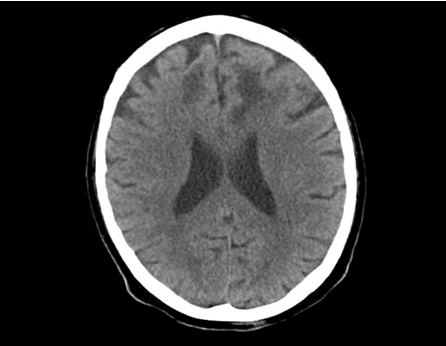
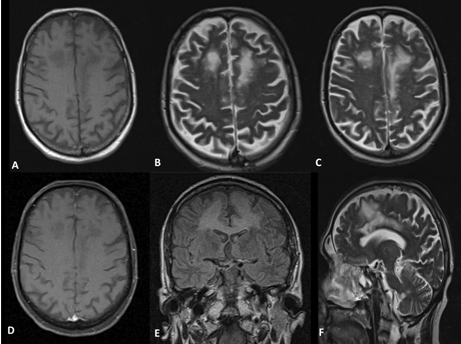
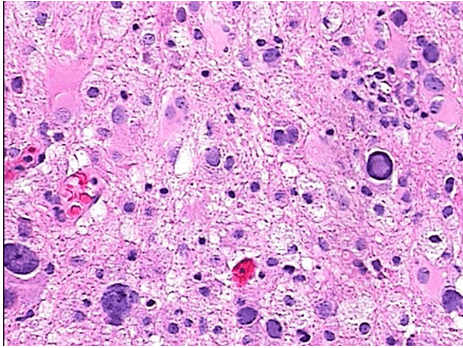
A 64-year-old Caucasian male with a history of hypertension, coronary artery disease, chronic obstructive pulmonary disease (COPD) presented with progressive behavioral change consistent with perseveration, less interaction and mutism within two weeks. The patient was in his normal state of health before he was left alone at home for two weeks. Family members returned home and found that he kept doing repetitive activities such as adjusting the bed. He rarely talked or interacted to family members. The patient and his family denied of fevers, organ-specific symptoms that suggest infection, weakness, numbness, headache, weight change, recent travel, or any sick contacts. He takes carvedilol, lisinopril, furosemide, aspirin, budesonide/formoterol. The last time he took oral prednisone was more than one year ago. He had stopped smoking and drinking alcohol for more than 10 years. His vital signs were within normal limits. Cardiovascular, respiratory, and abdominal examinations were unremarkable. Neurological examination did not reveal any motor, sensory, and cranial nerve deficits. He was awake, alert, and oriented, but could rarely answered questions in one word. He kept folding the hospital towels throughout the exam. Initial laboratory tests revealed the following: white blood cell 4,900/µL with 79% polymorphonuclear cells, hemoglobin 9.1 g/dL, platelet count 291,000/µL. All other laboratory results including kidney and liver function tests were unremarkable. His chest radiograph did not show flat diaphragm or infiltration. The CT scan of head revealed hypodense areas in bilateral frontal lobes (Figure 1). Magnetic resonance imaging scan of head with and without contrast revealed hypointense lesions on T1-weighted sequence of bilateral frontal lobes involving anterior part of corpus callosum. The same lesions were hyperintense on T2-weighted and fluid attenuated inversion recovery (FLAIR) sequences, and had peripheral restricted diffusion pattern. No significant mass effect and no contrast enhancement (Figure 2). Further investigation revealed the following: Anti-HIV antibody and Rapid plasma regain test were negative. Cerebrospinal fluid (CSF) analysis revealed red blood cell 192/mm3, white blood cell 3/mm3 with 8% polymorphonuclear cells and 74% lymphocytes, normal protein and glucose level, CSF VDRL non-reactive. IgG and IgM antibodies for Lyme were negative. West Nile antibodies were negative for recent infection. CSF antibodies and antigen tests for Coccidioides immitis, Cryptococcus neoformans, Histoplasma capsulatum, Blastomyces dermatitidis, were non-reactive. Herpes simplex virus 1 and 2 DNA were not detected. JCV DNA polymerase chain reaction (PCR) was ordered. However, it was canceled as we do not have enough CSF sample. The MRI scan of cervical-thoracic-lumbar spine did not show evidence of mass, demyelinating or enhancing lesion. The patient underwent stereotactic biopsy of the right frontal lobe lesion. The pathology revealed atypical reactive cells, oligodendrocytes with large hyperchromatic nuclei and homogeneously marginated chromatin consistent with intranuclear viral inclusions, marked macrophage infiltrate in the background suggesting secondary demyelination, which is typical for PML (Figure 3). The PCR and in situ hybridization were not performed in this case. His clinical condition was stable after the biopsy. However, after discussion about diagnosis and prognosis, the patient and his wife refused the pharmacological treatment. He was discharged to a facility after 19 days of admission. | ||||||
| ||||||
|
| ||||||
| ||||||
|
Discussion
| ||||||
|
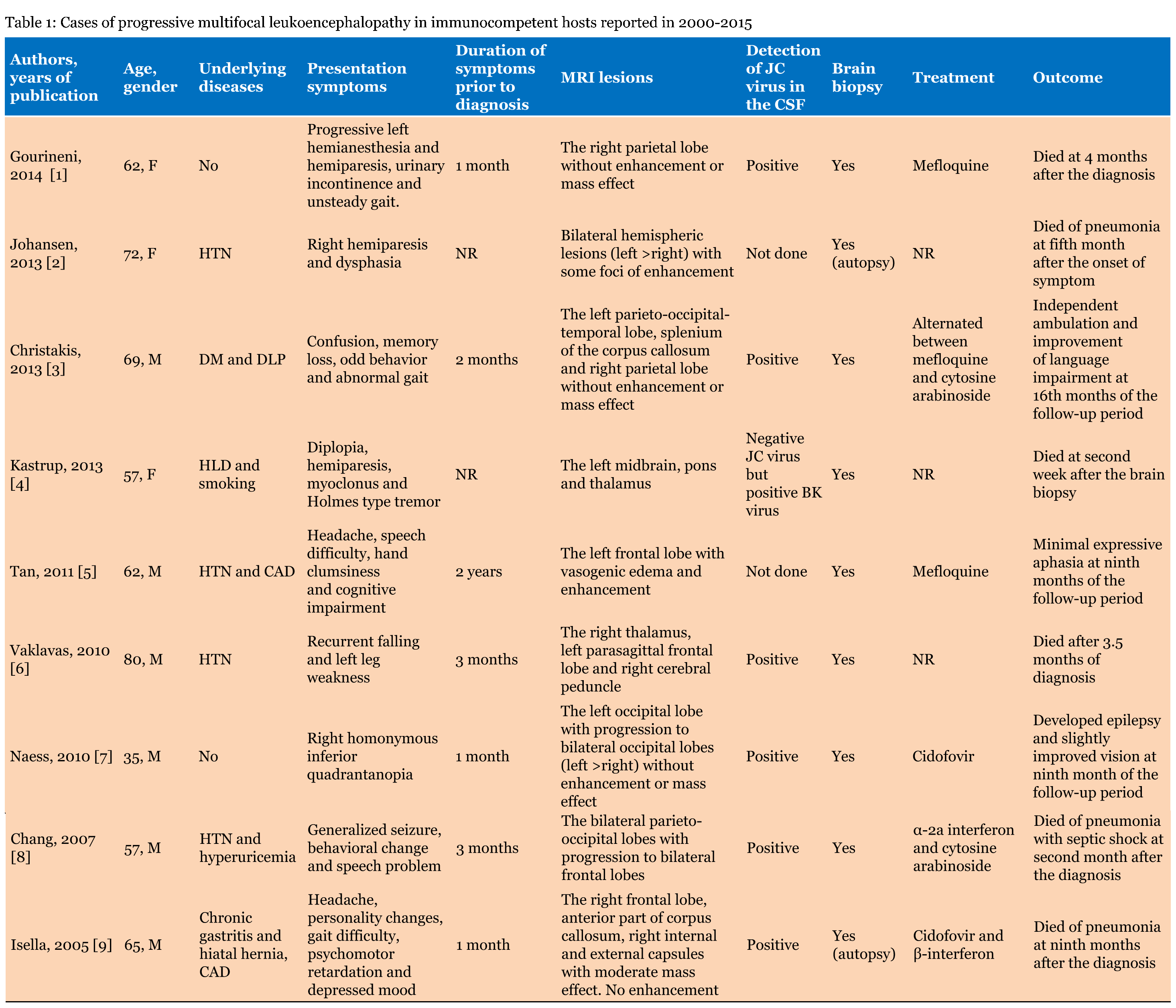
Progressive multifocal leukoencephalopathy (PML) is an uncommon, demyelinating disease of the central nervous system that is caused by reactivation of JCV. The prevalence of JCV infection in healthy adults is 50–90% [10]. However, the prevalence of PML is much lower than the infection. The PML is primarily known as an opportunistic infection in HIV-infected patients with a prevalence of 1–5%. Later, it was also found in patients with hematologic malignancies with a prevalence of 0.8% [11]. Its incidence in patients with other immunosuppressive conditions such as systemic lupus erythematosus, bone marrow transplantation were 2.4, 35.4/ 100,000 person-year, respectively [12]. PML in patients using newer immunomodulatory agents such as natalizumab, rituximab, efalizumab were reported in 3% of cases [10]. Development of PML was believed to be series of events, starting from infection of JCV, the virus becomes latent in some parts of body such as tonsils, kidneys. Later, the virus is reactivated and crosses blood-brain barrier to reach central nervous system. In order to cause productive infection, it must be able to avoid clearance by cellular immune response [13]. This explains why PML occurs almost exclusively in immunocompromised individuals. There are only rare case reports of PML in patients without evidence of immunosuppression. From literature review in PubMed during 2000–2016, we found only nine cases of PML that were reported in immunocompetent hosts (Table 1). The explanation for reactivation of JCV in immunocompetent patients is still controversial at this time. For our patient, the possible causes of immunosuppression are COPD and history of steroid use. However, the fact that he had stopped smoking more than 10 years before, and was using only inhaled corticosteroid make them unlikely to cause immunosuppression. The clinical presentations of PML are non-specific and variable according to the affected areas of brain. Most patients present with focal or multifocal neurological deficits that progress over days to weeks. The reported symptoms are weakness, numbness, speech and visual problems, ataxia, headache, and even seizure or cortical signs such as aphasia if the lesions locate near the cerebral cortex [13]. Our patients presented with behavioral change consistent with perseveration, less interaction and mutism, which are frontal lobe symptoms. Normally, the presence of immunosuppressive state help suggests the diagnosis of opportunistic infection. However, making a diagnosis of PML in an immunocompetent patient may need other supporting hints. Radiological images are important tools for diagnosis of PML. On CT of head, PML usually appears as hypodense lesions in the white matter. On MRI, PML lesions usually appear as single or multiple hypointense lesions on T1-weighted, hyperintense lesions on T2-weighted and FLAIR sequences. The borders of lesions are ill-defined and sometimes have peripheral restricted diffusion pattern. Typical PML lesions show no significant mass effect and do not enhance with contrast media. The lesions can become confluent and enlarged with the disease progression [13]. Although PML can occur in every parts of CNS, it often locates in the white matter with infrequent gray matter extension. Involvement of subcortical U-fibers, corpus callosum and posterior fossa are commonly reported. Brainstem involvement is occasionally reported and is more common in HIV-infected patients. The radiologic findings of our patient showed typical appearances for PML in terms of character of lesions in each MRI sequences and location of lesions. Although these findings are non-specific for PML as they can be found in some neoplasms and infections, their typical features make PML one of our differential diagnosis. Detection of JCV DNA from CSF-PCR is a relatively non-invasive method of diagnosis with a sensitivity of 74–92% and specificity of 92–100% in immunocompromised hosts [14][15]. Its data in immunocompetent hosts is still unsettled due to limited number of cases. The brain biopsy is the gold standard for diagnosis of PML with sensitivity of 64–96% and specificity of 100% [16]. However, it is more invasive and relates to increased morbidity and mortality. Typical histopathologic triad of PML are demyelination, reactive gliosis with bizarre astrocytes, and JCV-infected oligodendrocytes with enlarged nuclei [17]. The JCV infection can be further confirmed by immunohistochemistry detecting antibodies against simian virus 40, or in situ hybridization (ISH) for JCV DNA. Our patient's brain biopsy has typical histopathologic pattern for PML with the presence of the entire triad. There is no definitive treatment of PML at present. Several studies have tried to use antiviral and chemotherapeutic agents to treat PML such as cidofovir, acyclovir, interleukin-2, beta-interferon, maraviroc, cytarabine. Others have tried pharmacologic agents that have mechanisms against JCV such as mefloquine, mirtazapine. However, none of these agents has proven efficacy in treating PML [18] [19]. While PML still be an almost-always fatal disease with median survival of months to a few years, restoring of the host immune response is the most effective strategy to prolong survival of patients. Optimization of antiretroviral therapy in HIV-infected patients and stopping or decreasing immunosuppression therapy for non-HIV patients, are recommended. Nonetheless, the risks of discontinuation of immunosuppressant should be considered especially in post-transplant recipients and active autoimmune disease patients. Our patient is an immunocompetent host who does not use any immunosuppressive agents. After discussion about the diagnosis and prognosis, the patient and his family refused all the unproven treatments. | ||||||
| ||||||
|
| ||||||
|
Conclusion
| ||||||
|
This is one of a few cases of progressive multifocal leukoencephalopathy (PML) in an apparently immunocompetent patient who presented with frontal lobe-related behavioral change. The compatible appearances on imaging, especially MRI brain, and a high degree of clinical suspicion are essential for diagnosis, regardless of immune status. Detection of John Cunningham virus (JCV) DNA in cerebrospinal fluid by polymerase chain reaction (PCR) helps to make diagnosis. However, brain biopsy is the gold standard for diagnosis of PML. | ||||||
|
References
| ||||||
| ||||||
|
[HTML Abstract]
[PDF Full Text]
|
|
Author Contributions
Doungporn Ruthirago – Substantial contribution to conception and design, Analysis and interpretation of data, Drafting the article, Revising it critically for important intellectual content, Final approval of the version to be published Parunyou Julayanont – Substantial contribution to conception, Analysis and interpretation of data, Drafting the article, revising it critically for important intellectual content, Final approval of the version to be published Jongyeol Kim – Substantial contribution to conception, Analysis and interpretation of data, Drafting the article, Revising it critically for important intellectual content, Final approval of the version to be published |
|
Guarantor of submission
The corresponding author is the guarantor of submission. |
|
Source of support
None |
|
Conflict of interest
Authors declare no conflict of interest. |
|
Copyright
© 2016 Doungporn Ruthirago et al. This article is distributed under the terms of Creative Commons Attribution License which permits unrestricted use, distribution and reproduction in any medium provided the original author(s) and original publisher are properly credited. Please see the copyright policy on the journal website for more information. |
|
|