
  |

|
 |
|
Case In Images
| ||||||
| A diabetic woman with soft tissue complex pathology | ||||||
| Rodica-Elena Perciun1, Ancuţa Telcian2 | ||||||
|
1MD, PhD, "Prof. NC Paulescu" National Institute of Diabetes, Nutrition and Metabolic Diseases, "Prof. I Pavel" Metabolic Diseases Center, Bucharest, Romania.
2Biophysicist, Biotehnos, Bucharest, Romania. | ||||||
| ||||||
|
[HTML Abstract]
[PDF Full Text]
[Print This Article]
[Similar article in Pumed] [Similar article in Google Scholar] 
|


| How to cite this article |
| Rodica-Elena P, Telcian A. A diabetic woman with soft tissue complex pathology. Int J Case Rep Images 2016;7(1):65–71. |
|
Abstract
|
|
Introduction:
Despite the fact that the diabetic patients can frequently develop some soft tissue abnormalities, these entities are rarely described in aggregation.
Case Report: This clinical case of a 50-year-old insulin-treated female, presented with plantar and palmar fibromatosis (Ledderhose disease and Dupuytren disease), cheiroarthropathy, knuckle pads (Garrod's pads), Huntley's papules, acanthosis nigricans and large dorsal cutaneous scleredema. Diagnosis has engaged clinical and imaging correlation. Planning the therapeutic approach has been adapted accordingly. Conclusion: In this case, the soft tissue's abnormalities have challenged our clinical and imaging skills as well. Long-term follow-up is claimed due to the diabetic condition and the potential aggressiveness of lesions. | |
|
Keywords:
Diabetes mellitus, Insulin-treated, Soft tissue pathology, Therapeutic approaching
| |
|
Introduction
| ||||||
|
Some soft tissue (ST) abnormalities are frequently seen in diabetic individuals, rather in isolation than in association. A non-invasive imaging becomes undoubtedly helpful because they often present clinically undetectable features [1]. Certain ultrastructural similarities suggest a potential identical root at least for superficial proliferative disorders (palmar and plantar fibromatosis, Dupuytren disease, knuckle pads, Peyronie disease or keloids) [2]. We are describing a 50-year-old diabetic insulin-treated female presenting bilateral Ledderhose's disease (LD) and Dupuytren disease (DD), frequently referred to as plantar and palmar fibromatosis. The knuckle pads, cheiroarthropathy, scleredema and acanthosis nigricans (AN) (insulin-resistance cutaneous marker) were diagnosed too. In our opinion, this case with dysmetabolic grounds and multiple clinical ST abnormalities required a careful consideration and complementary imagistic approach for diagnosis. To our knowledge no parallels between clinical and imaging studies have been performed in a similar case. An original aspect consists in some 'histological' related data that high frequency ultrasound (HFUS) described. | ||||||
|
Case Report
| ||||||
|
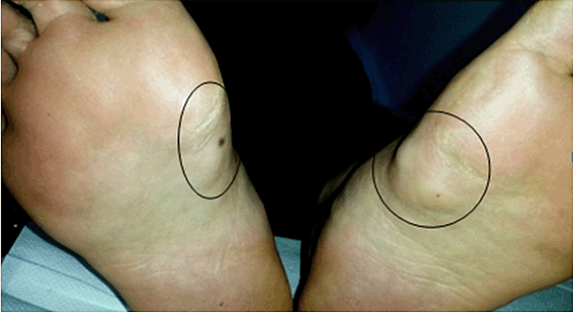
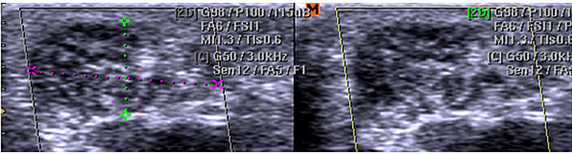
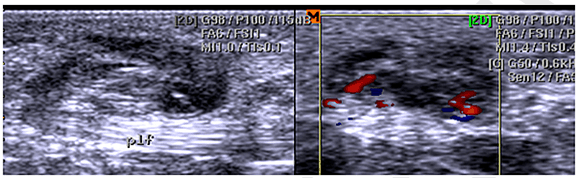
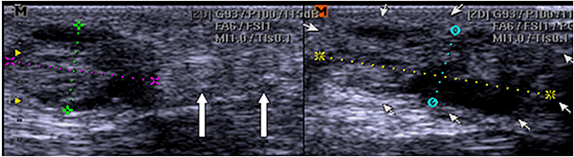
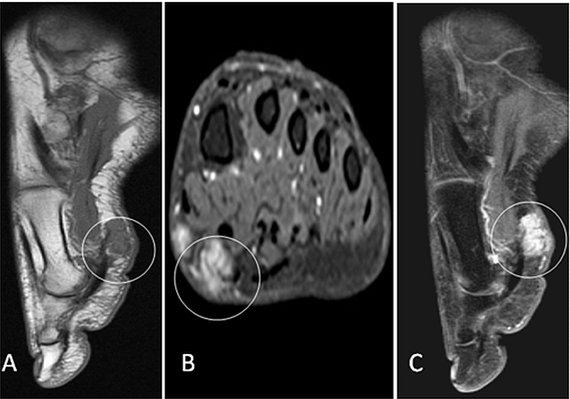
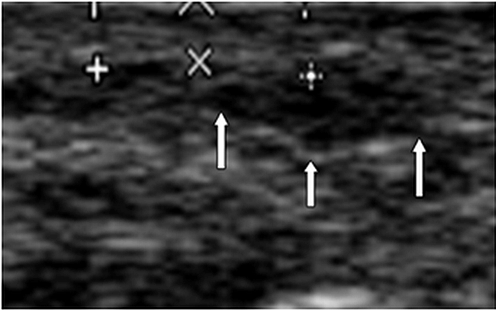
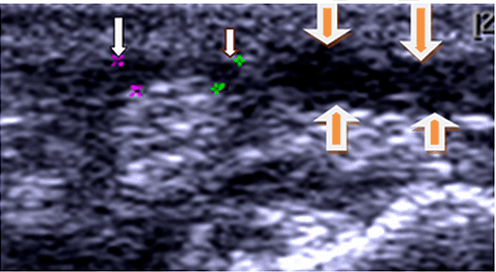
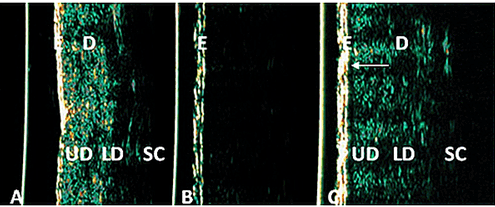
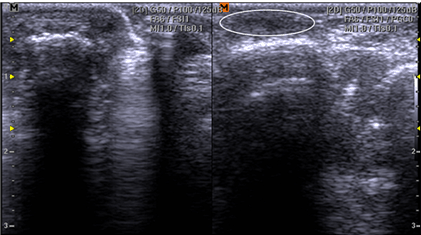
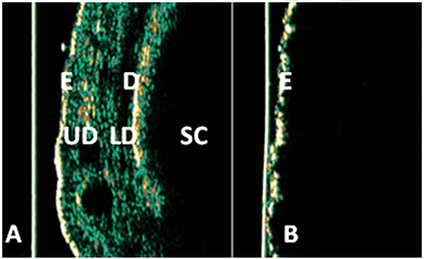
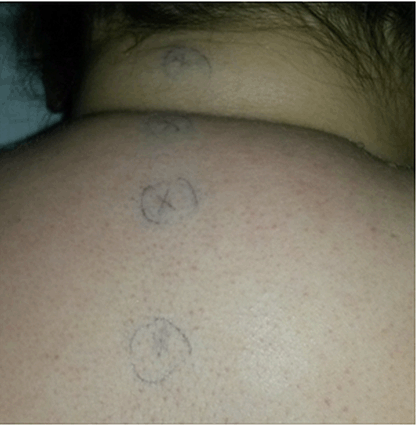
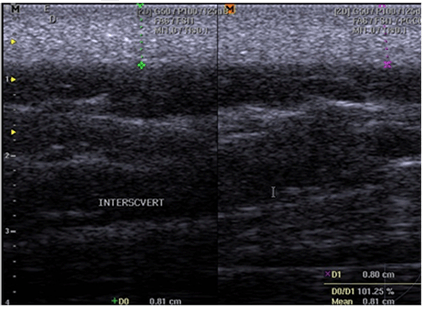
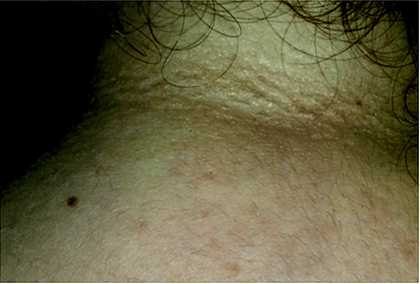
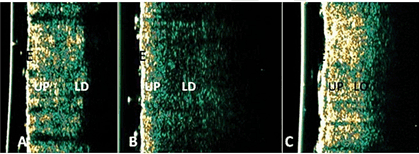
Our patient is a 50-year-old female with a 12-year history of insulin-treated diabetes mellitus (DM). A microvascular disease (incipient retinopathy, nephropathy and neuropathy) goes along with hypertension, hypercholesterolemia, autoimmune thyroid disease and obesity. Neither notable infectious fever, tightness in neck and shoulders nor a history of familial LD, drinking or phenytoin treatment have been recorded. Her current medication included hypotensors (ACE-inhibitors), hypolipidemics (statins), thyroid hormones substitutes (euthyrox), bed time basal insulin (glargine) and metformin. Blood analysis was within accepted ranges, excepting the mean of HbA1c which was, for years, 7.9%. No monoclonal gammopathy evidence was found. Three years ago she had been exclusively clinically examined for the left plantar mass having no more than 1.5 cm diameter, but never for skin pathology either in hands or trunk. Clinically, we have noticed bilateral medial mid-third LD. On the left foot an irregular, non-inflamed, more prominent mass (about 3.5 cm diameter) without contractures of toes was described. (Figure 1). The 10 MHz gray scale and Doppler ultrasound assessment, as conventional ultrasound (CUS), has shown various aspects according with sequences. The split screen transversal scan (left plantar lesion) showed a pseudolobular image of 1.9/1.1 cm without vascularity (Figure 2). The split screen longitudinal view depicted an inhomogeneous (left) and vascularized echostructure (right) (Figure 3). A split screen plantar image showed a cross-sectional pseudocystic echostructure of 1.5/0.8 cm and other two infracentimetric isoechoic nodules (arrows) (left) ; an oblique longitudinal view exhibited its largest dimensions (3.1/1.8 cm) (right) (Figure 4). The magnetic resonance imaging (MRI) scan detailed its heterogeneity (various cellularity and collagen content), size and invasiveness (fascial tails, cutaneous and subcutis) (Figure 5A-C). The patient also presented an incipient, bilateral form of DD with small nodules beneath the palmar skin without fingers' contracture yet (Figure 6). The co-existence of limited joint mobility (LJM) affecting the patient's hands (cheiroarthropathy) was proven by the presence of the 'prayer sign'. The thickened tight skin determined the hand stiffness impairing the extension of interphalangeal (IP) and metacarpophalangeal joints (MCP) (Figure 7). Conventional ultrasound depicted an irregular hypoechoic subcutis nodule as DD's anatomical substructure (Figure 8) and (Figure 9). The hypoechoic thickened flexor tendon sheath (1.5 mm vs and <1 mm the normal) defined the cheiroarthropathy substructure, here in association with DD (Figure 9). High frequency 20 MHz Dermascan C (Cortex technology) (HFUS) penetrates as deep as 2.5 cm. The echogenicity emerges from the low (LEP), medium (MEP) and high echogenic pixels (HEP). The normal volar skin shows the epidermis (E) - 0.29 mm, dermis (D) - 2.05 mm, integument (E+D) - 2.34 mm with intra-dermal scattered echos and the underlying hypoechoic subcutis (SC) (Figure 10A). Using a similar gain, the affected skin showed E- 0.53 mm with bilaminar intensively hyperkeratosis echostructure, thus preventing the deeper dermal scanning (Figure 10B). However, enhancing the gain curve (to compensate the posterior attenuation artifact), we detailed: the subepidermal low echogenic band (SLEB) and integument thickness of 4.5 mm being more hypoechogenic than normal either in upper dermis (UD) (84% vs 45%) or lower dermis (LwD) (94% vs 61%) (Figure 10). Another ST abnormalities are exhibited, over the dorsum of the IP and MCP as firm, painless nodules named 'knuckle pads' with tiny Huntley's papules on ( 'cobblestone') (Figure 11). Split screen (gray-scale CUS) image showed the normal MCP dorsal subcutis (left) and the heterogeneously hypoechoic, thickened counterparts within overgrowth knuckle pads (right) (Figure 12). HFUS scanned the normal E-0.13 mm compared with intensively hyperkeratosis thickened E-0.28 mm, not allowing the deeper penetration (Figure 13A-B). Despite the lack of complaints, the upper thorax dorsal area exhibited an erythematous, indurated skin suggesting scleredema. (Figure 14). The lower blue "X" painted sign conveys to the thickest cutis area of 8.1 mm that CUS expressed (Figure 15). Other areas measured no more than 4.8 mm. Acanthosis nigricans (AN) mimicked a dark velvety appearance over some flexural areas as shown by the patient's dorsal neck flexure (Figure 16). HFUS scanned the normal skin (sex, age, and anatomical site counterparts), scleredema and AN integuments to be compared. The normal cutis with E-0.20 mm, D-3.18 mm, integument-3.34 mm expressed a dominant medium/low echogenic UD and slightly hypoechogenic LwD (Figure 17A). Scleredema exhibited thicker layers: E-0.29 mm, D-5.21 mm, integument-5.5 mm with hyperechogenic UD and dominant hypoechogenic LwD (Figure 17B). Acanthosis nigricans showed irregular thickened E- 0.39 mm, ill-defined E-D junction, intensively hyperechogenic D-3.17 mm (slightly regressive in the LwD) and thickened integument-3.56 mm (Figure 17C). | ||||||
| ||||||
| ||||||
|
| ||||||
|
| ||||||
|
| ||||||
| ||||||
| ||||||
| ||||||
|
| ||||||
|
| ||||||
|
| ||||||
| ||||||
| ||||||
| ||||||
| ||||||
| ||||||
|
| ||||||
|
| ||||||
|
Discussion
| ||||||
|
Usually, the ST pathology in diabetics can be clinically diagnosed. Nevertheless, some abnormalities might be overlooked if attention is not paid. There is an agreement over the relationship between the superficial fibromatosis entities (LD, DD, knuckle pads and Peyronie's disease) and the long-standing poorly controlled DM associated with microvasculopathy [1] [2] [3]. Although, the DD and LD have different clinical, temporal and prevalence exposures, some histochemical and ultrastructural similarities connect them to the same root [2]. Nevertheless, some particular histology might also be found [4]. Ledderhose disease (LD) is a benign fibroproliferative disorder usually within medial and central aspects of aponeurosis plantaris, being bilateral up to 60%. The patient has developed bilateral, asymmetrical non-inflammatory nodules located within medial mid-thirds. The patient's complaints consisted in a palpable lump and pain while walking, mainly because the left lesion's size increased for the last three years. According to literature, LD is more confidently diagnosed when clinic and imagistics corroborate [2] [5]. CUS scanned a multifaceted potentially aggressive lesion asking for MRI interrogation. The heterogeneous structure with some low signaled foci suggested hypocellularity and higher collagen amount in contrast to the rest of the mass. The differentials from neurofibroma or fibrosarcoma should be considered but MRI scan is helpless in differentiating LD , clear cell sarcoma or desmoid tumor on the basis of their high signal intensity on T-weighted images [6]. Generally, when lesions are disabling the biopsy, excision, chemotherapy or radiotherapy should be considered [2]. Our patient rejected any other diagnostic and therapeutic maneuvers. The connective tissue is probable irreversible damaged by chronic hyperglycemia. This process is consistent with: a high level of reactive oxygen species, the advanced glycated endproducts, some immunobiochemicals, cytotoxic edema and microvasculopathy. Subsequently, hypoxia will ultimately increase collagen and glycosaminoglycan synthesis. The genetic should also be discussed [7]. Our patient exhibited within this context (HbA1c higher than the accepted range: 7.9 vs 6.5–7%) the DD, LJM (their prevalence ranges between 8–58% compared with 4–26% in non-diabetics) and knuckle pads (50–75% of diabetics). The CUS differentiated the ST anatomical substructures and discerned the knuckle pads from synovitis, rheumatoid nodules and pachydermodactyly [8] [9] [10] [11]. Using HFUS technique, the skin polychromatic structures express various echogenicities (extracellular matrix densities): white/yellowish - hyperechogenicity (HEP); yellow/red - medium echogenicity (MEP) ; dark green or black - hypoechogenicity (LEP). Therefore, a correlation between skin histology and HFUS imaging is quite possible [12]. Using the HFUS, the volar skin (no photoaged area) showed inflammatory edema and fibers abnormalities harbored within SLEB, besides the hyperkeratosis and thickened skin. Regarding scleredema, the patient's data raised the suspicion and disjointed the differentials. Both operating US systems measures skin thickness: 8.1 mm CUS vs 5.5 mm HFUS. The discrepancy emerged from their different image construction abilities [12]. The HFUS described dermal thickening and dominant LEP that quantifies the inflammatory edema and thickened disorganized collagen fibers interspaced by acid mucopolysaccharides. According to literature, AN substructures are: tiny papillomatosis, hyperkeratosis, hypertrophic epidermis and thickened dermis (collagen fibers abnormalities) being hyperinsulinemic promoted [13]. We found no particular CUS features but the HFUS scanned the dominant MEP and HEP components suggesting: proteic synthesis and probable a higher degree of promoting microfibrils. Nevertheless, the intrinsic ageing process cannot be discerned. The treatment of the hands' pathology implies a tight glycemic control from the beginning. Other therapeutics are more or less successful: antioxidants, some local steroid injection, physical therapy. Regarding scleredema, certain attempts were adapted to cases: immunosuppressants, psoralen with ultraviolet -light (PUVA), tamoxifen, electron beam, physical therapies and so on [14] [15]. For our patient having no complications of scleredema (restrictive dyspnea, shoulder motion disturbances) or evidence of malignancy, a strict glycemic control with periodical exams were considered. | ||||||
|
Conclusion
| ||||||
|
Such a great diversity of soft tissue pathology generally suggests, in diabetics, both the poorly metabolic control and microvasculopathy. The imagistics add valuable and complementary anatomo-histological related data; therefore, an earlier diagnosis and a holistic perception of the ST pathology could initiate a better understanding of its intrinsic processes and a preventive strategy related to microvasculopathy. | ||||||
|
Abbreviations
| ||||||
|
ST: soft tissue. LD: Ledderhose's disease. DD: Dupuytren's disease. US: ultrasonography. MRI: magnetic resonance imaging. LJM: limited joint mobility. E: epidermis. D: dermis. SC: subcutis. AN: acanthosis nigricans. UD: upper dermis. LwD: lower dermis. LEP: low echogenic pixels. MEP: medium echogenic pixels. HEP: high echogenic pixels. MCP: metacarpophalangeal joints. IP: interphalangeal joints. | ||||||
|
Acknowledgements
| ||||||
|
We would like to thank Dr. Laura Olariu (biophysicist-project director) at "Biotehnos" Institute, Bucharest and Dr. Simona Soare (internal medicine-rheumatology), Dr. Smarandita Lacau (imagistic consultant) at Emergency Hospital "Elias" Bucharest for their support. | ||||||
|
References
| ||||||
| ||||||




|
[HTML Abstract]
[PDF Full Text]
|
|
Author Contributions
Rodica-Elena Perciun – Substantial contributions to conception and design, Acquisition of data, Analysis and interpretation of data, Drafting the article, Revising it critically for important intellectual content, Final approval of the version to be published Ancuţa Telcian – Acquisition, analysis and interpretation of data, Revising it critically for important intellectual content, Final approval of the version to be published |
|
Guarantor of submission
The corresponding author is the guarantor of submission. |
|
Source of support
None |
|
Conflict of interest
Authors declare no conflict of interest. |
|
Copyright
© 2016 Rodica-Elena Perciun et al. This article is distributed under the terms of Creative Commons Attribution License which permits unrestricted use, distribution and reproduction in any medium provided the original author(s) and original publisher are properly credited. Please see the copyright policy on the journal website for more information. |
|
|