|
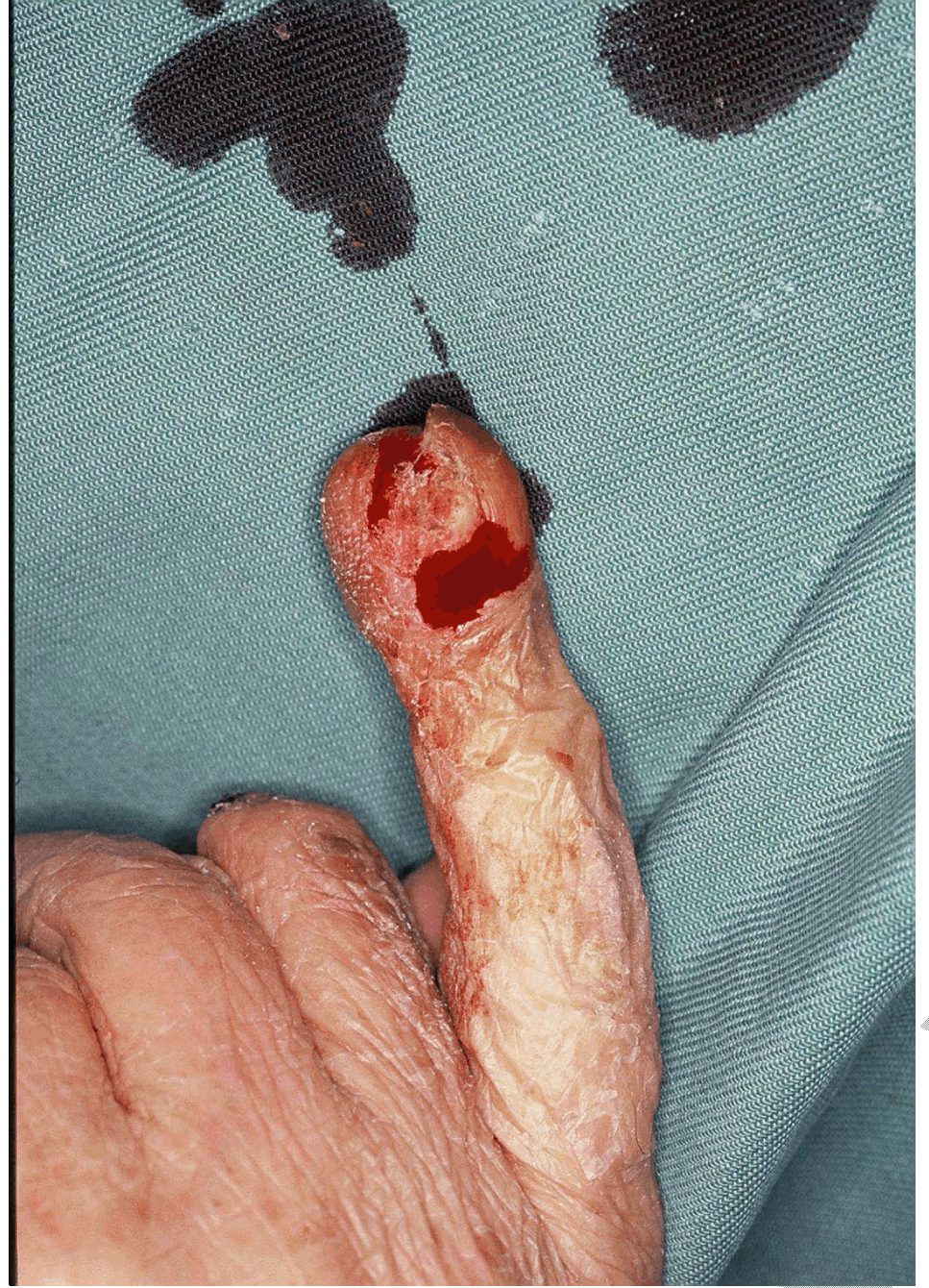
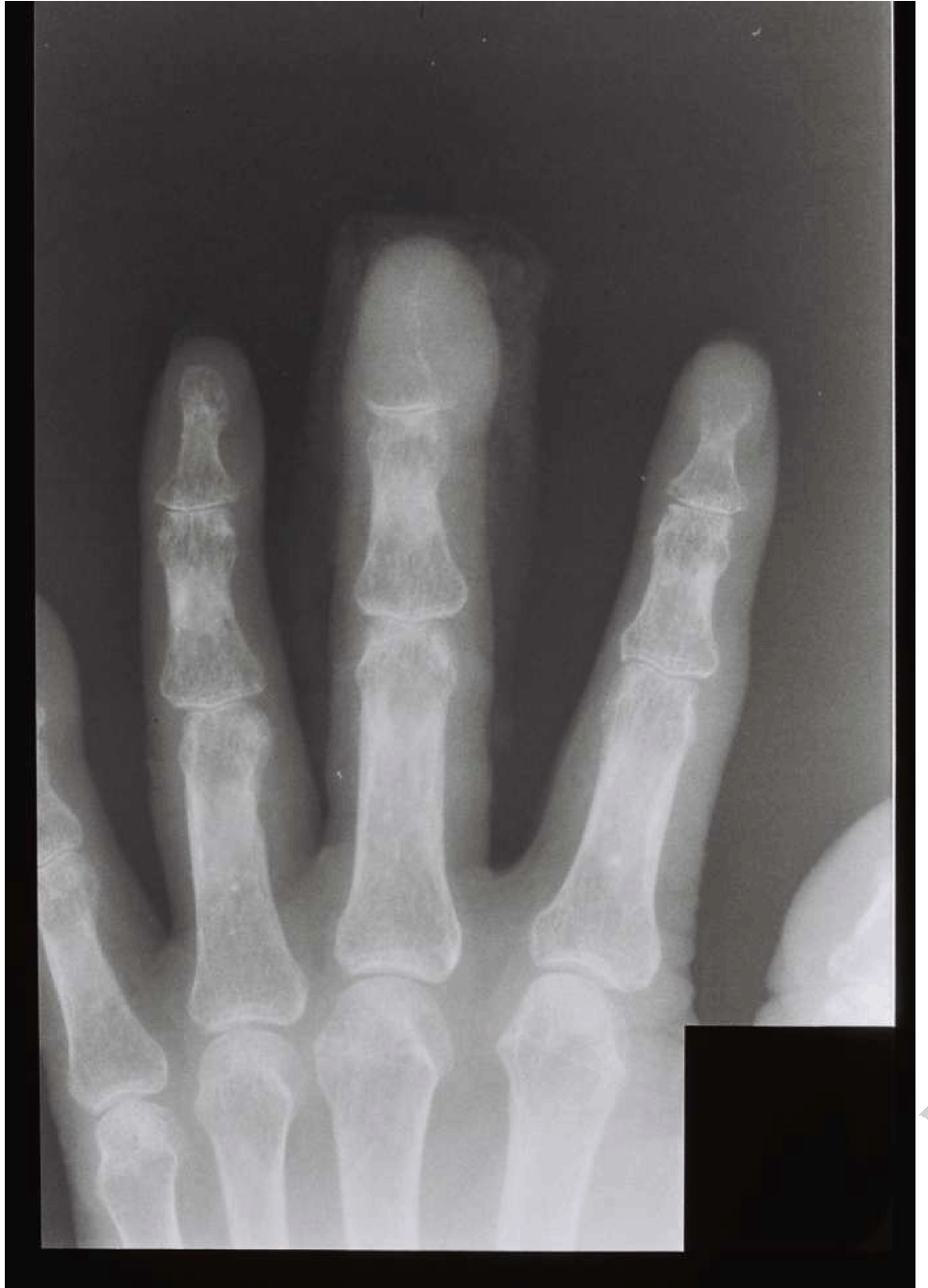
An 82-year-old male was admitted to our hospital complained of dyspnea on exertion and left chest pain. three months prior to admission, he noticed swelling and pain of his left forefinger and middle finger. Before visiting to our hospital, patient consulted his primary care physician and was treated with antibiotics as trauma and infectious disease. But his finger pain continued, and then he gradually noticed dyspnea and left chest pain. When admitting to our hospital, the tip of his fingers showed erosive redness and bled easily by contact (Figure 1). X-ray showed irregular osteolytic change of distal phalanx of forefinger and middle finger (Figure 2). His serum CEA level was elevated, which was 7.6 ng/mL (normal rage was less than 5.0 ng/mL), and thoracic CT scan showed left pleural effusion and pulmonary nodules (diameter was 2.1 cm, and military nodules was also recognized in the same lobe) of left lower lobe. Since oozing from his index finger did not stop and severe pain continued, his left index finger was finally amputated. The histopathological examination of his left forefinger revealed poorly differentiated adenocarcinoma, and the cytology of pleural fluid was also showed non-small cell carcinoma. CEA level of left exudative pleural fluid was 87.3 ng/mL. We diagnosed as his having primary lung cancer (T3, N2, M1b, stage IV), and finger metastasis. Left pleural effusion was controlled by therapeutic thoracentesis. But since his performance status was poor, there was no indication for systemic chemotherapy. To relive his dyspnea and pain, oxygen therapy and administration of opioid was continued. After four months, the patient died of disseminated disease and respiratory failure after the palliative therapy.
|
|
Bone metastasis, especially axial bone metastasis is common in advanced lung cancer patients [1]
[2]. But finger metastasis, as the first sign of lung cancer is extremely rare, and the incidence of finger metastasis from primary tumors is approximately 0.1% [3] [4] [5]. According to the previous reports [1] [2] [3] [4] [5], the most cases are mortal within six months and are correlated with poor prognosis because of advanced staging. According to the previous report [5] [6], lung, kidney, breast, and gastrointestinal cancers are known as the primary lesions of acrometastasis to the hands, and 44% of them is lung cancer. It is difficult for primary care physician to suspect the possibility of finger metastasis rather than trauma and infectious diseases because of uncommon presentation of metastasis with redness, swelling, and pain of the finger tip [4] [5]. In many cases, performance status of the patients showed already got worse, when having the diagnosis of cancer. Therefore, the treatment is usually palliative, and radiotherapy, chemotherapy, and amputation are performed. In this case, severe pain and bleeding did not discontinued and his index finger was finally amputated.
|
-
Kerin R. Metastatic tumors of the hand. A review of the literature. J Bone Joint Surg Am 1983 Dec;65(9):1331–5.
[Pubmed]

-
de Abaffy AM, Richter RH, Grünert J. Peripheral bone metastasis of a rare lung cancer. Arch Orthop Trauma Surg. 1998;117(8):477–8.
[CrossRef]
[Pubmed]
-
Kumar PP. Metastases to the bones of the hand. J Natl Med Assoc 1975 Jul;67(4):275–6
[Pubmed]
-
Kerin R. The hand in metastatic disease. J Hand Surg Am 1987 Jan;12(1):77–83.
[CrossRef]
[Pubmed]
-
Flynn CJ, Danjoux C, Wong J, et al. Two cases of acrometastasis to the hands and review of the literature. Curr Oncol 2008 Oct;15(5):51–8.
[Pubmed]
-
Carvalho Hde A, Tsai PW, Takagaki TY. Thumb metastasis from small cell lung cancer treated with radiation. Rev Hosp Clin Fac Med Sao Paulo 2002 Nov-Dec;57(6):283–6.
[CrossRef]
[Pubmed]
|