|

|
 |
|
Case Report
| ||||||
| The management of a recurrent lymphocele following a brachiobasilic fistula superficialization | ||||||
| Ahmed Mohamed Elhassan Elfaki Osman1, Saif Eldin Mohammed Ali Ibrahim2 | ||||||
|
1MBBS, Ibn Sina Specialized Hospital - Senior House-officer, Unit of Vascular and Endovascular Surgery, Ibn Sina Specialized Hospital, Khartoum, Sudan.
2MBBS, MD, MRCS (ENG); D.MAS; F.MAS; F. Vasc/Endovasc (MAL), Ibn Sina Specialized Hospital - Head, Unit of Vascular and Endovascular Surgery, Ibn Sina Specialized Hospital, Khartoum, Sudan. | ||||||
| ||||||
|
[HTML Abstract]
[PDF Full Text]
[Print This Article]
[Similar article in Pumed] [Similar article in Google Scholar] 
|


| How to cite this article |
| Osman AMEE, Ibrahim SMA. The management of a recurrent lymphocele following a brachiobasilic fistula superficialization. Int J Case Rep Images 2014;5(12):849–853. |
|
Abstract
|
|
Introduction:
A lymphocele is defined as a collection of lymphatic fluid in a space within the body not bordered by epithelial linings. They usually occur following surgeries due to iatrogenic disruption of the lymphatic vessels or following an injury in which there is destruction of the lymphatic vessels. Lymphoceles frequently arise following extensive pelvic surgeries, especially gynecological oncological surgeries, and renal transplant surgery. Other surgeries associated with lymphocele formation include open abdominal aortic aneurysm repair, mediastinal and peripheral vascular surgery.
Case Report: A 65-year-old male with end-stage renal disease (ESRD), presented with an upper arm lymphocele one month after basilic vein superficialization with no other complaints. On examination, all upper extremity pulses were intact (2+) and the arteriovenous fistula had a positive thrill. The swelling was cystic, measuring about 10x20 cm. On greyscale ultrasound, the swelling appeared hypoechoic. Doppler ultrasonography confirmed the patency of the fistula. His management included lymphatic fluid aspiration and povidone iodine sclerotherapy sessions. This regimen was carried out for four consecutive weeks; the same amount of lymphatic fluid was aspirated weekly, indicating the inadequacy of the procedure. On the fifth session, after aspirating the same amount of lymphatic fluid and sclerotherapy, external pressure was applied through a gauze stitched between two skin folds and was left in place for five days. There was no recurrence of the lymphocele after stitch removal. Therefore, we are reporting this case because we strongly believe that aspiration of lymphatic fluid with sclerotherapy complemented by fixed external pressure provided a definitive treatment for a recurrent upper-arm lymphocele. Conclusion: Complications arising after peripheral vascular surgeries are vast. Lymphoceles occur less frequently than thrombosis or aneurysms. However, the diagnosis should be kept in mind in any patient presenting with a swelling following recent vascular surgery. With regards to the studies conducted on management of postoperative lymphoceles, some authors advocate the approach of consecutive drain-and-sclerotize sessions while others support more conservative methods such as immobilization and pressure dressings. | |
|
Keywords:
Basilic vein superficialization,
Lymphocele, External pressure, Brachiobasilic fistula, Arteriovenous fistula
| |
|
Introduction
| ||||||
|
A lymphocele is defined as a collection of lymphatic fluid in a space within the body not bordered by epithelial linings. They usually occur following surgeries due to iatrogenic disruption of the lymphatic vessels [1] [2] or following an injury in which there is destruction of the lymphatic vessels [2]. Lymphoceles frequently arise following extensive pelvic surgeries, especially gynecological oncological surgeries, and renal transplant surgery. Other surgeries associated with lymphocele formation include open abdominal aortic aneurysm repair [3] , mediastinal and peripheral vascular surgery. | ||||||
|
Case Report
| ||||||
|
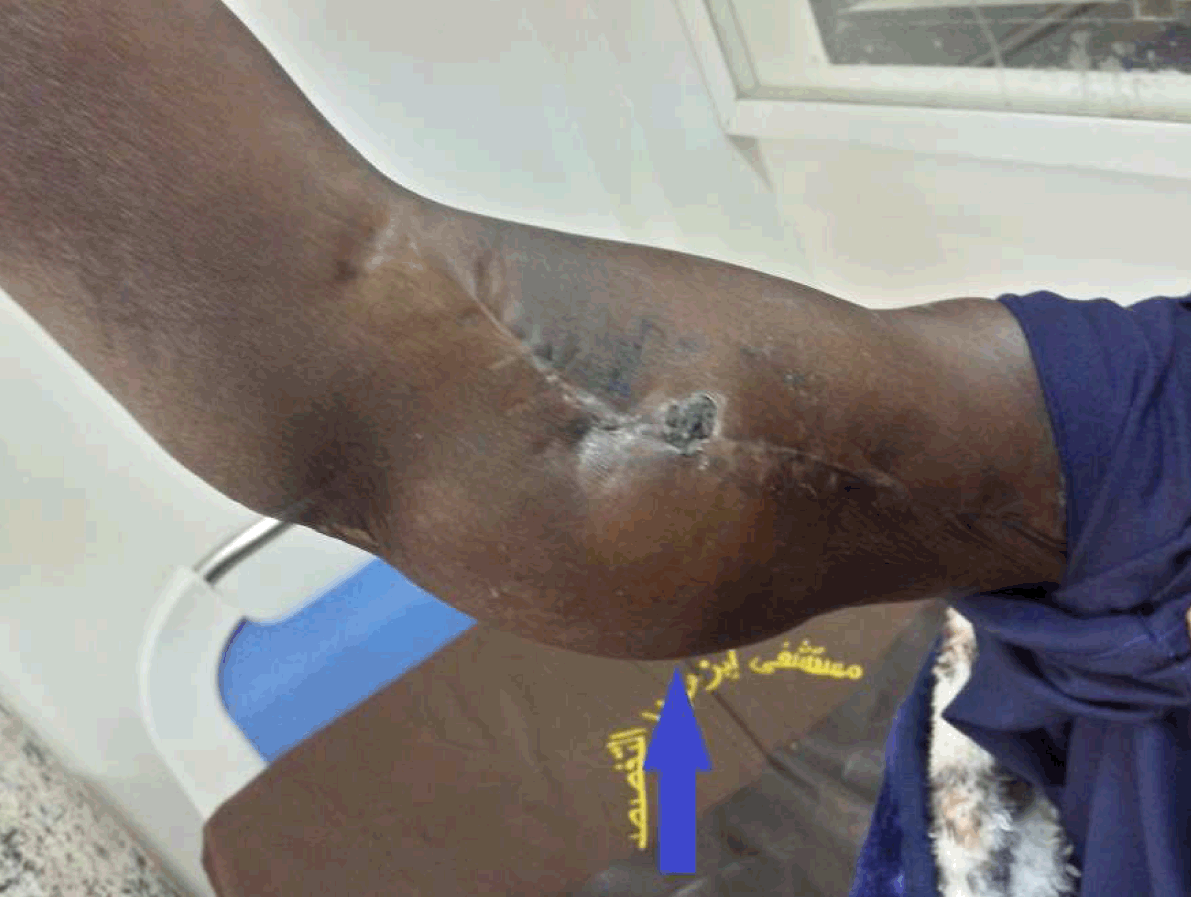
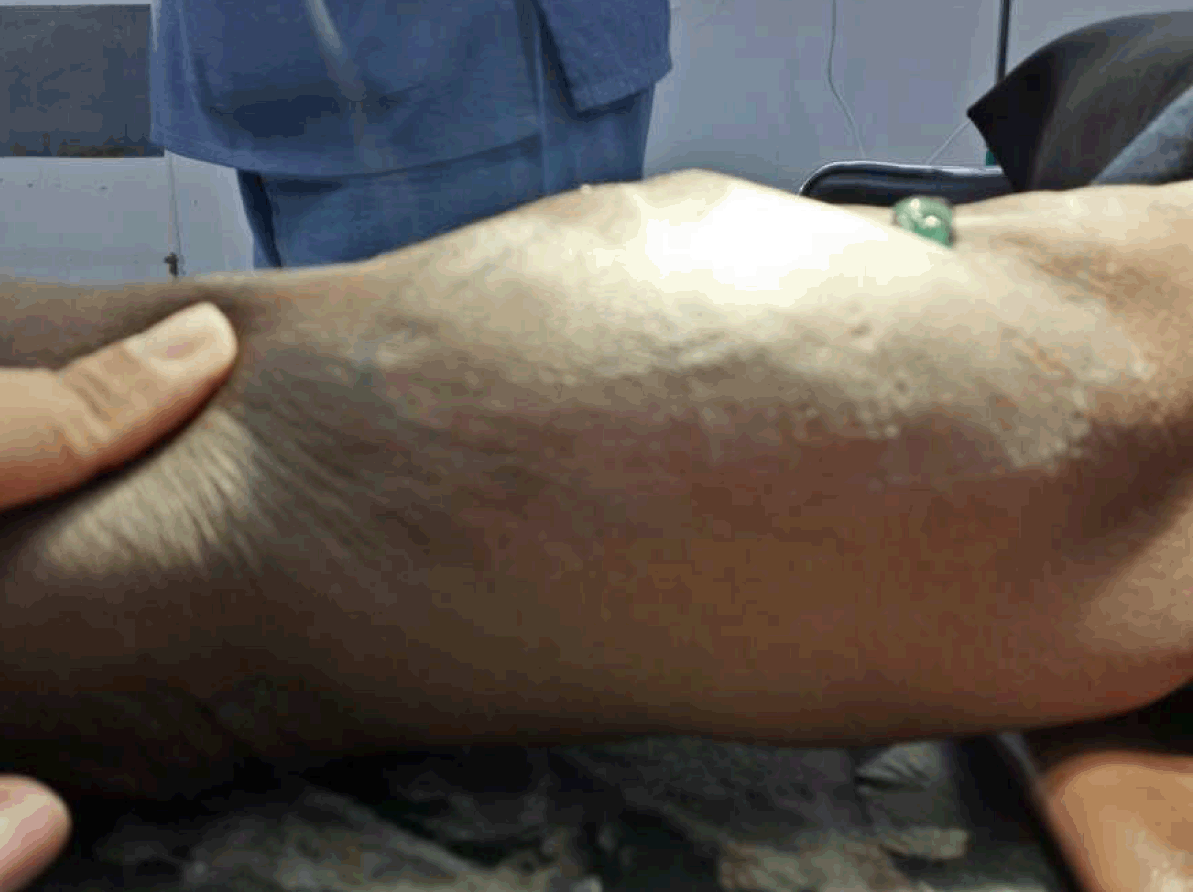
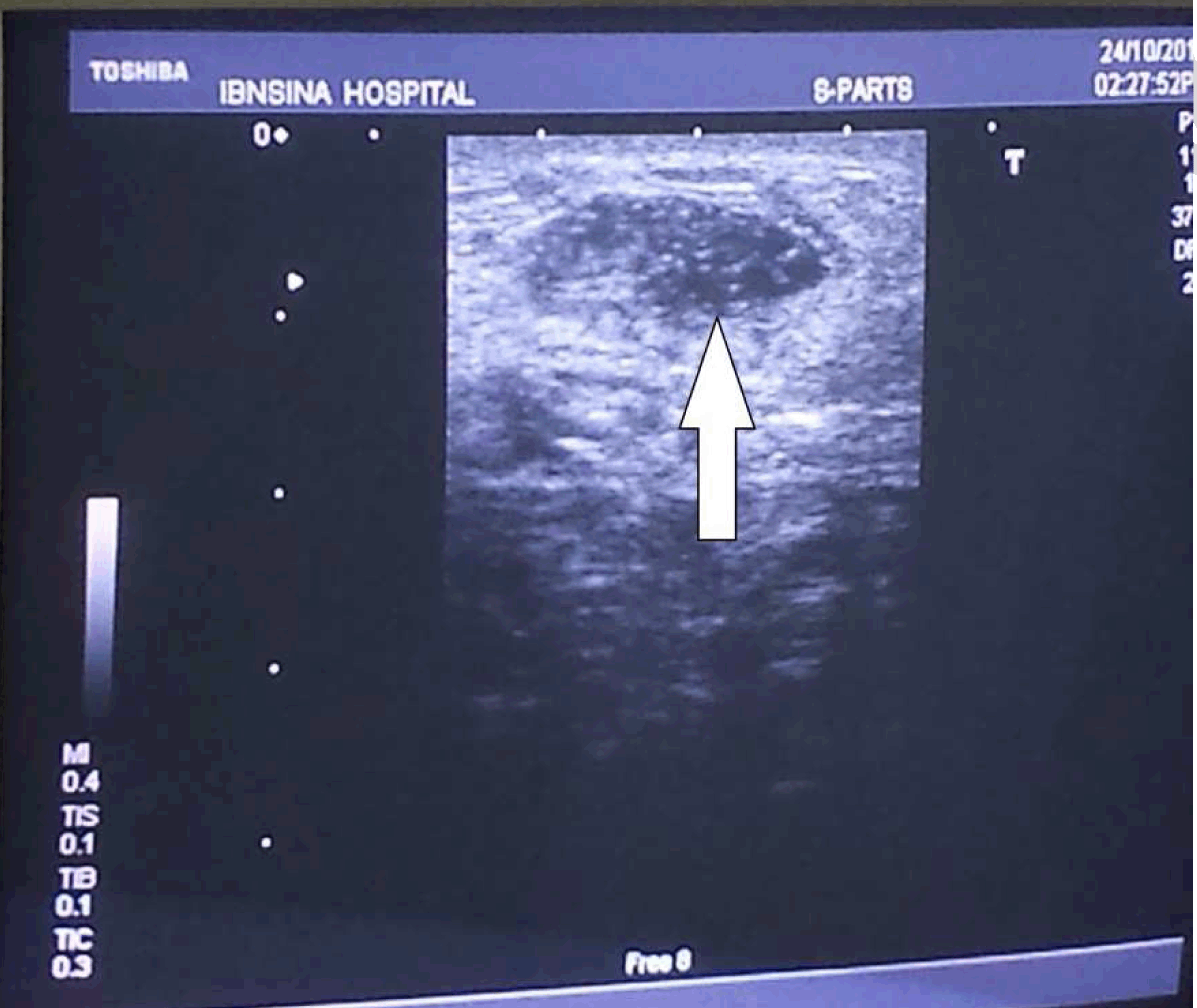
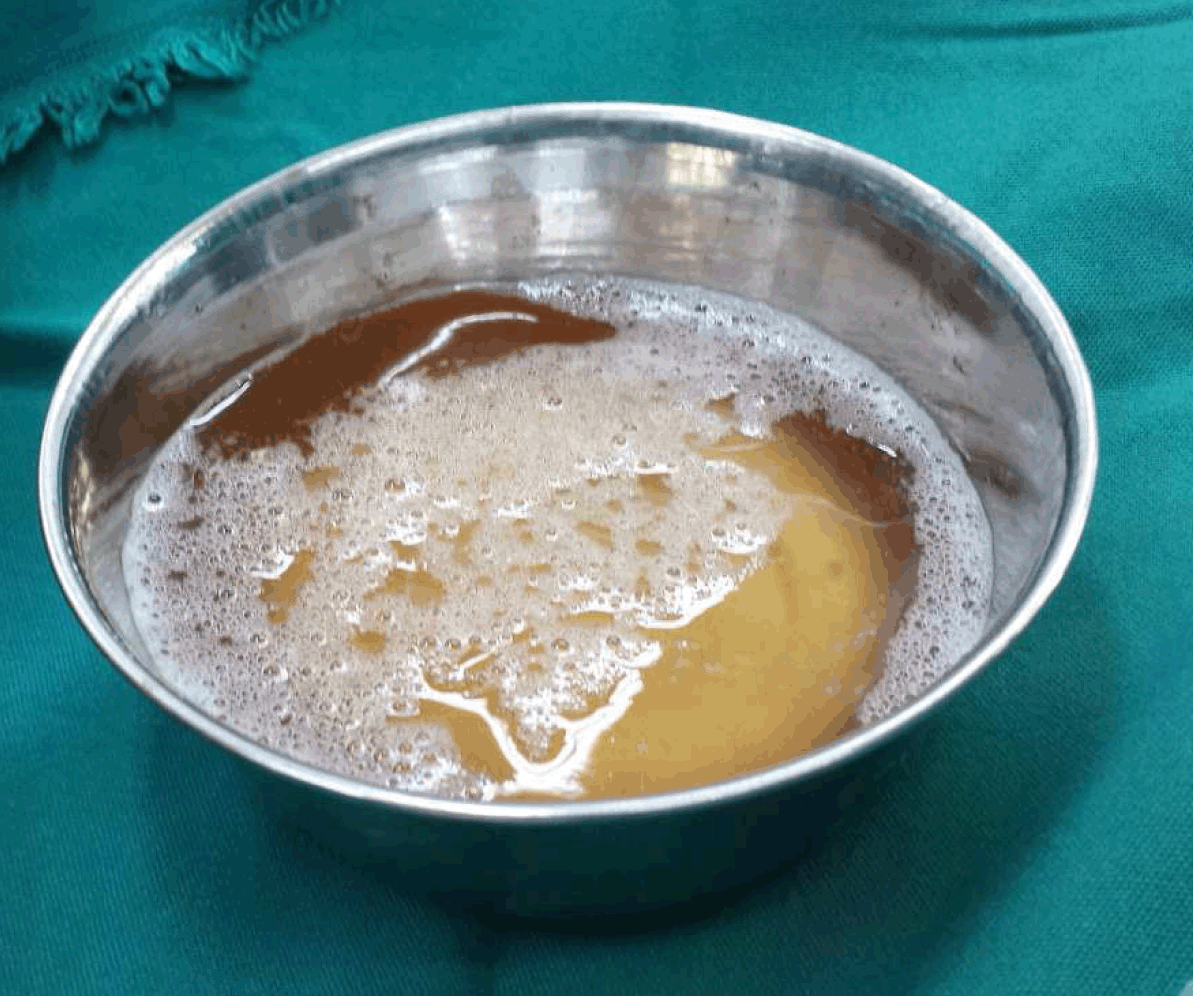
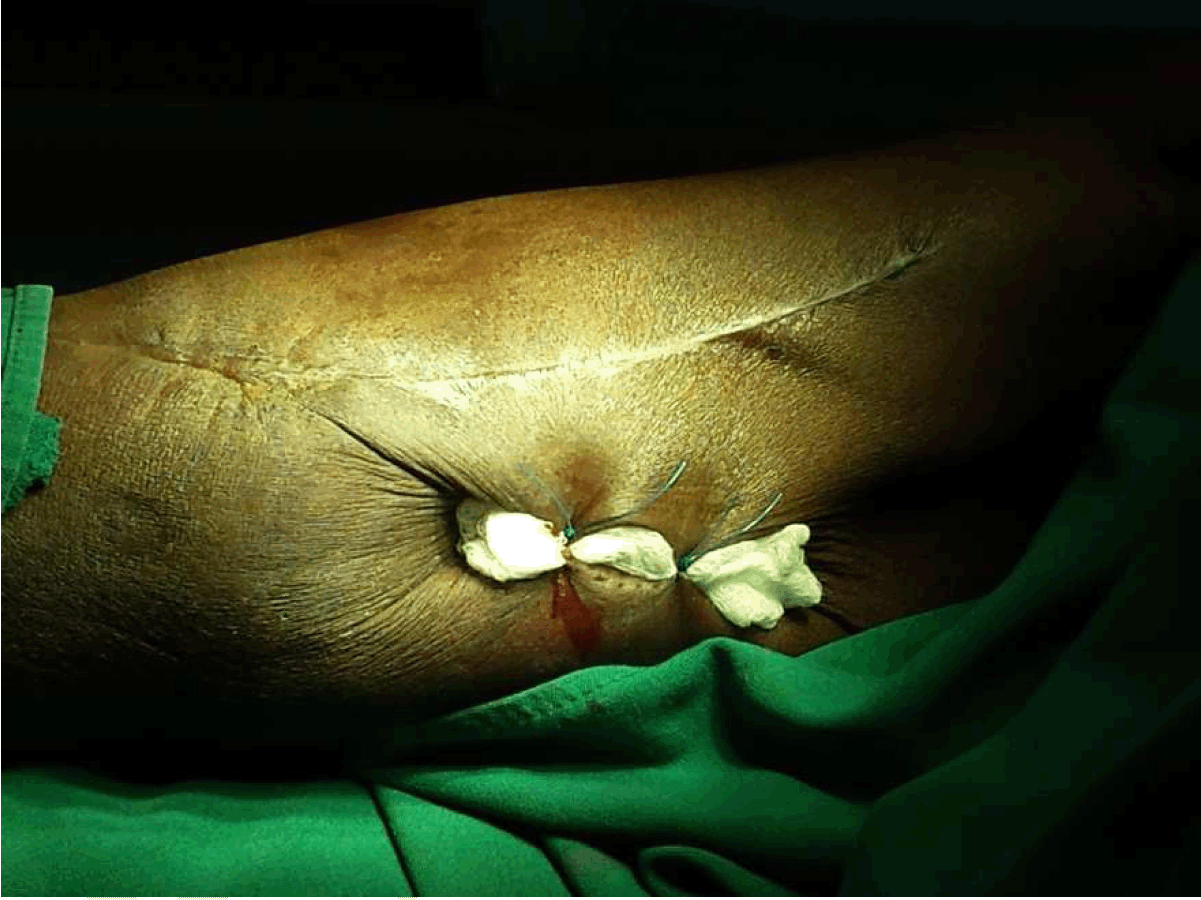
A 65-year-old male with end-stage renal disease for eight months, presented one month after a right basilic vein superficialization (Figure 1) with a swollen upper arm (Figure 2). The swelling started two weeks after the operation and grew gradually over the course of two to three weeks. He did not complain of any pressure symptoms, nor was he experiencing pain distal to the swelling. The arteriovenous fistula fistula was intact. On examination, the swelling was well confined, cystic, non-tender, located on the medial aspect of the right upper arm and was not attached to overlying skin. It measured about 10x20 cm. The patient's radial and ulnar pulses were intact and there were no signs of ischemia. A thrill was felt and a bruit was heard on the brachiobasilic fistula which lied on the superior border of the swelling. On greyscale ultrasonography the swelling represented a hypoechoic region (Figure 3). A Doppler ultrasound was performed, thus confirming the patency of the fistula. In view of the above description, the differential diagnoses we put in mind were hematoma, lymphocele or a seroma. On aspiration of the swelling, the fluid was straw-colored and cytology confirmed features of lymphocele. The patient was planned for weekly sessions of lymphatic fluid aspiration and sclerotherapy. This continued for four consecutive weeks. On the first session, a total of 130 mL of straw-colored fluid was drained (Figure 4), 7 cm3 of diluted povidone iodine were injected and mild pressure was applied with a bandage. On the subsequent sessions, the same amount of fluid was aspirated, indicating inadequacy of the procedure, and povidone iodine was used as the sclerotherapeutic agent. On the fifth session, following aspiration and sclerotherapy, a gauze was fixed externally between two skin folds using two simple interrupted sutures to apply high pressure on the cavity and was left in place for five days (Figure 5). After removal of the gauze, the lymphocele has resolved completely (Figure 6) and on serial follow-up sessions there was no recurrence and the arteriovenous fistula fistula was functioning well. | ||||||
| ||||||
| ||||||
| ||||||
| ||||||
| ||||||
| ||||||
|
Discussion
| ||||||
|
Lymphoceles commonly arise as a complication of surgeries, where the normal lymphatic vessels are dissected in the procedure or as a consequence following trauma. They regularly appear following major pelvic surgeries, gynecological oncological surgeries and renal transplantation. Other surgeries may also witness lymphocele formation, as open abdominal aortic aneurysm repair. Clinically, lymphoceles, hematomas and seromas may have similar presentations. Aspiration and cytology helps in confirming or excluding a diagnosis. Lymphoscintigraphy (radiological) helps visualize the course of the lymphatic vessels. Regarding the management of postoperative lymphoceles by sclerotherapy, Mahrer et al. conducted a study with 38 patients, the success of sclerotherapy treatment was observed in 33 patients. The number of sclerotherapy sessions ranged from 1–14, with an average of four sessions. They stated that the patients with a lower amount of fluid aspirated in the initial drainage (206 mL) had a higher chance of success, while those with a higher initial aspirated volume (1,708 mL) were the group that failed to respond to treatment. They concluded that the lymphocele cavity size is directly related to the success of sclerotherapy treatment [4]. In contrast to the presentation of this case report, the amount of fluid aspirated was 130 mL and the patient has received four sclerotherapeutic sessions with recurrences of the same amount of fluid in the cavity of the lymphocele in all sessions. Resolution of the lymphocele only occurred after application of the external pressure. In another study, treatment of a recurrent postoperative lymphocele was performed by drainage and alcohol ablation without complications, in one out of 13 patients. The rest were successfully treated via drainage and sclerosis [5]. Porcellini et al. conducted a study which evaluated the management of postoperative lymphoceles following lower limb arterial reconstructive surgery, in a conservative outpatient fashion. The patients were managed by ambulation limitation, elevation of the limbs and pressure dressings without serial aspirations. All the lymphoceles have resolved in an average period of 21 days [6]. In a study done by Weinberger et al., they discussed the management of postoperative lymphoceles after gynecological surgeries. They stated that the methods prevailing for management tend to be the less invasive ones like sclerotherapy and catheter drainage, followed by surgery (laparotomy vs laparoscopy) for recurring lymphoceles [7]. The use of isosulfan blue dye was also described in identifying and ligating a forearm lymphocele without prior drainage or sclerotherapy, which appeared as a complication of an interosseous artery pseudoaneurysm repair [8]. Fabrizio Sansone et al. described a technique in which they sutured pledgets over the skin on the groin to apply constant pressure to groin lymphoceles that occurred as a complication of major cardiovascular and vascular surgery. Their study included 10 patients and the length of time required for resolution of the lymphocele spanned from 10 to 20 days [9] . The technique described here is almost similar to what we have done, focusing mainly on pressure applied externally to avoid filling of the lymphocele cavity. | ||||||
|
Conclusion
| ||||||
|
The complications arising after peripheral vascular surgery are vast, some are common and others are rare, as is the case with postoperative lymphoceles. Nonetheless, the diagnosis should be kept in mind in any patient presenting with a swelling arising as a complication of recent vascular, or any major surgery. Many studies have been conducted regarding the treatment of postoperative lymphoceles, some authors advocate the implication of consecutive drain and sclerotize sessions while others use a more conservative approach using immobilization and pressure dressings. After our implication of this method for application of external pressure, we think it is a more effective way of resolving postoperative lymphoceles from the first session, i.e., drainage, sclerotherapy and external pressure. Larger studies have to be conducted in order to properly assess the advantage of this method over conventional ways and to determine the prevalence of any complications that may arise. | ||||||
|
References
| ||||||
| ||||||


|
[HTML Abstract]
[PDF Full Text]
|
|
Author Contributions
Ahmed Mohamed Elhassan Elfaki Osman – Acquisition of data, Drafting the article, Final approval of the version to be published Saif-Eldin Mohammed Ali Ibrahim – Substantial contributions to conception and design, Revising it critically for important intellectual content, Final approval of the version to be published |
|
Guarantor of submission
The corresponding author is the guarantor of submission. |
|
Source of support
None |
|
Conflict of interest
Authors declare no conflict of interest. |
|
Copyright
© 2014 Ahmed Mohamed Elhassan Elfaki Osman et al. This article is distributed under the terms of Creative Commons Attribution License which permits unrestricted use, distribution and reproduction in any medium provided the original author(s) and original publisher are properly credited. Please see the copyright policy on the journal website for more information. |
|
|
|
About The Authors
| |||
| |||
| |||