|

|
 |
|
Case Report
| ||||||
| Surgical treatment of high-dysplastic developmental spondylolisthesis in a child: A case report | ||||||
| Nalli Ramanathan Uvaraj1, Aju Bosco2 | ||||||
|
1MS, (Orth), DNB, MNAMS, Professor of Spine Surgery, Spine Unit, Institute of Orthopedics and Traumatology, Rajiv Gandhi Government General Hospital and Madras Medical College, Chennai, Tamil Nadu, India.
2MS, (Orth), DNB, Assistant Professor of Orthopedics, Department of Orthopedics and Traumatology, Government Mohan Kumaramangalam Medical College and Superspeciality Hospital, Salem. Tamil Nadu, India. | ||||||
| ||||||
|
[HTML Abstract]
[PDF Full Text]
[Print This Article]
[Similar article in Pumed] [Similar article in Google Scholar] 
|


| How to cite this article |
| Uvaraj NR, Bosco A. Surgical treatment of high-dysplastic developmental spondylolisthesis in a child: A case report. Int J Case Rep Images 2014;5(11):784–789. |
|
Abstract
|
|
Introduction:
High-dysplastic developmental spondylolisthesis (HDDS) is extremely rare, comprising 5% of the total cases of spondylolisthesis. It can remain asymptomatic for a long time and can progress to a more severe grade of olisthesis and spondyloptosis. Opinions regarding the surgical management of high-grade dysplastic spondylolisthesis in children and adolescents still remain conflicting and controversial.
Case Report: This case describes a 12-year-old girl with high-grade dysplastic L5-S1 spondylolisthesis with instability pain, managed with uninstrumented in situ circumferential fusion. The patient showed excellent clinical, functional and radiological outcomes at follow-up of 48th month. Since, plain radiographs and conventional computed tomography (CT) scan failed to show convincing anterior intercorporal fusion, we did fusion analysis with a multi-slice helical tomography scan with multiplanar reconstruction. The reconstructed multiplanar images defined a good posterolateral and anterior intercorporal fusion. Conclusion: Uninstrumented in situ circumferential fusion is a safe and effective surgical option in the management of high-grade L5-S1 dysplastic spondylolisthesis in children and adolescents. Multi-slice helical CT scan with multiplanar reconstruction is the modality of choice in the evaluation of interbody fusion and its progression. | |
|
Keywords:
Spondylolisthesis, Child, High-grade, Uninstrumented in situ circumferential fusion
| |
|
Introduction
| ||||||
|
Congenital (developmental/dysplastic) spondylolis-thesis comprises 15% of spondylolisthesis presenting before adulthood of which only 5% are of high-dysplastic (HDDS) type. Dysplastic spondylolisthesis occurs only at the L5-S1 level and usually presents in females [1] [2]. The significant causative association of genetic factors and the presence of a strong familial preponderance has been established. It is attributed primarily to congenital dysplasia of the L5-S1 facet joints. The pars interarticularis may be poorly developed or elongated. It may be associated with spina bifida occulta of L5 and/or the S1 vertebra and lumbosacral segmentation defects [3]. There is roundening of the superior anterior aspect of the sacrum (sacral doming). Classically, the L5 vertebra is trapezoidal in shape and acquires a kyphotic tilt in relation to the vertically oriented sacrum resulting in an increased lumbosacral angle. It can remain asymptomatic for a long time and can progress to a more severe grade of olisthesis and spondyloptosis [4]. Patients usually present during adolescence with low back pain and spinal stiffness. They may also present with lumbar hyperlordosis, hamstring shortening, flexed-hip and knee walking and toe gait. Patients do not always present with radicular symptoms due to adaptability of the nerves to compression or tension. Treatment of high-grade dysplastic spondylolisthesis (Meyerding grades III, IV and V) in a growing child is operative. Opinions regarding the surgical management of high-grade dysplastic spondylolisthesis in children and adolescents still remain controversial. We present a case of high-dysplastic developmental spondylolisthesis (HDDS) treated operatively, with a note on the surgical technique along with a review of literature. | ||||||
|
Case Report
| ||||||
|
A 12-year-old girl presented with pain in the lower back since 12 months radicular pain without any history of radicular pain. Pain affected her activities of daily living. Clinically, she had an exaggerated lumbar lordosis and painful restriction of movements of the lumbar spine. Her neurological examination was remarkably normal. Plain radiographs revealed a Meyerding grade III anterolisthesis of L5, an elongated intact pars interarticularis, vertically oriented sacrum with doming of the sacral end plate, trapezoidal L5 and lumbosacral kyphosis (Figure 1), consistent with the diagnosis of a HDDS as classified by Marchetti and Bartolozzi [5]. Computed tomography scan revealed dysplasia of the posterior elements at L5, S1 levels and magnetic resonance imaging (MRI) scan showed decreased spinal canal dimensions at the L5-S1 level (Figure 2). A detailed family history revealed that the girl's mother was having an untreated L5-S1 dysplastic spondylolisthesis, emphasizing the need for screening the family members of patients with dysplastic spondylolisthesis. | ||||||
|
| ||||||
|
| ||||||
|
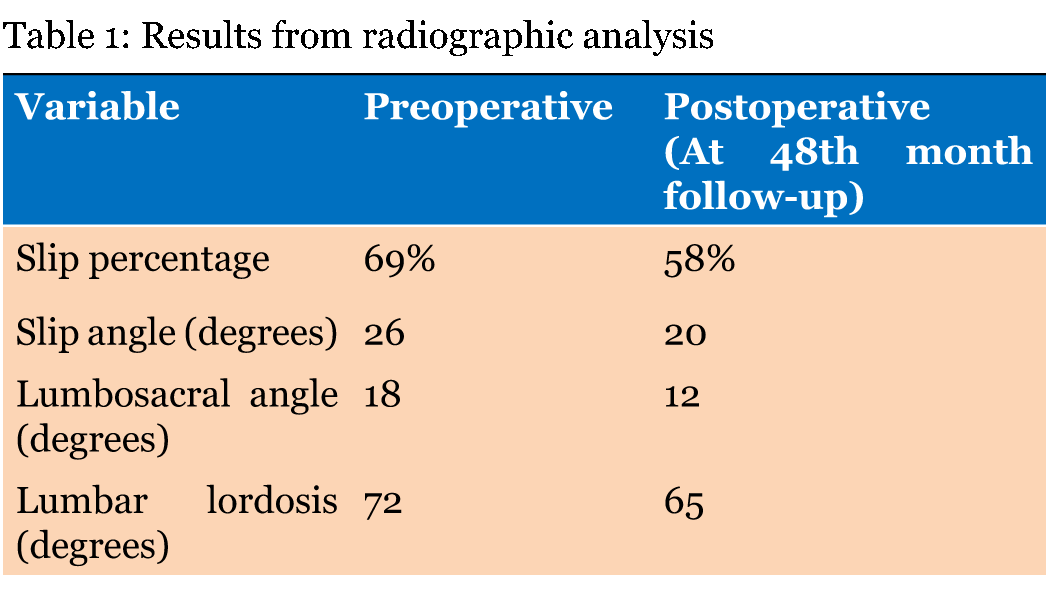
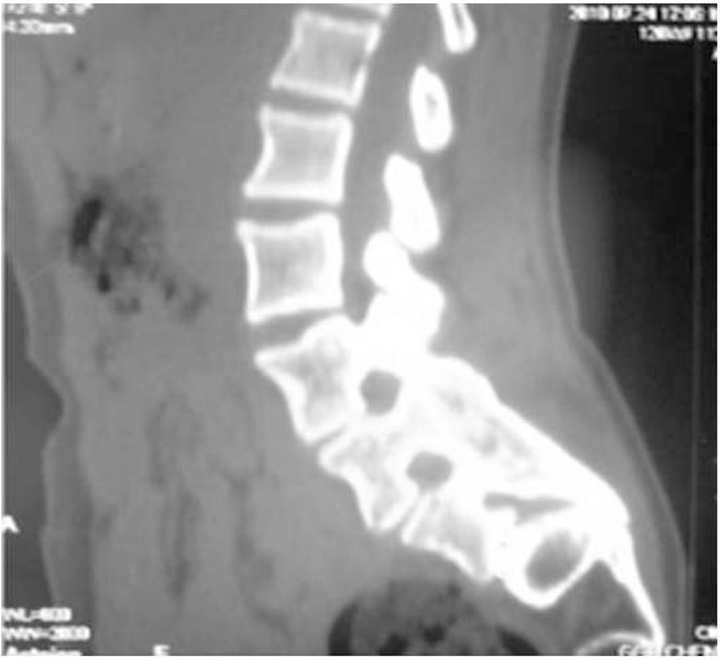
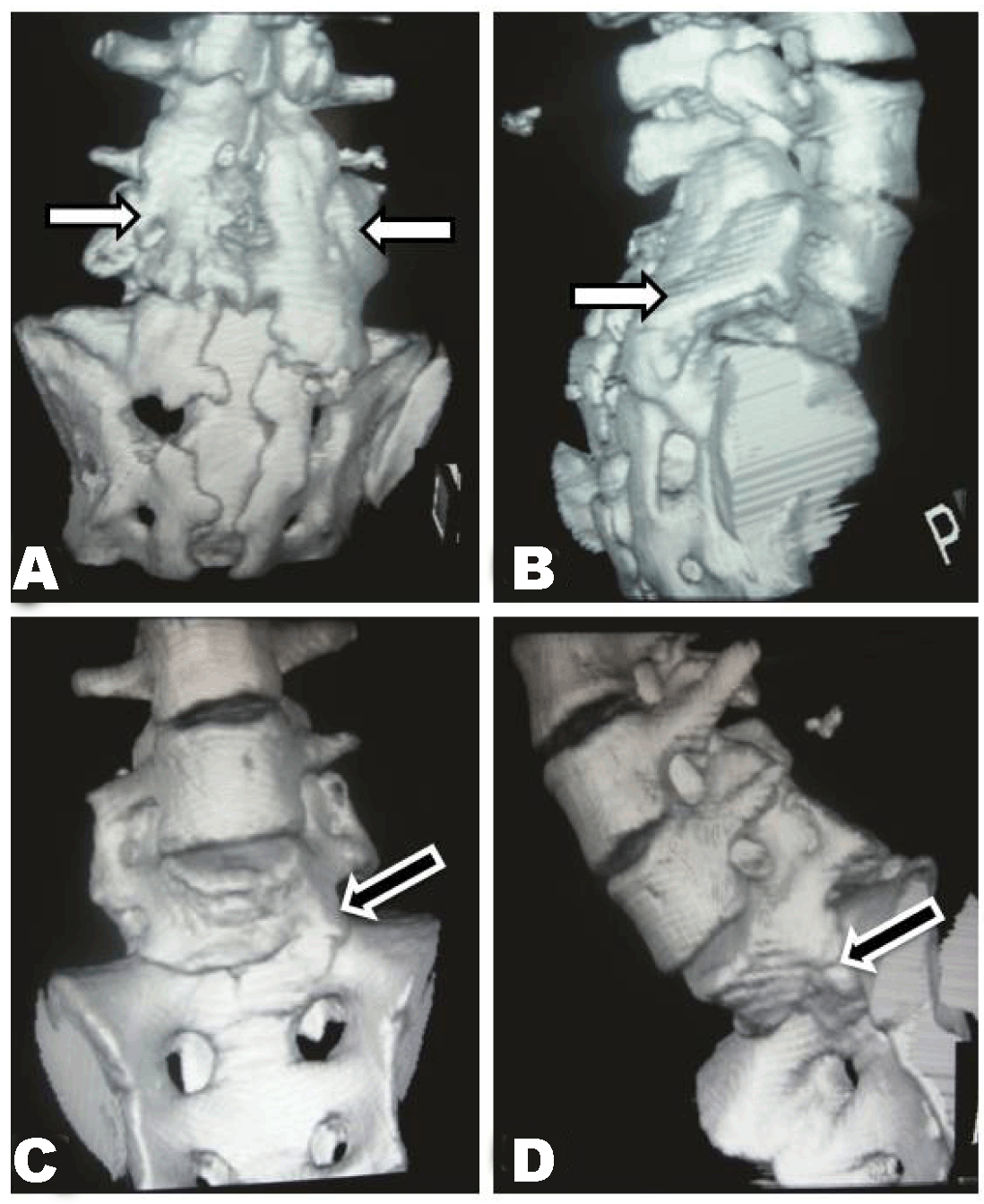
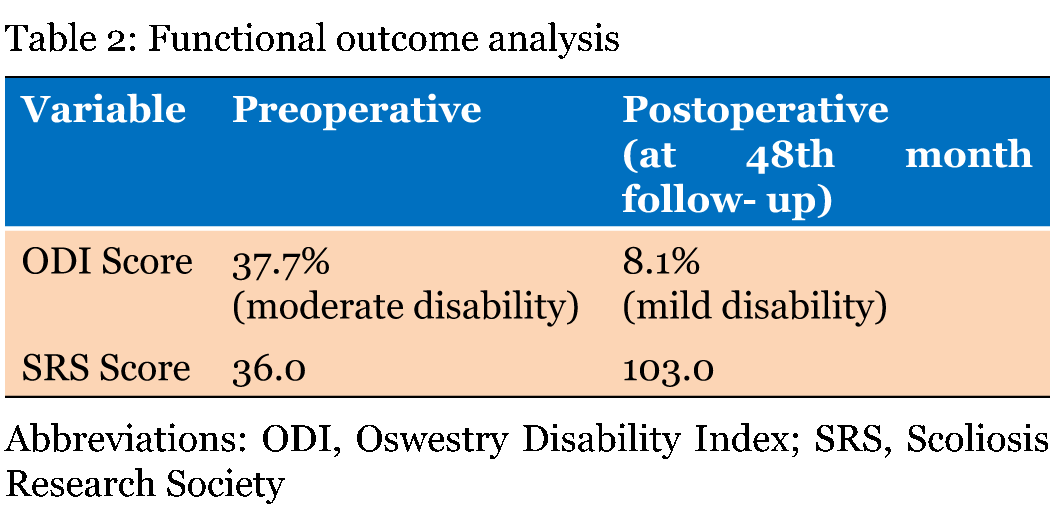
Operative procedure Taking into consideration various factors, it was decided to manage this case with an uninstrumented circumferential in situ fusion as a staged procedure. In the first stage, through a posterior midline approach, decortication and autografting (posterior iliac crest graft) of the posterior elements of L4, L5, S1 and the transverse processes of L4 and L5 were done. In the second stage, through a left sided retroperitoneal approach (as against a traditionally performed transperitoneal approach) the bodies of L5 and S1 were exposed. Femoral head allograft was placed between the bodies of L5 and S1, to accomplish an anterior intercorporal fusion. No intraoperative complication was noted and the postoperative period was uneventful. Postoperatively, a three-point support brace was used for six months. Results-Analysis of outcome Patient reported complete resolution of her symptoms at third month and resumed full activity at sixth month postoperatively. On final follow-up at 48th month, she had pain free range of movements of the spine with some restriction of forward flexion. A comparative analysis of the preoperative radiographs and radiographs at latest follow-up showed a marginal reduction in slip angle, slip percentage and lumbosacral angle (Table 1). Follow-up radiographs showed some evidences of intertransverse fusion from L4 to S1 (Figure 3). Plain radiographs and conventional CT failed to show a convincing anterior intercorporal fusion between L5 and S1 (Figure 4). We therefore did fusion analysis with a multi-slice helical tomography scan with multiplanar image reconstruction. The reconstructed multiplanar images defined a good posterolateral fusion mass extending from L4 to S1 and solid anterior interbody fusion mass bridging L5 and S1 (Figure 5A-D). Her functional outcomes with regard to pain, postoperative function, level of daily activity, and social life were assessed at 48th month using Oswestry Disability Index (ODI) and Scoliosis Research Society (SRS) scores [6] [7]. The ODI score improved from 37.7% (moderate disability) preoperatively to 8.1% (mild disability) at 48th month. Her SRS score also showed that she had a good functional outcome after 48 months (Table 2). There was a significant correlation between the postoperative function, level of daily activity and social life domains of the ODI and SRS questionnaires. | ||||||
| ||||||
|
| ||||||
| ||||||
|
| ||||||
| ||||||
|
Discussion
| ||||||
|
The surgical management of high-grade dysplastic spondylolisthesis in children and adolescents still remains conflicting and controversial. The spectrum of available surgical options include, instrumented in situ fusion, instrumented reduction and fusion or uninstrumented in situ fusion which may be posterolateral, anterior or circumferential and vertebrectomy (Gaines procedure). Though modern surgical techniques and instrumentation permit reduction or even removal of a severely slipped fifth lumbar vertebra, yet the benefits of reduction still remain controversial [8] [9]. Despite modern neurophysiologic monitoring (somatosensory and motor evoked potentials), these instrumented reduction procedures present the possibility of severe neurological complications [10]. According to available literature, instrumented reduction of L5-S1 high-grade spondylolisthesis is associated with an 8–30% rate of postoperative neurological compromise, mostly consisting of nerve root injuries or cauda equina syndrome. There is a relatively high incidence of well-documented complications associated with reduction, including instrumentation failure, loss of reduction and pseudoarthrosis [11]. Though reduction may reduce the slip, restore the sagittal plane balance and normal biomechanics, we believe that the risks of reduction in the setting of pediatric high-grade spondylolisthesis outweigh the benefits. Despite no reduction in the translational deformity, uninstrumented in situ fusion offers better long-term clinical, radiological and functional outcomes than instrumented reduction has in the same patient population [10]. In situ posterolateral fusion in children with severe spondylolisthesis was followed by deterioration of olisthesis in 25% of the cases [12]. Anterior interbody fusion saves levels, offers better fusion rates, provides axial load sharing and halts slip progression. Furthermore, circumferential in situ fusion offers better long-term results than posterolateral or anterior fusion alone [13]. Despite a severe neural canal and neural foraminal narrowing seen in the MRI images, the patient under study had no radicular symptoms. Hence, a primary decompression was not done in our patient. This is consistent with the fact that patients do not always present with radicular symptoms due to adaptability of the nerves to compression or tension. In addition, decompression in the presence of instability will further weaken the posterior buttress with postoperative progression of slip and of lumbosacral kyphosis. If the patient presents later with radicular symptoms, decompression may be accomplished in the presence of a circumferentially fused stable lumbosacral spine. We, therefore, recommend decompression only when patients present with radicular symptoms. Though there is no significant reduction of slip in insitu fusion as against instrumented reduction, the ODI and SRS scores were significantly better in the fusion in situ group than in the reduction group [10]. Disc degeneration above the fusion was more common in the reduction group than in the fusion in situ group on long- term MRI follow-up [13]. Therefore, uninstrumented in situ circumferential fusion can be considered as a method of choice in the management of high-grade L5-S1 dysplastic spondylolisthesis in children and adolescents. Although reduction may improve the cosmetic appearance postoperatively, very few patients complain about their cosmetic appearance in the long-term and indeed their appearance is improved by relief of hamstring tightness and correction of sciatic scoliosis. Though reduction was not attempted intraoperatively, the observation of a marginal reduction of slip angle and slip percentage at follow-up may be explained by the fact that corrective remodeling occurs during growth in patients operated on at an early age. Traditionally, interbody fusion has been assessed with plain radiographs, which have significant intra- and interobserver variation [14]. Sandhu et al. found that although plain radiographs showed evidence of interbody fusion at sixth month, only 33% were subsequently judged fused on histologic examination [15]. When human allograft bone is used for interbody fusion, it is again difficult to interpret fusion progression or allograft resorption, replacement or graft incorporation on plain films. The CT scan provides better evaluation of fusion progression and has evolved as the preferred method of assessing interbody fusion. It offers the potential for high-quality reformatted images in the coronal and sagittal planes, and provides exquisite bone detail [14]. Three dimensional multi-slice thin section CT scans with multiplanar reconstruction have been demonstrated to show fusion maturation and bone growth and have been effective in fusion evaluation unlike with plain CT films [14]. The retroperitoneal approach that has been used to obtain anterior interbody fusion between L5 and S1 offers an alternate safer approach to the commonly used transperitoneal approach. In addition, ethylene oxide sterilized allograft used in this patient, can be used to achieve anterior intercorporal fusion. | ||||||
|
Conclusion
| ||||||
|
Uninstrumented in situ circumferential fusion is a safe and effective surgical option in the management of high-grade L5-S1 dysplastic spondylolisthesis in children and adolescents. Multi-slice helical computed tomography scan with multiplanar reconstruction is the modality of choice in the evaluation of interbody fusion and its progression. | ||||||
|
References
| ||||||
| ||||||




|
[HTML Abstract]
[PDF Full Text]
|
|
Author Contributions
Nalli Ramanathan Uvaraj – Substantial contributions to conception and design, Acquisition of data, Analysis and interpretation of data, Drafting the article, Revising it critically for important intellectual content, Final approval of the version to be published Aju Bosco – Analysis and interpretation of data, Revising it critically for important intellectual content, Final approval of the version to be published |
|
Guarantor of submission
The corresponding author is the guarantor of submission. |
|
Source of support
None |
|
Conflict of interest
Authors declare no conflict of interest. |
|
Copyright
© 2014 Nalli Ramanathan Uvaraj et al. This article is distributed under the terms of Creative Commons Attribution License which permits unrestricted use, distribution and reproduction in any medium provided the original author(s) and original publisher are properly credited. Please see the copyright policy on the journal website for more information. |
|
|
|
About The Authors
| |||
| |||
| |||