| |
|
|
|
Case Report
| ||||||
| Adrenal cortical carcinoma presenting with secondary amyloidosis: A case report | ||||||
| Reetu Kundu1, Ujjawal Khurana2, Harsh Mohan3, Uma Handa4, Rachneet Kohli5, Ashok Kumar Attri6 | ||||||
|
1MD, Senior Resident, Department of Pathology, Government Medical College and Hospital, Chandigarh, India.
2MD, Senior Research Associate, Department of Pathology, Government Medical College and Hospital, Chandigarh, India. 3MD, Professor & Head, Department of Pathology, Government Medical College and Hospital, Chandigarh, India. 4MD, Professor, Department of Pathology, Government Medical College and Hospital, Chandigarh, India. 5MD, Resident, Department of Pathology, Government Medical College and Hospital, Chandigarh, India. 6MS, Professor & Head, Department of General Surgery, Government Medical College and Hospital, Chandigarh, India. | ||||||
| ||||||
|
[HTML Abstract]
[PDF Full Text]
[Print This Article]
[Similar article in Pumed] [Similar article in Google Scholar] 
|
| How to cite this article |
| Kundu R, Khurana U, Mohan H, Handa U, Kohli R, Attri AK. Adrenal cortical carcinoma presenting with secondary amyloidosis: A case report. Int J Case Rep Images 2014;5(11):777–780. |
|
Abstract
|
|
Introduction:
Adrenal cortical carcinoma is a rare aggressive tumor with a poor prognosis. Associated systemic amyloidosis is a rare phenomenon with only single case reported in English literature.
Case Report: We report a case of a 50-year-old female harboring a huge adrenal cortical tumor along with systemic amyloidosis who underwent primary curative surgical resection of the tumor. Our patient had a Weiss score of 6 which is indicative of bad prognosis. Conclusion: The presence of proteinuria in patients with adrenal cortical carcinoma may be indicative of amyloidosis. Further, the high risk of metastasis in adrenal cortical cancer mandates a close clinical follow-up. | |
|
Keywords:
Adrenal cortical carcinoma, Amyloidosis, Cancer, Histopathology
| |
|
Introduction
| ||||||
|
Adrenal cortical carcinoma (ACC) is a rare aggressive endocrine malignancy accounting for 0.2% of all cancers [1]. An ACC has a bimodal age distribution with a first peak in childhood and a second higher peak in the fourth and fifth decades of life [2]. Females are more often affected than males. Majority of cases are sporadic while some show a familial predisposition. Certain malignancies are associated with systemic deposition of amyloid, peculiarly the myelomatosis, Hodgkin's lymphoma and renal cell carcinoma [3]. Systemic amyloidosis in association with ACC is exceptional as in the indexed case and only one such case has been reported in English literature [[4]. | ||||||
|
Case Report
| ||||||
|
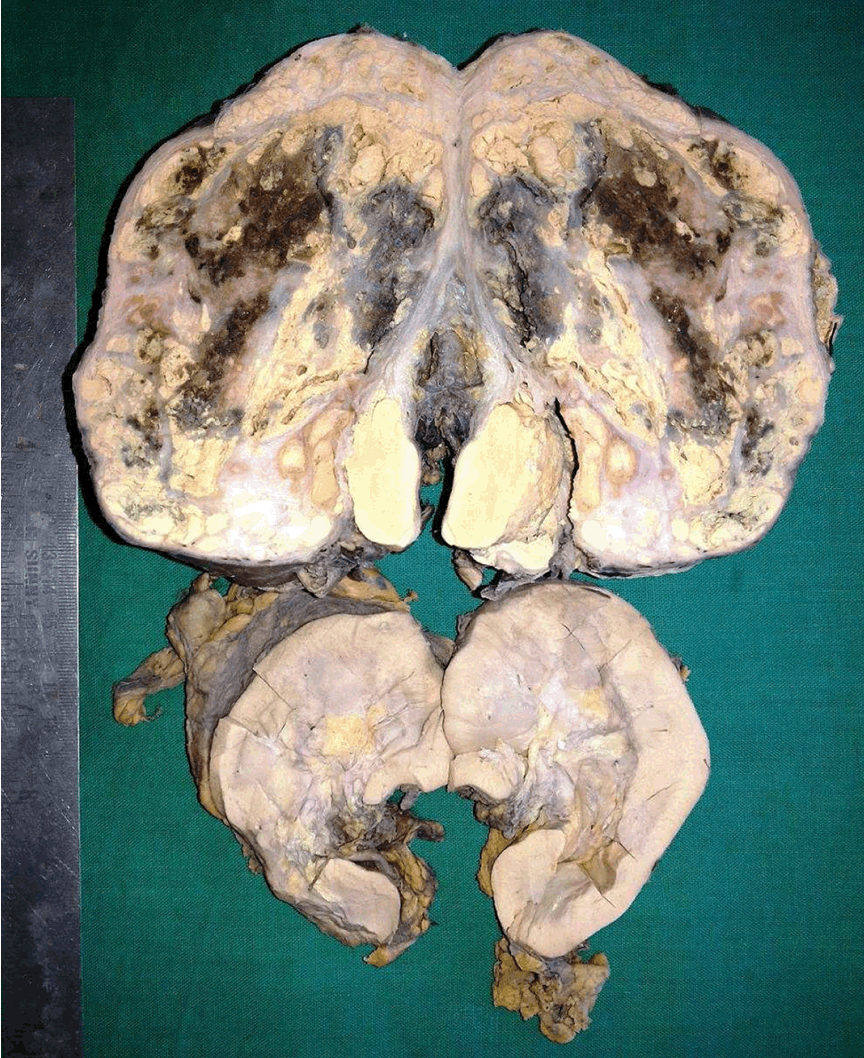
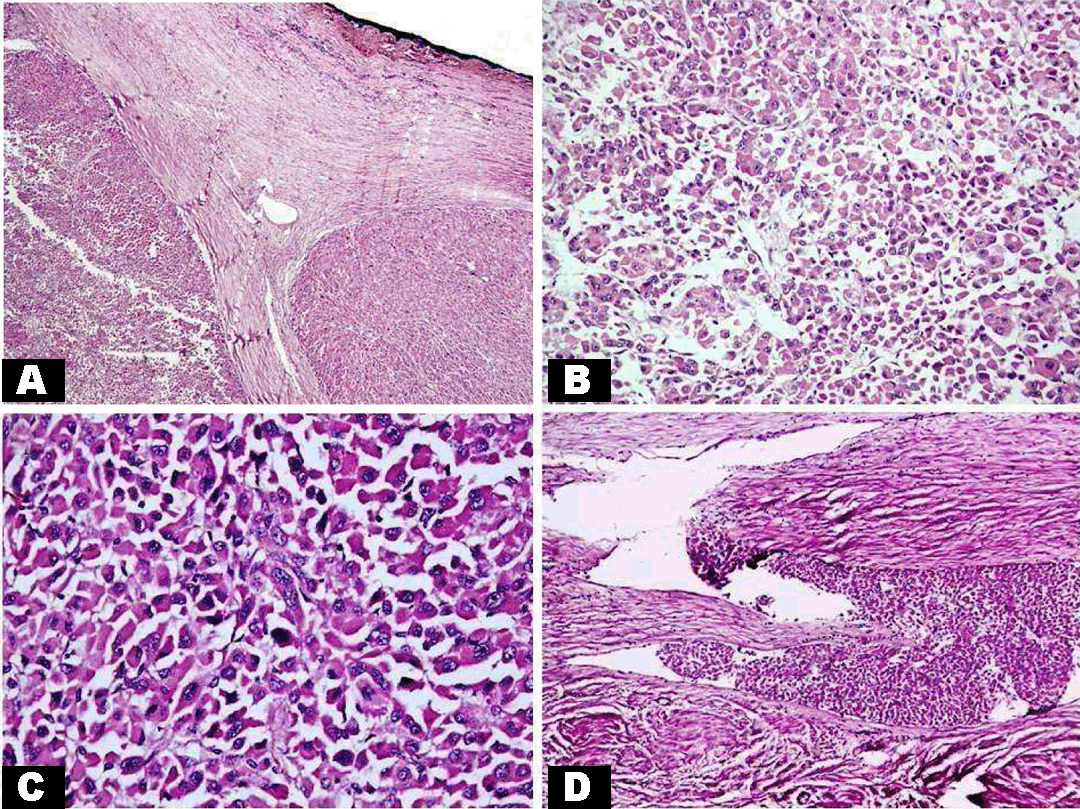
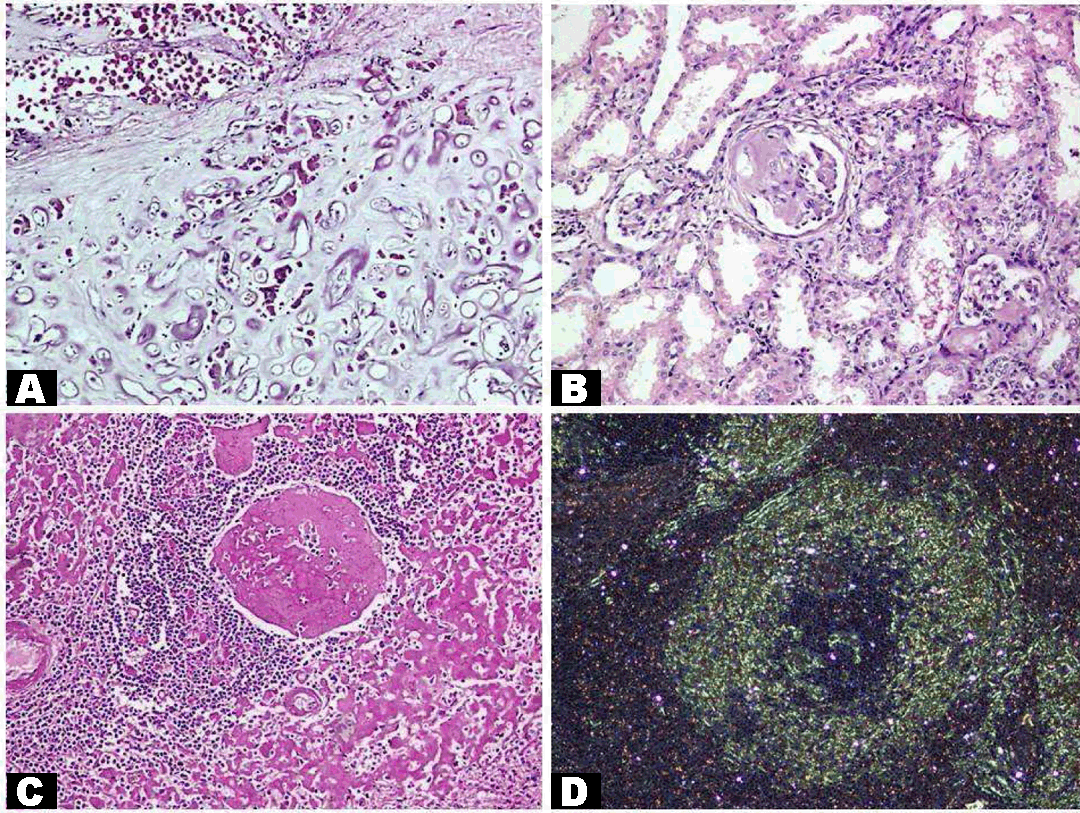
A 50-year-old female presented to the surgery outpatient clinic with a history of weight loss, fever, fatigue and vague pain abdomen for one year. Her blood pressure (BP) records showed fluctuant BP with lowest of 110/70 mmHg and highest of 160/134 mmHg. The patient did not have any history of bone pains, tuberculosis, rheumatoid arthritis or any other chronic ailment. Complete hemogram showed hemoglobin 10.8 g/dL, leukocyte count 4100/µL, differential count 68/25/05/02, platelet count 2.2x10⁵/µL and ESR 72 mm at 1st h. Urine examination revealed proteinuria (3+). The serum and urine protein electrophoresis were negative for M (monoclonal) band. Urine was negative for Bence Jones proteins. Biochemical parameters were as follows: sodium 132 mmol/L, potassium 3.9 mmol/L, serum calcium 9.4 mg/dL, urea 34 mg/dL, creatinine 0.8 mg/dL, total serum protein 3.6 g/dL and albumin 1.2 g/dL. Blood glucose, liver function tests and lipid profile were within normal limits. On examination a lump was felt per abdomen and computed tomography (CT) scan was advised. A large mass 13x12x10 cm in gastro-splenic region, likely from adrenal, was detected on CT scan which had heterogeneous enhancement with areas of calcification and necrosis. It compressed and displaced the pancreas. The left kidney was also displaced posteriorly. The mass was well delineated from the left kidney by a plane of fat. There was no lymphadenopathy/suggestion of metastasis. The radiologic impression was of a malignant tumor with a possible origin from left adrenal with no evidence of metastasis in the abdominal viscera. Fine-needle aspiration cytology (FNAC) and/or histopathological correlation were advised. The FNAC was done and smears were cellular with loose clusters and singly scattered tumor cells in a necrotic background. The tumor cells were large, polygonal with plasmacytoid appearance at places. Nuclei were pleomorphic, hyperchromatic with coarse chromatin and cytoplasm was moderate to abundant and granular with vacuolization in some tumor cells. Binucleated cells were also seen. Mitotic figures were noted. Immunohistochemistry (IHC) for vimentin, chromogranin, cytokeratin, S-100 and HMB-45 was done on the cell block. Immunopositivity for vimentin was seen while the other markers were negative. The FNAC report of adrenal cortical carcinoma was rendered. Based on the FNAC report, complete steroid hormone profile (testosterone, dehydroepiandrosterone, androstenedione, aldosterone, estradiol, 11-deoxycortisol, cortisol, pregnenolone and 17-hydroxypregnenolone) of the patient was done which was within normal limits. Radiologic workup was done to rule out metastasis which showed no evidence of metastasis. A primary curative radical surgery comprising left adrenalectomy, left nephrectomy and splenectomy was done. The tumor was bulky and compressed the kidney, hence nephrectomy was done. Splenectomy was done because the splenic artery and vein were entangled by the tumor. On gross examination, the left adrenal tumor measured 15.2x11.1x10.0 cm and weighed 770 grams. The mass was well separated from the attached kidney by perirenal fat (Figure 1). Externally, the tumor was grey brown, globular and well encapsulated. Cut section showed a variegated appearance with grey brown to grey yellow to grey tan areas. Areas of hemorrhage and necrosis were seen. Normal adrenal tissue was not identified. Left kidney measured 13.5x6.5x4 cm and weighed 130 grams. Cut section was pale waxy and translucent (Figure 1) . Spleen was enlarged measuring 14x10.5x5.2 cm and weighing 380 grams. Cut section was grey tan and firm. Representative sections examined from the adrenal mass showed a well-encapsulated tumor with organoid and lobular pattern (Figure 2A). The tumor cells were large with plasmacytoid appearance at places (Figure 2B) showing considerable nuclear pleomorphism, and atypia with moderate to abundant eosinophilic cytoplasm (Figure 2C). Clear cells (15%) were seen. The mitotic count was 12/50 high power field including atypical mitoses. Areas of hemorrhage and confluent necrosis were seen. Formation of cholesterol clefts and fibrosis was noted. Lymphovascular invasion was seen (Figure 2D). The capsule was devoid of any breach. Nine histological criteria proposed by Weiss were assessed and a Weiss score of 6 was obtained. Noteworthy were foci showing deposition of intratumoral perivascular homogeneous acellular eosinophilic material (Figure 3A). A panel of immunostains was applied for confirmation of the tumor type. Tumor cells were positive for vimentin and negative for S-100, HMB-45, chromogranin and cytokeratin. Sections from the kidney were free of tumor and showed deposition of homogeneous acellular eosinophilic material in the glomerular tuft, mesangium and the peritubular capillary walls ( (Figure 3B). Sections from spleen were free of tumor and showed deposition of eosinophilic material in the arteriolar walls with replacement of follicles at places (Figure 3C). The acellular eosinophilic material deposits seen in tumor per se, kidney and spleen showed congophilia and apple green birefringence on polarization (Figure 3D), thus confirming it to be amyloid. Multiple organ involvement; kidney, spleen and adrenal gland indicated systemic amyloidosis. Hence rectal, gingival and subcutaneous adipose tissue biopsies were not done. Furthermore, the sections were treated with potassium permanganate and congophilia was not seen subsequently thus confirming it to be secondary amyloid. The final histopathological diagnosis was of an adrenal cortical carcinoma with amyloid deposition and amyloidosis kidney and spleen. After surgery the patient was advised for follow-up in the oncology clinic but the patient did not come for follow-up. | ||||||
| ||||||
|
| ||||||
|
| ||||||
|
Discussion
| ||||||
|
Systemic amyloidosis in association with carcinomas is rare and perhaps with adrenal cortical tumors is exceptional. It is mostly accompanied with immunocyte dyscrasias and sometimes malignant neoplasms [5]. Amongst malignancies, Hodgkin's lymphoma and renal cell carcinoma have a greater predilection for such an association with a reported prevalence of 4% and 3.2%, respectively [2]. Amyloidosis associated with cancers shows hepatic, splenic and renal involvement. The kidney and spleen were involved in our case. The amyloid A (AA) type of protein has a wide distribution in systemic amyloidosis associated with cancer. The serum amyloid A (SAA), the serum precursor of AA type amyloid is produced by the liver after stimulation by a factor released from activated macrophages. Tumor cells are believed to be effective macrophage activators [4] [5]. It is plausible that tumors initiate amyloid formation by such a mechanism. Adrenal cortical carcinomas can be functional by producing hormones or non-functional. Cushing's syndrome is most common manifestation of hormone secreting neoplasms [6]. Rarely, feminization and hyperaldosteronism may be seen in isolation. Incidentally, the adrenal mass may be detected on imaging studies done for an unrelated cause and these incidentalomas are commonplace with hormonally inactive tumors [7]. These patients usually present with pain and/or lump abdomen as in the current case in which the tumor was non-functional. Weight loss, fever, fatigue, anorexia, nausea and myalgias are other symptoms [6]. A few patients may present with the metastatic disease. In this case, the cytologic diagnosis of ACC was based on combination of characteristic cytology, immunostaining, clinical and radiological information. Cytomorphologic features include good cellularity, scattered and loose clusters of large pleomorphic tumor cells and tumoral fragments with traversing capillaries. Tumor cells are mostly plasmacytoid or polygonal, with moderate to abundant finely granular cytoplasm. Nuclei are usually eccentric with coarse hyperchromatic chromatin and conspicuous nucleoli. Multi-nucleation, bizarre nuclei, frequent mitoses including atypical ones and necrosis are seen in high grade tumors [8] [9]. On cytologic grounds alone, it is extremely difficult to differentiate adrenal cortical carcinoma from other adrenal and extra-adrenal tumors. Immunopositivity for vimentin and negative staining for S-100, HMB-45, chromogranin and cytokeratin helped in cytodiagnosis in the present case. On histopathology our case had a Weiss score of 6. A score of 3 or more is a criterion for malignancy [10]. A diligent histomorphologic assessment, along with staging and curative resection is important for prognosticating the disease. | ||||||
|
Conclusion
| ||||||
|
We have reported a case of adrenal cortical carcinoma with secondary amyloidosis which is extremely rare. Weiss score of 6 in our patient correlates with a poorer survival. Given the higher risk of metastasis in adrenal cortical cancer a close follow-up and careful clinical assessment is imperative. | ||||||
|
References
| ||||||
| ||||||
|
[HTML Abstract]
[PDF Full Text]
|
|
Author Contributions
Reetu Kundu – Substantial contributions to conception and design, Acquisition of data, Analysis and interpretation of data, Drafting the article, Critical revision of the article, Final approval of the version to be published Ujjawal Khurana – Substantial contributions to conception and design, Acquisition of data, Analysis and interpretation of data, Critical revision of the article, Final approval of the version to be published Harsh Mohan – Substantial contributions to conception and design, Critical revision of the article, Final approval of the version to be published Uma Handa – Substantial contributions to conception and design, Critical revision of the article, Final approval of the version to be published Rachneet Kohli – Acquisition of data, Critical revision of the article, Final approval of the version to be published Ashok Kumar Attri – Substantial contributions to conception and design, Critical revision of the article, Final approval of the version to be published |
|
Guarantor of submission
The corresponding author is the guarantor of submission. |
|
Source of support
None |
|
Conflict of interest
Authors declare no conflict of interest. |
|
Copyright
© 2014 Reetu Kundu et al. This article is distributed under the terms of Creative Commons Attribution License which permits unrestricted use, distribution and reproduction in any medium provided the original author(s) and original publisher are properly credited. Please see the copyright policy on the journal website for more information. |
|
|