| |
|
|
|
Case Report
| ||||||
| Multifocal testicular capillary hemangioma | ||||||
| Shikha Singhal1, Waseem Akhtar2, Mabel Das Thyveetil3 | ||||||
|
1MBBS, MD, Specialty Trainee, Department of Histopathology, Wexham Park Hospital, Slough, United Kingdom.
2MBBS, Specialty Trainee, Department of Urology, Wexham Park Hospital, Slough, United Kingsdom. 3MBBS, FRCPath, Consultant Histopathologist, Department of histopathology, Wexham Park Hospital, Slough, United Kingdom. | ||||||
| ||||||
|
[HTML Abstract]
[PDF Full Text]
[Print This Article]
[Similar article in Pumed] [Similar article in Google Scholar] 
|
| How to cite this article |
| Singhal S, Akhtar W, Thyveetil MD. Multifocal testicular capillary hemangioma. Int J Case Rep Images 2014;5(11):761–765. |
|
Abstract
|
|
Introduction:
Capillary hemangioma of testis is extremely rare. Less than 20 cases have been reported and all of these were single lesion. To our knowledge this is the first case report of a multifocal testicular capillary hemangioma.
Case Report: An elderly patient presented with pain in the right testis. Ultrasound showed a mass in the upper pole with increased vascularity at the periphery of lesion. The left testicle and testicular tumor markers were normal. Radical orchidectomy was performed that showed a well-defined cystic area within the testis. Histology showed an organizing hematoma in the cystic area with benign capillary proliferations in the periphery. There were multiple well-demarcated foci of benign capillary proliferations in the adjacent testicular parenchyma. These proliferative lesions were positive for CD34 and factor VIII. This case was diagnosed as multifocal capillary hemangioma. A review of color Doppler imaging of the right testis showed an area of hypervascularity inferior to the mass lesion that corresponded with multifocal capillary hemangiomas on histology. Conclusion: Vascular neoplasms of testis are rare and mainly reported in young adults. Preoperative imaging and frozen sections are vital for appropriate management of these patients. Conservative management or incomplete excision may cause recurrence or hemorrhage but malignant transformation of these lesions has not been reported. This case of multifocal capillary hemangioma in the testis emphasizes the need for an astute radiological examination with frozen section for the appropriate management of patients with a clinically suspicious testicular mass. | |
|
Keywords:
Testis, Multifocal, Capillary, Hemangioma
| |
|
Introduction
| ||||||
|
Testicular capillary hemangioma is a very rare neoplasm. Less than 20 cases have been reported in literature [1] [2]. All of these were single lesions and most of them were reported in children and younger adults [1] [2] [3] [4] [5]. They are often misdiagnosed as malignant tumors clinically. Ultrasound and color Doppler can be inconclusive [3] . Previous case reports have emphasized the importance of frozen section in deciding the appropriate management for these patients [1] [6]. We report a rare case of multifocal capillary hemangioma of the testis in an elderly male that was missed on color Doppler examination and was diagnosed on histology. Awareness of this entity is important so that appropriate management can be given to the patient after an astute clinico-radiological correlation and frozen section examination. | ||||||
|
Case Report
| ||||||
|
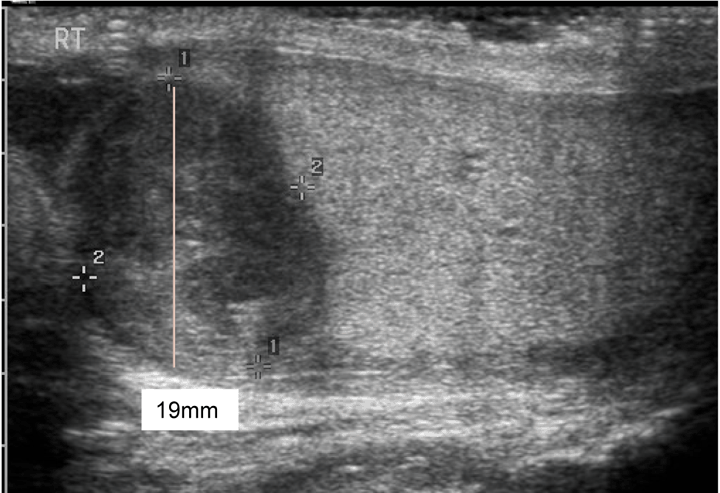
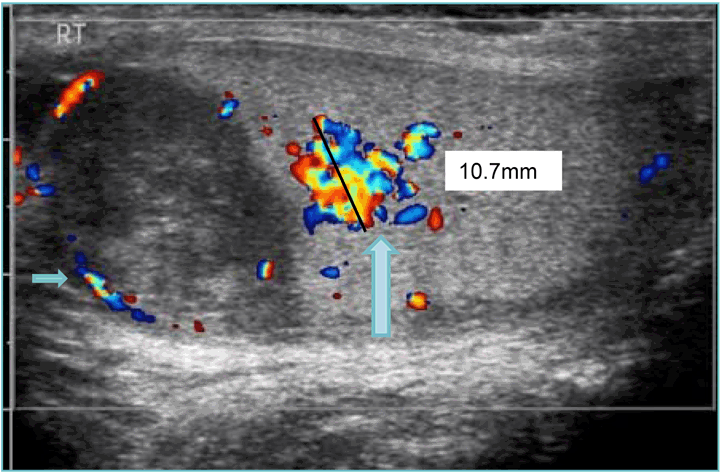
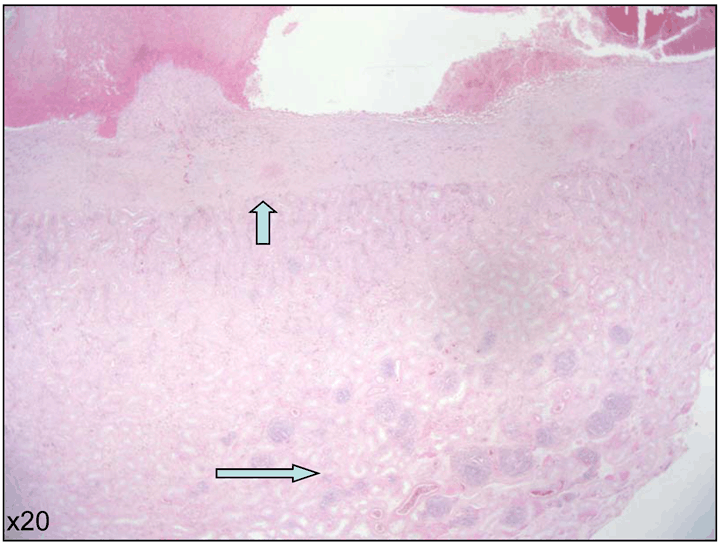
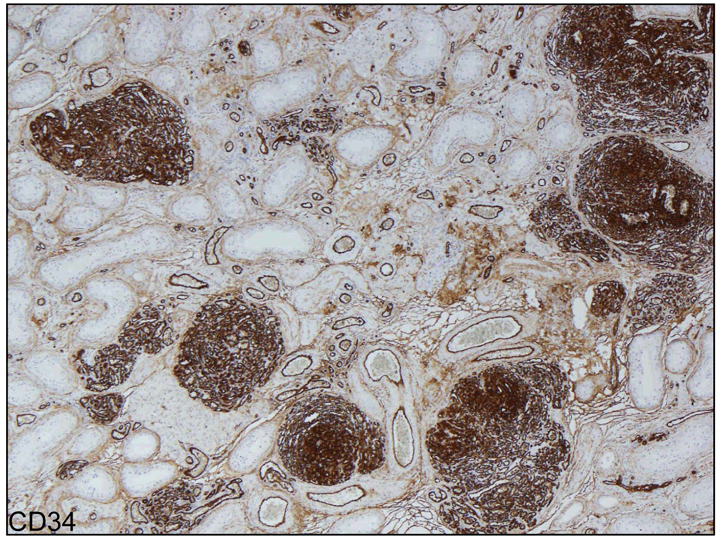
A 74-year-old male presented with pain in the right testis. He had no significant past medical history. Ultrasound of the right scrotum showed a well-demarcated mass with mixed echogenicity in the upper pole measuring 1.91 cm (Figure 1). Color Doppler sonography showed a focus of hypervascularity at the upper pole of lesion (Figure 2). Left testicle showed no mass lesion or areas of increased vascularity. Testicular tumor markers such as alpha-fetoprotein, beta human chorionic gonadotropin and lactate dehydrogenase were within normal limits. The patient underwent radical orchidectomy in view of a suspicious lesion in the testis. Macroscopically, there was a well-defined cystic area measuring 20 mm, in the upper pole of the testis. The rest of the testicular parenchyma was unremarkable. Whole of the testicular parenchyma was examined and the histology showed an organizing hematoma with granulation tissue in the cystic area (Figure 3). On several deeper levels multiple well-defined foci of benign capillary proliferations ranging from 0.2 mm to 1 mm were seen with intervening atrophic seminiferous tubules inferior to the hemorrhage that confirmed the multifocal nature of the lesion (Figure 3) and (Figure 4). Benign endothelial cells lined these capillaries (Figure 5). These endothelial cells were positive for CD34 (Figure 6) and factor VIII and negative for cytokeratin, confirming the vascular nature of the lesion. None of the smaller foci showed hemorrhage. Intervening seminiferous tubules were negative for PLAP and showed no evidence of intratubular germ cell neoplasia. A similar proliferation of benign capillaries was identified adjacent to the organized hematoma which may have represented a remnant of a pre-existing large capillary hemangioma. This case was diagnosed as multifocal capillary hemangioma. A retrospective review of color Doppler imaging showed an area of increased blood flow inferior to the mass lesion in the right testis measuring 1.07 cm (Figure 2). This corresponded with the area of multiple capillary hemangiomas on histology. This lesion had not been described preoperatively and was not evident on conventional sonography. | ||||||
| ||||||
|
| ||||||
| ||||||
| ||||||
| ||||||
| ||||||
|
Discussion
| ||||||
|
Capillary hemangiomas are common soft tissue tumors, but they are reported rarely in the testis. They are mainly seen in children and young adults with only two cases reported in males aged more than 70 years old [7] [8]. There are approximately 51 reported cases of vascular hemangiomas of the testis in literature and of these less than 20 cases were unequivocally reported as capillary hemangioma [2]. All of these were reported as solitary lesions on ultrasonography and on histology. There are two case reports in which testicular sparing surgery could be performed in young patients due to frozen section diagnosis [1] [6]. In this case, capillary hemangiomas of testis were seen as separate areas of increased blood flow on preoperative imaging. The sizes of these foci of vascular proliferations ranged from 0.2 mm to 20 mm. This patient presented with pain in the testis due the hemorrhage in the largest focus. Testicular hemangioma can mimic germ cell or other malignant tumors of testis clinically and radiologically [3]. There have been previous case reports on the radiological findings that will help differentiate between hemangiomas and malignant tumors [9] [10]. Ricci et al. have suggested that an extensive hypervascularity with areas of low resistance velocity on spectral Doppler imaging in a testicular mass should raise the possibility of hemangiomas which should be confirmed on frozen section for appropriate surgical management [10]. In our case, two foci of hypervascularity were seen on color Doppler imaging. Although a frozen section of these areas may have helped in diagnosis of a benign vascular lesion, enucleation or testicular sparing surgery may have been inadequate in this patient due to the presence of multiple foci of hemangiomas in the parenchyma. Incomplete excision of these lesions may result in possible recurrence [1], however no unequivocal malignant transformation has been reported [1] [3]. If managed conservatively or incompletely excised, they can present as hemorrhage and pain in the residual lesion. | ||||||
|
Conclusion
| ||||||
|
This is the first case of multifocal capillary hemangioma of the testis in an elderly male and emphasize the need for recognition and awareness of this entity by radiologists, clinicians and pathologists. Testicular vascular tumors are rare and lack a definite preoperative tool that can help differentiate between these benign tumors from malignancy. Therefore in a patient with a testicular mass and normal tumor marker, a color Doppler ultrasound correlation with frozen section can help manage the patient appropriately. | ||||||
|
Acknowledgements
| ||||||
|
We would like thank Dr. Seema Agrawalia, Consultant Radiologist, Wexham Park Hospital for helping us with interpretation of radiology images. | ||||||
|
References
| ||||||
| ||||||
|
[HTML Abstract]
[PDF Full Text]
|
|
Author Contributions
Shikha Singhal – Substantial contributions to conception and design, Acquisition of data, Analysis and interpretation of data, Drafting the article, Revising it critically for important intellectual content, Final approval of the version to be published Waseem Akhtar – Acquisition of data, Analysis and interpretation of data, Revising it critically for important intellectual content, Final approval of the version to be published Mabel Das Thyveetil – Acquisition of data, Analysis and interpretation of data, Revising it critically for important intellectual content, Final approval of the version to be published |
|
Guarantor of submission
The corresponding author is the guarantor of submission. |
|
Source of support
None |
|
Conflict of interest
Authors declare no conflict of interest. |
|
Copyright
© 2014 Shikha Singhal et al. This article is distributed under the terms of Creative Commons Attribution License which permits unrestricted use, distribution and reproduction in any medium provided the original author(s) and original publisher are properly credited. Please see the copyright policy on the journal website for more information. |
|
|
|
About The Authors
| |||
| |||
| |||
| |||