|

|
 |
|
Case Report
| ||||||
| A rare case of huge intrahepatic portal vein aneurysm | ||||||
| Muharrem Battal1, Mustafa Ozer Ulukan2, Burhan Akdana3, Rabia Karasu3, Uğur Temel4 | ||||||
|
1Sisli Etfal Teaching and Research Hospital, General Surgery Department, Istanbul, Turkey.
2Gaziosmanpasa Taksim Teaching and Research Hospital, Cardiovascular Surgery Department, Istanbul, Turkey. 3Sisli Etfal Teaching and Research Hospital, Radiology Department, Istanbul, Turkey. 4Sisli Etfal Teaching and Research Hospital, Thoracic Surgery Department, Istanbul, Turkey. | ||||||
| ||||||
|
[HTML Abstract]
[PDF Full Text]
[Print This Article]
[Similar article in Pumed] [Similar article in Google Scholar] 
|


| How to cite this article |
| Battal M, Ulukan MO, Akdana B, Karasu R, Temel U. A rare case of huge intrahepatic portal vein aneurysm. Int J Case Rep Images 2014;5(11):752–755. |
|
Abstract
|
|
Introduction:
Our case was incidentally diagnosed large aneurysm of the main portal vein. The incidence of intrahepatic and extrahepatic portal vein aneurysms (PVAs) is not clear. Portal vein aneurysm usually occurs at the junction of the superior mesenteric vein and splenic veins or at the hepatic hilus at the bifurcation of the right and left portal veins.
Case Report: Color Doppler and contrast-enhanced dynamic computed tomography scan and computed tomography angiography clearly showed a well-circumscribed, 44x34 mm intrahepatic portal vein aneurysm. Conclusion: The aim of this study is to evaluate the imaging features of portal vein aneurysm. | |
|
Keywords:
Portal vein, Aneurysm, Liver, Angiography, Intrahepatic
| |
|
Introduction
| ||||||
|
Portal vein aneurysm usually occurs at the junction of the superior mesenteric vein and splenic veins or at the hepatic hilus at the bifurcation of the right and left portal veins [1]. It is very rarely diagnosed disorder that has been observed by ultrasonography in 0.067% of the patients [2]. In our case dilatation was at intrahepatic portion of portal vein and it is very rare. Whereas small aneurysms tend to be asymptomatic, large extrahepatic aneurysms may give rise to various complications including right upper quadrant pain, jaundice due to compression of adjacent organs such as the duodenum and the bile duct, rupture, or complete occlusion of the portal vein by thrombosis [3] [4]. | ||||||
|
Case Report
| ||||||
|
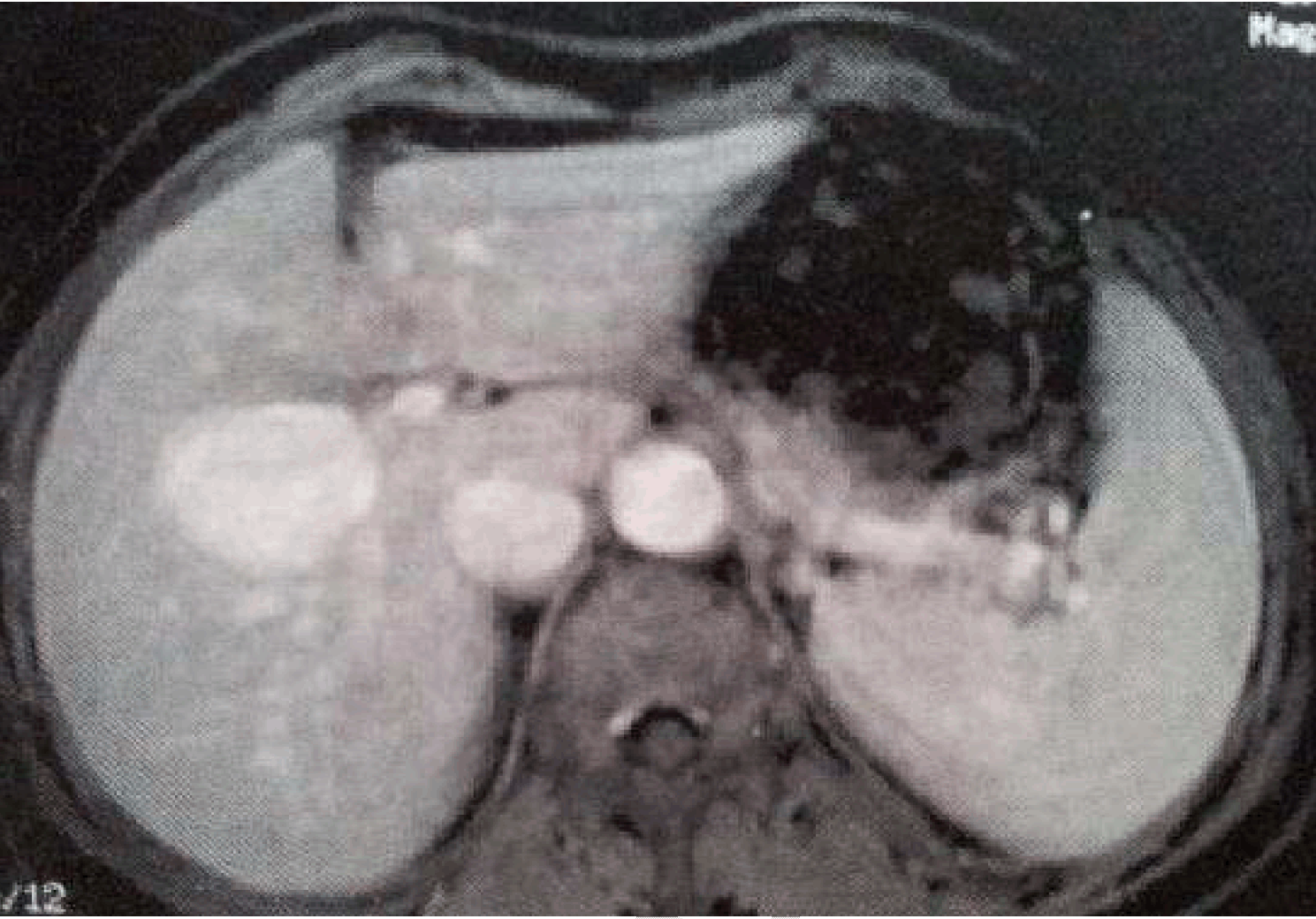
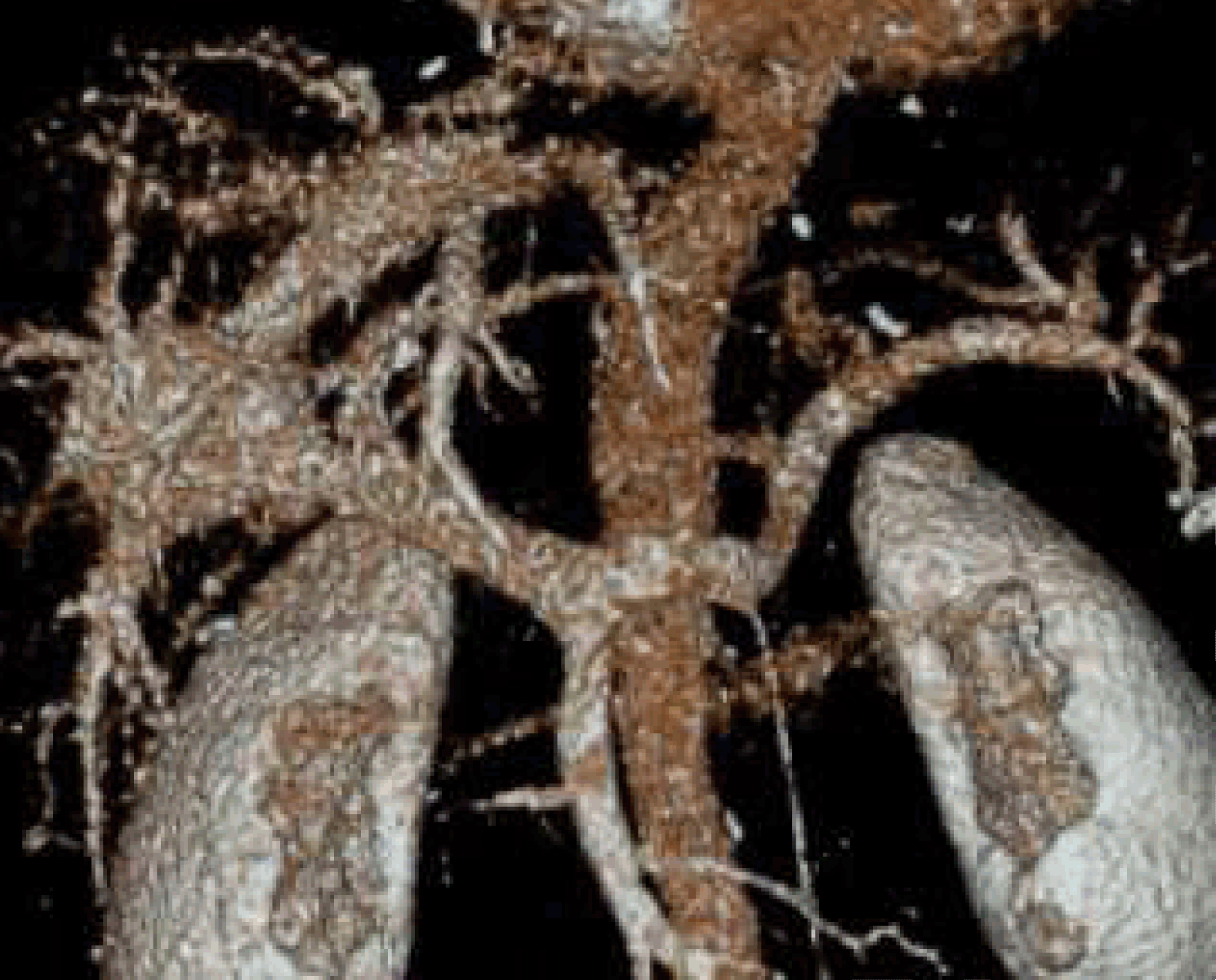
A 54-year-old female was presented with non-specific upper quadrant pain and dyspepsia. The laboratory tests of the patient were normal. She was evaluated with ultrasonography and intrahepatic cystic lesion was detected. This lesion was evaluated by magnetic resonance imaging (MRI) scanner and 44x34 mm diameter intrahepatic portal vein dilatation was found (Figure 1). The diagnosis of intrahepatic portal vein aneurysm was corrected on color Doppler ultrasonography. Color Doppler ultrasonography showed color flow in the lesion (Figure 2) and duplex Doppler ultrasonography showed the characteristic monophasic waveform. On computed tomography (CT) scan, portal vein aneurysm was seen as a well-circumscribed enhanced mass communicating with the portal vein (Figure 3A-B). Three-dimensional and volume rendered contrast-enhanced dynamic computed tomography and angiography images clearly showed aneurysmal dilatation of the umbilical portion of the portal vein and the relation between the aneurysm and portal vein branches (Figure 4). | ||||||
| ||||||
| ||||||
| ||||||
| ||||||
|
Discussion
| ||||||
|
Portal vein aneurysms are most often diagnosed sporadically, and the incidence is ambiguous because most patients are asymptomatic. The reported frequency in the ultrasonography is 0.067% [2]. Although the cause of portal vein aneurysm is unknown, two origins, congenital and acquired, have been proposed. Hepatocellular disease and portal hypertension are etiologies of acquired origin portal vein aneurysm. A portal venous system aneurysm may be congenital or may be acquired as a result of weakening of the vascular wall [5]. Congenital factors include an abnormality of the internal walls of the vessel, incomplete regression of the distal right primitive vitellin vein or a variant branching pattern of the portal vein [6]. Portal vein aneurysms may lead urgent surgical operations if they make complications as thrombosis, portal hypertension, rupture, embolism, and compression of the duodenum and inferior vena cava [7]. In this case, the hypothesis of a congenital origin can be suggested because no other cause was found. The diagnosis is generally based on color Doppler ultrasound. Color Doppler sonography showed a constant hepatopetal flow along the aneurysmal wall, which immediately led to the diagnosis. We stress the usefulness of color Doppler sonography for studying the hemodynamics of this vascular anomaly and contrast-enhanced dynamic computed tomography and angiography clearly showed a well-circumscribed, 44×34 mm portal vein aneurysm. Large aneurysms may give rise to various complications including right upper quadrant pain, jaundice due to compression of adjacent organs such as the duodenum and the bile duct, rupture, or complete occlusion of the portal vein by thrombosis [3] [4]. Operative treatment is required in these complications. The prognosis depends on complications and underlying liver disease. Therefore, this patient requires careful follow-up. | ||||||
|
Conclusion
| ||||||
|
As having complications such as thrombosis, portal hypertension, rupture, embolism, and compression of the duodenum and inferior vena cava, these aneurysms should be appreciated in emergency situations. | ||||||
|
References
| ||||||
| ||||||



|
[HTML Abstract]
[PDF Full Text]
|
|
Author Contributions
Muharrem Battal – Substantial contributions to conception and design, Acquisition of data, Analysis and interpretation of data, Drafting the article, Revising it critically for important intellectual content, Final approval of the version to be published Mustafa Ozer Ulukan – Analysis and interpretation of data, Revising it critically for important intellectual content, Final approval of the version to be published Burhan Akdana – Analysis and interpretation of data, Revising it critically for important intellectual content, Final approval of the version to be published Rabia Karasu – Analysis and interpretation of data, Revising it critically for important intellectual content, Final approval of the version to be published Uğur Temel – Analysis and interpretation of data, Revising it critically for important intellectual content, Final approval of the version to be published |
|
Guarantor of submission
The corresponding author is the guarantor of submission. |
|
Source of support
None |
|
Conflict of interest
Authors declare no conflict of interest. |
|
Copyright
© 2014 Muharrem Battal et al. This article is distributed under the terms of Creative Commons Attribution License which permits unrestricted use, distribution and reproduction in any medium provided the original author(s) and original publisher are properly credited. Please see the copyright policy on the journal website for more information. |
|
|
|
About The Authors
| |||
| |||
| |||
| |||
| |||
| |||