| |
|
|
|
Clinical Image
| ||||||
| Advanced cutaneous Kaposi's sarcoma: An uncommon AIDS-related manifestation in the era of antiretroviral therapy | ||||||
| Talal Hilal | ||||||
|
MD, Department of Internal Medicine, University of Kentucky, Lexington, KY, USA
| ||||||
| ||||||
|
[HTML Abstract]
[PDF Full Text]
[Print This Article]
[Similar article in Pumed] [Similar article in Google Scholar] 
|
| How to cite this article |
| Hilal T. Advanced cutaneous Kaposi's's sarcoma: An uncommon AIDS-related manifestation in the era of antiretroviral therapy. Int J Case Rep Images 2014;5(10):731–733. |
|
Case Report
| ||||||
|
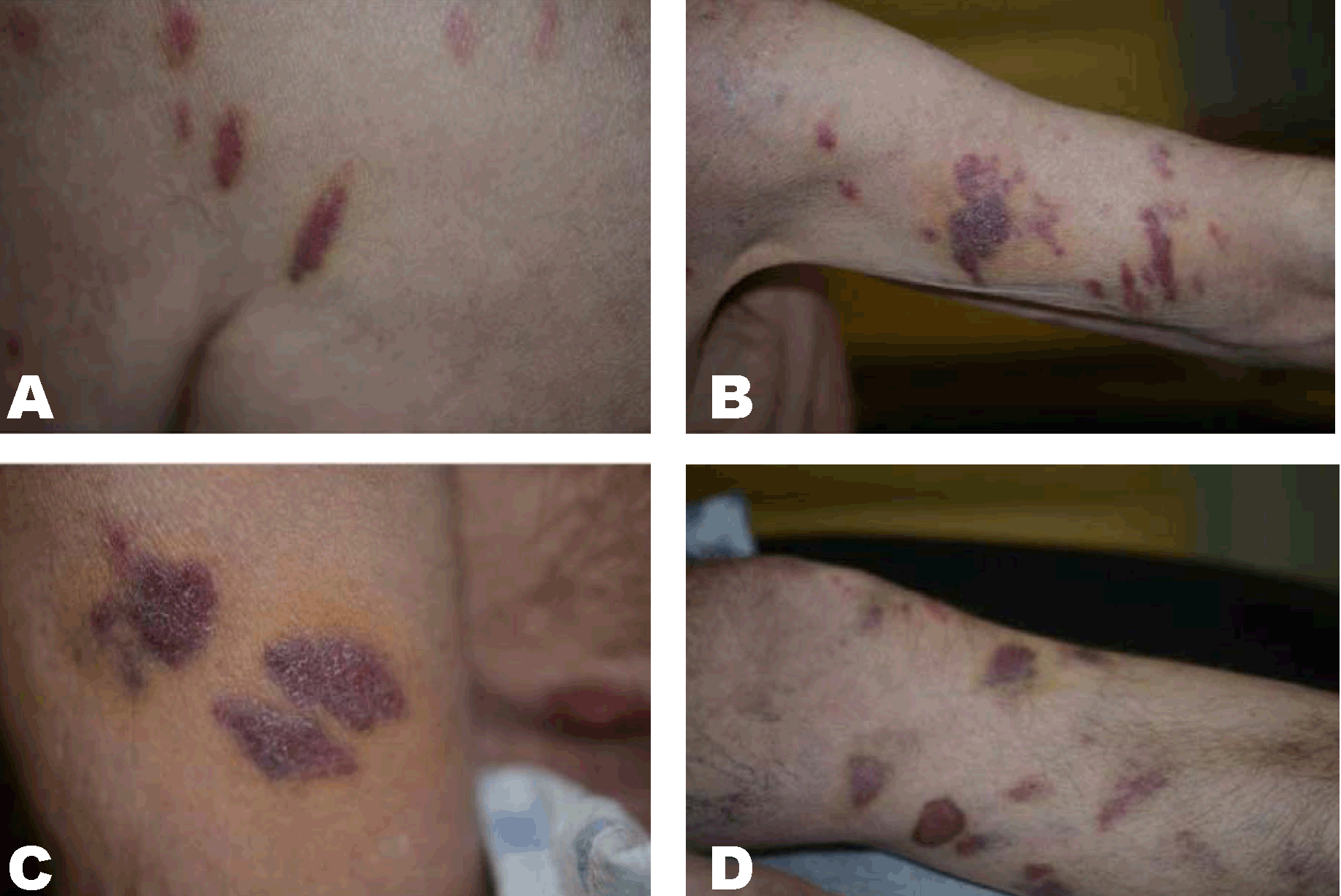
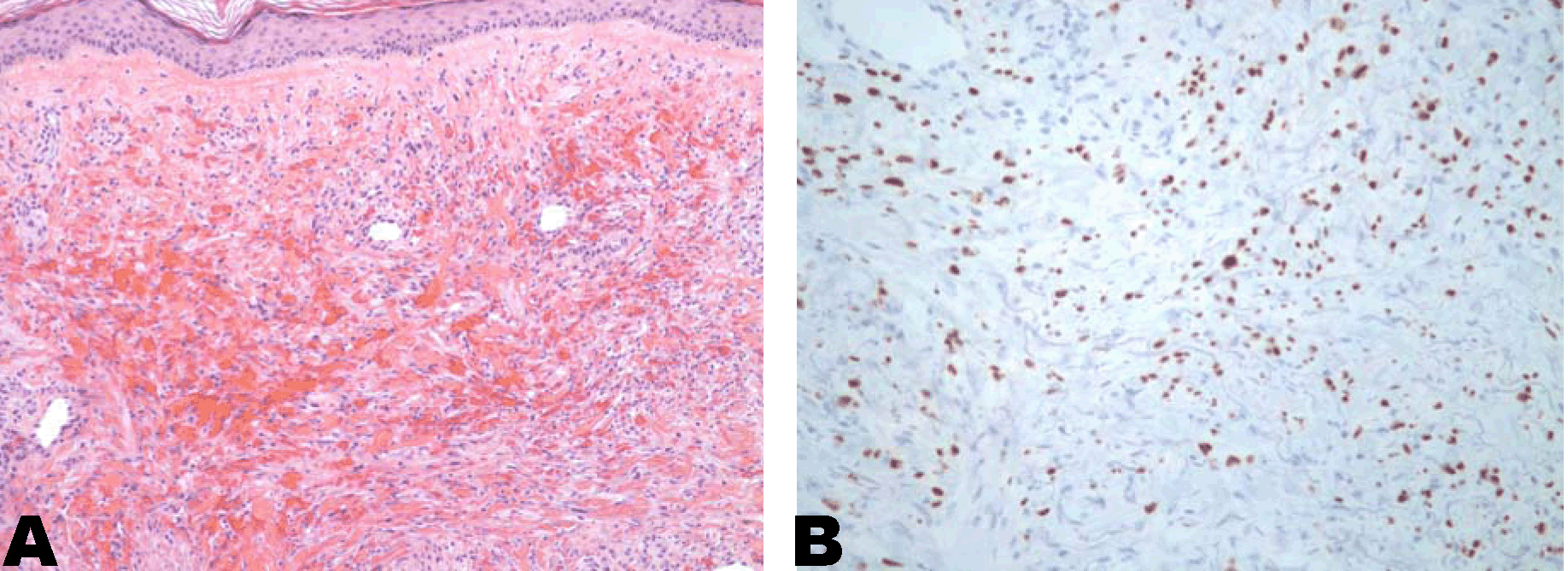
A 53-year-old male presented with a one-month history of dark purple skin lesions first noticed on his arms and back that have been progressively increasing in size and number, associated with lower extremity swelling. Examination revealed a thin man with normal vital signs who had diffuse, multiple, dark and violaceous, oval-shaped, indurated plaques measuring 2–3 cm in the largest diameter distributed on arms, legs, thorax, and back (Figure 1). A biopsy was obtained revealing diffuse dermal vascular infiltrate with extension into subcutaneous tissue along with cellular eosinophilic hyaline globules suspicious for Kaposi's sarcoma (KS) (Figure 2A). A positive immunohistochemical stain for human herpes virus (HHV)-8 latent nuclear antigen (LNA)-1 confirmed the diagnosis (Figure 2B). The patient tested positive for human immunodeficiency virus (HIV) type 1 with a viral load of 149,000/mL and a CD4 count of 15/uL. He was started on antiretroviral therapy (ART) with emtricitabine and tenofovir with boosted darunavir, and prophylactic antimicrobials with trimethoprim/sulfamethoxazole and azithromycin for his low CD4 count. Due to his rapidly progressive disease, treatment with liposomal doxorubicin was initiated concomitantly. The patient tolerated treatment and skin lesions showed significant decrease in size and number. His follow-up period was uneventful and his CD4 count was on the rise with an undetectable viral load. | ||||||
| ||||||
|
| ||||||
|
| ||||||
|
Discussion
| ||||||
|
Kaposi's's sarcoma is a malignant neoplasm of blood and lymph vessels presenting with multiple vascular nodules in the skin or other organs. The etiology seems to be related to HHV-8 in addition to multiple co-factors including genetic, immunologic and environmental. The "typical" variant of cutaneous KS, which is seen in AIDS, usually progress through three stages-patch stage, plaque stage and nodular stage [1]. Treatment varies based on severity of disease and associated immunologic state. Local therapy using intralesional vinblastine, cryotherapy with liquid nitrogen and excisional surgery are usually reserved for minimal cutaneous disease and have an overall response rate of 35–50%. Systemic therapy using ART with or without chemotherapeutic agents is the treatment of choice for AIDS-related KS. Frequently, KS may flare dramatically following the initiation of ART, which seems to be a manifestation of immune reconstitution inflammatory syndrome (IRIS). Antiretroviral therapy with concomitant chemotherapy is indicated for visceral and/or rapidly progressive disease and ART after chemotherapy may be effective as anti-KS therapy after debulking chemotherapy with an overall response rate of 91% [2]. The first line chemotherapeutic agents are liposomal anthracyclines (doxorubicin and daunorubicin) and paclitaxel. Agents with immune modulating activity such as intralesional interferon alpha and lenalidomide have been used with varying degrees of success. Inhibitors of the vascular endothelial growth factor (VEGF) pathway such bevacizumab and sorafenib are currently under investigation [3]. | ||||||
|
Conclusion
| ||||||
|
Since the discovery of the HHV-8, researchers have gained a better understanding of the pathogenesis of Kaposi's's sarcoma. Even though it is still incurable, the advent of antiretroviral therapy and systemic chemotherapy has made it possible to control the disease and hinder progression. Studies examining alternate treatment approaches are underway. | ||||||
|
Acknowledgments
| ||||||
|
Dr. Pavan Kapadia from the Department of Internal Medicine for his valuable help with the images. Dr. Eun Lee from the Department of Pathology for providing the pathology slides. | ||||||
|
References
| ||||||
| ||||||
|
[HTML Abstract]
[PDF Full Text]
|
|
Author Contributions
Talal Hilal – Acquisition of data, Analysis and interpretation of data, Drafting the article, Revising it critically for important intellectual content, Final approval of the version to be published |
|
Guarantor of submission
The corresponding author is the guarantor of submission. |
|
Source of support
None |
|
Conflict of interest
Authors declare no conflict of interest. |
|
Copyright
© 2014 Talal Hilal. This article is distributed under the terms of Creative Commons Attribution License which permits unrestricted use, distribution and reproduction in any medium provided the original author(s) and original publisher are properly credited. Please see the copyright policy on the journal website for more information. |
|
|
|
About The Author
| |||
| |||