| |
|
|
|
Clinical Image
| ||||||
| Two cases in a family with the diagnosis of pachydermoperiostosis mimicking acromegaly | ||||||
| Nilufer Ozdemir Kutbay1, Banu Sarer Yurekli1, Gokcen Unal Kocabas2, Fusun Saygili3 | ||||||
|
1Endocrinology Specialist, Ege University Faculty of Medicine, Department of Endocrinology and Metabolism, Izmir, Turkey.
2Endocrinology specialist, Bozyaka Education and Research Hospital, Department of Endocrinology, Izmir, Turkey. 3Endocrinology Specialist, Professor, Ege University Faculty of Medicine, Department of Endocrinology and Metabolism, Izmir, Turkey. | ||||||
| ||||||
|
[HTML Abstract]
[PDF Full Text]
[Print This Article]
[Similar article in Pumed] [Similar article in Google Scholar] 
|
| How to cite this article |
| Kutbay NO, Yurekli BS, Kocabas GU, Saygili F. Two cases in a family with the diagnosis of pachydermoperiostosis mimicking acromegaly. Int J Case Rep Images 2014;5(10):727–730. |
|
Case Report
| ||||||
|
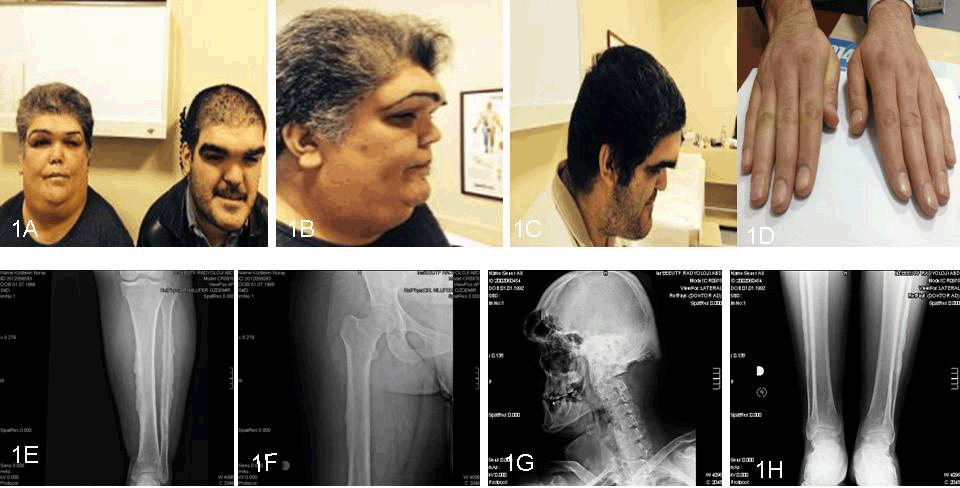
A 47-year-old female and her 21-year-old son were admitted to the hospital with the complaint of head enlargement (Figure 1A). They declared that head enlargement had started from the puberty. This complaint was stabilized for last a few years. Body mass index (BMI) of the mother was 51.9 kg/m2 (weight 150 kg, height 170 cm) and BMI of the son was 30 kg/m2 (weight 120 kg, height 200 cm). There was an increment of sebaceous activity on scalp skin of the son. Both mother and son had coarsening of facial structures and frontal bossing (Figure 1B-C). The son had also enlargement of hand and feet. The son had digital clubbing (Figure 1D). With those acromegaloid features, both the patients were referred to our department with the possible diagnosis of acromegaly. X-ray of head and long bones were performed because of the head enlargement, and with the thought of association of acromegaly with fibrous dysplasia. As far as acromegaly was concerned, growth hormone (GH) level and IGF-1 level of mother was measured 0.14 ng/mL (0.06–5) and 106 ng/mL (64–336), respectively. Both value for the son were also normal. During GH response to oral glucose tolerance test, GH nadir was <1 ng/mL indicating together with normal IGF-1 levels, acromegaly was ruled out. Other pituitary hormone levels were also normal. Both mother and the son were euthyroid. TSH level was 2.11 µIU/mL and 3.2 µIU/mL (0.35–5.5) for the mother and the son, respectively. Both patients had normal kidney and liver function tests. Insulin level of mother and the son was 5.26 mIU/l and 2.0 mIU/l (6–10), respectively. The mother had impaired fasting glucose that was 118 mg/dL. But she had no diabetes according to oral glucose tolerance test. Radiological images of the head of the mother shown that there was a thickening of the calvarial bone and marked thickening of the occipital bone. There was cortical thickening at the diaphyses region of the humerus. Lower extremity X-ray images indicated that there was prominent thickening of cortical bone at tibia and fibula, and because of this, there was a periost reaction seen as irregularities at those sites (Figure 1E). Same cortical thickening were observed at the X-ray images of femur (Figure 1F). Radiological images of the son were not different from the images of her mother. Cranium X-ray images of the son showed that frontal sinuses were hyperaerated. Occipital protuberance was prominent (Figure 1G). The son had cortical thickening and irregularities at lateral cortex because of chronic periostitis (Figure 1H) at tibia and fibula. There were sclerotic points at glenohumeral, tibiofemoral and coxofemoral joints (not shown). Cranial magnetic resonance imaging also revealed thickening of calvarial bone (not shown). With the findings of skin thickening, coarsening of facial structures and periostosis (bone cortical thickening and irregularities) pachydermoperiostosis (PDP) was diagnosed in both patients. | ||||||
|
| ||||||
|
Discussion
| ||||||
|
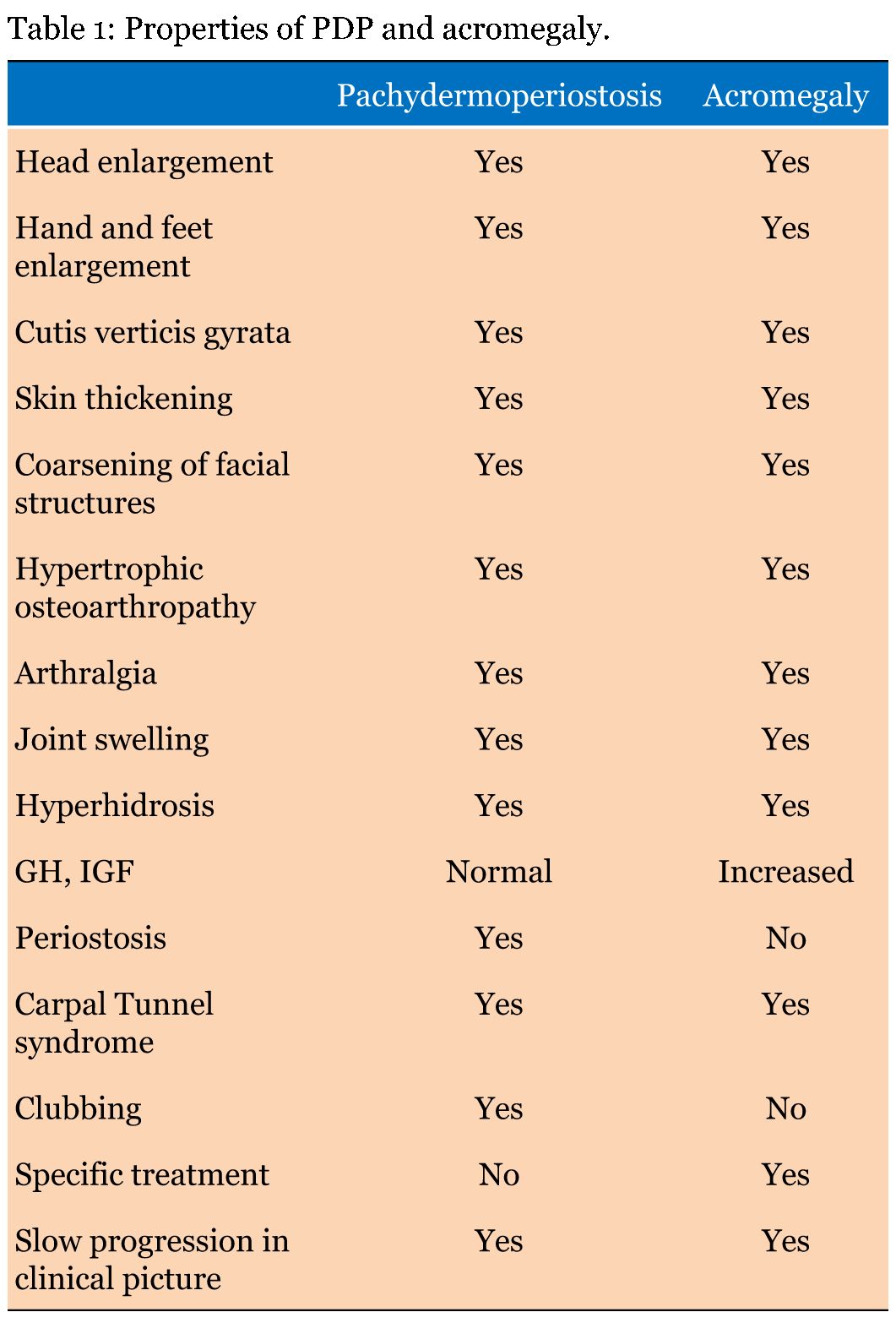
Pachydermoperiostosis (PDP) is an autosomal dominant disease. It has family history in one-third of the patients [1]. In our case, both mother and her son affected, pattern of inheritance is suggestive of autosomal dominant transmission. PDP is a disease characterized by thickening of skin (pachydermia), cortical thickening of long bones (periostosis) and clubbing. The PDP was first defined by Freidreich in 1868 [2] and was thought as a form of acromegaly. Later on, it was defined as a different entity by Touraine and Solente [3]. Clinical picture can change in a way that while some of patients may have pachydermia, periostosis and clubbing together, some have only pachydermia without bone features. According to literature, PDP can be diagnosed in the presence of at least two features of four which are pachydermia, digital clubbing, familial transmission (in 25–40%) and bone manifestations as periostitis [4]. Males are more frequently affected than females (M/F:9/1) [4]. In our patients, there was coarsening of facial structures, family history, bone changes and clubbing of the digits of the son. At first sight, acromegaly was suspected with the findings of enlargement of head, hands and feet. Both patients also had complaint of hyperhidrosis. This feature also accompany to the acromegaly disease. 50–88% of acromegalic patients have excessive sweating [5]. Hyperhidrosis is seen in 44% of PDP patients [4]. Oily skin is seen in more than 90% of patients with PDP. Most acromegalic patients also have oily skin [5] Thickening of skin of scalp-cutis verticis gyrata is observed in 24% of the patients with PDP [2]. In this case, the son had mild cutis verticis gyrata. In literature, there are cases of acromegaly presenting with cutis verticis gyrata [6]. Acromegaly should be in the list for the differential diagnosis because of the fact that acromegaly and PDP have some features in common (Table 1). So that, by doing GH, IGF and GH response to oral glucose load tests, the diagnosis of acromegaly was excluded. As the acromegaloid point of view, pseudoacromegaly mediated by hyperinsulinemia should be kept in mind for differential diagnosis [7]. In our cases, insulin resistance was not present. In PDP, manifestations related to bone are irregular periosteal hypertrophy with new bone formation. These changes can involve any bone but most frequently seen in extremities. Radiographs revealed diffuse periostosis leading to irregular contours through long bones including epiphyses in our patients. Calvarial bones of our patients were thickened also causing frontal bossing and head enlargement. In acromegaly, with the involvement of bony structures and soft tissue, enlargement of head, hand and feet occurs (Table 1). At the report of radiological images of calvarium it was mentioned that acromegaly should be thought in differential diagnosis. The PDP is also called as primary hypertrophic osteoarthropathy because hypertrophic osteoarthropathy is also seen in PDP. It is different from the secondary form to pulmonary diseases and malignancies. There were no joint complaints of our patients. Arthritis and joint effusions are present in 20–40% of patients [8] In acromegaly because of excess GH and IGF-1, proliferation of articular chondrocytes and increased matrix production occurs. Synovial hypertrophy is also present. This leads to thickened articular cartilage and widening of the joint spaces. Acromegaly, thyroid acropachy, rheumatic causes of arthritis, syphilitic periostitis, secondary forms of hypertrophic osteoarthropathy should be excluded for differential diagnosis [3]. There is no specific treatment for PDP (Table 1). If there is joint complaints, non-steroidal anti-inflammatory drugs, colchicine or corticosteroids may be given [2] . Plastic surgery may be involved in the management of the disease because of the esthetic concern. | ||||||
| ||||||
|
| ||||||
|
Conclusion
| ||||||
|
Pachydermoperiostosis was kept in mind for differential diagnosis because of the characteristics mimicking acromegaly. | ||||||
|
References
| ||||||
| ||||||
|
[HTML Abstract]
[PDF Full Text]
|
|
Author Contributions
Nilufer Ozdemir Kutbay – Substantial contributions to conception and design, Acquisition of data, Analysis and interpretation of data, Drafting the article, Revising it critically for important intellectual content, Final approval of the version to be published Banu Sarer Yurekli – Analysis and interpretation of data, Drafting the article, Revising it critically for important intellectual content, Final approval of the version to be published Gokcen Unal Kocabas – Analysis and interpretation of data, Drafting the article, Revising it critically for important intellectual content, Final approval of the version to be published Fusun Saygili – Analysis and interpretation of data, Drafting the article, Revising it critically for important intellectual content, Final approval of the version to be published |
|
Guarantor of submission
The corresponding author is the guarantor of submission. |
|
Source of support
None |
|
Conflict of interest
Authors declare no conflict of interest. |
|
Copyright
© 2014 Nilufer Ozdemir Kutbay et al. This article is distributed under the terms of Creative Commons Attribution License which permits unrestricted use, distribution and reproduction in any medium provided the original author(s) and original publisher are properly credited. Please see the copyright policy on the journal website for more information. |
|
|
|
About The Authors
| |||
| |||
| |||
| |||
| |||