|

|
 |
|
Case Series
| ||||||
| Chagas chronic cardiomyopathy: Report of two cases in Coahuila, Mexico | ||||||
| José Gerardo Martínez-Tovar1, Ildefonso Fernández-Salas2, Eduardo A Rebollar-Téllez2 | ||||||
|
1MD, Doctoral Student. Hospital General de Zona No 24, Instituto Mexicano del Seguro Social, Nueva Rosita, Coahuila, México.
2PhD, Medical Entomologist. Universidad Autónoma de Nuevo León. Facultad de Ciencias Biológicas. Laboratorio de Entomología Médica, Centro Regional de Investigación en Salud Pública (CRISP). Tapachula, Chiapas. | ||||||
| ||||||
|
[HTML Abstract]
[PDF Full Text]
[Print This Article]
[Similar article in Pumed] [Similar article in Google Scholar] 
|


| How to cite this article |
| Martínez-Tovar JG, Fernández-Salas I, Rebollar-Téllez EA. Chagas chronic cardiomyopathy: Report of two cases in Coahuila, Mexico. Int J Case Rep Images 2014;5(8):533–537. |
|
Abstract
|
|
Introduction:
Chronic cardiomyopathy is a fatal form of the Chagas disease without specific treatment. It is a frequent type of dilated cardiomyopathy usually not recognized by the health team in non-endemic areas. The cases presented here represent the first autochthonous cases of the disease in Coahuila, Mexico.
Case Series: Two cases of dilated cardiomyopathy with positive antibodies to Trypanosoma cruzi are presented, one of them with progressive heart failure and another with conduction disorders. Conclusion: Even in areas of low endemicity, all cases of dilated cardiomyopathy, Chagas disease should be rule out as one of the etiologies. | |
|
Keywords:
Dilated cardiomyopathy, Chronic cardiomyopathy, Chagas disease, Trypanosoma cruzi
| |
|
Introduction
| ||||||
|
Chagas disease is caused by the protozoan Trypanosoma cruzi. It affects about 10 million people worldwide, while it is estimated that 90 million are at risk of infection [1]. Parasites are transmitted by hematophagous bugs of the family reduviidae, and the subfamily triatominae. The main route of infection of T. cruzi to humans is during defecation after blood-feeding. Although, other mechanisms of transmission have been documented, e.g., blood transfusions and organ transplantation from T. cruzi infected individuals [2], meat eating undercooked parasitized or drink contaminated with Triatomine feces [3], transplacental route and breast feeding [4], laboratory accidents [5] , and skinning of wild animals [6]. The natural history of Chagas disease has three stages, acute illness, indeterminate and chronic state. The chronic disease mainly affects the nervous system, digestive system and the heart. Chagas cardiomyopathy has a prevalence rate of 17.9/100,000 in the general population with an annual mortality rate ranging from 69–95% being the most common chronic form [6]. An estimated 20–30% of the people who initially progressed with the indeterminate form of the disease will progress over a period of a few years or decades to cardiac or gastrointestinal form [7]. Chronic Chagas cardiomyopathy is characterized by a chronic inflammatory process involving all cardiac chambers, damaging the conduction system, and sometimes producing an apical aneurysm. It is thought, that in its pathogenesis there are parasite persistence in the myocardial tissue and additional immunologic injury [8]. Clinical manifestations include thromboembolic phenomena, chest pain, heart blocks, malignant ventricular arrhythmias, sudden cardiac death and chronic systolic heart failure [6]. Early signs are usually conduction abnormalities and the most frequent are right bundle branch block and left anterior hemiblock as well as abnormal motility of the left ventricle [9]. These abnormalities may lead to palpitations, syncope and to a high risk of sudden death [10]. Chronic Chagasic cardiomyopathy is a fatal form of the disease, for which there is no specific treatment. It is characterized by scattered or focal inflammatory infiltrates, myocytolysis, myonecrosis and progressive deposits of fibrous tissue. The mechanisms responsible for cardiomyopathy are not yet clearly understood, but the presence of chronic myocardial injury in the absence of parasitemia suggesting involvement of autoimmunity [11]. From July 2008, the blood banks of the Mexican Institute of Social Security (IMSS) began the screening of antibodies to T. cruzi to volunteer donors [12]. In the General Hospital Family Medicine No 24 "Dr. Felix Oyervides Pinales" since 2011 we extended the study to patients with cardiomyopathies. The cases reported herein are part of these clinical inspections. | ||||||
|
Case Series
| ||||||
|
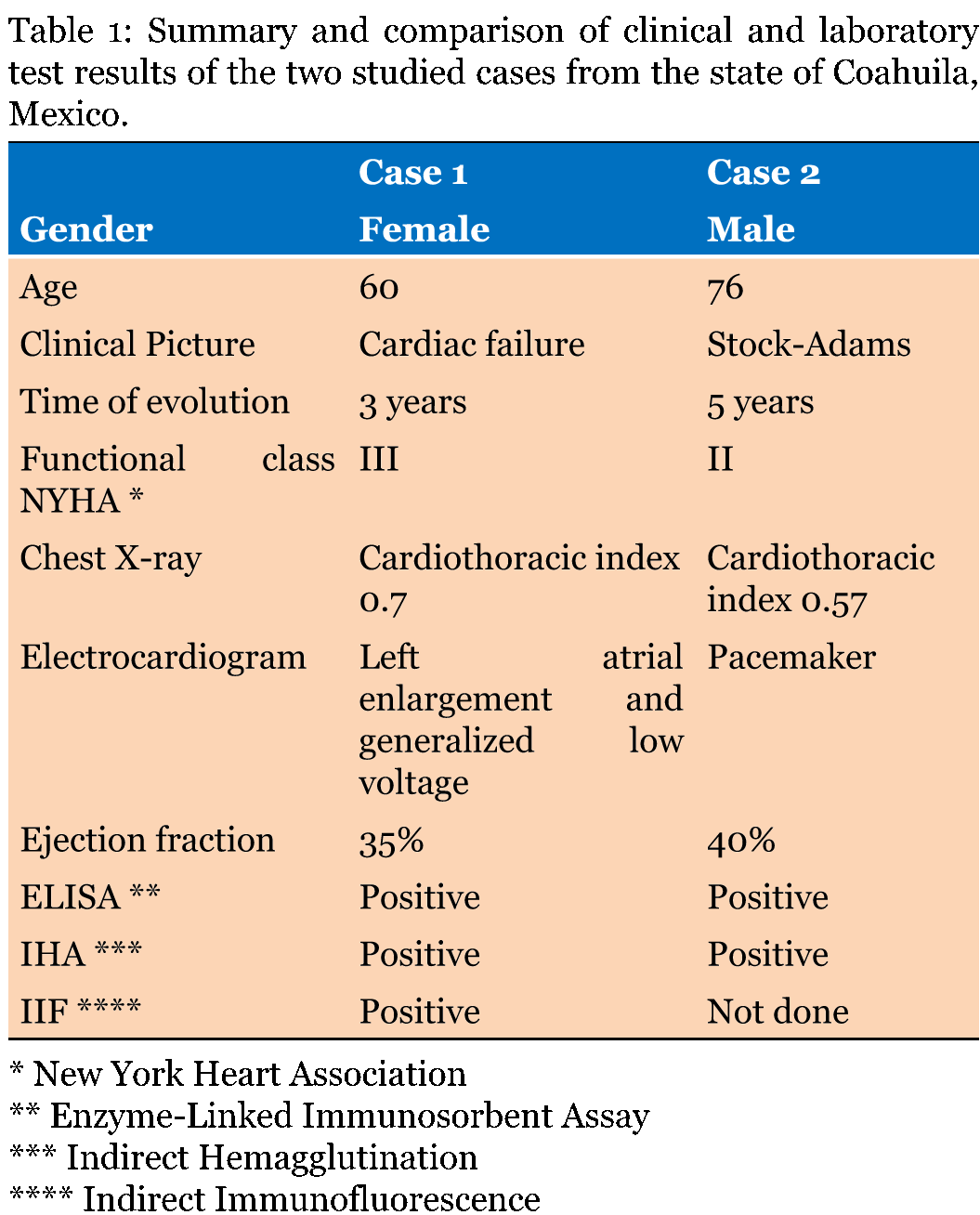
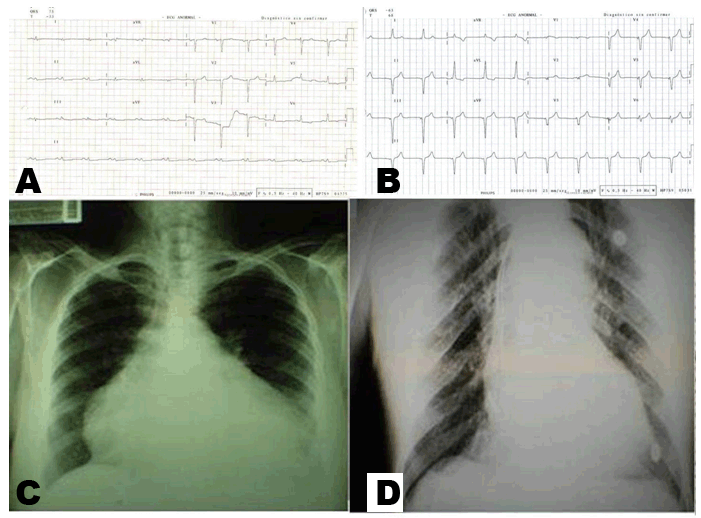
Case 1: A sixty-year-old female from Sabinas Coahuila, Mexico who had not visited areas of high endemicity for American trypanosomiasis. She was found to have primary hypothyroidism treated for four years with levothyroxine. Two years before the present admission, she received a blood transfusion due to uterine bleeding. She had been asymptomatic until three years ago when she began to experience progressive dyspnea and edema of lower limbs. The electrocardiogram showed left atrial enlargement and generalized low voltage. The chest X-ray showed grade IV cardiomegaly with a cardiothoracic index 0.7. Basic laboratory tests were within normal limits. Cardiac ultrasound showed severe atrial and moderated ventricular dilatation with an ejection fraction of 35%. Gammagram cardiac showed scattered perfusion defects so that cardiac catheterization was performed which was reported as normal. The ventriculography reveled abnormal global and segmental abnormal mobility also severe generalized hypokinesis. Dilated cardiomyopathy was diagnosed initiating treatment with digoxin, furosemide, spironolactone, isosorbide and pravastatin. The patient was admitted into a program for heart transplant protocol. Serological tests performed in our hospital four years later, Enzyme-Linked Immunosorbent Assay (ELISA), indirect hemagglutination and immunofluorescence were reported positive for Chagas disease. Case 2: A seventy-six-year old male from Múzquiz Coahuila, Mexico. He reported that he had always lived there and had never traveled to endemic areas nor had received blood transfusion. He began his present illness about five years ago when presenting paroxysmal episodes of syncope interpreted as Stock-Adams syndrome secondary to sinus node disease producing symptomatic bradycardia alternating with ventricular premature beats. A permanent pacemaker was placed three years ago. He had been asymptomatic until two years ago began with dyspnea and edema of lower limbs. An evaluation at that time revealed on chest radiography grade III cardiomegaly with a cardio thoracic index 0.57. The ultrasonography showed cardiac dilatation and left heart ejection fraction of 40%. General laboratory tests were within normal limits. Diagnosis of dilated cardiomyopathy was made and management began with digoxin, furosemide, captopril, isosorbide and acetylsalicylic acid and pravastatin. He had been stable with a functional class II, until March 2011 when he came to our hospital with decompensated heart failure manifested mainly by dyspnea at rest. He was admitted to the intensive care unit to his improvement. At that time, an ELISA test was reported positive for antibodies to T. cruzi. An indirect hemagglutination test was also positive. The patient was discharged with management support for heart failure and diagnosed with chronic Chagas cardiomyopathy. Table 1 gives summary and comparison of clinical and laboratory test results of the two studied cases and Figure 1 shows the corresponding electrocardiograms and chest radiographs. | ||||||
| ||||||
|
| ||||||
|
| ||||||
|
Discussion
| ||||||
|
To the best of our knowledge, these patients are the first two cases of chronic Chagas, cardiomyopathy reported in the state of Coahuila, Mexico. We suggest that they represent autochthonous cases because there is no history of travel or residence in endemic areas and that all their life has been in Coahuila, and based on the clinical histories of patients. We are aware that conclusive evidence is lacking to fully demonstrate the presence of endemic foci of Chagas disease in northern Mexico. Nonetheless, we can put forward several facts that strongly support our suggestion. Firstly, a previous study conducted by our research team showed a seroprevalence of antibodies to T. cruzi in patients with dilated cardiomyopathy to be as high as 21.14% even in areas of low endemicity [13] and these estimates were obtained and confirmed by two different tests [14]. Seroprevalence as such is an estimator at community level and represents some degree of contact with the parasite. Since, only one of the two cases gave a history of recent blood transfusion, and as the disease occurs ten to twenty years after the initial infection, a vectorial transmission is more likely to have occurred. Secondly, in the context of this investigation, we have also shown that two Triatomine species- Triatoma gerstaeckeri and Triatoma rubida- are present in the region. These two species have been reported to harbor T. cruzi parasites [15]. Thirdly, there are reports suggesting that Chagas disease may actually be present in the state of Coahuila since ancient times [14]. Finally, it is important to highlight the urging need to trained health teams in non-endemic areas, because they are not accustomed to the presence of Chagas disease. As this disease represents a potentially emerging treat, it is very important to continue the detection antibodies against T. cruzi in all blood banks, organ as well as the screening in pregnant women and patients with heart diseases. If a systematic surveillance program is established, it would be possible to diagnose acute positive cases in order to undertake specific antiparasitic treatment. In addition, vector ecology and surveillance studies are needed to evaluate the transmission potential of T. cruzi to inhabitants of the region. | ||||||
|
Conclusion
| ||||||
|
The diagnosis of Chagas chronic cardiomyopathy is based on the presence of antibodies to Trypanosoma cruzi by serological techniques as Enzyme-Linked Immunosorbent Assay (ELISA), indirect hemagglutination and immunofluorescence in a patient with dilated cardiomyopathy. It is very important to continue to detection of antibodies to T. cruzi in all blood banks and organ donors in general, as well as the screening in pregnant women and patients with heart diseases. The finding of acute positive cases represents an opportunity to undertake specific antiparasitic treatment. | ||||||
|
Acknowledgements
| ||||||
|
The first author is grateful to the support given by Conacyt through a scholarship for doctoral studies # 392195. He also wishes to thank the staff of the General Hospital No. 24 of the Mexican Social Security Institute in Nueva Rosita, Coahuila for the facilities granted. | ||||||
|
References
| ||||||
| ||||||

|
[HTML Abstract]
[PDF Full Text]
|
|
Author Contributions:
José Gerardo Martínez-Tovar – Substantial contributions to conception and design, Acquisition of data, Analysis and interpretation of data, Drafting the article, Revising it critically for important intellectual content, Final approval of the version to be published Ildefonso Fernández-Salas – Substantial contributions to conception and design, Acquisition of data, Analysis and interpretation of data, Drafting the article, Revising it critically for important intellectual content, Final approval of the version to be published Eduardo A Rebollar-Téllez – Substantial contributions to conception and design, Acquisition of data, Analysis and interpretation of data, Drafting the article, Revising it critically for important intellectual content, Final approval of the version to be published |
|
Guarantor of submission
The corresponding author is the guarantor of submission. |
|
Source of support
None |
|
Conflict of interest
Authors declare no conflict of interest. |
|
Copyright
© 2014 José Gerardo Martínez-Tovar et al. This article is distributed under the terms of Creative Commons Attribution License which permits unrestricted use, distribution and reproduction in any medium provided the original author(s) and original publisher are properly credited. Please see the copyright policy on the journal website for more information. |
|
|
|
About The Authors
| |||
| |||
| |||
| |||