
 |

|
 |
|
Case Report
| ||||||
| Dengue breathing down our neck: A case report of dengue encephalitis | ||||||
| Lionel HW Lum1, Nares Smitasin2 | ||||||
|
1MBBS, MRCP UK, Registrar, Infectious Diseases, National University Health System, Singapore.
2MD, Consultant, Infectious Diseases, National University Health System, Singapore. | ||||||
| ||||||
|
[HTML Abstract]
[PDF Full Text]
[Print This Article]
[Similar article in Pumed] [Similar article in Google Scholar] 
|


| How to cite this article |
| Lum LHW, Smitasin N. Dengue breathing down our neck: A case report of dengue encephalitis. Int J Case Rep Images 2014;5(8):600–603. |
|
Abstract
|
|
Introduction:
There has been a resurgence of dengue worldwide in the tropics and it has emerged as one of the most common mosquito-borne infections brought back by travelers to the temperate regions. Although considered an unusual presentation, dengue encephalitis has to be considered in a returning traveler presenting with fever accompanied by neurological symptoms.
Case Report: A 50-year-old Singaporean female with poorly controlled diabetes presented with a neck abscess. She had persistent fever despite adequate drainage of the abscess. Her repeat blood count four days after the admission revealed that she had developed thrombocytopenia (platelets 13x109/L). She was found to have dengue fever based on a positive serum dengue NS1 antigen. Subsequently, she presented with neurological symptoms. Dengue encephalitis was confirmed by a positive dengue PCR (DEN-4 serotype) on lumbar puncture. Conclusion: With the increasing incidence of dengue and the expansion of air travel worldwide, one would expect to see an uncommon manifestation such as dengue encephalitis even in non-endemic areas. Dengue encephalitis should be considered in returning travelers from the tropics as well as patients in the endemic areas who present with viral fever and neurological symptoms. | |
|
Keywords:
Dengue, Encephalitis, Neurological, Fever, Thrombocytopenia
| |
|
Introduction
| ||||||
|
Dengue is one of the most common mosquito-borne viral infections in the tropics. It is a Flavivirus that can present asymptomatically, or as an undifferentiated fever. Its course can be complicated by hemorrhagic manifestations, plasma leakage with shock or any organ dysfunction such as liver or renal impairment. Neurological complications such as encephalitis and meningitis are uncommon, but may prove fatal in some. In the last 50 years, the incidence has increased 30 folds. With the increasing incidence of dengue and the expansion of air travel worldwide, one would expect to see an uncommon manifestation such as dengue encephalitis even in non-endemic areas. | ||||||
|
Case Report
| ||||||
|
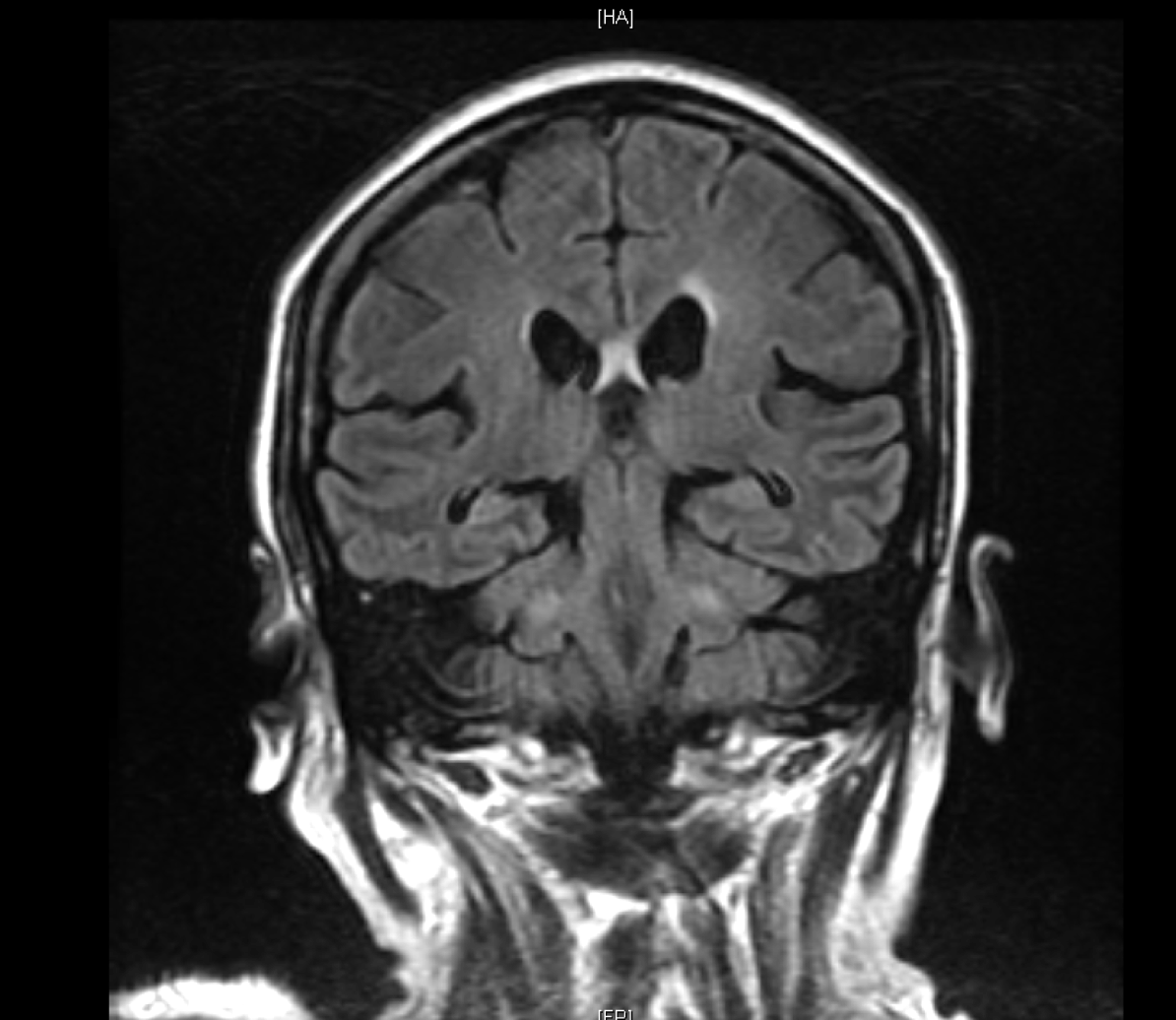
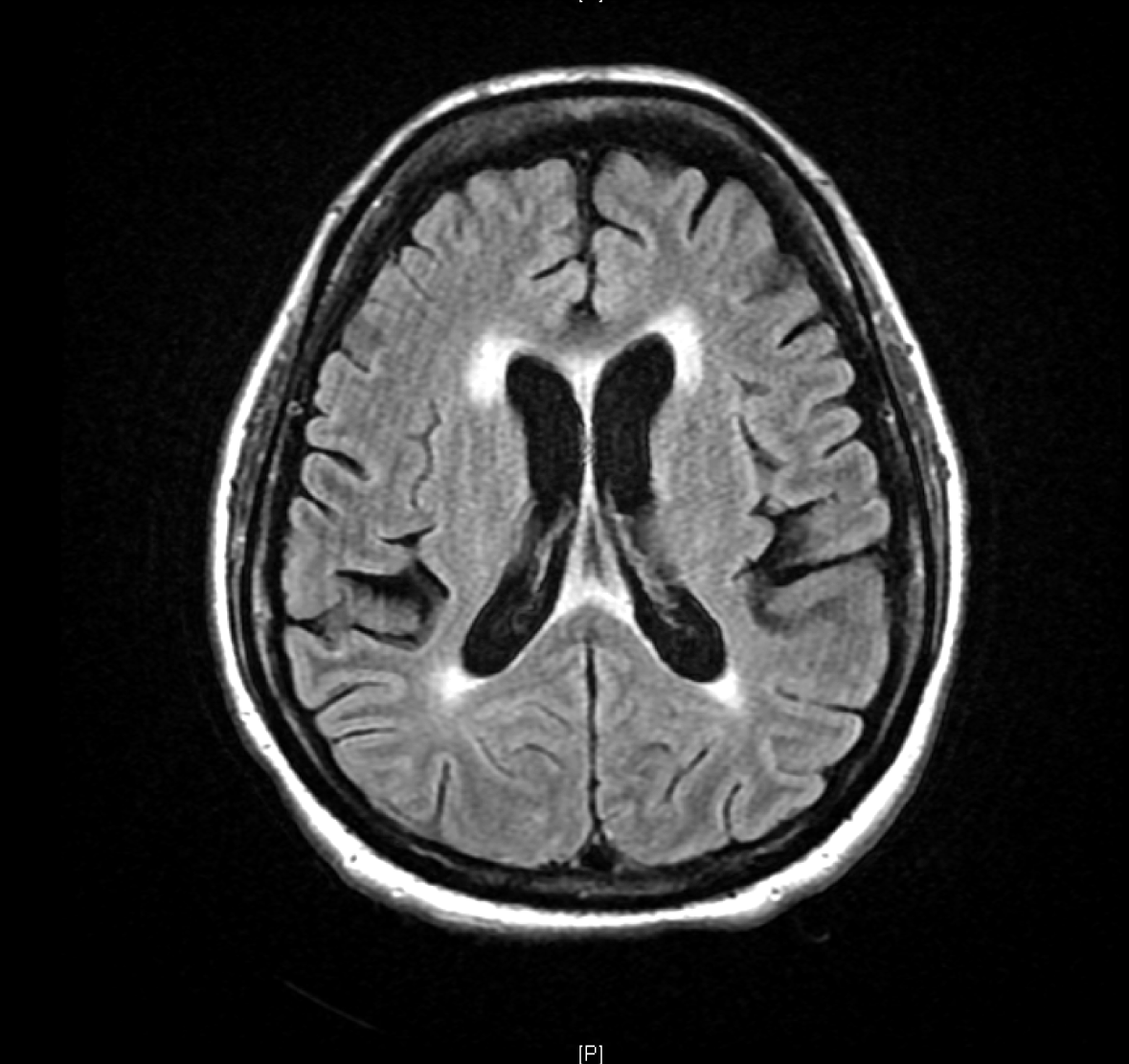
The patient is a 50-year-old Singaporean female who has poorly controlled diabetes mellitus with HbA1c of 14%. She has underlying peripheral vascular disease which required a left below-knee amputation. She was referred by her physician for an enlarging right posterior neck lump in the last two weeks. She also complained of fever, generalized weakness and myalgia one day prior to admission. She had no previous trauma to the neck. There was no significant travel history. On physical examination, she was febrile and had a 4x5-cm abscess over her posterior neck. Her white blood cell count was 13.65x10⁹/L (normal range 3.4–9.6x10⁹/L) with neutrophilia of 71.5%, hemoglobin 11.8 g/dL (normal range 10.9–15.1 g/dL) and platelets 251x109/L (normal range 132–372x109/L). Her renal function and liver function tests were unremarkable. She was initially treated with intravenous amoxicillin-clavulanate 1.2 g every eight hours while awaiting microbiological results. Incision and drainage was done on the third day of admission. The intraoperative cultures grew methicillin susceptible Staphylococcus aureus, Streptococcus agalactiae, Klebsiella pneumoniae and Enterobacter cloacae. Blood cultures did not yield any microorganism. The patient was still febrile despite adequate drainage. A repeat complete blood count on the fourth day of admission showed white blood cell count 4.69x10⁹/L, hemoglobin 11.3 g/dL, and platelets 13x109/L. The prothrombin time was normal, but the partial thromboplastin time was prolonged at 50.1 seconds (normal range 27.0–35.6 seconds) and the fibrinogen was high at 4.20 g/L (1.47–3.91 g/L). There was a rise in aspartate transaminase (AST) to 283 U/L (normal range 0–50 U/L) but alanine transaminase (ALT) was normal. At this juncture, a dengue screen was sent off, and the dengue non-structural protein 1 (NS1) and IgG were positive while the IgM remained negative. The antibiotic regimen was also switched from intravenous amoxicillin-clavulanate to intravenous cefepime 2 g every 12 hours. However, a day later, the patient became progressively drowsier and experienced two episodes of generalized tonic clonic seizure lasting approximately two minutes each. She was intubated and transferred to the medical intensive care unit for intravenous midazolam infusion at 3 mg/h. Cefepime, which was thought to be contributing to the encephalopathy, was discontinued after two days. Intravenous meropenem 2 g every eight hours and acyclovir 500 mg every eight hours was started empirically for possible meningoencephalitis. A mildly traumatic lumbar puncture, done on the 10th day of admission, revealed an opening pressure of 20 cm H2O, white blood cells of 3/µL and red blood cells of 2988/µL in the cerebrospinal fluid (CSF). The CSF glucose was 106 mg/dL (blood glucose was 198 mg/dL) and CSF protein was 60 mg/dL (normal range 10–40 mg/dL). The CSF gram stain and cultures were negative, as were the CSF polymerase chain reaction (PCR) assay for herpes simplex virus, varicella zoster virus and enterovirus. The cryptococcal antigen detection in CSF was negative. The CSF cytology did not show any malignant cells. Magnetic resonance imaging (MRI) scan of brain findings of the patient (Figure 1) and (Figure 2). A dengue virus PCR from the CSF was requested in view of possible dengue encephalitis and was positive for dengue virus, serotype 4 (DEN-4). Intravenous meropenem and acyclovir were ceased after three days. Her platelet counts normalized, and neurological symptoms resolved after five days and she was weaned off midazolam infusion successfully. Throughout the stay, she had no hemorrhagic complications or hemodynamic compromise. She did not require any platelet transfusions or inotropic support. She stayed in hospital for a week more for physiotherapy and was discharged well with oral hypoglycemic agents and levetiracetam 500 mg every 12 hours for antiseizure prophylaxis. | ||||||
| ||||||
| ||||||
|
Discussion
| ||||||
|
Dengue infection is caused by a Flavivirus with four serotypes, DEN-1 to DEN-4. It is endemic in the tropics and subtropics and is transmitted by the Aedes mosquito. Over 2.5 billion (40%) of the world's population is now at risk of infection with dengue virus and it is not uncommon to see a returning traveler present with dengue fever. Most of the patients present with uncomplicated viral fever while some may experience a more complicated course. In 2009, World Health Organization (WHO) has highlighted the need to recognize severe dengue, which encompasses hemorrhagic manifestations, plasma leakage with shock or any organ impairment including the heart, liver and central nervous system [1]. Neurological features were never thought to be prominent in dengue illness until recently. Unlike the well recognized neurotropic viruses such as herpes simplex virus, West Nile virus, Saint Louis encephalitis virus, Japanese encephalitis virus, dengue was seldom associated with encephalitis. A comprehensive review of all publications on dengue and neurological complications revealed that over the last two decades, there have been prospective studies on patients with dengue and encephalitis in various cohorts in Southeast Asia, India and South America [2] [3] [4]. Patients can present with a myriad of neurological symptoms, ranging from encephalopathy, encephalitis, neuromuscular involvement such as Guillain-Barre syndrome, polyneuropathy or transverse myelitis and neuro-ophthalmic involvement [2]. Dengue encephalopathy and dengue encephalitis may be difficult to distinguish clinically as both may present with clouding of consciousness. However, it is thought that encephalopathy arose from metabolic disorders like hyponatremia, hepatic failure, hypotension, cerebral edema, disseminated intravascular coagulation or frank hemorrhage while encephalitis was attributed to neuroinvasion by dengue virus. Some case reports have shown positive dengue virus antigen in brain tissue, or inflammation of brain parenchyma on biopsy specimens in dengue patients presenting with an encephalitis-like illness [5] [6] [7] [8]. Approximately, 0.5–21% of dengue patients, admitted to hospital, have neurological symptoms. On the other hand, dengue was identified in 4–47% of admissions with encephalitis-like illness in endemic areas [2]. A prospective study of patients with suspected CNS infection carried out in Vietnam in 1995 reported that DEN-2 and DEN-3 serotype of dengue viruses were more frequently associated with neurological complications. Out of 21 patients with dengue and neurological symptoms, nine had encephalitis, nine had encephalopathy, two had transverse myelitis, and one had meningism. About half were older than 16 years of age. Majority (8/9) of the patients with encephalitis had convulsions and all but one recovered fully at discharge. Recovery occurred from as early as 24 hours to weeks after illness onset [8]. Our patient had DEN-4 serotype of dengue virus associated encephalitis, second only to another case reported in Singapore [9] and had full recovery after five days from the onset of her neurological symptoms. The diagnosis of dengue encephalitis demands a high index of suspicion. It is impractical to demonstrate invasion of brain tissue by dengue virus via brain biopsy in all patients suspected to have dengue encephalitis. In an appropriate clinical context of a patient with proven dengue infection and associated clouding of consciousness and seizures, a positive CSF dengue virus RNA, NS1 antigen or IgM with the absence of other neuroinvasive viruses is a reasonable surrogate for diagnosis. As with most viral encephalitis, CSF studies may demonstrate a mildly elevated protein or pleocytosis, but these may not be universally present. Magnetic resonance imaging scan of the brain may reveal brain edema or focal parenchymal abnormalities [2]. Treatment is supportive. The use of antipyretics, antiemetics and muscle relaxants are commonplace in the management of dengue fever. Intravenous fluids may be administered in patients with impending shock or those who cannot tolerate oral fluids. However, strict fluid balance should be observed to avoid causing pulmonary edema. Platelet transfusion may be warranted in patients with hemorrhagic complications. Patients with dengue encephalitis may require antiepileptic drugs or airway protection during the acute presentation. Majority, however, will be expected to recover fully. Less than two decades ago, there was still uncertainty of dengue encephalitis as an entity, but now, it is established that dengue virus has neuroinvasive potential. The international encephalitis consortium has recognized this as an emerging area of encephalitis [10]. Dengue tetravalent vaccines are currently in phase III trials. It is hopeful that launch of the vaccines coupled with intensive arthropod-control measures will reduce the burden of dengue worldwide. | ||||||
|
Conclusion
| ||||||
|
While dengue fever is a common cause of undifferentiated fever in the tropics, it can present atypically with encephalitis. Although uncommon, dengue encephalitis should be considered in a traveler returning from an endemic region presenting with fever and neurological symptoms. | ||||||
|
References
| ||||||
| ||||||

|
[HTML Abstract]
[PDF Full Text]
|
|
Author Contributions
Lionel HW Lum – Substantial contributions to conception and design, Acquisition of data, Analysis and interpretation of data, Drafting the article, Revising it critically for important intellectual content, Final approval of the version to be published Nares Smitasin – Acquisition of data, Analysis and interpretation of data, Drafting the article, Revising it critically for important intellectual content, Final approval of the version to be published |
|
Guarantor of submission
The corresponding author is the guarantor of submission. |
|
Source of support
None |
|
Conflict of interest
Authors declare no conflict of interest. |
|
Copyright
© 2014 Lionel HW Lum et al. This article is distributed under the terms of Creative Commons Attribution License which permits unrestricted use, distribution and reproduction in any medium provided the original author(s) and original publisher are properly credited. Please see the copyright policy on the journal website for more information. |
|
|