| |
|
|
|
Case Report
| ||||||
| Atraumatic elbow dislocation without fractures in an elderly patient | ||||||
| Rida-Allah Bassir1, Monsef Boufettal1, Mustapha Mahfoud2, Ahmed Elbardouni2, Mohamed Saleh Berrada2, Moradh Elyaacoubi2 | ||||||
|
1Doctor, Department of Orthopedic Surgery and Traumatology, Mohamed V Souissi University, Rabat, Morocco.
2Professor, Department of Orthopedic Surgery and Traumatology, Mohamed V Souissi University, Rabat, Morocco. | ||||||
| ||||||
|
[HTML Abstract]
[PDF Full Text]
[Print This Article]
[Similar article in Pumed] [Similar article in Google Scholar] 
|
| How to cite this article |
| Bassir RA, Boufettal M, Mahfoud M, Elbardouni A, Berrada MS, Elyaacoubi M. Atraumatic elbow dislocation without fractures in an elderly patient. Int J Case Rep Images 2014;5(8):595–599. |
|
Abstract
|
|
Introduction:
Atraumatic dislocation without fractures is a very rare condition in elderly patient. Elbow dislocations are frequently affiliated with a variety of fractures involving the ulna and radius. To our knowledge, there is not any record of adult atraumatic elbow dislocation without fractures in literature.
Case Report: Herein, we report a case of a purely left elbow dislocation in an elderly patient without obvious trauma. Good reduction was achieved by closed method. We present a review of literature highlighting the characteristics and treatment options of this rare condition. Conclusion: The good understanding of the pathophysiology of this type of dislocation helps to avoid during the reduction maneuver; any fracture or incarceration of ulnar nerve, requiring the surgical reduction and worsening the functional prognosis of the elbow. | |
|
Keywords:
Atraumatic, Elbow dislocation, Treatment
| |
|
Introduction
| ||||||
|
Purely dislocation of the elbow is a rare condition especially in elderly patient without obvious history of trauma [1]. Elbow dislocations are frequently affiliated with a variety of fractures involving the ulna and radius [2]. To our knowledge, in literature there is not any record of adult atraumatic elbow dislocation without fractures. We present the observation with a good outcome after a reduction by closed method, and the review of literature highlighting the characteristics and treatment options. | ||||||
|
Case Report
| ||||||
|
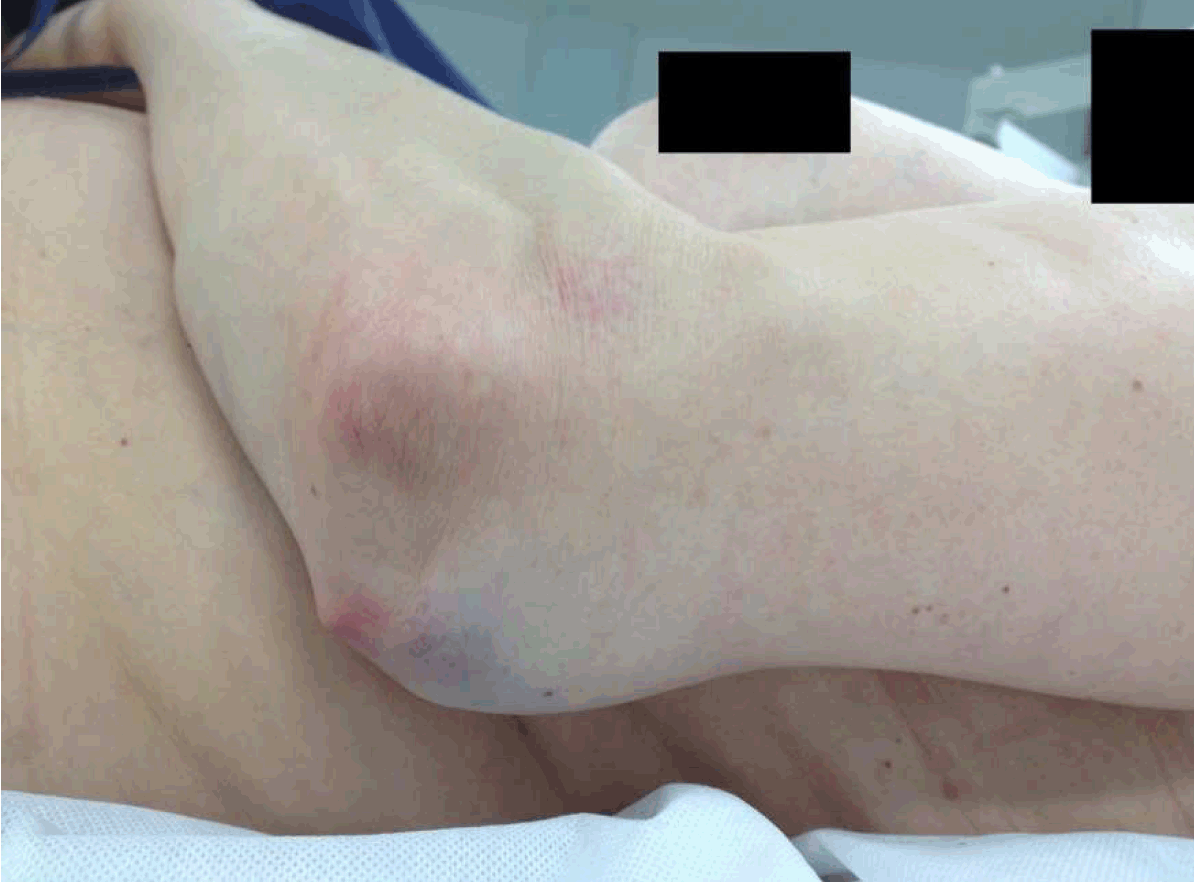
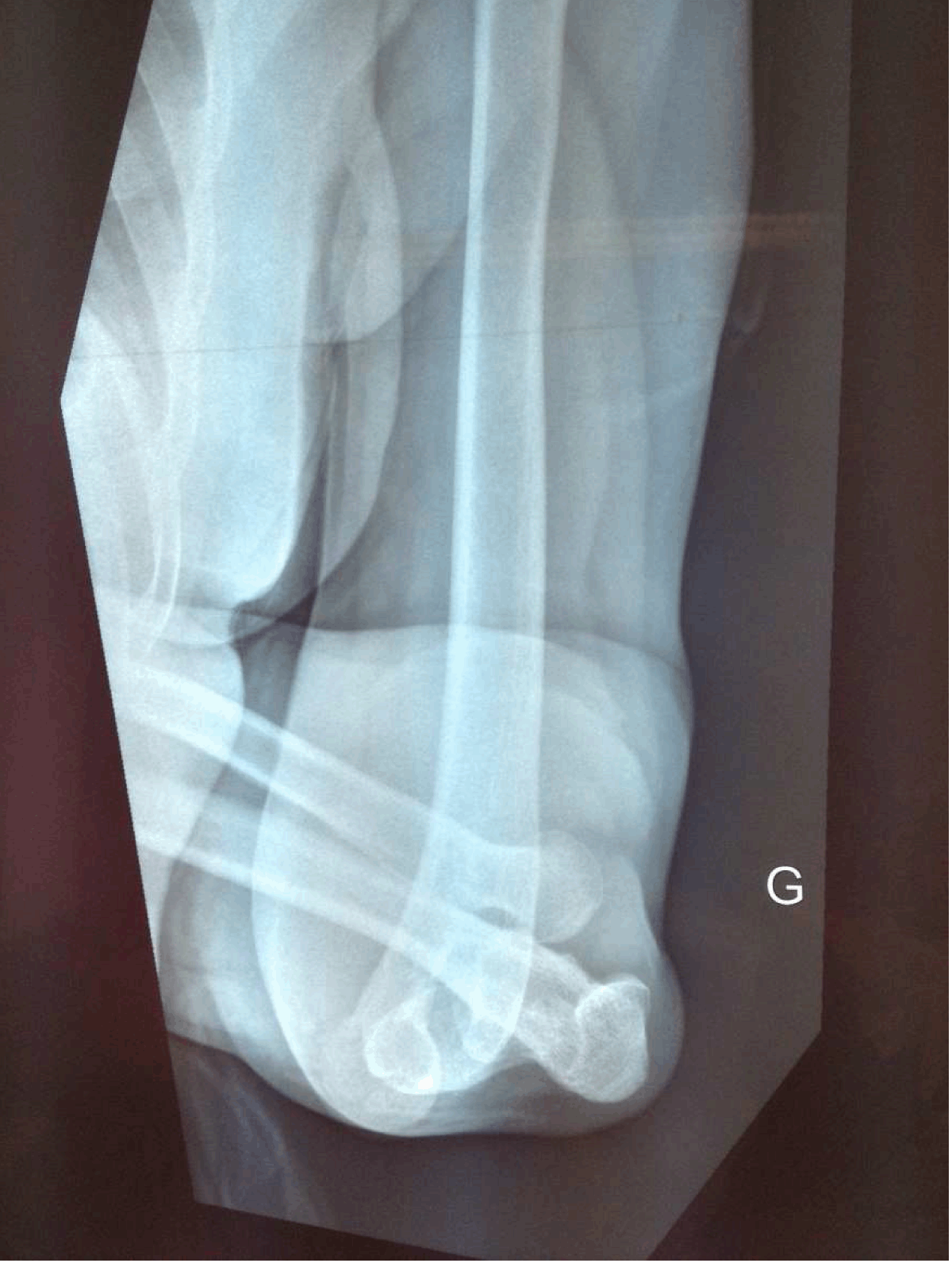
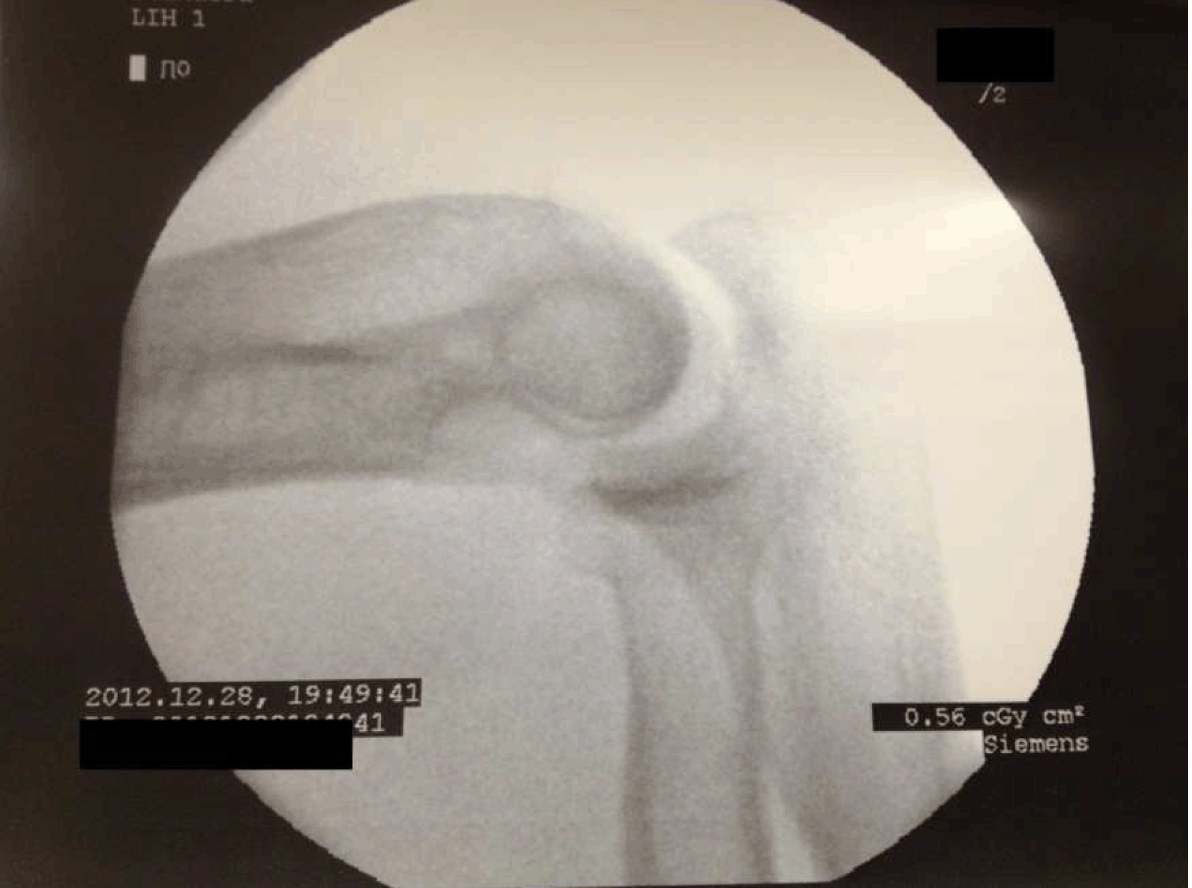
A 63-year-old female arrived in the emergency department without history of acute injury. The patient had one-year history of rapidly progressing, rheumatoid arthritis involving her hands, elbows, and shoulders. RA-latex reaction was positive, rheumatoid factor concentration was 360 IU/mL, and C-reactive protein was constantly high (80 +/- 20 mg/L). The clinical examination revealed a valgus deformity of the left elbow without neurovascular deficit (Figure 1). Identified injuries in radiographs included: a posterolateral dislocation of the left elbow without fracture (Figure 2) and (Figure 3). No other injuries were diagnosed. The patient was taken to the operating room, placed in the supine position and general endotracheal anesthesia was administered. A reduction by closed method with soft traction in supination of the forearm and pushing the olecranon medially was made. The control in image intensification was satisfactory (Figure 4). With, as expected, a reduction was unstable to valgus stress (Figure 5), but remained stable through an arc of flexion and extension. Then the patient was placed in a posterior splint. At sixth month follow-up, the elbow was stable and painless with full mobility. | ||||||
| ||||||
| ||||||
| ||||||
| ||||||
| ||||||
|
Discussion
| ||||||
|
Elbow dislocations are a usually high-energy traumatic event resulting in the loss of congruence of a stable joint. Purely, atraumatic elbow dislocations have never been reported in adult patient. Only one case of bilateral atraumatic dislocation of the shoulder has been reported in literature [1]. Rheumatoid arthritis is a common chronic inflammatory disorder. The shoulder joints are involved in the majority of patients with rheumatoid arthritis (50–70%) [3]. Newell in his series of 1114 elbow injuries do not found a similar case [4]. These dislocations are normally reduced by distal traction on the forearm with the elbow held in mild extension and then straight lateral pressure [5]. To our knowledge, such injuries have not been previously reported in old age [6]. This type of dislocation is only possible by important capsulolabral damage interesting three bundles of the medial collateral ligament. This medial capsulolabral damage release the ulnar nerve of all his fasteners. So that, it takes it to an oblique way, and protects it of a possible rupture or elongation. It exposes it more to risk of incarceration, especially, when we try a reduction. Chhaparwal et al. reported the cause of irreducibility to brachialis muscle and the ulnar nerve incarceration [7]. The neurovascular injuries secondary to this type of dislocation are even more outstanding, only one case of radial nerve palsy was reported by Koulali et al. [8] and a case of injury to the radial artery reported by Cumming et al. [9]. Posterolateral dislocation of the elbow joint can lead to persistent valgus instability that is associated with a worse overall clinical and radiographic result [6]. The reduction of this type of dislocation is reputed to be difficult because of the high risk of fractures and incarceration. In our case, the reduction by external maneuver was not pose a problem. According to Khan et al., reduction requires two persons [10]. The first one maintaining upper limb in extension and supination, and the second one guide the olecranon medially by a soft push, which should achieve a reduction of the dislocation. In the event of irreducibility after the attempt, the surgical approach is necessary to seek for a possible incarceration. The elbow is reputed to be the joint having the most frequent stiffness complication, posing the problem of post reductional immobilization. The cases reported has no problem of stiffness after three weeks of cast immobilization. | ||||||
|
Conclusion
| ||||||
|
Through this observation of a purely atraumatic dislocation of the elbow, we draw attention to the rarity of this entity, especially on the necessity of a good clinical and radiological analysis. Moreover, the good understanding of the pathophysiology of this type of dislocation helps to avoid during the reduction maneuver; any fracture or incarceration of ulnar nerve, requiring the surgical reduction and worsening the functional prognosis of the elbow. | ||||||
|
References
| ||||||
| ||||||
|
[HTML Abstract]
[PDF Full Text]
|
|
Author Contributions
Rida-Allah Bassir – Conception and design, Acquisition of data, Analysis and interpretation of data, Drafting the article, Critical revision of the article, Final approval of the version to be published Monsef Boufettal – Conception and design, Acquisition of data, Analysis and interpretation of data, Drafting the article, Critical revision of the article, Final approval of the version to be published Mustapha Mahfoud – Conception and design, Acquisition of data, Analysis and interpretation of data, Drafting the article, Critical revision of the article, Final approval of the version to be published Ahmed Elbardouni – Conception and design, Acquisition of data, Analysis and interpretation of data, Drafting the article, Critical revision of the article, Final approval of the version to be published Mohamed Saleh Berrada – Conception and design, Acquisition of data, Analysis and interpretation of data, Drafting the article, Critical revision of the article, Final approval of the version to be published Moradh Elyaacoubi – Conception and design, Acquisition of data, Analysis and interpretation of data, Drafting the article, Critical revision of the article, Final approval of the version to be published |
|
Guarantor of submission
The corresponding author is the guarantor of submission. |
|
Source of support
None |
|
Conflict of interest
Authors declare no conflict of interest. |
|
Copyright
© 2014 Rida-Allah Bassir et al. This article is distributed under the terms of Creative Commons Attribution License which permits unrestricted use, distribution and reproduction in any medium provided the original author(s) and original publisher are properly credited. Please see the copyright policy on the journal website for more information. |
|
|
|
About The Authors
| |||
| |||
| |||
| |||
| |||
| |||
| |||