
  |

|
 |
|
Case Report
| ||||||
| A rare case of left adrenal cortical carcinoma with inferior vena cava tumor thrombus managed with use of piggyback mobilization technique: A case report | ||||||
| Jayesh Gori1, Nithya Manyath2, Deepak Bhojwani2, Debanshu Bhaduri3, Manish Bhatia4 | ||||||
|
1M.S, (General Surgery), Registrar, Department of Surgical Oncology, M.N.B.C.I., Inlaks and Budhrani Hospital, Pune, Maharashtra, India.
2D.N.B, (General Surgery), Senior Resident, Department of Surgical Oncology, M.N.B.C.I., Inlaks and Budhrani Hospital, Pune, Maharashtra, India. 3M.S, (Consultant Oncosurgeon), Primary Consultant Oncosurgeon, Department of Surgical Oncology, M.N.B.C.I., Inlaks and Budhrani Hospital, Pune, Maharashtra, India. 4M.Ch, (Surgical Oncology), Primary consultant oncosurgeon, Department of Surgical Oncology, M.N.B.C.I., Inlaks and Budhrani Hospital, Pune, Maharashtra, India. | ||||||
| ||||||
|
[HTML Abstract]
[PDF Full Text]
[Print This Article]
[Similar article in Pumed] [Similar article in Google Scholar] 
|


| How to cite this article |
| Gori J, Manyath N, Bhojwani D, Bhaduri B, Bhatia M. A rare case of left adrenal cortical carcinoma with inferior vena cava tumor thrombus managed with use of piggyback mobilization technique: A case report. Int J Case Rep Images 2014;5(8):586–589. |
|
Abstract
|
|
Introduction:
Adrenal cortical carcinoma has tendencies to involve adrenal vein, renal vein, inferior vena cava and rarely, reaching up to right atrium. In literature, a very few cases (mainly as case report and a very few case series) of left adrenal cortical carcinoma with inferior vena cava tumor thrombus are reported. Though aggressive surgical approach is the most effective therapeutic option available for long-term survival, surgery itself is challenging due to retroperitoneal location, inferior vena cava tumor extension, risk of massive hemorrhage, possibility of tumor thrombo-emboli and requirement of cardiopulmonary bypass.
Case Report: A rare case of a 25-year-old female having left adrenal cortical carcinoma extending into inferior vena cava managed using piggyback technique of liver mobilization with minimal morbidity. Conclusion: Adrenal cortical carcinoma has tendency to extend into inferior vena cava which is rare phenomenon and is not a contraindication for surgery. If managed with the use of piggyback technique of liver mobilization, it results in reduced morbidity with maximal oncological clearance. | |
|
Keywords:
Adrenal cortical carcinoma, Inferior vena cava tumor thrombus, Piggyback technique, Cardiopulmonary bypass
| |
|
Introduction
| ||||||
|
Adrenocortical carcinoma (ACC) is a rare malignancy with very low incidence of 0.5–2 cases per million/year but due to late diagnosis and no adequate effective adjuvant treatment, prognosis remains poor [1]. Adrenocortical carcinoma has tendency to extend along inferior vena cava (IVC) and rarely, to reach the right atrium. It frequently metastasizes to the lung, lymph nodes, liver and bones [2]. Adrenocortical carcinoma with IVC tumor thrombus has been reported in only a few case reports and small case series except by Chiche et al. [3]. Mostly, all reported cases are of right ACC and a very few are of left ACC. This could be due to anatomical difference between right and left renal veins, (a) the right vein being smaller in length than the left and (b) right vein directly converges on to the IVC [4] . The preferred management for adrenal tumors with IVC tumor thrombus is to remove the tumor en bloc with tumor thrombus [4]. We are describing a rare case of a 25-year-old female with left adrenal cortical carcinoma with IVC tumor thrombus managed with piggyback technique of liver mobilization. | ||||||
|
Case Report
| ||||||
|
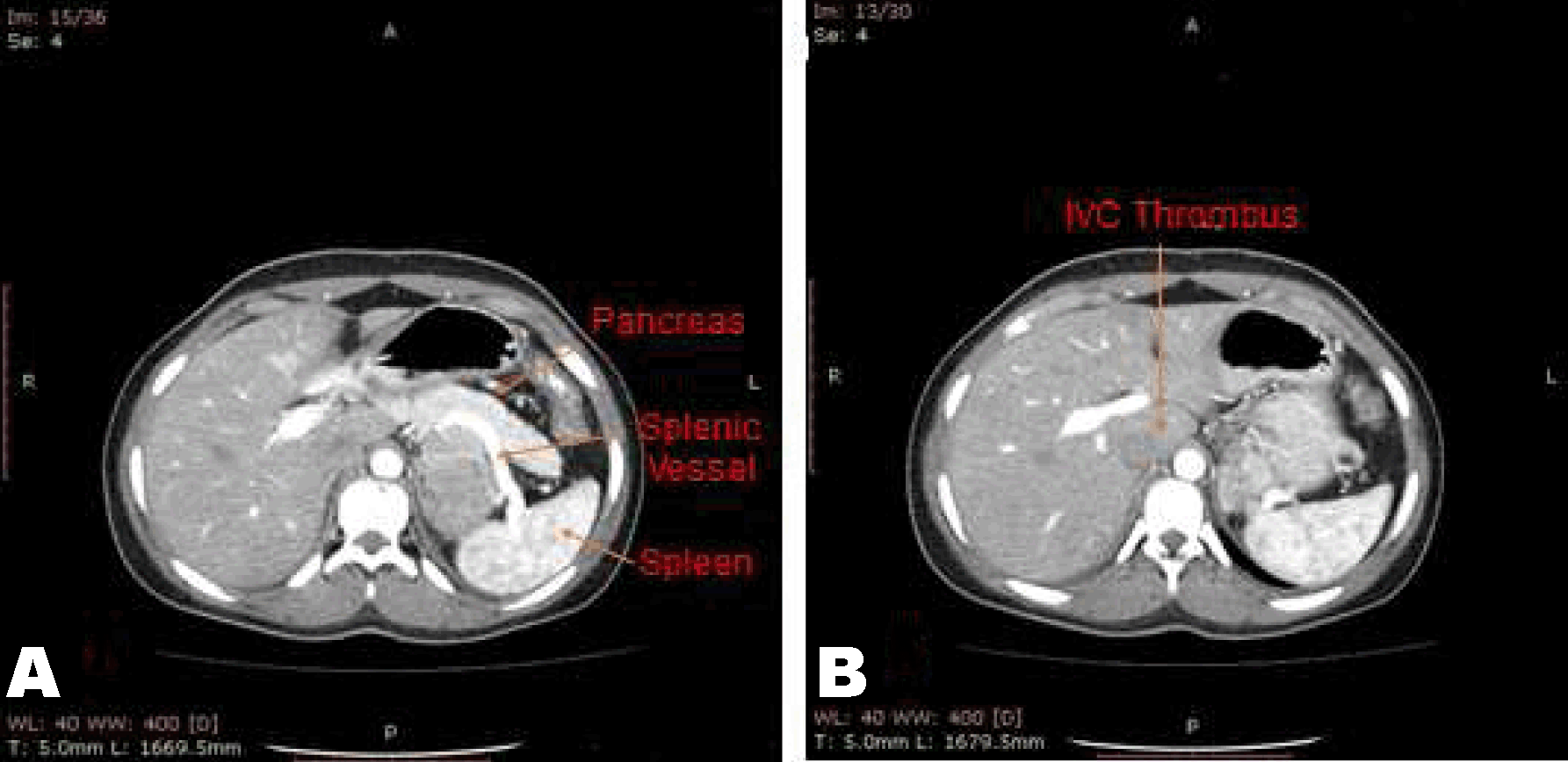
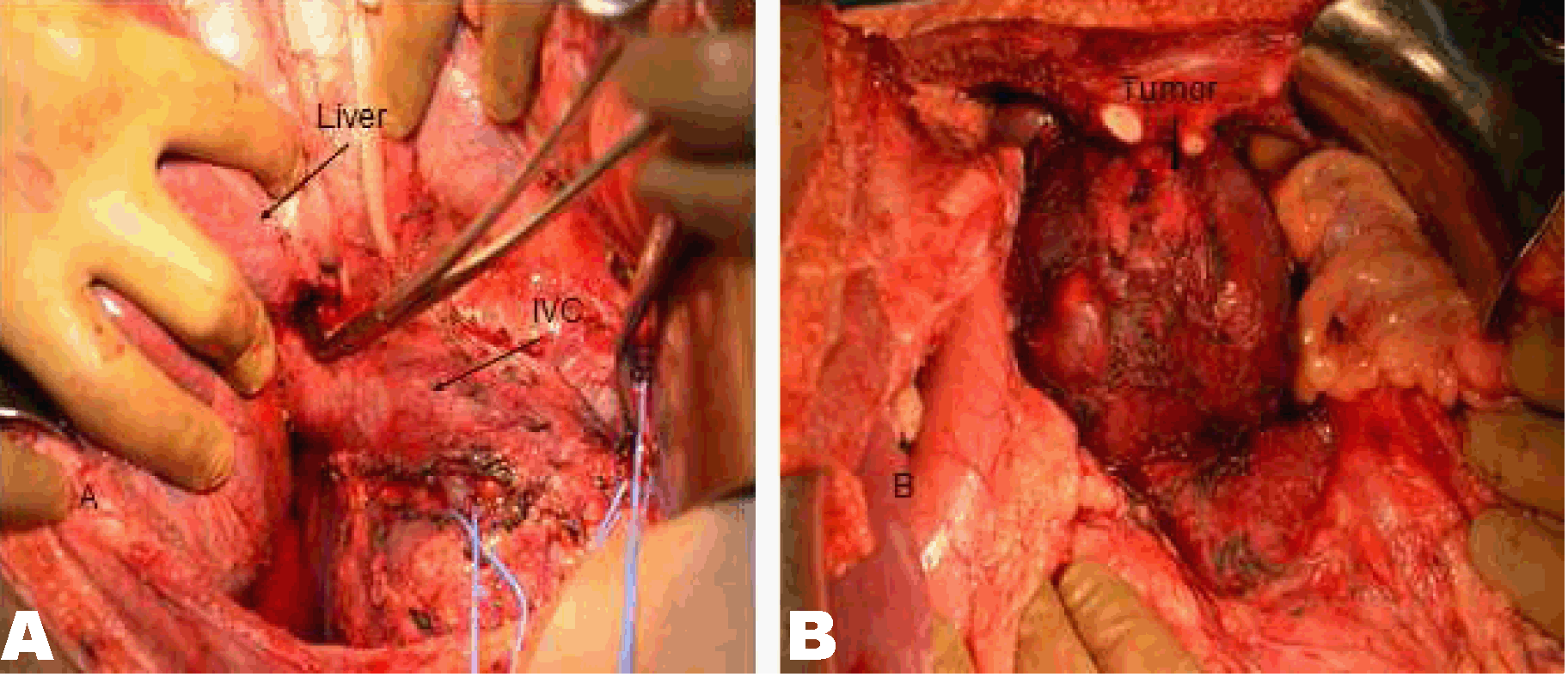
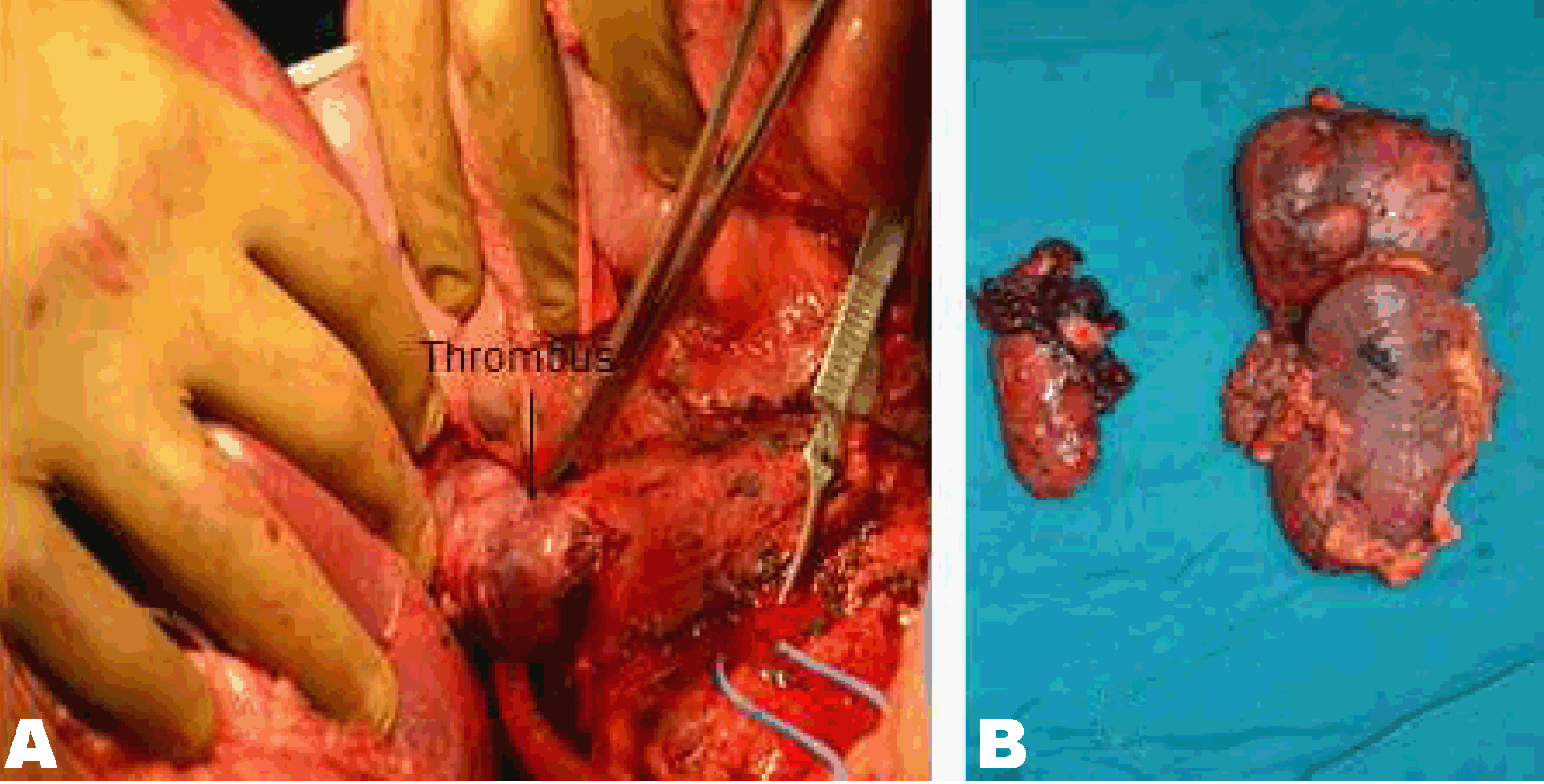
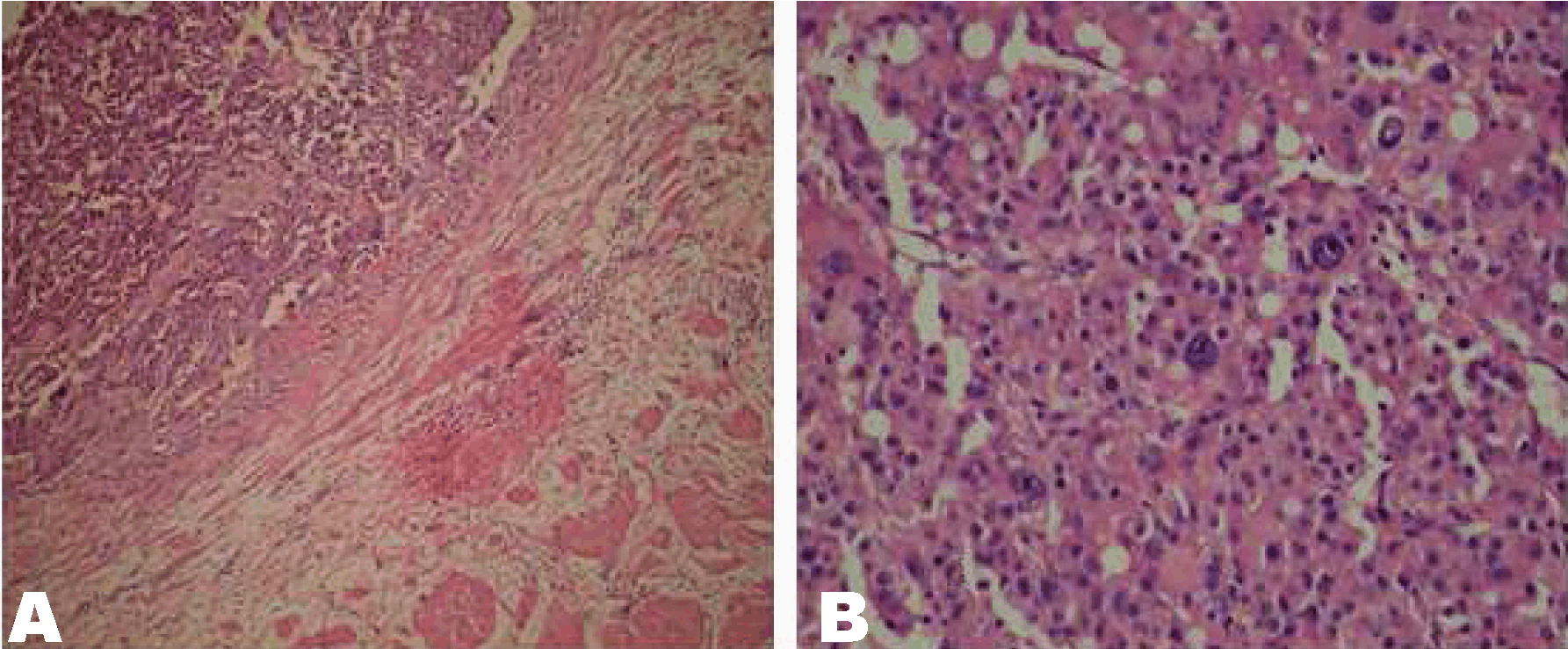
A 25-year-old female presented with back pain for six months and got treated as renal colic before presenting to us. There was mild tenderness in left lumbar region and left renal angle with no other significant clinical finding including features of endocrinopathy. X-rays and ultrasonography were non-diagnostic but triple phase computed tomography of abdomen was suggestive of 76x70x60 mm well circumscribed round heterogeneous solid mass in left suprarenal region, with early arterial and persistent delayed enhancement. The left adrenal gland was not seen separately from the lesion. The mass was displacing pancreatic tail and splenic vessels anteriorly and was indenting the stomach (Figure 1A). Enhancing soft tissue was noted within left renal vein and extra hepatic IVC suggestive of tumor thrombus (Figure 1B). Hepatic veins, right renal vein and both renal arteries were normal. There was no extension into the right atrium. Enlarged lymph nodes were present in the paraaortic region and along left renal vein. Renal Doppler was suggestive of 8 cm tumor thrombus in IVC extending from 3 cm below hepatic venous confluence to 2 cm below the renal veins with complete left renal vein thrombosis. Serum cortisol and other investigations including metastatic workup were normal. After multidisciplinary meeting, we planned to operate the patient in cardiac operation-theater with the help of cardiothoracic surgeon and back up for cardiopulmonary bypass (CPB). We took bilateral subcostal (Chevron) incision with left thoracic extension to reach beyond tumor thrombus. Right colon and left colon were mobilized along with Kocherization of duodenum. Stomach and pancreas were separated from mass and splenic vessels were secured. Liver was mobilized by dividing all its attachments and it was dissected from the IVC in piggyback technique in such a way that liver remained attached to IVC only by major hepatic veins and thus allowing exposure of infrahepatic and intrahepatic IVC (Figure 2A). Then, plane between IVC and posterior abdominal wall was dissected which allowed circumferential control of cava flow. The left renal vein and artery were identified separately and tagged. There was about 9×7 cm left adrenal mass with tumor thrombus extending into the left renal vein and IVC reaching up to retrohepatic level. The inferior extent was about 2 cm below the left renal vein (Figure 2B). There were presence of enlarged lymph nodes along the left renal vein and para caval region but there was no involvement of the surrounding structure. Resectability was confirmed and left adrenalectomy with nephrectomy and lymphadenectomy were done after applying vascular clamp left renal vein close to hilum. After applying Pringle maneuver to temporarily occlude liver inflow, obtaining proximal and distal control of IVC and temporary clamping of right renal vein, cavotomy was done extending just distal from hepatic venous confluence to over left renal vein. During this, the patient remained hemodynamically stable after the caval clamping. The thrombus was extracted en bloc along with the remaining left renal vein which was sectioned close to IVC (Figure 3A). The IVC and left renal vein opening were repaired with Prolene 5–0. Patient tolerated procedure well without any complication like thromboembolism and without requirement of CPB. Total blood loss during surgery was about 2800 mL which was adequately replaced using eight units packed cell volume and 12 units fresh frozen plasma. In postoperative period, the patient was monitored in ICU for 24 hours. Patient remained hemodynamically stable with normal coagulation profile. Postoperative period remained uneventful and was discharged on postoperative seventh day. Final histopathology report was suggestive of 6x5.5x4 cm (Figure 3B) adrenocortical carcinoma with focal capsular invasion and presence of lymphovascular emboli. All lymph nodes were negative and IVC and renal vein thrombus was a tumor thrombus. The left kidney was free of tumor (Figure 4A-B). After four months of surgery patient developed multiple metastasis and was referred to higher center for palliative mitotane. | ||||||
|
| ||||||
|
| ||||||
| ||||||
|
| ||||||
|
Discussion
| ||||||
|
Primary ACC is a rare tumor with a five-year actuarial survival rates of 38%. It is more common in females than males with bimodal age incidence. The age groups affected are mostly under-fives and 40–59 years [1] [5] [6]. Our patient was 25 years old. Adrenocortical carcinoma has propensity to spread along the adrenal vein, renal vein, IVC and rarely right atrium. In literature, only a few cases of ACC with IVC tumor thrombosis are available. In 2001, report by Nakanoma et al. [7] was reported 8th case of adrenal cortical carcinoma extending to IVC thrombus. In 2006, review article of Chinche et al. [3] reported 15 cases of ACC with IVC tumor thrombus over 25 years with various methods of management based on level of IVC tumor thrombus. It has been hypothesized that due to anatomical difference between two renal veins, there could be more probability of right ACC extending into IVC compared to left. Zhi-gang [4], study of 19 patients with urological tumors with IVC tumor thrombus, suggested that aggressive surgical approach is the only option for curative intervention. In literature, various methods of cava control with thrombectomy are caval clamping, hepatic vascular exclusion, CPB with or without deep hypothermic cardiac arrest and piggyback technique of liver mobilization. In study of 68 patients by Ciancio et al. [8] piggyback liver mobilization technique provides excellent exposure and control of the IVC in cases with level 3 and 4 tumor thrombus, avoiding CPB except in rare circumstances. During surgery, the main concerns are complete exposure with adequate control of IVC and prevention of tumor thrombo-emboli. Piggyback and liver overturning techniques can provide complete exposure of IVC to apply vascular clamps and to remove tumor thrombus safely. This helps to reduce the need for thoracotomy and its attendant complications [4]. This technique compare to other techniques (like caval clamping, hepatic vascular exclusion), avoids hypotension from decreased venous return (by it allows the liver to drain into the IVC) and also avoids liver congestion and postoperative hepatic dysfunction (by not clamping the major hepatic veins or porta hepatis) [8]. We had taken left thoracic extension incision to reach beyond tumor mass. In spite of evolution of better techniques of surgical removal of tumor thrombus, prognosis is still poor due to delay in diagnosis and lack of adequate adjuvant treatment. | ||||||
|
Conclusion
| ||||||
|
Adrenocortical carcinoma has tendency to extend into inferior vena cava which is rare phenomenon but is not a contraindication for surgery. If managed with use of piggyback technique of liver mobilization, it results in reduced morbidity with maximal oncological clearance. | ||||||
|
References
| ||||||
| ||||||

|
[HTML Abstract]
[PDF Full Text]
|
|
Author Contributions
Jayesh Gori – Substantial contributions to conception and design, Acquisition of data, Analysis and interpretation of data, Drafting the article, Revising it critically for important intellectual content, Final approval of the version to be published Nithya Manyath – Acquisition of data, Revising it critically for important intellectual content, Final approval of the version to be published Deepak Bhojwani – Acquisition of data, Revising it critically for important intellectual content, Final approval of the version to be published Debanshu Bhaduri – Acquisition of data, Revising it critically for important intellectual content, Final approval of the version to be published Manish Bhatia – Acquisition of data, Revising it critically for important intellectual content, Final approval of the version to be published |
|
Guarantor of submission
The corresponding author is the guarantor of submission. |
|
Source of support
None |
|
Conflict of interest
Authors declare no conflict of interest. |
|
Copyright
© 2014 Jayesh Gori et al. This article is distributed under the terms of Creative Commons Attribution License which permits unrestricted use, distribution and reproduction in any medium provided the original author(s) and original publisher are properly credited. Please see the copyright policy on the journal website for more information. |
|
|