| |
|
|
|
Case Series
| ||||||
| Genu valgum and primary hyperparathyroidism in children | ||||||
| Ramkumar S1, Devasenathipathy Kandasamy2, Vijay MK3, Madhavi Tripathi4, Jyotsna VP5 | ||||||
|
1Senior Resident, Department of Endocrinology and Metabolism, All India Institute of Medical Sciences, New Delhi, India.
2Assistant Professor, Department of Radiology, All India Institute of Medical Sciences, New Delhi, India. 3Senior Resident, Department of Pathology, All India Institute of Medical Sciences, New Delhi, India. 4Assistant Professor, Department of Nuclear Medicine, All India Institute of Medical Sciences, New Delhi, India. 5Additional Professor, Department of Endocrinology and Metabolism, All India Institute of Medical Sciences, New Delhi. | ||||||
| ||||||
|
[HTML Abstract]
[PDF Full Text]
[Print This Article]
[Similar article in Pumed] [Similar article in Google Scholar] 
|
| How to cite this article |
| Ramkumar S, Kandasamy D, Vijay MK, Tripathi M, Jyotsna VP. Genu valgum and primary hyperparathyroidism in children. Int J Case Rep Images 2014;5(6):401–407. |
|
Abstract
|
|
Introduction:
Bony deformity due to primary hyperparathyroidism is a rare entity in children.
Case Series: We describe two children who presented with genu valgum to the Endocrine Department. Ten children with primary hyperparathyroidism presenting with genu valgum have been reported in literature and have been reviewed by us. Biochemical investigations revealed parathyroid hormone dependent hypercalcemia despite a deficiency of vitamin D in both children. A single parathyroid adenoma was identified by ultrasonography and (99m) Tc-sestamibi (MIBI) scan. Both children underwent resection of the solitary parathyroid lesion which was confirmed as adenoma by histopathological examination. All cases reported in literature had solitary parathyroid adenoma and had onset around puberty consistent with our observation that pubertal growth spurt is responsible for the occurrence of genu valgum in children with previously undiagnosed primary hyperparathyroidism. Conclusion: Genu valgum is a common skeletal deformity in children with primary hyperparathyroidism. Solitary parathyroid adenoma was identified in all reported cases and all underwent parathyroidectomy. Pubertal growth spurt seems to contribute to the occurrence of genu valgum in children with primary hyperparathyroidism. | |
|
Keywords:
Genu valgum, Hypercalcemia, Hyperparathyroidism, Parathyroid adenoma, Technetium-99m sestamibi
| |
|
Introduction
| ||||||
|
Primary hyperparathyroidism (PHPT) is one of the most common causes of hypercalcemia and metabolic bone disease in adults but it is a relatively uncommon disorder in children. Parathyroid adenomas are the most common cause of PHPT, other causes being four gland hyperplasia and rarely parathyroid carcinoma. Parathyroid adenoma can occur sporadically or as part of multiple endocrine neoplasia type 1 or type 2A (MEN-1/MEN-2A). Primary hyperparathyroidism presenting with bony deformities such as genu valgum has rarely been reported in children its mechanism is not understood. We report two cases of hyperparathyroidism who presented to the endocrine outpatient department with genu valgum. | ||||||
|
Case Series
| ||||||
|
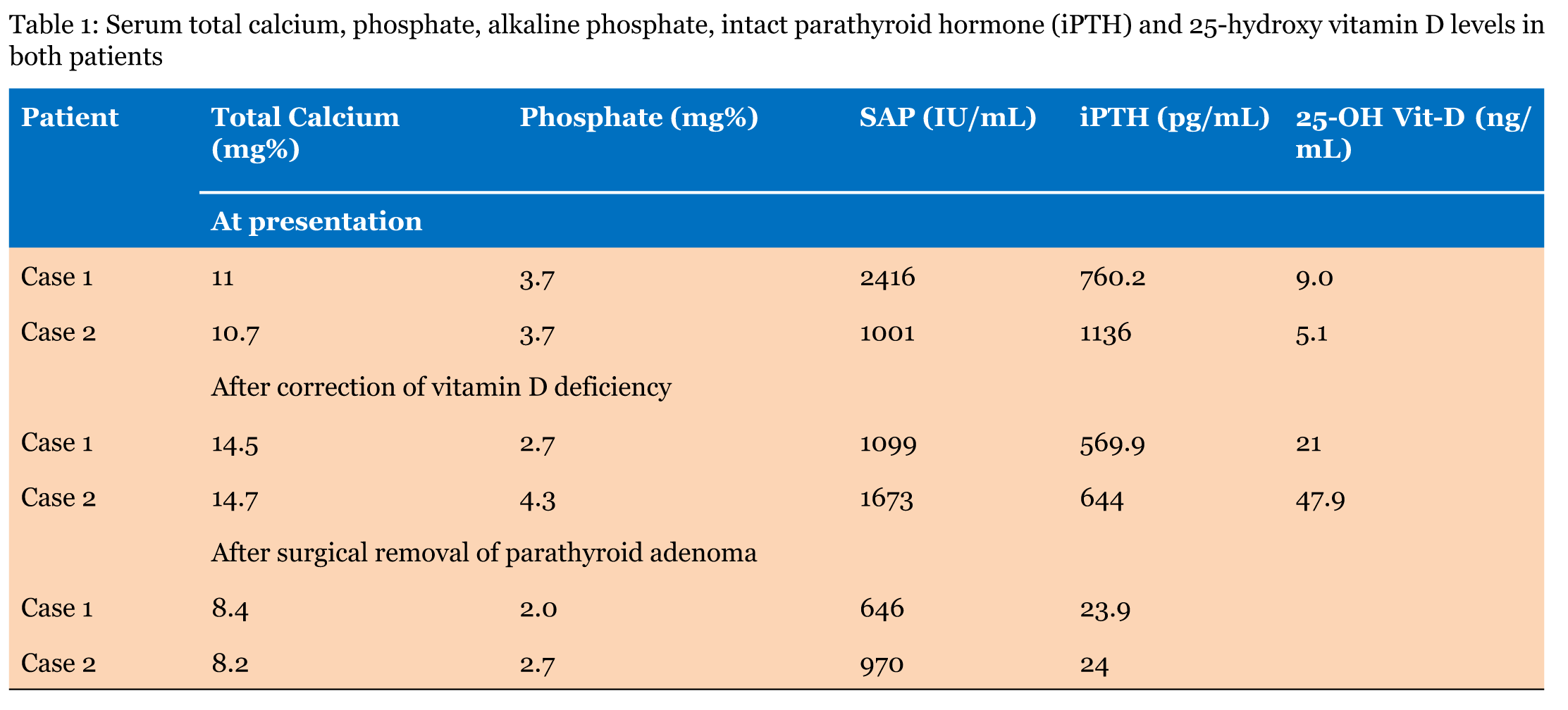
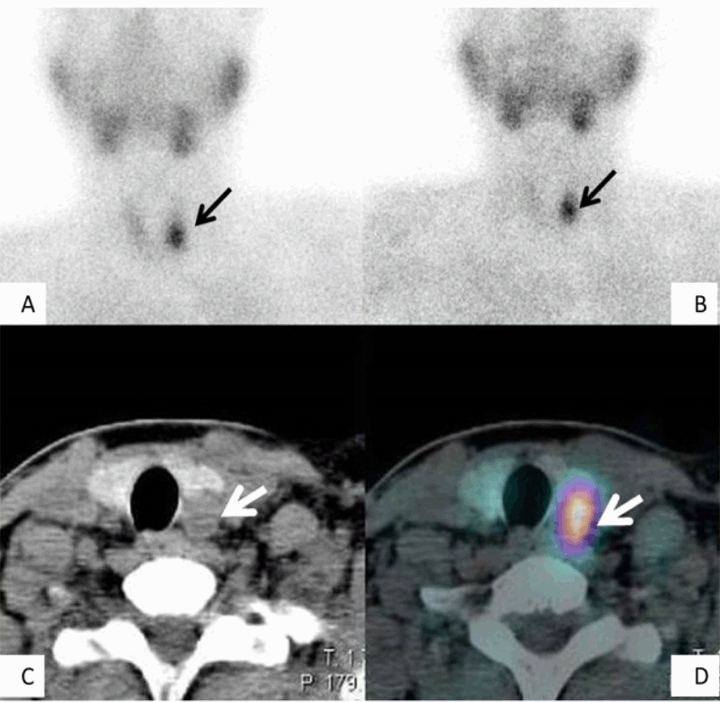
Case 1: A 16-year-old boy was presented with symptoms of progressively increasing bowing of the legs for four years and bilateral leg pain for two years. He also had generalized arthralgia and polyuria. There was no history of recurrent fractures, recurrent vomiting, constipation or neck swelling. There was no past history of native treatment, the use of anti-tubercular or anti epileptic drugs, jaundice or renal problems. There was no family history of renal calculi, hypertension or multiple endocrine neoplasia (MEN) related disorders. His height, weight and body mass index were 177 cm, 67 kg and 21.38 kg/cm2, respectively. Apart from genu valgum (Figure 1A), no other skeletal deformity was noted. He was in tanners stage 4. Hemogram, electrolytes, renal and liver functions test were normal. Serum prolactin was 11.2 (normal range 4.6–21.4 ng/mL) and serum albumin was 4.4 g/L. Radiological evaluation showed a brown tumor in the right proximal humerus (Figure 1C). His base line calcium and vitamin D status are given in Table 1. He was vitamin D deficient and after treatment of vitamin D deficiency, his hypercalcemia worsened and parathyroid hormone remained high. 24 hours urinary calcium excretion was 570 mg per day. Ultrasonogram (Figure 1D) and Tc-99m MIBI (Figure 2) scan showed presence of a left inferior parathyroid adenoma. No thyroid nodule was seen in the neck ultrasonogram. | ||||||
|
| ||||||
| ||||||
|
| ||||||
|
| ||||||
|
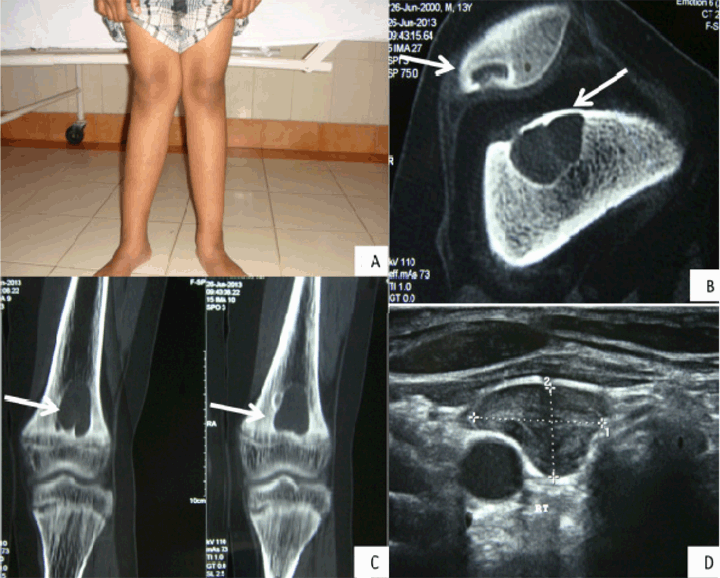
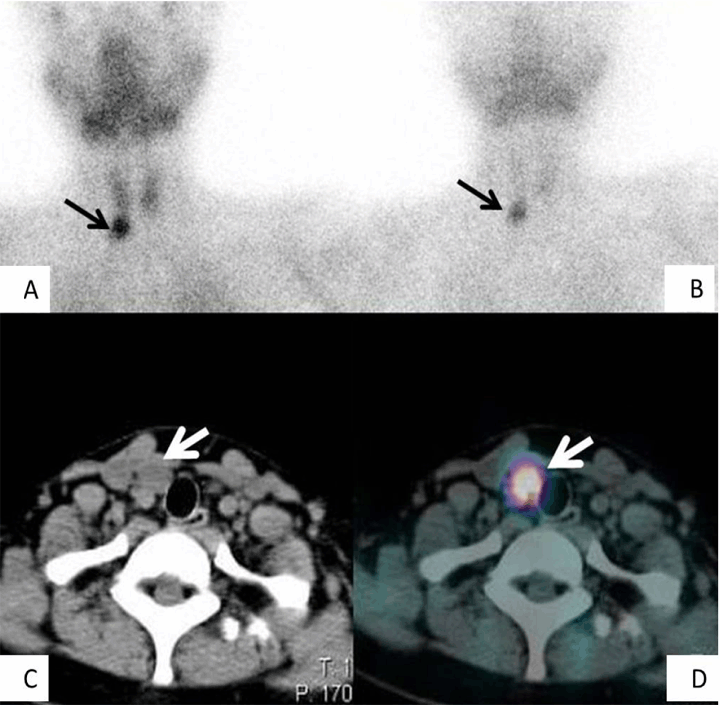
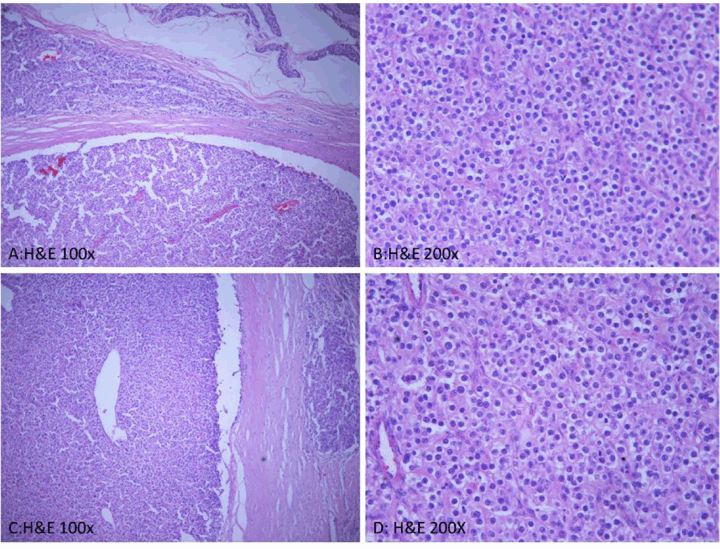
Case 2: A 13-year-old boy was presented with bowing of legs (Figure 3A) which was noted in last three months and was slowly progressive. Apart from myalgia, nausea and occasional abdominal pain, there was no other history of hypercalcemic symptoms, bone pain or fractures. There was no history of malabsorption, recurrent diarrhea, native treatment, antitubercular or antiepileptic drug intake, jaundice or renal problems. There was no family history of renal calculi, hypertension or MEN related disorders. His height, weight and body mass index were 154 cm, 50 kg and 21.08 kg/cm2, respectively. Apart from genu valgum, no other skeletal deformity was noted. He was in tanner stage 2. His hemogram, electrolytes, renal and liver functions test were normal. Serum prolactin was 11.6 (normal range 4.6Serum prolactin was21.4 ng/mL) and serum albumin was 4.9 g/L. Radiological evaluation showed brown tumor in the distal femur and patella (Figure 3B-C). Patient was initially suspected of rickets by a private practitioner and treated with injection arachitiol six lac units stat. Baseline calcium and vitamin are given in Table 1. Similar to the first case, his hypercalcemia worsened and parathyroid hormone remained high. Urine showed calcium oxalate crystals. A 24-hour urinary calcium excretion was 520 mg per day. Ultrasonogram (Figure 3D) and (99m) Tc-sestamibi (MIBI) scan (Figure 4) showed the presence of a right inferior parathyroid adenoma. No thyroid nodule was seen in neck ultrasonogram. Both the children underwent resection of the parathyroid lesion. Biopsy in both cases was consistent with parathyroid adenoma. Cut section of both the specimen showed grayish brown lobulated lesion surrounded by a thin connective tissue capsule. Microscopically, the tumor was encapsulated with a rim of compressed non-neoplastic parathyroid tissue at the periphery. The tumor was hypercellular and predominantly comprises chief cells (Figure 5). No nuclear atypia, mitotic activity or necrosis was identified. Postoperatively, both had symptomatic hypocalcemia secondary to transient hypoparathyroidism and were managed with calcium and calcitriol. | ||||||
|
| ||||||
|
| ||||||
|
| ||||||
|
| ||||||
|
Discussion
| ||||||
|
Primary hyperparathyroidism in children is uncommon and usually presents with bone disease or renal stones. [1] [2] [3] The clinical spectrum of hyperparathyroidism in children is non-specific with vague signs and symptoms such as fatigue, anorexia, nausea, vomiting, constipation, irritability and lack of concentration, which are attributed to hypercalcemia. Polyuria and polydipsia are seen in about 50%. The level of 25-hydroxyvitamin D should be assessed in all patients suspected of having PHPT, and vitamin D deficiency should be cautiously corrected at the time it is detected. The Endocrine Society guidelines mention that the measurement of serum 25-hydroxy vitamin D levels be performed in all patients with PHPT and that correction of vitamin D depletion is warranted before other management decisions (medical or surgical). [4] Genu valgum as a presenting feature of primary hyperparathyroidism is uncommon, though it is one of the skeletal deformities in children with primary hyperparathyroidism. To our knowledge, only 10 cases have been reported in literature. The clinical features, biochemical parameters and radiological findings in these cases are summarized in Table 2. Out of ten seven were girls and three were boys. Most of them had genu valgum as the presenting feature which definitely indicates an etiological link. All the 10 cases were due to a solitary parathyroid adenoma. Vitamin D deficiency can present with genu valgum and can also cause tertiary hyperparathyroidism. However, none of these cases were reported vitamin D deficient. The two cases discussed here were boys and had presented with genu valgum as the primary complain. Similar to the published cases, both were detected to have solitary parathyroid adenomas. Both had normal serum prolactin level and ultrasonography of thyroid was normal, thus MEN-1/MEN-2A seems unlikely in these children. Although both cases were reported as vitamin D deficient, they did not have other features of rickets. Vitamin D deficiency alone is insufficient to explain the isolated occurrence of genu valgum in hyperparathyroidism in children. The second case described by us had evidence of brown tumor in the distal femur and patella. These tumors were not located in the growth plate regions it is unlikely that they could have resulted in genu valgum. Most of the cases described till date have presented during adolescence when it is expected that they would have a growth spurt. Bjernulf et al. reviewed 31 cases of primary hyperparathyroidism and reported three cases of genu valgum. They also reported one case of genu recurvatum and one case of skeletal deformity. Rapaport reported a single center experience of seven cases and genu valgum was present in two of these cases. We have earlier reported 3 cases of skeletal deformities in children with primary hyperparathyroidism from our Institute. [6] [11] First case reported by Menon et al. [6] had presented with genu valgum. Kataria et al. from our Institute had reported the other two cases; one with genu varum and another with deformities secondary to fractures. [11] The case described by Balch et al. [8], had presented at 21 years of age with hypercalcemic symptoms and was detected to have genu valgum at the time of presentation. Hyperparathyroidism like rickets causes bone demineralization and rarefaction and therefore could affect the remodeling process of growing long bones [10]. Though the exact mechanism for development of genu valgum in PHPT still needs to be defined, a possible explanation could be due to the direct effect of elevated parathyroid hormone on the growth plates during pubertal growth spurt. | ||||||
| ||||||
|
| ||||||
|
Conclusion
| ||||||
|
Genu valgum is a rare presentation of PHPT in children. These children rarely manifest with other features of rickets. They have elevated parathyroid hormone levels with radiological features like brown tumors favoring hyperparathyroidism. Ultrasonogram and technetium 99M sestamibi scan are useful in localizing the parathyroid adenoma. Though the exact mechanism of genu valgum in these children with primary hyperparathyroidism needs to be elucidated, it is proposed that elevated parathyroid hormone levels may have a direct effect on the growth plates during pubertal growth spurt resulting in genu valgum. | ||||||
|
References
| ||||||
| ||||||
|
[HTML Abstract]
[PDF Full Text]
|
|
Author Contributions:
Ramkumar S – Substancial contribution to conception, design, Acquisition of data, Drafting the article, Revising it critically for important intellectual content, Final approval of the version to be published Devasenathipathy Kandasamy – Substancial contribution to conception, design, Acquisition of data, Drafting and revising article critically for important radiology related content, Final approval of the version to be published Vijay MK – Substancial contribution to conception, design, Acquisition of data, Drafting the article and revising it critically for important Pathology related content, Final approval of the version to be published Madhavi Tripathi – Substancial contribution to conception, design and acquisition of data, Drafting the article and revising it critically for important nuclear medicine related content, Final approval of the version to be published Jyotsna VP – Substancial contribution to conception, design and acquisition of data, Drafting the article and revising it critically for important intellectual content, Final approval of the version to be published |
|
Guarantor of submission
The corresponding author is the guarantor of submission. |
|
Source of support
None |
|
Conflict of interest
Authors declare no conflict of interest. |
|
Copyright
© 2014 Ramkumar S et al. This article is distributed under the terms of Creative Commons Attribution License which permits unrestricted use, distribution and reproduction in any medium provided the original author(s) and original publisher are properly credited. Please see the copyright policy on the journal website for more information. |
|
|
|
About The Authors
| |||
| |||
| |||
| |||
| |||
| |||