
  |

|
 |
|
Case Report
| ||||||
| Longest and left-sided gallbladder | ||||||
| Atul Kumar Mittal1, Sourabh Sharma1, Selva Kumar Balakrishnan2, Jeevan Kankaria3, Rajkamal Jenaw4 | ||||||
|
1MBBS, Resident, Department of Surgery, S.M.S. Medical College and Hospital, Jaipur, Rajasthan, India.
2MS, General Surgery, Resident, Department of Surgery, S.M.S. Medical College and Hospital, Jaipur, Rajasthan, India. 3MS, General Surgery, Associate Professor, Department of Surgery, S.M.S. Medical College and Hospital, Jaipur, Rajasthan, India. 4MS, General Surgery, Professor, Department of Surgery, S.M.S. Medical College and Hospital, Jaipur, Rajasthan, India. | ||||||
| ||||||
|
[HTML Abstract]
[PDF Full Text]
[Print This Article]
[Similar article in Pumed] [Similar article in Google Scholar] 
|


| How to cite this article |
| Mittal AK, Sharma S, Balakrishnan SK, Kankaria J, Jenaw R. Longest and left-sided gallbladder. International Journal of Case Reports and Images 2014;5(5):373–376. |
|
Abstract
|
|
Introduction:
As laparoscopic cholecystectomy is one of the most common procedure done worldwide. Although anomalies are rare but are associated with congenital malformations of gallbladder, bile ducts and vascular system.
Case Report: Herein, we present a case of young female presenting with symptoms of pain in right hypochondrium with ultrasonographic diagnosis of cholelithiasis undergone successful laparoscopic cholecystectomy with Intraoperative findings of: 1. The length of the gallbladder was measured to be 25.8 cm. 2. The fundus of the gallbladder was placed to the left of the falciform ligament. The gallbladder then extended to the right of the falciform ligament, reached up to the liver margin before taking a 'U'-turn to lie in the usual gallbladder fossa. Conclusion: Anomalies of gallbladder present an important hurdle in successful laparoscopic cholecystectomy. Most of time not known preoperatively encountered during surgery. Isolated left-sided gallbladders are rare and found in 0.04–0.3% of cases. When there is question about anatomy of biliary tract intraoperatively one should consider for anomalies. A habit of calm and slow dissection with precautions should be developed. Clearance of the anatomical structures with limited use of electrocautery should be done before proceeding towards ligation or clip applications to structures. A surgeon should be well equipped with knowledge of anomalies of gallbladder and meticulous dissection with good exposure of structures should be done when an anomaly found. | |
|
Keywords:
Left-sided gallbladder, Longest gallbladder, Laparoscopic cholecystectomy, Anomaly gallbladder
| |
|
Introduction
| ||||||
|
As laparoscopic cholecystectomy is one of the most common procedure done worldwide. Although anomalies are rare but are associated with congenital malformations of gallbladder, bile ducts and vascular system. Knowledge of anomalies before going for laparoscopic cholesystectomy is essential for safe and successful surgery. These can be dealt with meticulous dissection and appropriate identification of structures before applying clips and cutting structures. | ||||||
|
Case Report
| ||||||
|
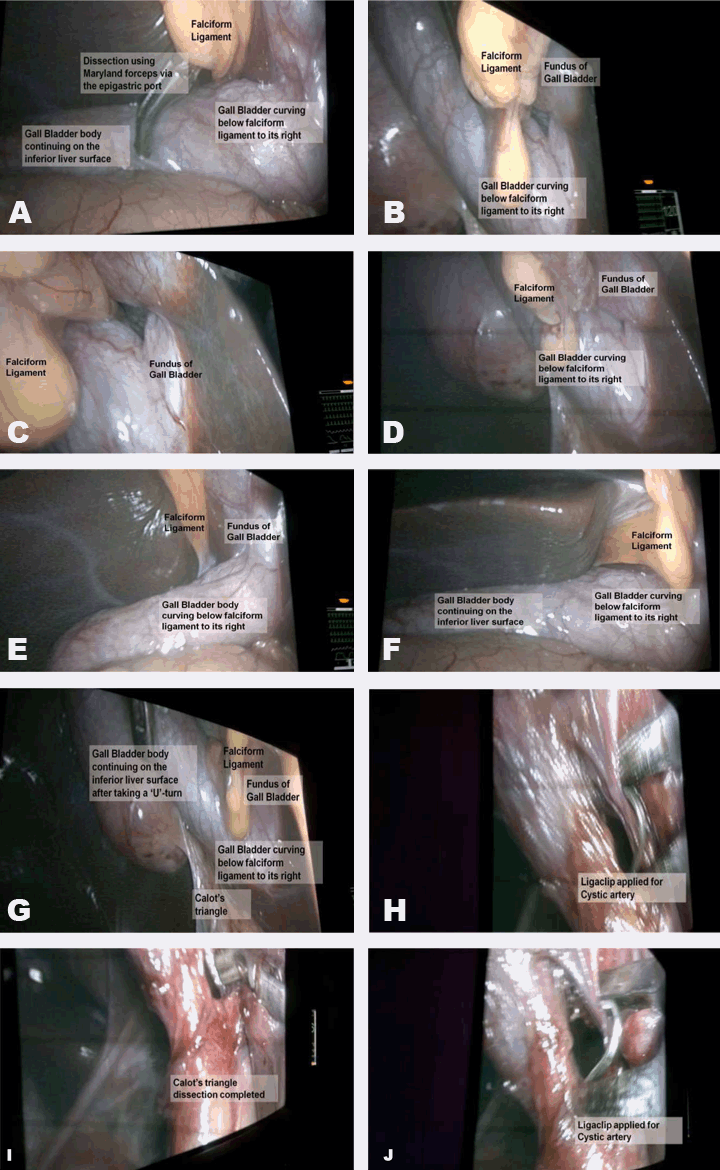
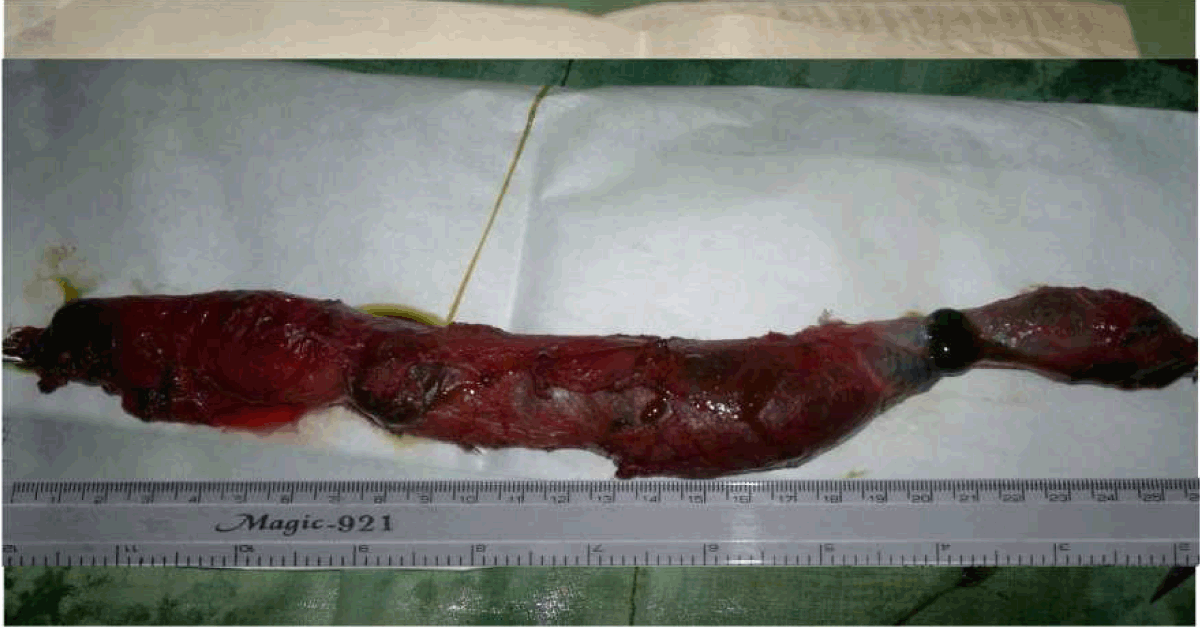
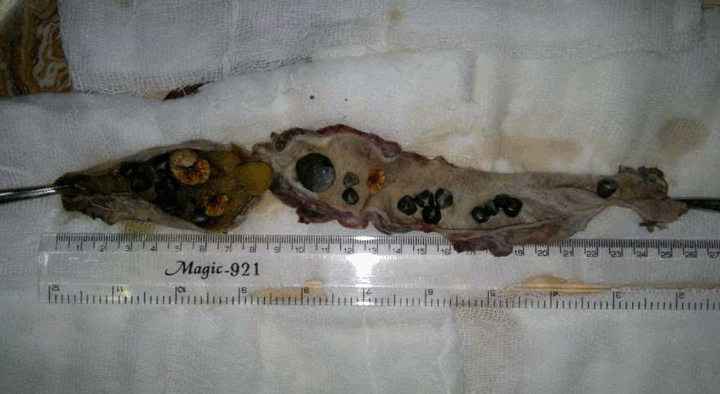
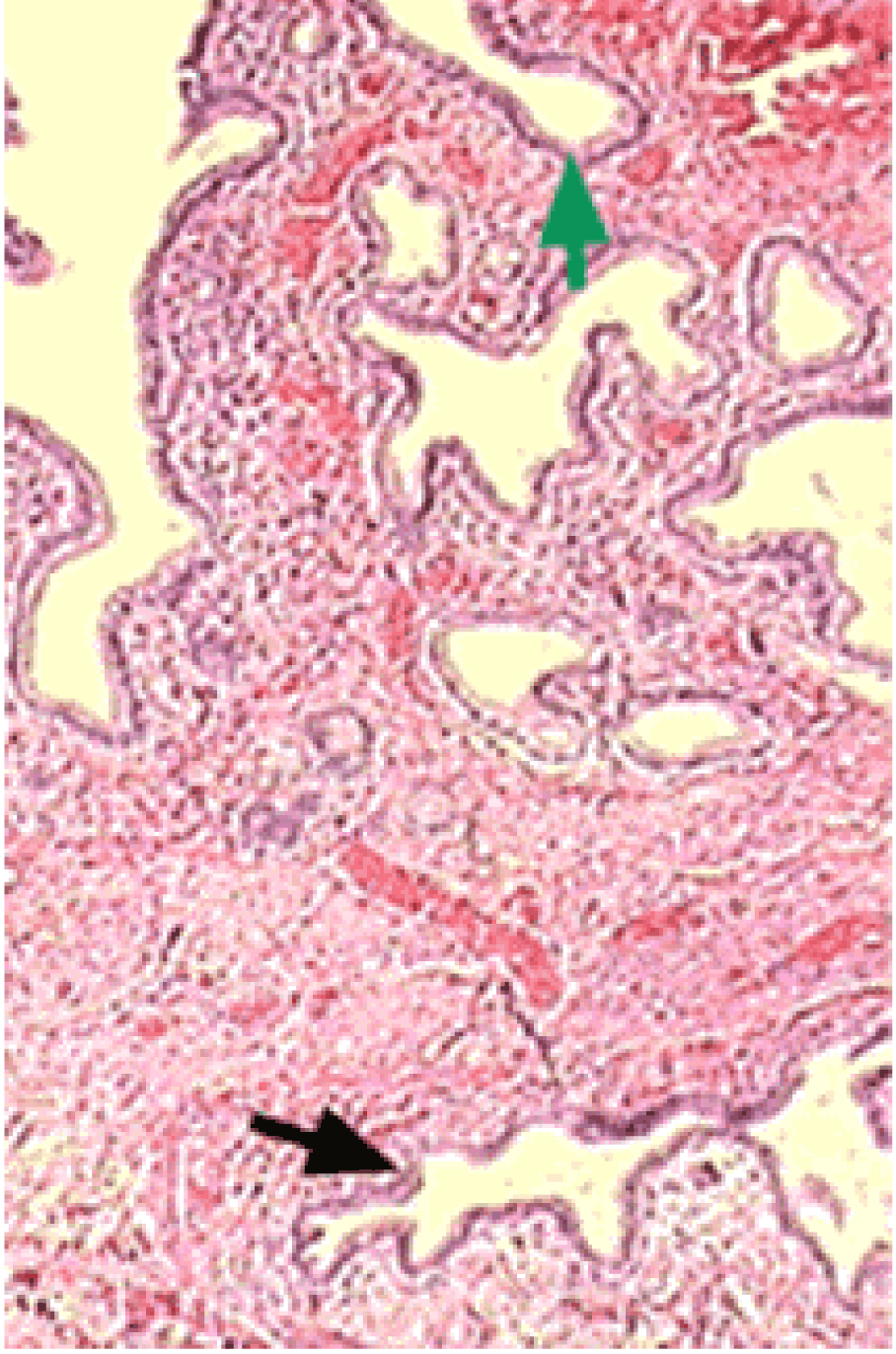
We presents a case of young female presenting with symptoms of pain in right hypochondrium with ultrasonographic diagnosis of cholelithiasis. Laparoscopic cholecystectomy was planned. After creating pneumoperitoneum standart four ports were placed. On inspection of gallbladder findings noted were:
Patient undergone uneventful laparoscopic cholecystectomy and was allowed oral intake in evening and discharged on next day. Patient followed for 30 days with no significant complaints. | ||||||
| ||||||
| ||||||
| ||||||
| ||||||
|
Discussion
| ||||||
|
Anomalies of gallbladder presents an important hurdle in successful laparoscopic cholecystectomy. Most of time not known preoperatively encountered during surgery. A prenatal study done by Bronshtein et al. 1993 on 10,016 fetal examinations after the 14th week of gestation reported 17 cases of anomalous gallbladder a 0.15% incidence of gallbladder malformations. [1] As per study of 500 subjects by Carbajo et al. Congenital gallbladder malformations were diagnosed in 1% of the cases, all cases were intraoperatively diagnosed and only two patient have to be converted to open cholecystectomy. [2] Isolated left-sided gallbladders are rare and found in 0.04%–0.3% of cases. [3] Two possible embryological etiologies for left-sided gallbladder are suggested.
As in our case gallbladder was of 25.8 cm which is largest as certified by Guinness book of world record with association of anomalous location of fundus of gallbladder to left side. Dr Naeem Taj operated a case at CDA hospital Islamabad, Pakistan, Rasheeda Bibi, 70-year-old female with a-25.5 cm long gallbladder. When there is a question about anatomy of billiary tract intraoperatively one should consider for anomalies. There are four types of aberrant gallbladder: (1) intrahepatic, (2) left-sided, (3) transverse, and (4) retrodisplaced illustrated. The aberrant gallbladder produced false positive liver scans which were correctly diagnosed by hepatic angiography. [6] A habit of calm and slow dissection with precautions should be developed. Clearance of the anatomical structures with limited use of electrocautery should be done before proceeding towards ligation or clip applications to structures. An intraoperative cholangiography can be used to further delineate details of anatomy. [7] If surgeons' experience allow, one can proceed with laparoscopic surgery. Fundus first approach can make access easy in tricky situations. If surgeon is not experienced enough, conversion to open procedure should be done. | ||||||
|
Conclusion
| ||||||
|
A surgeon should be well equipped with knowledge of anomalies of gallbladder and meticulous dissection with good exposure of structures should be done when an anomaly found. The importance of identifying the gallbladder at hepatic angiography by observing the cystic arteries in arterial phase and the gallbladder wall stain in hepatogram phase is stressed. | ||||||
|
References
| ||||||
| ||||||

|
[HTML Abstract]
[PDF Full Text]
|
|
Author Contributions
Atul Kumar Mittal – Conception and design, Analysis and interpretation of data, Drafting the article, Critical revision of the article, Final approval of the version to be published Sourabh Sharma – Conception and design, Analysis and interpretation of data, Drafting the article, Critical revision of the article, Final approval of the version to be published Selva Kumar Balakrishnan – Conception and design, Analysis and interpretation of data, Critical revision of the article, Final approval of the version to be published Jeevan Kankaria – Conception and design, Analysis and interpretation of data, Critical revision of the article, Final approval of the version to be published Rajkamal Jenaw – Conception and design, Analysis and interpretation of data, Critical revision of the article, Final approval of the version to be published |
|
Guarantor of submission
The corresponding author is the guarantor of submission. |
|
Source of support
None |
|
Conflict of interest
Authors declare no conflict of interest. |
|
Copyright
© 2014 Atul Kumar Mittal et al. This article is distributed under the terms of Creative Commons Attribution License which permits unrestricted use, distribution and reproduction in any medium provided the original author(s) and original publisher are properly credited. Please see the copyright policy on the journal website for more information. |
|
|