| |
|
|
|
Case Report
| ||||||
| Imaging findings in a case of cystic neoplasm of pancreas: A case report | ||||||
| Pooja Gupta1, Devika Gupta2, Kamlesh Kumar Singh3, Satish Mendonca4 | ||||||
|
1MD, DNB Radiodiagnosis, Armed Forces Medical College and Command Hospital Southern Command. Department of Radiodiagnosis and Imaging, Pune, India.
2MD, Pathology, Assistant Professor, Armed Forces Medical College, Department of Pathology and Laboratory Science, Command Hospital, Pune, India. 3MD Pathology, Armed Forces Medical College, Department of Pathology and Laboratory Science Command Hospital, Pune, India. 4MD (Medicine), Associate Professor Medicine, Armed Forces Medical College and Command Hospital Southern Command, Pune, India. | ||||||
| ||||||
|
[HTML Abstract]
[PDF Full Text]
[Print This Article]
[Similar article in Pumed] [Similar article in Google Scholar] 
|
| How to cite this article |
| Gupta P, Gupta D, Singh KK, Mendonca S. Imaging findings in a case of cystic neoplasm of pancreas: A case report. International Journal of Case Reports and Images 2014;5(5):351–354. |
|
Abstract
|
|
Introduction:
The spectrum of cystic neoplasms of the pancreas encompasses a wide range from benign to malignant. Serous cystadenomas are benign cystic tumors of the pancreas.
Case Report: A 54-year-old female presented with pain in epigastrium with a lump in mid upper abdomen. On imaging there was a large, lobulated, well defined, multicystic, heterogeneously enhancing mass arising from the body of pancreas which was subsequently excised and on histopathological examination was found to be a serous cystadenoma of pancreas. Conclusion: The aim of this case report is to highlight the characteristic radiological features in cystic neoplasms of the pancreas along with a review of the relevant literature. | |
|
Keywords:
Serous cystadenoma, Microcystic, Oligocystic
| |
|
Introduction
| ||||||
|
There are various cystic neoplasms of the pancreas which can be benign to malignant. The cystic masses of pancreas can be pseudocysts, mucinous cystic neoplasms, serous cystadenoma and intraductal papillary mucinous neoplasms. The most common cystic neoplasms are mucinous followed by the serous cystadenomas. With the recent advances in imaging techniques more cases of pancreatic cystic neoplasms are being identified. Herein, we have a case of a middle aged female who presented with pain and lump in the epigastrium and on subsequent evaluation was found to have a cystic neoplasm in the body of pancreas. | ||||||
|
Case Report
| ||||||
|
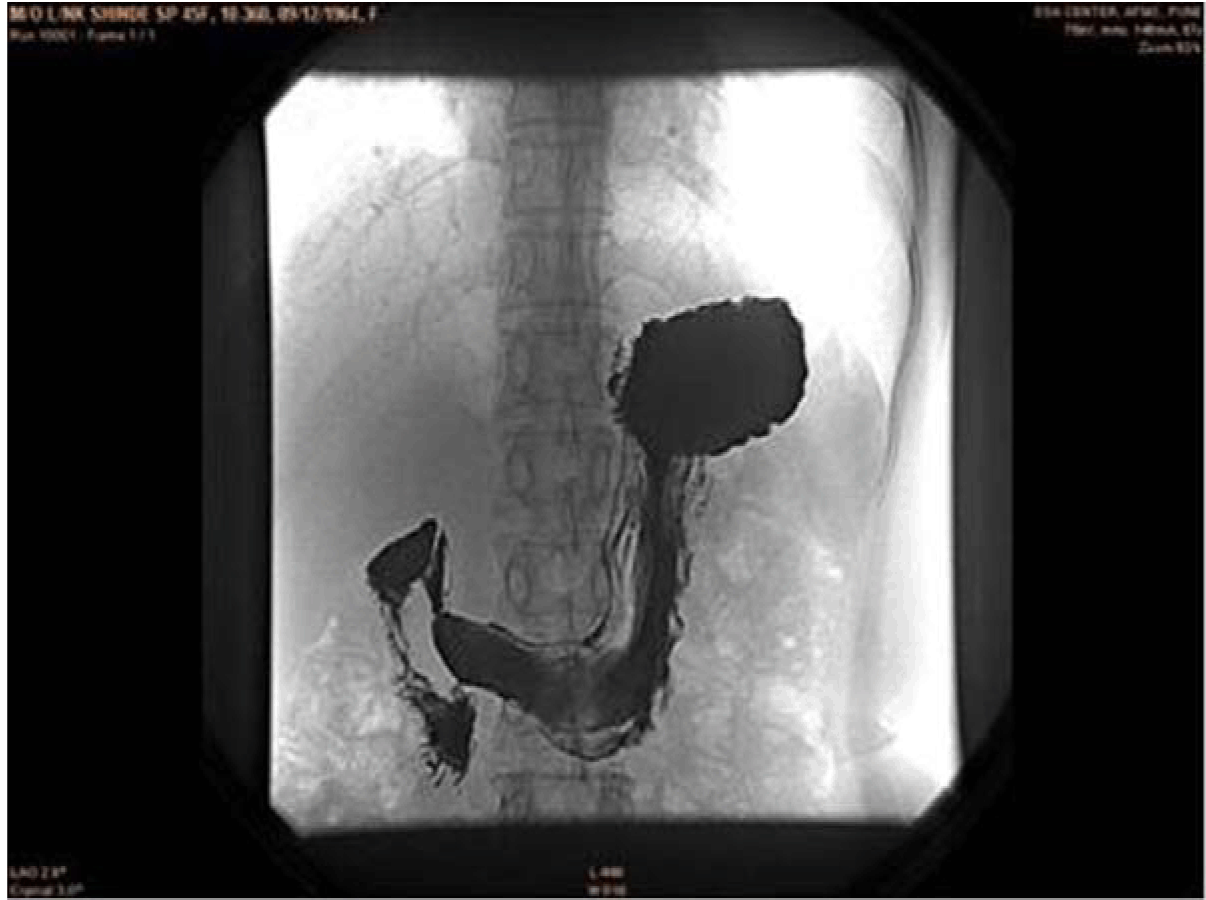
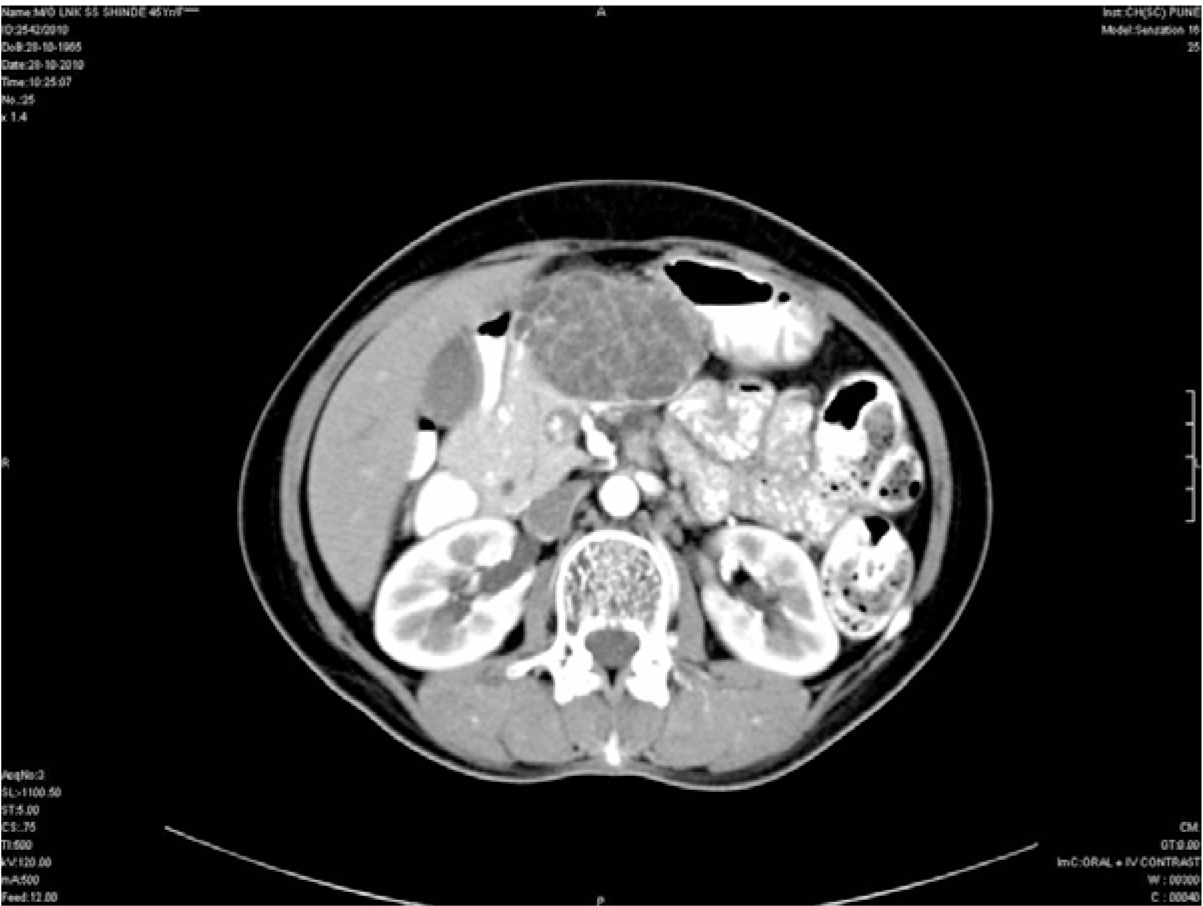
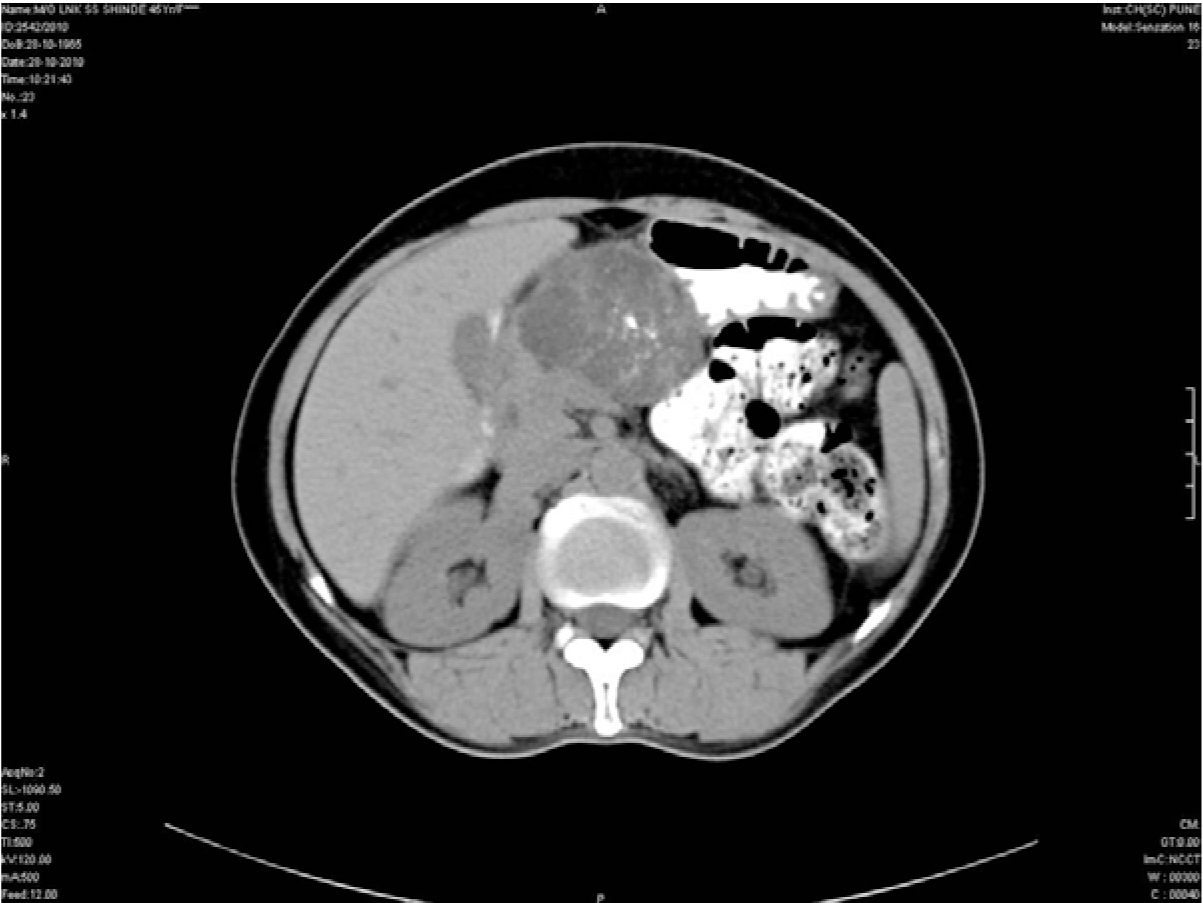
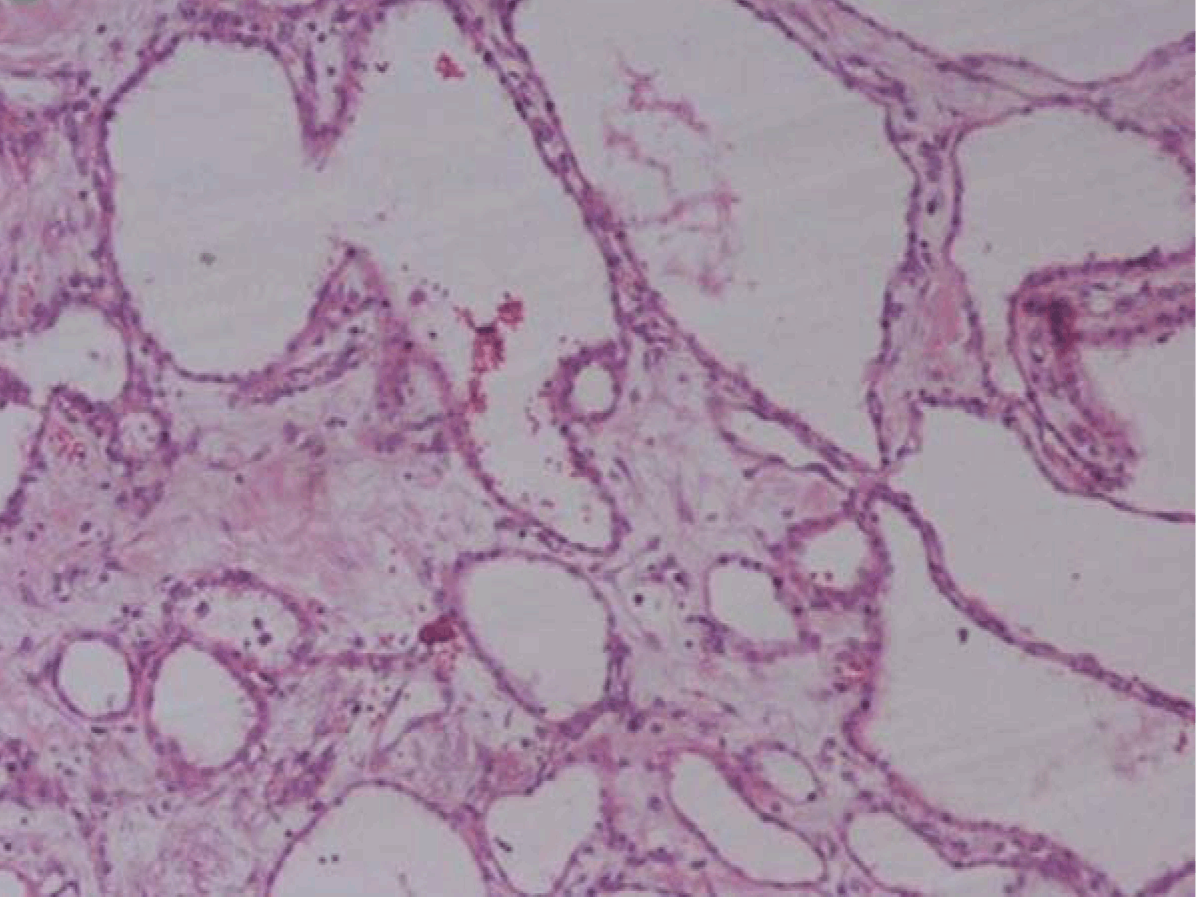
A 54-year-old female was presented with pain in epigastric region of six months duration and nausea, anorexia, weight loss and lump in mid upper abdomen of two months duration. On admission to the hospital, chest and abdominal X-rays were performed which were inconclusive. Routine laboratory studies including hematological and biochemical parameters were normal. Serum amylase was within normal limits. Following this an ultrasound of the abdomen was performed. Ultrasound showed a well-delineated, multi-loculated, cystic lesion of size 5.2x6.2x7.7 cm in the body of the pancreas. The cysts were all subcentimetric giving a honeycomb appearance to the lesion. (Figure 1) Subsequently, a barium meal study was done which showed a smooth extrinsic indentation on the lesser curvature of the stomach. (Figure 2) Contrast-enhanced computed tomography scan showed a large, lobulated, well defined, lesion with multiple subcentimetric non enhancing hypodense cystic areas with enhancing hyperdense walls in the body of pancreas. (Figure 3) Multiple discrete foci of calcifications were seen within the lesion. (Figure 4) Anteriorly the lesion was reaching till anterior abdominal wall, posteriorly it was abutting the splenic vein, superiorly it was abutting the segment IV of liver and inferiorly it was abutting lesser curvature of stomach. After complete investigations, patient was diagnosed as a case of cystic tumor of pancreas and she was operated upon with resection of the lesion. Histology of resected pancreatic tissue revealed multicystic lesion in the body of pancreas containing cysts less than 1 cm in size lined by small flat to cuboidal cells. (Figure 5) There was no architectural or cytological atypia noted. Based on the imaging findings and further confirmation by histopathology a diagnosis of serous cystadenoma of pancreas was made. | ||||||
| ||||||
| ||||||
| ||||||
| ||||||
| ||||||
|
Discussion
| ||||||
|
Serous cystadenomas are benign tumors of the pancreas. There is strong female predominance with a sex ratio of 2:1. The most common presenting symptom is vague abdominal pain. A palpable epigastric mass is present in nearly two thirds of cases. Serous cystadenomas constitute 25% of all cystic tumors of the pancreas the majority of which are found in females. [1] The most common site of serous cystadenomas is the head and tail of pancreas. In our case, the lesion was present in the body of the pancreas. They are seen almost exclusively after 35 years of age and 82% occurs after 60 years of age. The diagnosis of serous cystadenoma can be done by various imaging modalities such as ultrasound, computed tomography (CT) scan, and endoscopic ultrasound. On CT scan 30% of cases have a fibrous central scar with or without a characteristic stellate calcification which is considered pathognomic for serous cystadenoma. [2] On contrast-enhanced CT scan, there is enhancement of the septae. [3] Serous cystadenomas have three morphologic patterns: polycystic, honeycomb, and oligocystic. [4] In 70% of cases, serous polycystic adenomas consist of a collection of cysts (usually more than six) which range from a few millimeters up to 2 cm in size. [5] On non-contrast CT, they appear as hypodense, cystic masses that frequently show calcifications. [6] The honeycomb pattern, seen in approximately 20% of patients, is characterized by numerous subcentimeter cysts that cannot be individually distinguished by cross-sectional imaging. Therefore, cysts having the honeycomb pattern are seen as well defined lesions with soft-tissue attenuation seen on CT. [7] Oligocystic have fewer larger cysts which are usually greater than 2 cm in diameter. Differential diagnostic features that help in distinguishing serous from mucinous cystic tumors include older age group, and presence of multiple (>6) small cysts in case of serous cystadenoma as opposed to mucinous cystadenomas in which cysts are larger and fewer in number. Patients with serous cystadenoma are thought to have an excellent long-term prognosis. Hence is important to differentiate serous cystadenoma from other cystic tumors. | ||||||
|
Conclusion
| ||||||
|
Serous cystadenomas are benign tumors of pancreas which present as well defined multicystic lesions predominantly in the body of the pancreas. They have a good long term prognosis and hence need to be well differentiated from other cystic lesions of the pancreas on various imaging modalities. | ||||||
|
References
| ||||||
| ||||||
|
[HTML Abstract]
[PDF Full Text]
|
|
Author Contributions
Pooja Gupta – Substantial contributions to conception and design, Acquisition of data, Analysis and interpretation of data, Drafting the article, Revising it critically for important intellectual content, Final approval of the version to be published Devika Gupta – Analysis and interpretation of data, Drafting the article, Final approval of the version to be published Kamlesh Kumar Singh – Analysis and interpretation of data, Drafting the article, Final approval of the version to be published Satish Mendonca – Analysis and interpretation of data, Drafting the article, Final approval of the version to be published |
|
Guarantor of submission
The corresponding author is the guarantor of submission. |
|
Source of support
None |
|
Conflict of interest
Authors declare no conflict of interest. |
|
Copyright
© 2014 Pooja Gupta et al. This article is distributed under the terms of Creative Commons Attribution License which permits unrestricted use, distribution and reproduction in any medium provided the original author(s) and original publisher are properly credited. Please see the copyright policy on the journal website for more information. |
|
|
|
About The Authors
| |||
| |||
| |||
| |||
| |||