| |
|
|
|
Case Report
| ||||||
| Syphilitic paroxysmal cold hemoglobinuria associated with peripheral gangrene: A diagnostic dilemma | ||||||
| Segun P Adeoye1, Seema Tayal2, Apar Bains3, Prabhjot Manes2 | ||||||
|
1University of Pittsburgh Medical Center (UPMC), Horizon Hospitalist Unit, Greenville and Shenango Valley Hospitals, Pennsylvania, USA.
2Department of Family Medicine The Brooklyn Hospital Center, Brooklyn, New York. USA. 3Union Primary Care Elkton Elkton, Maryland 21921. | ||||||
| ||||||
|
[HTML Abstract]
[PDF Full Text]
[Print This Article]
[Similar article in Pumed] [Similar article in Google Scholar] 
|
| How to cite this article |
| Adeoye SP, Tayal S, Bains A, Manes P. Syphilitic paroxysmal cold hemoglobinuria associated with peripheral gangrene: A diagnostic dilemma. International Journal of Case Reports and Images 2014;5(5):339–344. |
|
Abstract
|
|
Introduction:
Paroxysmal cold hemoglobinuria is a rare clinical entity; syphilitic association is even rarer. The lack of awareness amongst healthcare providers, and its fleeting course often mean that many a time, paroxysmal cold hemoglobinuria is not diagnosed.
Case Report: Herein, we present a case of syphilitic paroxysmal cold hemoglobinuria with peripheral gangrene that necessitated amputation. We describe the atypical presentation, emphasize or diagnostic dilemma and report our therapeutic considerations. Conclusion: The report raises two important points (i) the lack of awareness of the clinical entity amongst healthcare providers (ii) the sub-optimal work-up done for late-onset dementia. We conclude by making the case for including the screen for syphilis in their work-up of patients presenting with aortic valvular disease, chronic dementia (especially of the early-onset type) and hemolytic anemia of the cold antibody variety. | |
|
Keywords:
Syphilitic paroxysmal cold hemoglobinuria, Syphilis, Cold hemoglobinuria
| |
|
Introduction
| ||||||
|
Paroxysmal cold hemoglobinuria (PCH) is a relatively rare clinical syndrome first described in 1854 by Dressler, [1] its association with syphilis is even rarer; the first description of this association is credited to Goetz, in 1885. [1] The causative biphasic hemolysin was first described by Donath and Landsteiner in 1904. [2] The incidence of syphilitic PCH is higher in males, probably reflective of the greater prevalence of syphilis in males. It may complicate congenital as well as acquired syphilis. A number of cases of syphilis associated PCH have been documented, some of these have reported events of peripheral gangrene. [3] In the latter half of the 19th century, congenital and adult tertiary-stage syphilis were the most common cause of PCH. However, with the decreased prevalence of syphilis due to better population education and awareness, improved identification-contact tracing, reporting and monitoring, as well as the availability more effective treatment options for syphilis, incidence of the syphilis-induced PCH has declined significantly. In the present time, PCH is most often related to infections and neoplasms. Identified pathogens include: measles, mumps, influenza, varicella-zoster virus (VZV), cytomegalovirus (CMV), Epstein-Barr virus (EBV), adenovirus, parvovirus B19, Coxsackie A9, Haemophilus influenzae, Mycoplasma pneumoniae, and Klebsiella pneumonia. [4] [5] [6] [7] Implicated neoplasms include: solid organ malignancy like small-cell lung carcinoma, and hematopoietic disorders such as non-Hodgkins lymphoma (NHL), chronic lymphocytic leukemia (CLL), multiple myeloma and monoclonal gammopathies. [8] [9] [10] [11] [12] A study of children found that as many as 40% of immune hemolytic anemias were due to the Donath-Landsteiner (D-L) antibody. [8] [13] In the adult population, infections and neoplasms have been associated with the development of D-L antibody. [3] PCH is thought of as a unique form of immune hemolytic anemia (IHA) characterized by paroxysms of severe anemia and hemoglobinuria upon exposure to cold temperatures, due to massive intravascular hemolysis. The hemolysin antibody attaching to red blood cells (RBCs) in the cold and inducing hemolysis due to complement activation when the RBCs are warmed. [1] [2] [4] [14] Episodes are heralded by a combination of the following: sudden onset of back and abdominal pain, headache, leg cramps, fever, rigors, chills, nausea, vomiting, diarrhea, and esophageal spasms. The associated hemoglobinuria is often severe, hematuria is generally minimal or absent. Oliguria or anuria is indicative of renal insult. Cold urticaria and jaundice may also occur. [15] These generalized symptoms are attributable to the release of large quantities of hemoglobin from hemolyzed RBCs, which then act as an irritant to various tissues or precipitate causing renal tubular obstruction. Gangrene rarely occurs in cold autoimmune hemolytic anaemia; occuring, it is usually associated with primary cold agglutinin disease. [15] The mainstay of management of PCH is avoidance of cold exposure, supportive care and treatment/control of the associated primary disorder (when applicable and feasible). Administration of warmed, packed RBC units for life-threatening hemolysis and symptomatic anemia is a common event in management. Use of washed RBC units has not been shown to improve transfusion safety, but may be employed if condition remains refractory to standard warmed products. Though corticosteroids have been used, it has not been shown to shorten the clinical course of PCH. Hydration, urine alkanization and temporary hemodialysis may be required to enhance elimination of hemoglobin, and to prevent or treat complicating renal failure. Antihistamines may ameliorate symptoms of cold urticaria in PCH. The lack of awareness amongst healthcare providers, and its fleeting course often mean that many a time, like in the case we present, PCH goes undiagnozed. We present a case on patient with PCH secondary to syphilis, and complicated by peripheral gangrene necessitating an amputation. | ||||||
|
Case Report
| ||||||
|
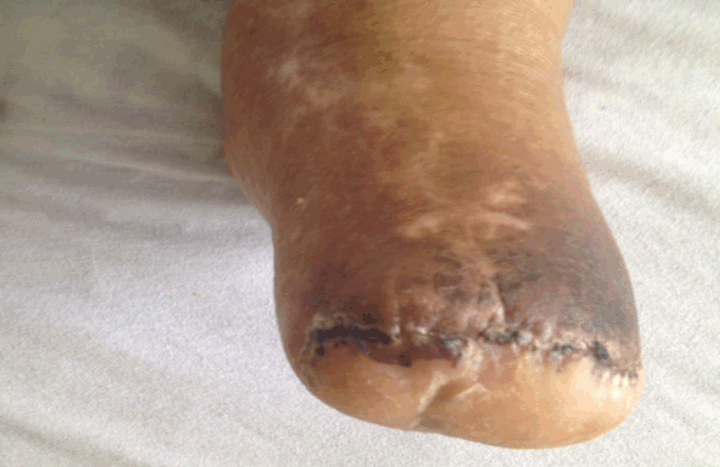
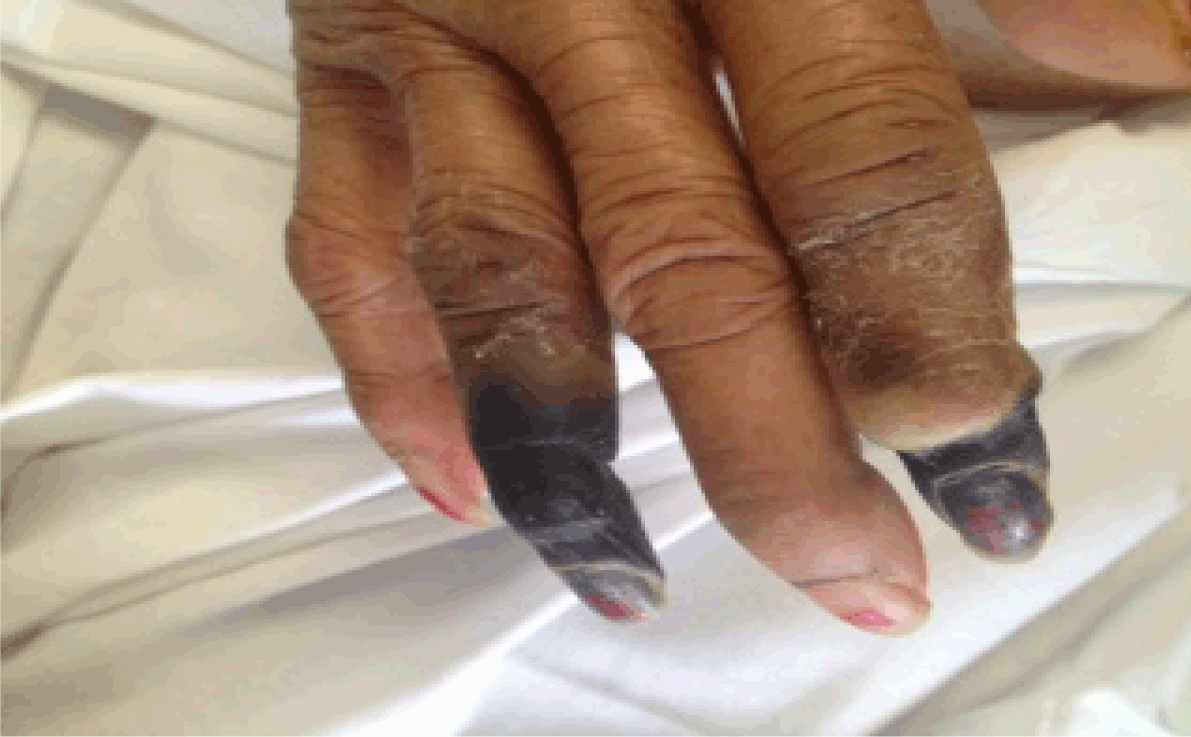
A 91-year old female was presented to the emergency room with complaint of a two-week history of abdominal pain and vomiting which started soon after left trans-metatarsal amputation for gangrene of unknown cause in another hospital. The history was obtained from her daughter due to the patient's cognitive impairment from baseline dementia. A 10-day history of intermittent passage of red-colored urine was also noted. Abdominal pain was diffuse, dull-to-achy, associated with constipation, vomiting was non-projectile, related to and aggravated by meals and contained recently ingested meals, gastric secretions and phlegm. No relieving factor was identified. No hemoptysis, melena, hematochezia were reported. No other organs or system-related symptoms. Upon further enquiry, daughter recounted were present a remote history of similar passage of red urine that resolved spontaneously. Medical history was significant for hypertension and dementia. As indicated above she underwent left trans-metatarsal amputation for a gangrenous foot two weeks before presentation. Family and social history was unremarkable. She had no known drug, food or environmental allergies. Home medications included amlodipine, metoprolol, omeprazole and laxatives. She reported no history of transfusion of blood or blood products. On examination, vital signs of the patient were essentially normal, but she was pale, icteric and cachectic. HEENT, chest, cardiovascular and abdominal (no organomegaly) with rectal exam was normal, neurological exam was consistent with mild-moderate dementia, initially suggestive to Alzheimer' or vascular etiology. Cutaneous and integumentary exam were significant for reddish blue nose tip coloration and acrocyanosis of left index and ring fingers, and a healed post-amputation stump on the left foot. (Figure 1) Significantly, no telangiectasia, peri-ungual lesions, or clubbing of extremities was noted. Initial laboratory tests reported anemia ([Hb]/Hct=6.1/18), hemoglobinuria (without hematuria), reduced haptoglobin, increased LDH, reticulocytosis (7.8%) peripheral film revealed normochromia, normocytosis, without polychromasia, few schizocytes and neutrophils with toxic granulations were present, and indirect hyperbilirubinemia (3.5 g/dL), all suggestive of intravascular hemolysis. Abdominal ultrasound reported some thickening of gall bladder wall associated with biliary sludge. EKG showed normal sinus rhythm, with a ventricular rate of 67 bpm. Echocardiogram was essentially normal. An initial impression of intravascular hemolysis (autoimmune versus drug-induced hemolytic anemia) with uremic gastritis/gastropathy was made. Patient's daughter was unsure of medication exposure during the patient's admission in the previous hospitals. Gastroenterology and hematology consults were called and obtained. Continuity care and medical records on her recent admission for gangrenous foot (especially antibiotic exposure and vascular studies) were not available at that point. Electronic medical records (EMR) are currently not integrated or cross-accessible across hospital. There is often a lag between need for, patient's signing of release document, call for and access to records on prior hospitalization in other hospitals. Patient was transfused with six units of packed red blood cells to keep hemoglobin >8g/dL, as intravascular hemolysis continued. Consistent with the initial impression of an autoimmune etiology, corticosteroid (prednisone) therapy was instituted. During the hospital course, the acrocyanotic digits progressed to dry gangrene with sharply demarcated borders. (Figure 2) Later in the course of her hospital stay, the daughter gave a history associating her prior gangrenous episode with the onset of winter., as well as a remote history of passage of red-colored urine. In view of the interval events and new history obtained, an impression of PCH was made and work-up to confirm the diagnosis and to identify the trigger was pursued. Repeat enquiry did not elicit a remote or recent history of syphilis. The patient was subsequently kept warm using blankets, mittens and stockings. The Donath-Landsteiner reaction was positive, as was a direct Coombs test performed at room temperature. Screening and confirmatory test for syphilis was positive (significant RPR titer of 1:8 and a positive FTA test), rheumatology test battery was negative (rheumatoid factor, ANA, IgG/M/A, b2microglobulin), hepatitis profile and HIV screen were negative. Hematological tests including bone marrow aspiration and serum electrophoresis excluded any underlying lymphoproliferative disorder or monoclonal gammopathy. A rheumatology consult was called to assist with evaluation for autoimmune and collagen vascular disorders. Lumbar puncture to evaluate for neurosyphilis was not performed as her healthcare proxy requested only comfort care. Pulsed vascular recording (PVR) and arterial duplex of the extremities showed mild tibial and disease in the right leg, as well mild femoro-popliteal and tibial disease in the left leg. A bone scan study was suggestive of Paget's disease; no malignancy pattern was discerned. The patient was treated with penicillin 2.4 M IU IM weekly for three weeks, Ceftriaxone 2 g daily for 10 days. The gangrenous digits (right index and ring fingers) remained well demarcated, requiring surgical amputation. The dose of prednisone was gradually tapered with sustained control of hemolysis. As no other pathological cause of vascular occlusion was identified, patient was discharged to center for sub-acute rehabilitation and advised to avoid future cold exposure. At discharge, she was no longer pale or icteric, intravascular hemolysis had completely resolved, this was evident in her stable [Hb]/Hct of 10.3/29, reticulocyte count of 1.9% and an essentially normal urinalysis. The patient was lost to follow-up after sub-acute rehabilitation. | ||||||
| ||||||
| ||||||
|
Discussion
| ||||||
|
We lay no claim to the first description of syphilitic paroxysmal cold hemoglobinuria, nor to the first report on a complicating gangrene, but our report raises two important considerations. Firstly, the lack of awareness amongst healthcare providers of this diagnostic entity, and the transitory nature of PCH often mean that many a time, like in the case we present, PCH is often not diagnosed. The patient had prior episodes of passage of red-colored urine, she also had gangrene of her left foot neccessitating a trans-metatarsal amputation two weeks before presentation (all indicative of a possibility of PCH). In hindsight, the entire symptomatology, (gastrointestinal symptoms inclusive) was consistent with PCH. Taking a detailed history of presenting complaints, utilization of all diagnostic clues, and informational continuity of care are invaluable to making accurate diagnoses. Secondly, the patient was not diagnosed of syphilis, even in the setting of moderate dementia. Syphilitic dementia complicates 25–40% of untreated syphilis. [16] The report makes the case for investigating every case of dementia, irrespective of the age of presentation or presumed surety of diagnosis. Many physicians (like we did initially at presentation) often attribute dementia to an Alzheimer' or vascular etiology, especially when dementia-related symptoms is not the presenting complain or when dementia or cognitive decline appear age-appropriate. It is logical to infer that early-onset dementia or cognitive decline and acute changes in mental status are more likely to receive extensive investigation. In this patient, physical examination did not reveal any sign directly relatable to syphilis, and absent a past medical history of syphilis, considering a diagnosis of syphilitic-PCH was far-fetched. The only clues were the presence of dementia and on hindsight, syphilis-relatable PCH. We did not confirm syphilitic dementia in this case since family refused diagnostic lumbar puncture, the diagnosis is highly likely though. This impression informed our choice of, and duration of antimicrobial therapy. Neuroimaging findings in neurosyphilis are non-specific, these include cortical and subcortical infarcts, cortical atrophy, hydrocephalus, leptomeningeal enhancement associated with a clinical meningitis, and arteritis. [16] The more specific finding of leptomeningeal and cerebral gummas are also not diagnostic. We did not perform neuroimaging on the patient, as dementia was not the presenting complaint. Furthermore, absent the consent to perform lumbar puncture in the setting of dementia in a syphilis sero-positive patient, commonsense advised assuming a neurosyphylis diagnosis and treating as such. Though the patient was eventually lost to follow-up, it is our expectation that with clinical cure of syphilis, the frequency and severity of her bouts of PCH, as well as vaso-occlusive events will reduce over time, and assuming syphilis is the sole cause of her PCH, a complete resolution is likely. We had no cause to suspect another casaution giving the extensive investigation we conducted. | ||||||
|
Conclusion
| ||||||
|
In the light of our discussion primary syphilis may be on the decline, but the same cannot be said of tertiary syphilis from untreated/sub-optimally treated syphilis acquired many years (sometimes decades) earlier, when primary syphilis was prevalent. Sporadic cases of tertiary syphilis have been reported in medical literature in the recent past. Physicians should have a low threshold for entertaining the diagnosis and especially including screening for syphilis in their work-up of aortic valvular disease, chronic dementia (especially of the early-onset type) and hemolytic anemia of the cold antibody variety. We highlighted the importance of exploiting all diagnostic clues when cases present a diagnostic dilemma. In concluding, we hope this paper re-brings to limelight the existence of a seemingly forgotten disease entity- syphilitic paroxysmal cold hemoglobinuria. | ||||||
|
References
| ||||||
| ||||||
|
[HTML Abstract]
[PDF Full Text]
|
|
Author Contributions
Segun P Adeoye – Substantial contributions to conception and design, Acquisition of data, Analysis and interpretation of data, Drafting the article, Revising it critically for important intellectual content, Final approval of the version to be published Seema Tayal – Analysis and interpretation of data, Drafting the article, Revising it critically for important intellectual content, Final approval of the version to be published Apar Bains – Analysis and interpretation of data, Drafting the article, Revising it critically for important intellectual content, Final approval of the version to be published Prabhjot Manes – Analysis and interpretation of data, Drafting the article, Revising it critically for important intellectual content, Final approval of the version to be published |
|
Guarantor of submission
The corresponding author is the guarantor of submission. |
|
Source of support
None |
|
Conflict of interest
Authors declare no conflict of interest. |
|
Copyright
© 2014 Segun P Adeoye et al. This article is distributed under the terms of Creative Commons Attribution License which permits unrestricted use, distribution and reproduction in any medium provided the original author(s) and original publisher are properly credited. Please see the copyright policy on the journal website for more information. |
|
|
|
About The Authors
| |||
| |||
| |||
| |||
| |||