| |
|
|
|
Case Report
| ||||||
| Orbital lymphangioma | ||||||
| Naser Salihu1, Anita Sylaj1 | ||||||
|
1Eye Clinic, University Clinical Center of Kosovo, Prishtina.
| ||||||
| ||||||
|
[HTML Abstract]
[PDF Full Text]
[Print This Article]
[Similar article in Pumed] [Similar article in Google Scholar] 
|
| How to cite this article |
| Salihu N, Sylaj A. Orbital lymphangioma. International Journal of Case Reports and Images 2014;5(1):28–31 |
|
Abstract
|
|
Introduction:
Orbital lymphangioma is a rare benign vascular malformation which may affect the conjunctiva, lids and orbit. Although hemodinamically isolated from the circulation, bleeding into the lumen may occur. Treatment options for orbital lymphangiomas include conservative management, partial surgical resection of the major cyst, needle aspiration, and intralesional injection of sclerosing agents and local radiotherapy. Recurrences in this disease are common because complete surgical excision is very difficult as the lesions are friable, not encapsulated, bleed easily and may infiltrate normal orbital structures.
Case Report: A 15-year-old boy presented in our institution with a sudden onset of pain proptosis, visual loss, restricted eye movement, diplopia and subconjunctival bleeding. Patient underwent complete ocular examination, clinical, echographic and radiological evaluation. Despite systemic steroid treatment during two weeks follow- up, situation was worsened. Signs of exposure keratopathy began to occur in cornea due to increased proptosis and intraocular pressure. Visual acuity continuously decreased because of decreased corneal transparency and presence of compressive optic neuropathy which were evident. As a result, we decided to perform orbital decompression. Subtotal excision of tumor and blood evacuation was performed. Pathological findings were suggestive of orbital lymphangioma. Postoperative course was uneventful. Conclusion: Orbital lymphangioma has to be included in the differential diagnosis in any case of acute proptosis, especially in young patients. In cases which this condition causes retrobulbar hemorrhage with acute proptosis associated with exposure keratopathy, secondary glaucoma, compressive optic neuropathy and visual loss, orbital decompression is one of the choices of treatment to restore vision. | |
|
Keywords:
Orbital lymphangioma, Retrobulbar hemorrhage, Acute proptosis, Orbital decompression
| |
|
Introduction
| ||||||
|
Orbital lymphangioma is a rare benign vascular malformation; 0.3–1.5% of all histopathologically diagnosed orbital tumors. [1] The tumor is probably congenital, slowly growing, and may not become clinically apparent for months and for years. [2] [3] [4] [5] It occurs in children and teenagers, but most frequently in the first decade of life. [6] Although 20% of lymphangiomas involve the orbit and ocular adnexa, they account for less than 2% of orbital biopsies. [2] [3] Spontaneous hemorrhage occurred in 55% of patients. Vascular changes are possible and can result with acute proptosis associated with compressive optic neuropathy and loss of vision. [1] [2] [3] [6] [7] Treatment options for orbital lymphangiomas include conservative management, partial surgical resection of the major cyst, needle aspiration, intralesional injection of sclerosing agents and local radiotherapy. [2] [3] [7] [8] [9]In cases when orbital hemorrhage caused compressive opticopathy, orbital decompression is an option to restore the vision. Recurrences in this disease are common because complete surgical excision is very difficult. The lesions are friable, not encapsulated, bleed easily and may infiltrate normal orbital structures. [2] [3][6] | ||||||
|
Case Report
| ||||||
|
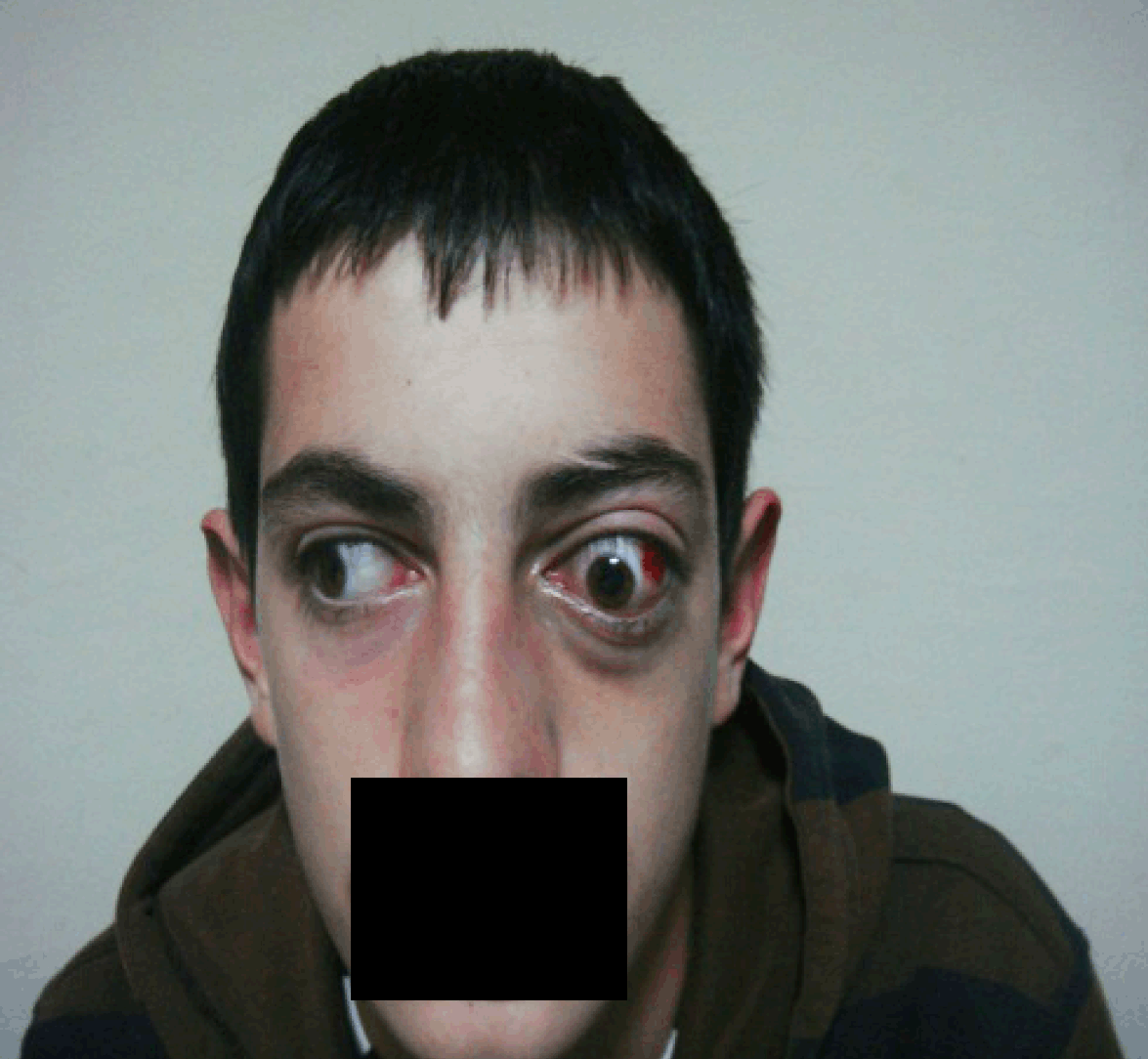
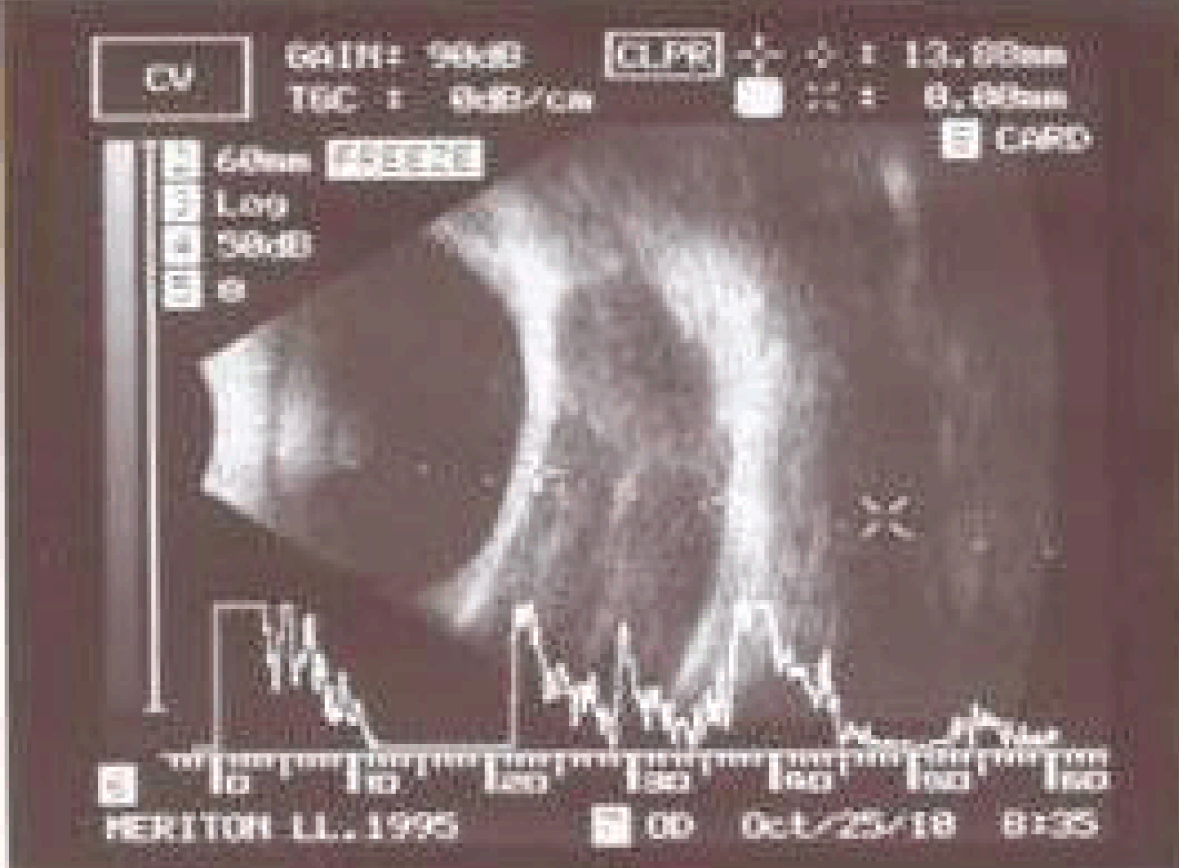
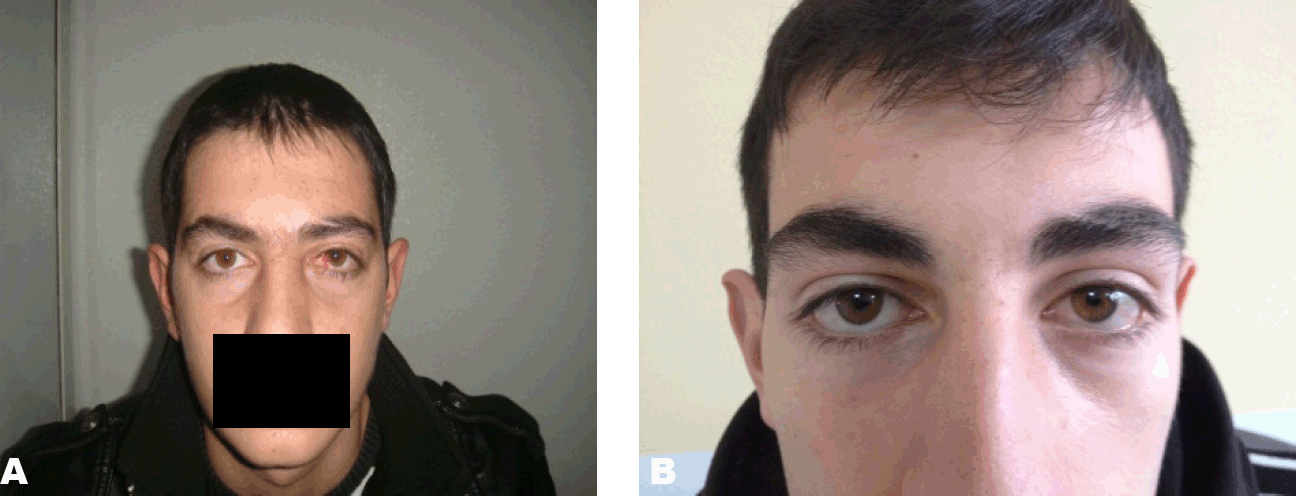
A 15-year-old boy was presented in our institution with a sudden onset of left eye, painful proptosis (4 mm on Hertel) with lateral globe displacement, visual loss (0.6 Snellen), restricted eye movement, diplopia. (Figure 1) No previous history about orbital disease, minor head trauma or upper respiratory tract infections. Anterior segment examination demonstrated diffuse subconjunctival hemorrhage which was located temporally. Bluish conjunctival lesions were associated with swelling involving the superior temporal quadrant. Fundus examination showed initial disc edema with choroidal folds in posterior pole. Patient underwent complete ocular examination, echographic and radiological evaluation. Echography documented retrobulbar mass with low internal reflectivity but highly reflective internal septa. (Figure 2) To establish diagnosis, computed tomography (CT) scan and magnetic resonance imaging scan of the orbit were done. CT scan and MRI (T1- and T2-weighed) scan showed lobulated intraconal mass (16x22 mm) located retrobulbar medially without contrast imbibition. (Figure 3A-B) Despite systemic steroid treatment during two weeks follow-up, the situation was worsened. Visual acuity was limited to 0.2, proptosis and intraocular pressure increased. Corneal exposure problems and relative afferent pupillary defect with manifest papilledema were also increased. As a result, we decided to perform orbital decompression under general anesthesia. The lesion was approached through a medial orbitotomy transconjunctival incision because it can give good access to the deep medial portion of the muscle con to evacuate blood and to make the subtotal resection of tumor. The conjunctiva is opened medially just anterior to the muscle insertion and Tenon’s capsule is separated from the sclera. A 6/0 Vicryl suture is woven horizontally through the muscle insertion 2 mm from its attachment to the sclera. After that we cut the muscle from the globe at its insertion and with scissors opened posterior Tenon’s capsule to expose the intraconal orbital space. We removed the tumor as much as possible, dissected carefully along its surface, and cauterized any vessels gently. We reattached the medial rectus muscle and closed the conjunctiva with running suture 8/0 Vicryl. Antibiotic with steroids‒tobradex drops was applied four times daily for seven days. The surgical treatment was successful. Pathological findings were suggestive of orbital lymphangioma. The postoperative course was uneventful with excellent aesthetic result and improvement of visual acuity (1.0 sc.) with the completely reduction of proptosis, changes in conjunctiva and the fundus of affected eye. (Figure 4A) The patient was discharged after six days. The patient has no shown changes even 27 months after the treatment. (Figure 4B) | ||||||
| ||||||
| ||||||
|
| ||||||
| ||||||
|
Discussion
| ||||||
|
The pathogenesis of orbital lymphangioma is controversial. Harris et al. considered lymphangioma to be isolated from normal orbital vasculature but Wright et al. consider lymphangioma to represent venous anomalies. [1] The clinical course of lymphangioma is slightly variable but the most commonly reported symptoms are acute proptosis and hemorrhage. Although not in our case, this is most common after upper respiratory tract infection. In our case, hemorrhage of the soft and hard palate and intracranial arteriovenous malformation were not present, even though they usually accompany this disease. In acute proptosis in children, in addition to orbital lymphangioma, orbital cellulitis, orbital pseudotumor, and thyroid orbitopathy must also be taken into consideration. This is because they are associated with chemosis and limitation of eye movements with pain during motion. Trauma may also cause it, but is not generally so acute. Embrional sarcoma, or traditionally designated rhabdomyosarcoma, is the most common primary orbital malignancy of childhood. The classic clinical picture is sudden onset and rapid evolution of unilateral proptosis but has a less dramatic course comparing with hemorrhage in orbital lymphangiomas. [1] With regard to treatment, orbital lymphangioma is a challenging disease and sometimes is difficult to treat, with good visual outcome, cosmetic complications and the possibility of frequent recurrences. [2] [3] [7] [10] | ||||||
|
Conclusion
| ||||||
|
Orbital lymphangioma has to be included in the differential diagnosis in any case of acute proptosis, especially in young patients. In cases which this condition causes retrobulbar hemorrhage with acute proptosis associated with exposure keratopathy, secondary glaucoma, compressive optic neuropathy and visual loss, orbital decompression is one of the choices of treatment to restore vision. | ||||||
|
References
| ||||||
| ||||||
|
[HTML Abstract]
[PDF Full Text]
|
|
Author Contributions
Naser Salihu – Substantial contributions to conception and design, Acquisition of data, Analysis and interpretation of data, Drafting the article, Revising it critically for important intellectual content, Final approval of the version to be published Anita Sylaj – Analysis and interpretation of data, Drafting the article, Revising it critically for important intellectual content, Final approval of the version to be published |
|
Guarantor of submission
The corresponding author is the guarantor of submission. |
|
Source of support
None |
|
Conflict of interest
Authors declare no conflict of interest. |
|
Copyright
© Naser Salihu et al. 2014; This article is distributed the terms of Creative Commons Attribution License which permits unrestricted use, distribution and reproduction in any means provided the original authors and original publisher are properly credited. (Please see Copyright Policy for more information.) |
|
|
|
About The Authors
| |||
| |||