| |
|
|
|
Case Report
| ||||||
| Carotid body tumor with thyroid involvement | ||||||
| Hlatshwayo B1, Panicker A2, Tsatsi LDR3 | ||||||
|
1Dip Rad diag, MBChB, Elliot Radiology Depth, Polokwane Hospital University of Limpopo. Polokwane, Northern Province South, South Africa.
2MBBCh, Penicker Alex, Radiology Depth Polokwane Hospital University of Limpopo Polokwane Hospital Northern Province South Africa. 3FCRad(D), Tsasti Darius HOD Radiology Depth Polokwane Hospital, University of Limpopo Northern Province, South Africa. | ||||||
| ||||||
|
[HTML Abstract]
[PDF Full Text]
[Print This Article]
[Similar article in Pumed] [Similar article in Google Scholar] 
|
| How to cite this article: |
| Hlatshwayo B, Panicker A, Tsatsi LDR. Carotid body tumor with thyroid involvement. International Journal of Case Reports and Images 2013;4(8):448–451. |
|
Abstract
|
|
Introduction:
The carotid body tumor (paraganglioma) is a tumor that originates from paraganglion cells. The tumor is usually begnin and non-functional, and can expand early but rarely metastasis. These tumors are rare and make up 65% of all head and neck tumors.
Case Report: Herein we discuss a case of a 66-year-old female patient who presented with a right side neck mass measuring 2x3 cm, soft and non-tender. The mass was gradually increasing in size. Blood pressure 142/182 mmHg, pulse 120 beats/min. Blood workup: Hemoglobin 10.5 g/dL (11.0–15,0 g/dL), platelets count 479x103/µL (150–400x103/µL), thyroid stimulating hormone 0.26 mIU/L (0.34–5.6 mIU/L), thyroxin 13.5 g/dL, Retro viral disease exposed, and liver function test was normal. Conclusion: Carotid body tumors are rare entity; they account for 65% of all head and neck tumors and should be considered in evaluating all lateral neck masses. They are diagnosed in the 4–5th decade of life. Treatment of choice is surgical excision, but their differential diagnosis is important for all neck masses and the definite diagnosis is needed before surgery. | |
|
Keywords:
Carotid body tumor, Lyre sign, Chemoreceptor, Neural crest, Flow voids
| |
|
Introduction
| ||||||
|
The carotid body is a small oval structure, with an irregular surface and is pink in color measuring 3–5 mm in diameter. [1] Ten percent of tumors are bilaterally located in the bifurcations of common carotid arteries. [2] The paraganglion are tumors that originate from paraganglion cells of the neural crest and develop in the paravetebral region associated with blood vessels, skull nerves and the venous system. This tumor is usually benign and nonfunctional; it expands early and rarely metastasizes. They are classified according to its locations: carotid body, jugular vein, vagal body, orbital and laryngeal. They sometimes arise within the abdominal cavity usually in the retroperitoneal space. They may originate from little chemoreceptor organs which are found in the adventitia of common carotid arteries bifurcation. Paraganglion are rare and make up 65% of all head and neck tumors. | ||||||
|
Case Report
| ||||||
|
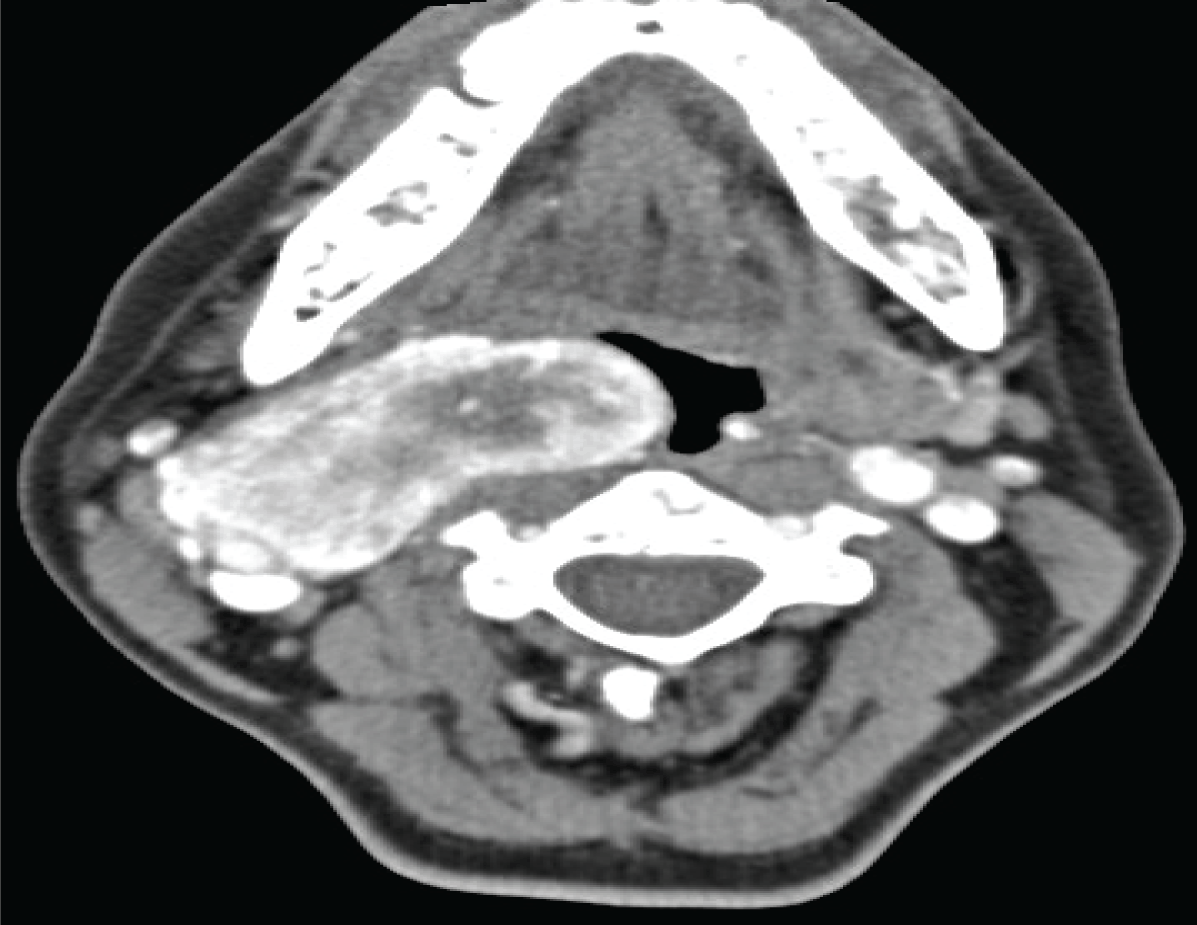
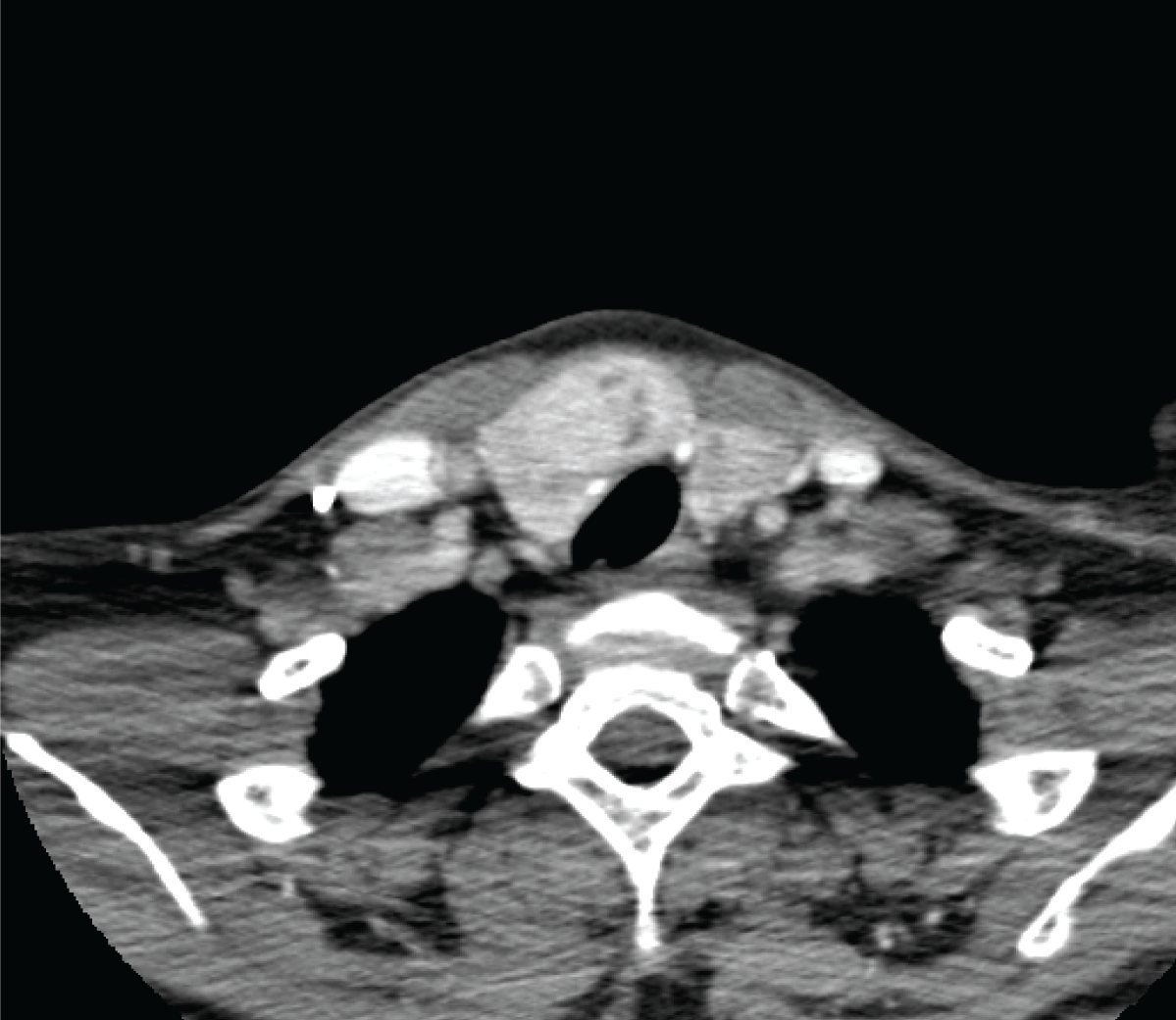
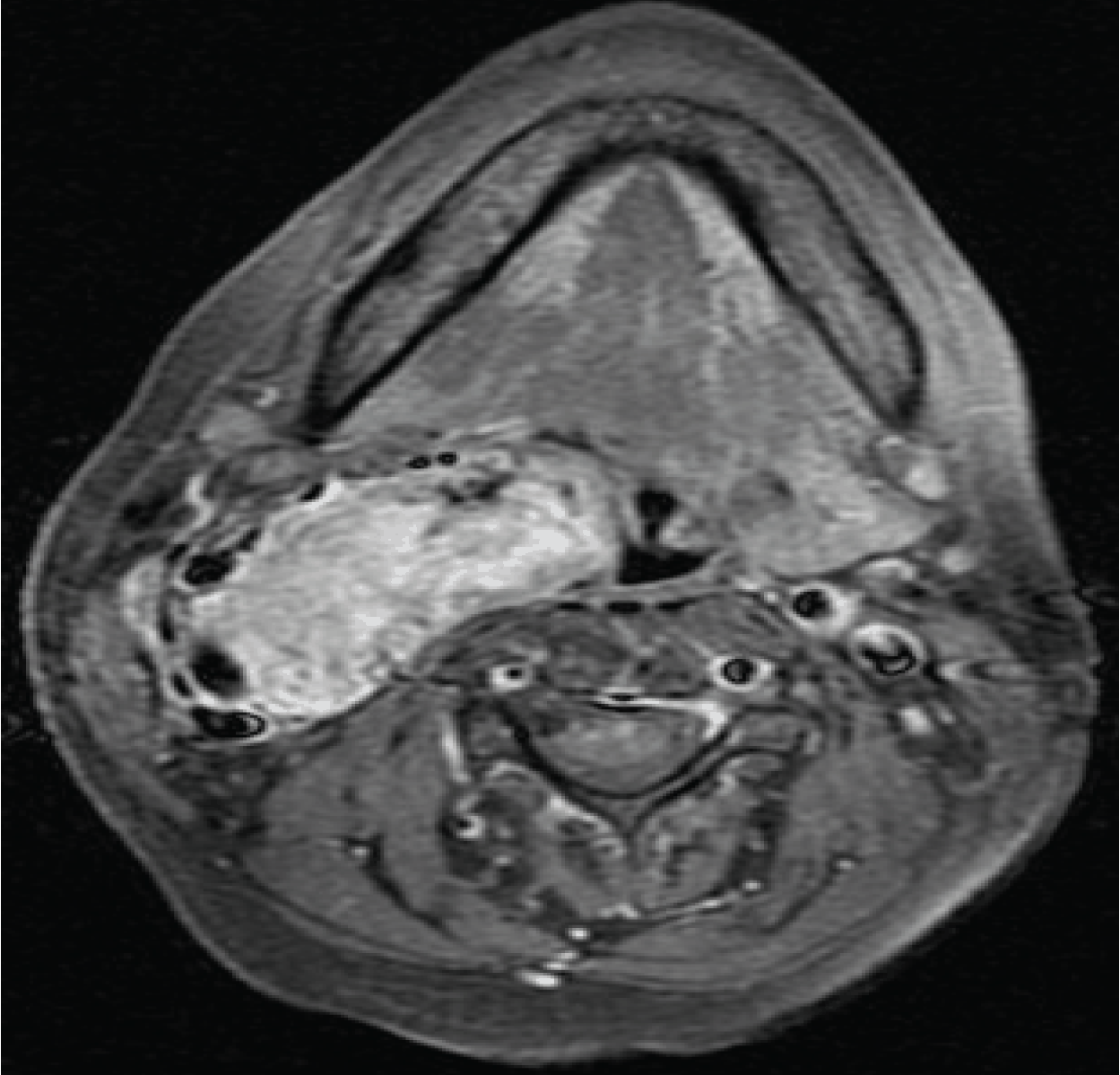
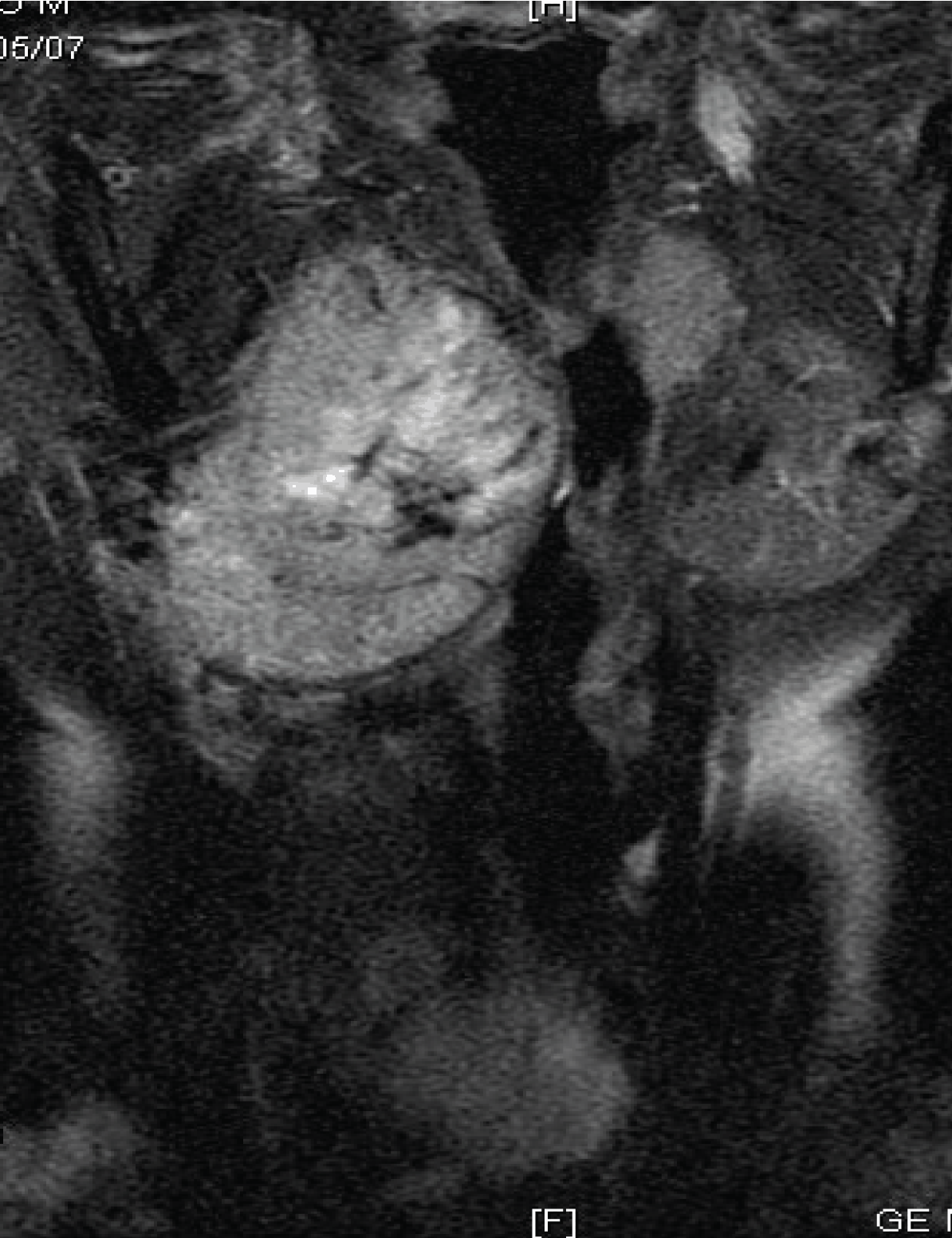
We are presenting a case of a 66-year-old female patient who complained of right side neck mass measuring 2x3 cm, soft and non-tender. The mass was gradually increasing in size. Clinical examination showed blood pressure 142/182 mmHg, pulse 120 beats/min. Laboratory examination showed blood workup: hemoglobin 10.5 g/dL (11.0–15.0 g/dL), platelets count 479x103/µL (150–400x103/µL), thyroid stimulating hormone 0.26 mIU/L (0.34–5.6 mIU/L), thyroxin 13.5 g/dL, HIV-1,2 and liver function test were normal. Radiological features: Characteristic of carotid body tumors is the splaying of both internal and external carotid arteries described as the lyre sign. The computed tomography (CT) scan showed soft tissue density on non-enhanced contrast as well as bright and rapid enhancement post contrast. (Figure 1) (Figure 2) Magnetic resonance imaging (MRI): T1WI the tumor was iso to hypo tense compared to the muscle. There was a salt and pepper appearance, representing a combination of punctuate region of the hemorrhage or slow flow (salt) and flow voids (pepper). There was intense enhancement following gadolinium. T2WI the tumor was high signal intensity compared to the muscle. (Figure 3) The salt and pepper appearance could be seen on T2WI (Figure 4). Angiogram: The splaying of carotid vessels lyre sign was identified by an intense blush in the tumors with early vein filling due to arterovenous shunting. Malignant transformations were encountered in 2–36% with metastasis common in bones, lungs and livers. (Figure 4) Differential diagnoses were as follows:
| ||||||
|
| ||||||
|
| ||||||
| ||||||
|
| ||||||
|
Discussion
| ||||||
|
In 1743, Van Haller first described carotid body tumors. It is a round reddish brown to tan structure found in the adventitia at the bifurcation of common carotid arteries, on the posteromedial wall of the vessels. [1] [2] They originate from paraganglion cells of neural crest. [2] They may also originate from little chemoreceptor organs. [2] Carotid body tumors are rare entities; they account for 65% of all head and neck tumors, and should be considered in evaluating every lateral neck mass. [2] [3] Malignant transformation is encountered in 2–36% cases, with metastasis common in bones, lungs, livers and regional lymph nodes. [2] They are diagnosed in the 4–5th decade of life and have a higher female prevalence. [4] When familial, they are usually autosomal dominant inheritance and associated with multiple endocrine neoplasia (MEN IIa, MEN IIb), tuberous sclerosis, neurofibromatosis NF1 and Von Hippel–Lindau disease. [4] The following are different types of carotid body tumors:
Sporadic form is the most common type, representing approximately 85% of carotid body tumors. Hypoxia, which includes those patients living at a high altitude. Hyper plastic form is also seen in patients who has chronic obstructive pulmonary disease or cyanotic heart disease. Shamblin's classification of carotid body tumors are: [4] Tumor size is important because those greater than 5 cm in diameter have a markedly higher incidence of complications. [2] Management: Surgical excision is the treatment of choice for carotid body tumors. However, tumor size and other patient co-morbidities determine whether embolization is necessary; vascular surgeons generally perform transcatheter embolization with plastic particles, ethanol or glue. [5] For small tumors that are less than 3 cm surgery is recommended; for larger tumors in patients who are not surgical candidates, radiations with or without radiation embolization is the treatment of choice. [6] Embolization may also have a role in palliative therapy. Our patient was referred to a vascular surgeon for embolization and surgery but she refused surgery and opted to consult the traditional healer. We contacted her and she told us that she is feeling much better after consultation with traditional healer. Complication: One possible complication of resection of carotid body tumors is stroke. | ||||||
|
Conclusion
| ||||||
|
Carotid body tumors are rare tumors and treatment is surgical; the need to know the differential diagnosis and establish the definitive diagnosis is important. In our setting most patients are referred at later stages with large tumors. The treatment of choice for most carotid body tumors is surgical excision, but their location is in close approximation to important vessels and nerves. Tumor size is important because those greater than 5 cm in diameter have a higher incidence of complication. | ||||||
|
References
| ||||||
| ||||||
|
[HTML Abstract]
[PDF Full Text]
|
|
Author Contributions
Hlatshwayo B – Substantial contributions to conception and design, Acquisition of data, Analysis and interpretation of data, Drafting the article, Revising it critically for important intellectual content, Final approval of the version to be published Panicker A – Drafting the article, Revising it critically for important intellectual content, Final approval of the version to be published Tsatsi LDR – Drafting the article, Revising it critically for important intellectual content, Final approval of the version to be published |
|
Guarantor of submission
The corresponding author is the guarantor of submission. |
|
Source of support
None |
|
Conflict of interest
Authors declare no conflict of interest. |
|
Copyright
© Hlatshwayo B et al. 2013; This article is distributed the terms of Creative Commons Attribution License which permits unrestricted use, distribution and reproduction in any means provided the original authors and original publisher are properly credited. (Please see Copyright Policy for more information.) |
|
|