
  |

|
 |
|
Case Report
| ||||||
| Metastatic squamous cell carcinoma of jejunum of unknown primary masquadering as superior mesentric artery syndrome: A case report | ||||||
| Harnam Singh1, Pankaj Shivhare2, Pankaj Dugg2, Sushil Mittal3, Ashwani Kumar4, Sona Goyal5 | ||||||
|
1MS, Assistant Professor, Department of Surgery, Govt. Medical College, Patiala, India.
2MS, Junior Resident, Department of Surgery, Govt. Medical College, Patiala, India. 3MS, Associate Professor, Department of Surgery, Govt. Medical College, Patiala, India. 4MS, Professor, Department of Surgery, Govt. Medical College, Patiala, India. 5MD, Junior Resident, Department of Pathology, Govt. Medical College, Patiala, India. | ||||||
| ||||||
|
[HTML Abstract]
[PDF Full Text]
[Print This Article]
[Similar article in Pumed] [Similar article in Google Scholar] 
|


| How to cite this article: |
| Singh H, Shivhare P, Dugg P, Mittal S, Kumar A, Goyal S. Metastatic squamous cell carcinoma of jejunum of unknown primary masquadering as superior mesentric artery syndrome: A case report. International Journal of Case Reports and Images 2013;4(8):411–414. |
|
Abstract
|
|
Introduction:
Metastatic squamous cell carcinoma of proximal jejunum is rare presentation, in which the diagnosis is made only after biopsy. A rare case of metastatic squamous cell carcinoma of jejunum with unknown primary is reported here.
Case Report: A 75-year-old female was presented with recurrent episodes of nausea and vomiting. On the basis of radiological investigation, diagnosis of superior mesenteric artery syndrome was made. On exploration growth was present in proximal jejunum. Resection of the growth with adequate margins and primary anastomosis was done. Histopathology showed metastatic squamous cell carcinoma. Whole body positron emission tomography scan shows no evidence of primary. Conclusion: Jejunum is rare site for squamous cell carcinoma of metastatic origin of unknown primary and can be confirmed only on biopsy. | |
|
Keywords:
Squamous cell carcinoma, Intestinal obstruction, Superior mesenteric artery (SMA) syndrome
| |
|
Introduction
| ||||||
|
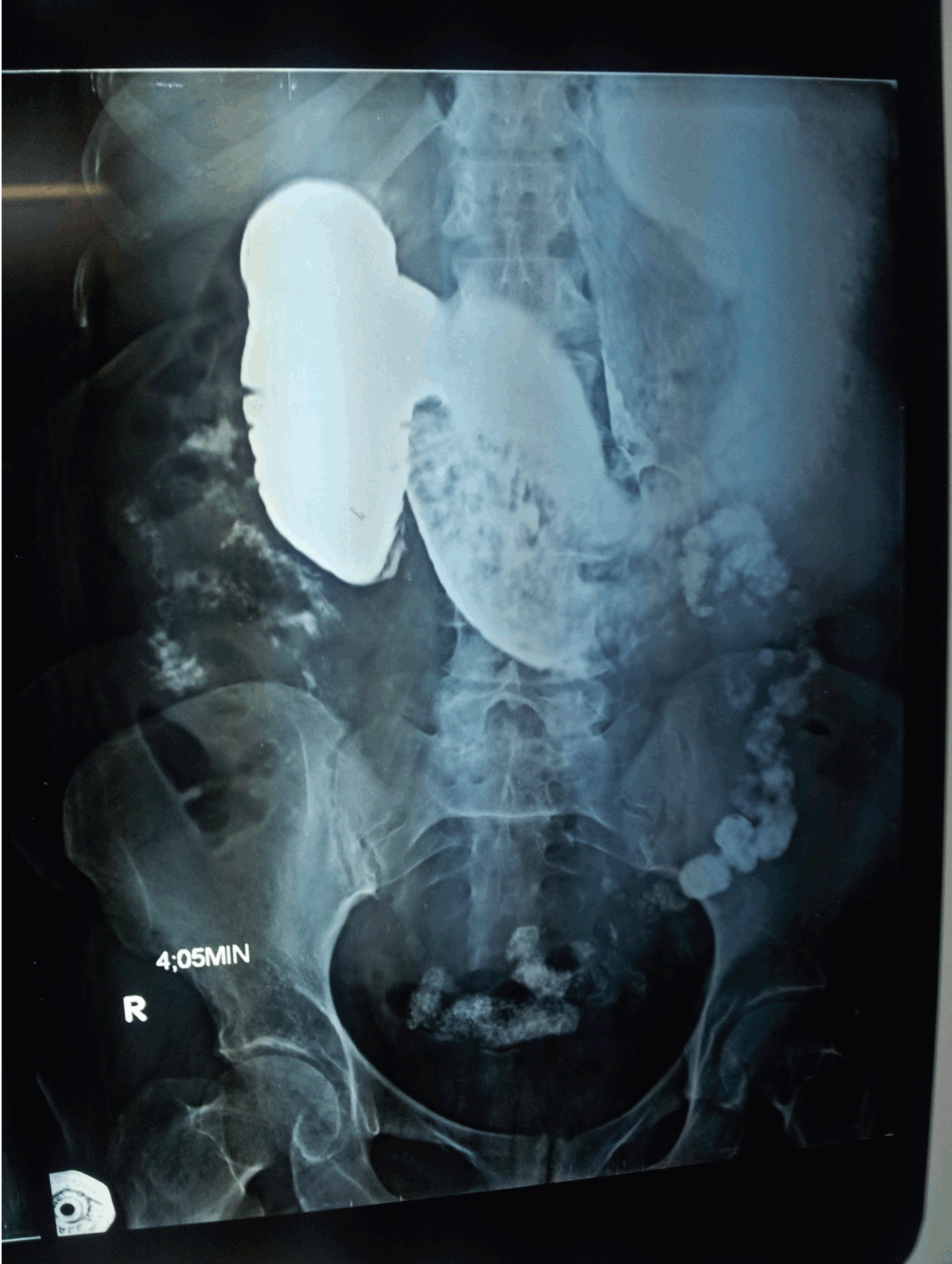
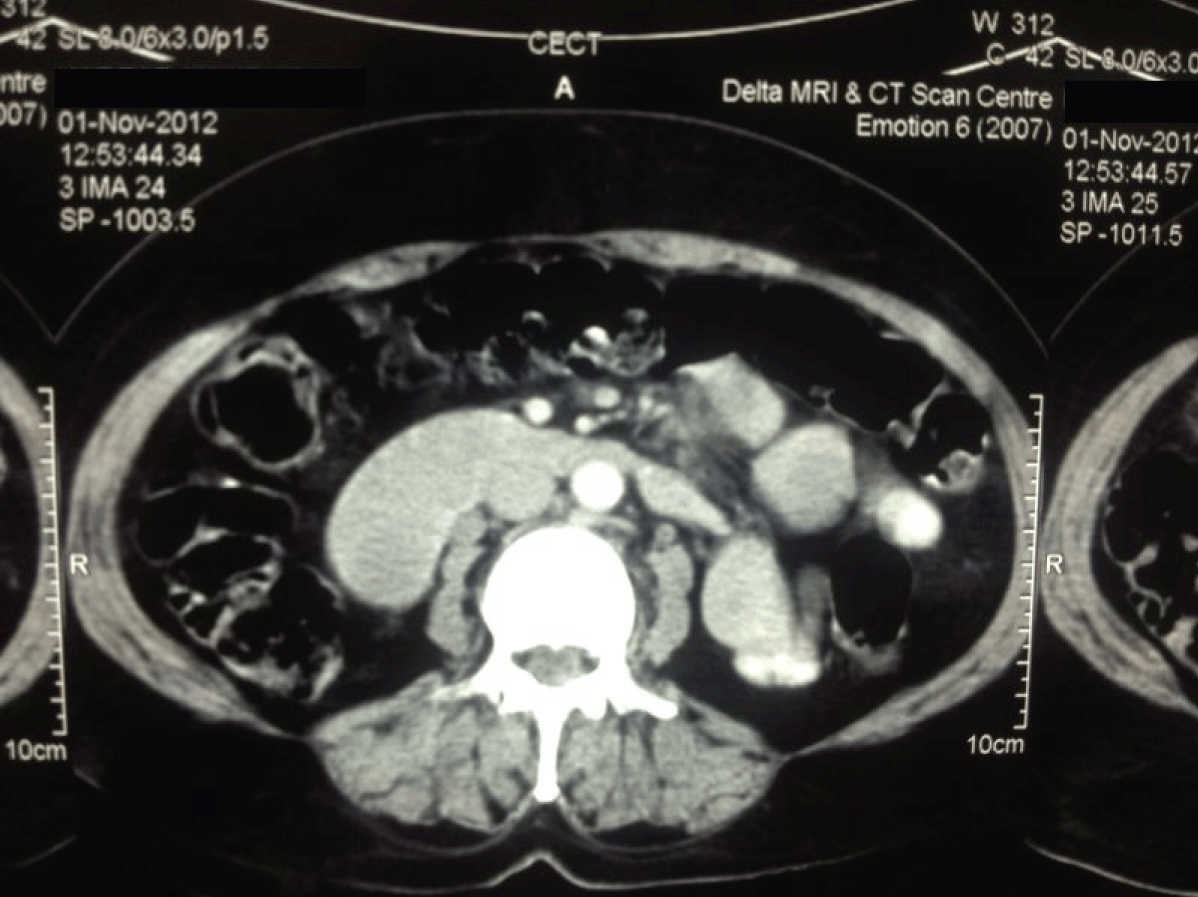
Metastatic carcinoma of unknown primary is a common problem, accounting for up to 10–15% of all solid tumors at presentation. [1] Jejunum cancer is rare, and is difficult to diagnose before surgery. [2] Compared to other gastrointestinal malignancies such as gastric cancer and colorectal cancer it is relatively rare. [3] We report a patient in whom preoperative barium meal follow through (BMFT) showed dilatation of the 2nd and 3rd part of the duodenum and contrast-enhanced computed tomography (CECT) whole abdomen reported as superior mesenteric artery (SMA) syndrome. On exploration proximal jejunal mass was found and in biopsy carcinoma, squamous cell, NOS, metastatic was found. Postoperative positron emission tomography (PET) scan showed no evidence of primary. | ||||||
|
Case Report
| ||||||
|
A 75-year-old female, house wife was presented to the outpatient department with complains of nausea and vomiting for last one week. She had been having similar complains in the past on and off for about 4–6 months, which was relieved on its own. There was no history of abdominal distension or weight loss. Bowel/bladder habits were normal. Patient was admitted and work up was done. General physical and systemic examination which included breast and axilla was within normal limits. Biochemical profile was within normal limits. Barium meal follow through 4:05 min film showed dilated duodenal loop with small amount of contrast in the jejunum. (Figure 1) The CECT scan of whole abdomen showed compression of third part of the duodenum in between the aorta and superior mesenteric artery (SMA), with dilatation of 1st and 2nd part of duodenum—SMA syndrome. (Figure 2) Considering the diagnosis as SMA syndrome based on CECT report, duodenojejunostomy was planned. On exploration omentum was adherent to proximal jejunum. Growth was felt in proximal jejunum about size 4x5 cm approximately 7–8 cm distal from the duodenojejunal junction. Jejunum was adherent to the root of mesentery. No lymph node was palpable. Resection and primary anastomosis was done. Rest of the viscera grossly appeared normal. Resected specimen showed normal mucosal folds and mass. (Figure 3) Histopathological report showed squamous cell carcinoma, NOS type, metastatic. The section showed normal intestinal mucosa which signified that primary tumor was not arising from the intestine and it was metastatic in nature. Figure 4 shows malignant squamous epithelial cells with increased N:C ratio, hyperchromatism, pleomorphism and increased keratin formation. Figure 5 is a high power section showing squamous malignant epithelial cells with increased N:C ratio, hyperchromatism and pleomorphism. Acute inflammatory infilterate such as neutrophils, eosinophils, lymphocytes and plasma cells were also seen. In the follow-up peroid Pap-smear was done which showed reactive hyperplasia followed by cervical biopsy that showed nabothian cyst. IDL was done which was within normal limit. Upper and lower gastrointestinal endoscopy was done and no lesions were detected. The PET scan of whole body was done which reported no evidence of active metabolic disease anywhere in the body with mild (FDG) uptake seen in bilateral tonsils and posterior part of tongue. | ||||||
| ||||||
|
| ||||||
| ||||||
| ||||||
| ||||||
|
Discussion
| ||||||
|
Metastatic carcinoma of unknown primary account for up to 10–15% of all solid tumors at presentation. [1] For small intestine, melanoma, lung, breast, colon and kidney are the most frequent primary sites. Metastatic spread from primary lung cancer to the small intestine is more frequent than to stomach and colon. Virtually, all primary cancers can occasionally lead to metastases in the small intestine and, because of the low frequency of primary small bowel cancer, a high proportion of small intestinal malignancies are metastatic. The pathogenesis of intestinal metastasis usually involves hematogenous spread of tumor cells.[4] Malignant small intestinal tumors frequently develop in persons aged 40–79 years. The male-to-female ratio is 1.4:1. [5] Concerning common sites, jejunum cancer develops in the jejunal region 50–60 cm distant from Treitz' ligament in more than 80% of patients. [5] [6] [7] Clinical symptoms mainly consist of ileus, hemorrhage of the digestive tract, and phymas on palpation. In addition, anemia is observed. Occlusive symptoms are frequent in the presence of cancer. [7] For diagnosis, contrast-enhanced radiography of the small intestine, small intestinal endoscopy, abdominal angiography, abdominal echography, and abdominal CT scan are employed. As characteristic findings on contrast-enhanced radiography of the small intestine, Good indicated that circumferential, small shadow defects with a clear border, the disappearance of normal mucosa and ulcer formation, irregular narrowing of the lumen around the lesion, and intestinal dilatation on the orifice side of the cancer lesion were important. [6] It is relatively rare to make a definitive diagnosis before surgery, suggesting difficulty in diagnosis. According to Moriyama et al., a definitive diagnosis was made via endoscopic biopsy in 28.3% of jejunal and 5.7% of ileal cancer patients. [8] According to some studies, the 5-year survival rates of primary small intestinal cancer patients range from 9.1–38.5%. [8] [9] James et al. investigated 144 patients with small intestinal tumors and reported that the 5-year survival rate for small intestinal cancer was 59%. [10] In particular, the 5-year survival rate in patients undergoing total resection was 81%. However, the prognosis of small intestinal cancer is poor, possibly because cancer is advanced at the time of detection in many patients due to a delayed diagnosis. | ||||||
|
Conclusion
| ||||||
|
Metastatic squamous cell carcinoma of the jejunum is sufficiently rare to justify a case report. Though the this case was typical with regard to age and symptom of vomiting because of cancer-related occlusion, but atypical with regard to location of the tumor which was present 7–8 cm from duodenojejunal junction junction whereas the common location is 50–60 cm distant from Treitz’ ligament and it was masquadering as superior mesenteric artery syndrome with regard to symptoms and contrast-enhanced computed tomography report. However, metastatic squamous cell carcinoma in jejunum with unknown primary is rare presentation confirmed only in biopsy. | ||||||
|
References
| ||||||
| ||||||


|
[HTML Abstract]
[PDF Full Text]
|
|
Author Contributions
Harnam Singh – Substantial contribution to conception and design, Revising it critically for important intellectual content, Final approval of the version to be published Pankaj Shivhare – Substantial contribution to conception and design, Acquisition of data, analysis and interpretation of data, Drafting the article, Final approval of the version to be published Pankaj Dugg – Acquisition of data, analysis and interpretation of data, Drafting the article, Final approval of the version to be published Sushil Mittal – Substantial contribution to conception and design, Revising it critically for important intellectual content, Final approval of the version to be published Ashwani Kumar – Analysis and interpretation of data, Revising it critically for important intellectual content, Final approval of the version to be published Sona Goyal – Acquisition of data, Revising it critically for important intellectual content, Final approval of the version to be published |
|
Guarantor of submission
The corresponding author is the guarantor of submission. |
|
Source of support
None |
|
Conflict of interest
Authors declare no conflict of interest. |
|
Copyright
© Harnam Singh et al. 2013; This article is distributed the terms of Creative Commons Attribution License which permits unrestricted use, distribution and reproduction in any means provided the original authors and original publisher are properly credited. (Please see Copyright Policy for more information.) |
|
|