
 |

|
 |
|
Case Report
| ||||||
| Incidental cystic duct lymph node tuberculosis | ||||||
| Gaurav Sali1, Iqbal Ali2, Gurmohan Sethi3, Gurjit Singh4 | ||||||
|
1Assistant Professor, Department of Gen. Surgery, Padm. Dr. DY Patil Medical College, Pimpri, (Pune), Maharashtra, India.
2Associate Professor, Department of Gen. Surgery, Padm. Dr. DY Patil Medical College, Pimpri, (Pune), Maharashtra, India. 3Resident in Gen. Surgery, Resident, Department of Gen. Surgery, Padm. Dr. DY Patil Medical College, Pimpri (Pune), Maharashtra, India. 4Professor, Department of Gen. Surgery, Padm. Dr. D.Y. Patil Medical College, Pimpri (Pune), Maharashtra, India. | ||||||
| ||||||
|
[HTML Abstract]
[PDF Full Text]
[Print This Article]
[Similar article in Pumed] [Similar article in Google Scholar] 
|


| How to cite this article: |
| Sali G, Ali I, Sethi G, Singh G. Incidental cystic duct lymph node tuberculosis. International Journal of Case Reports and Images 2013;4(6):337–340. |
|
Abstract
|
|
Introduction:
Tuberculosis is one of the most widespread diseases worldwide. Though it can affect any organ in body, hepatobiliary involvement by tuberculosis is uncommon. Even within hepatobiliary system isolated cystic duct lymph node tuberculosis is very rare.
Case Report: We report a case of 30-year-old female who presented with pain in right hypochondrium, anorexia and nausea. Ultrasonography of the abdomen revealed cholelithiasis. Cholecystectomy was done along with excision of incidentally found cystic duct lymph node. Histopathology confirmed tuberculosis of cystic duct lymph node with chronic cholecystitis. Antitubercular chemotherapy was given. Conclusion: Primary hepatobiliary tuberculosis can present as isolated cystic duct lymph node tuberculosis. Histopathological diagnosis is mandatory for confirmation and antitubercular chemotherapy must be adviced to prevent further complication. | |
|
Keywords:
Cystic duct lymph node, Tuberculosis, Hepatobiliary
| |
|
Introduction
| ||||||
|
Isolated biliary involvement in tuberculosis is extremely rare. [1] Cystic duct lymph node tuberculosis without affecting gallbladder is also rare. The pathogenesis of biliary tuberculosis includes direct biliary contaminations from swallowed mycobacterium, extension from adjacent affected structures and rarely by hematogenous spread. | ||||||
|
Case Report
| ||||||
|
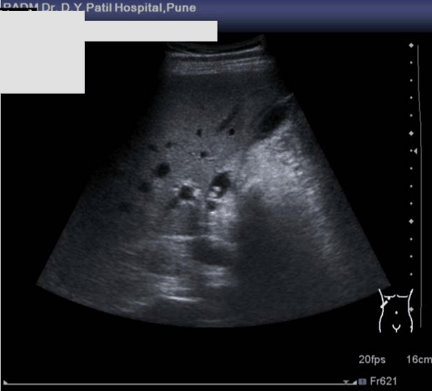
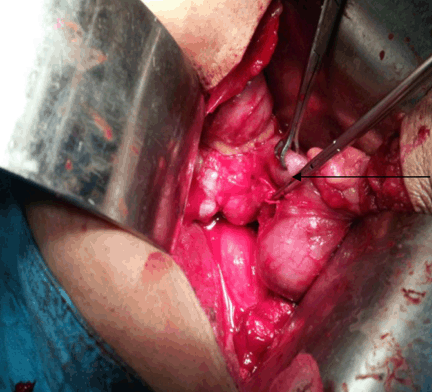
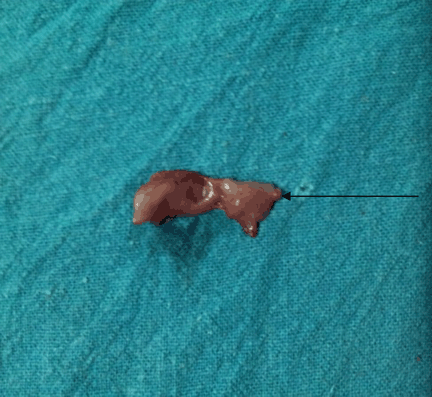
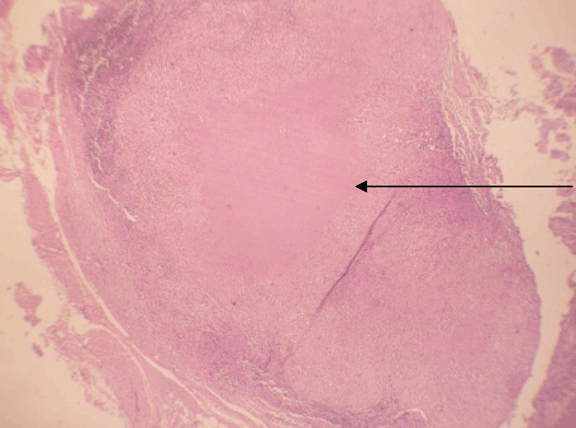
A 30-year-old female was admitted with complaints of pain in right hypochondrium, anorexia and nausea from five months. There was no history of vomiting, fever or jaundice. There was no past history of chronic cough with hemoptysis. There was no family history of tuberculosis. General physical examination was unremarkable. Liver function test was also normal. Nothing abnormal was detected in chest X-ray. Ultrasonography of abdomen revealed dilated gallbladder with multiple gallstones. (Figure 1) No other abnormal finding was reported. Cholecystectomy was performed. Peroperatively a firm cystic duct lymph node measuring approximately 2 cm was found incidentally and excised. (Figure 2) Gross appearance of cut section of this lymph node showed cheesy white material. (Figure 3) Histopathological examination of this lymph node showed caseating necrosis (Figure 4) in granuloma associated with Langhans type of giant cells suggestive of tuberculosis while gallbladder showed features of chronic cholecystitis only. Patient was subjected to computed tomography scan of abdomen postoperatively to locate any other lesion in abdomen and specifically involvement of other lymph nodes in porta hepatis. Computed tomography showed no evidence of abdominal lymphadenopathy. Then patient was treated by antitubercular chemotherapy. | ||||||
| ||||||
| ||||||
| ||||||
| ||||||
|
Discussion
| ||||||
|
Any organ system in body can be affected by tuberculosis. Tuberculosis is one of the most widespread diseases worldwide with an estimated 20–43% of the world’s population infected with Mycobacterium tuberculosis. [2] In India, nearly two million people develop tuberculosis per year constituting major health problem of the country. India accounts for one-fifth of the global tuberculosis incident cases. [3] According to World Health Organisation guidelines, [4] extrapulmonary tuberculosis (EPTB) is considered as separate entity only if there is no associated pulmonary. Abdominal tuberculosis constitutes 3% of extrapulmonary tuberculosis in HIV-negative patients. [5] Tuberculosis of the cystic duct lymph node without involvement of gallbladder is also exceedingly rare. [1] [6] In a study done by Amarapurkar et al., 38 patients of hepatobiliary tuberculosis (HBTB) were reported amongst 242 tuberculosis patients. [7] Among this group only 12 patients were presented with biliary obstruction due to lymph node masses and none having isolated cystic duct lymph node involvement. The HBTB has been classified into three varieties viz. hepatic, biliary and mixed variety. [7] In their classification and its subdivision, isolated cystic duct lymph node involvement does not find any place probably because of its rarity. In another study over a 10-year period only 14 patients of HBTB were identified from total of 1888 cases of tuberculosis [8] and pure biliary involvement was seen only in two cases. Diagnosis of EPTB is always a challenge. Preoperative diagnosis of tuberculosis may not be possible in cases who present due to another pathology. Diagnosis of tuberculosis is established when at least one of the following criteria is found:
Tuberculosis of the cystic duct lymph node is rare and usually it is associated with tuberculosis of gallbladder. [9] Our case is similar to that reported by de Melo et al. [6] where in gallstone disease was present but tuberculosis was seen only in cystic lymph node but not in gallbladder. If untreated it may spread to involve gallbladder and results in formation of biliary stricture, biliary fistulae that may progress to bilioma. [10] Antitubercular chemotherapy following cholecystectomy for cholelithiasis will result in cure. After extensive search through English literature on Pubmed, J- STAGE, CiNii, PLoS and google we found only two cases of isolated cystic duct lymph node tuberculosis till date. | ||||||
|
Conclusion
| ||||||
|
Tuberculous involvement of isolated cystic duct lymph node in association with cholelithiasis is extremely rare. Histopathological confirmation from excised tissue should be followed up with full course of antitubercular chemotherapy in order to avoid complications and affect cure. | ||||||
|
References
| ||||||
| ||||||

|
[HTML Abstract]
[PDF Full Text]
|
|
Author Contributions
Gaurav Sali – Conception and design, Acquisition of data, Analysis and interpretation of data, Drafting the article, Critical revision of the article, Final approval of the version to be published Iqabal Ali – Conception and design, Acquisition of data, Analysis and interpretation of data, Drafting the article, Critical revision of the article, Final approval of the version to be published Gurmohan Sethi – Acquisition of data, Analysis and interpretation of data, Drafting the article. Final approval of the version to be published Gurjit Singh – Conception and design, Acquisition of data, Analysis and interpretation of data, Drafting the article, Critical revision of the article, Final approval of the version to be published |
|
Guarantor of submission
The corresponding author is the guarantor of submission. |
|
Source of support
None |
|
Conflict of interest
Authors declare no conflict of interest. |
|
Copyright
© Gaurav Sali et al. 2013; This article is distributed the terms of Creative Commons Attribution License which permits unrestricted use, distribution and reproduction in any means provided the original authors and original publisher are properly credited. (Please see Copyright Policy for more information.) |
|
|