|
|
|
|
Case Report
| ||||||
| Choledochal cyst with portal hypertension: A case report | ||||||
| Rahul Roy1, Jyoti Bansal1, Yeshwanth Rajagopal1, Rajendra mandia2, Raj Kamal Jenaw3 | ||||||
|
1Resident, General surgery, S M S Medical College, Jaipur, Rajasthan, India.
2Associate Professor, General surgery, S M S Medical College, Jaipur, Rajasthan, India. 3Professor, General surgery, S M S Medical College, Jaipur, Rajasthan, India. | ||||||
| ||||||
|
[HTML Abstract]
[PDF Full Text]
[Print This Article]
[Similar article in Pumed] [Similar article in Google Scholar] 
|
| How to cite this article: |
| Roy R, Bansal J, Rajagopal Y, Mandia R, Jenaw RK. Choledochal cyst with portal hypertension: A case report. International Journal of Case Reports and Images 2012;3(12):20–24. |
|
Abstract
|
|
Introduction:
Choledochal cysts in adults are commonly associated with hepatobiliary pathology and complications of previous cyst related procedures. Portal hypertension is a rare complication of choledochal cyst. The treatment of choledochal cyst complicated by portal hypertension has evolved from internal drainage of cysts to single stage excision of cyst with bilio-enteric anastomosis.
Case Report: A 15-year-old female presented with typical triad of abdominal pain, abdominal lump and jaundice. Magnetic resonance cholangiopan-creatography (MRCP) was suggestive of type-I choledochal cyst with portal hypertension. An upper gastrointestinal endoscopy revealed grade 1 esophageal varices with proximal gastropathy. Intraoperatively, the posterior wall of the choledochal cyst was densely adherent to the portal vein and hence a partial excision of cyst with stripping of the mucosa of the posterior wall of the cyst along with Roux-en-Y hepaticojejunostomy was done. Conclusion: Single stage excision of choledochal cyst with bilio-enteric anastomosis is the treatment of choice of choledochal cyst with portal hypertension. Portal decompression is reserved for cases with extensive collaterals in the hepatoduodenal ligament. | |
|
Keywords:
Complicated choledochal cyst, Portal hypertension
| |
|
Introduction
| ||||||
|
Choledochal cyst is predominantly a disease of childhood. However, about 20% cases are diagnosed in adults. With the recent advances in imaging technology the incidence of choledochal cyst is increasing. Choledochal cyst in adults are commonly associated with hepatobiliary pathology and complications of previous cyst related procedures. Portal hypertension is a rare complication of choledochal cyst. The treatment of choledochal cyst complicated by portal hypertension has evolved from internal drainage of cyst to single stage excision of cyst with bilioenteric anastomosis. Portal decompression is reserved for cases with extensive collaterals in the hepatoduodenal ligament. [1] [2] Here we report a case of choledochal cyst with portal hypertension. | ||||||
|
Case Report
| ||||||
|
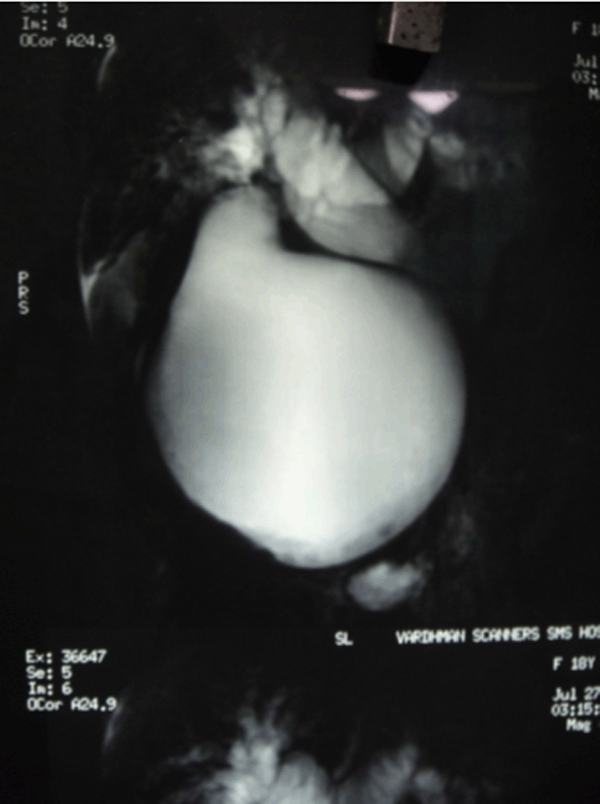
A 15-year-old female was presented with typical traid of abdominal pain and abdominal lump for one year and jaundice for eight months. For last two months, she also had pruritus with passage of clay colored stools. There was no previous history of acute cholecystitis, pancreatitis, hematemesis or melena. On biochemical investigations, hemoglobin was 8.3 g/dL, serum bilirubin 6.3 mg/dL, serum SGOT 258 U/L, serum SGPT 105 U/L, serum alkaline phosphatase 711 IU/L and albumin-globulin ratio was 1:1.2. Viral markers for hepatitis B and hepatitis C were negative. Abdominal ultrasonography showed a large cystic lesion of size 11.5x13 cm in epigastric region, hepatosplenomegaly with heterogenous coarse echotexture of liver, dilated intrahepatic biliary radicle (IHBR) and common bile duct (CBD). Proximal CBD measured 2.2 cm with non- visualization of distal portion. On further investigating the patient, magnetic resonance cholangiopancreatography (MRCP) showed a large cystic dilatation of CBD measutring 11.8x11.6x11.6 cm (type-I choledochal cyst) with minimum sludge in dependent position likely to be choledochal cyst. Also seen were dilated IHBR and hepatic ducts, nodular liver, splenomegaly, displaced portal vein with recanalization of left umbilical vein and ascites (Figure 1). An upper gastrointestinal endoscopy revealed grade 1 esophageal varices with proximal gastropathy. Serum-ascites albumin gradient (SAAG) was >1.1 g/dL wich was suggestive of portal hypertension. A preoperative diagnosis of choledochal cyst with portal hypertension was made and single stage operative procedure which included excision of the choledochal cyst with bilioenteric anastomosis was planned. Intraoperatively, large focal segmental dilation of CBD below the cystic duct (type-IB choledochal cyst) displacing the portal vein on left with dense adhesions between the portal vein and posterior wall of the choledochal cyst, and splenomegaly with multiple collaterals in the hepatoduodenal ligament were evident. The posterior wall of the choledochal cyst could not be separated from the portal vein; so partial excision of the cyst with stripping of the mucosa of the posterior wall of the cyst along with a Roux-en-Y hepaticojejunostomy was performed. The postoperative period was uneventful and the histopathological examination was suggestive of an inflamed choledochal cyst. At 16 months of follow-up the patient was well with complete regression of esophageal varices. | ||||||
| ||||||
|
Discussion
| ||||||
|
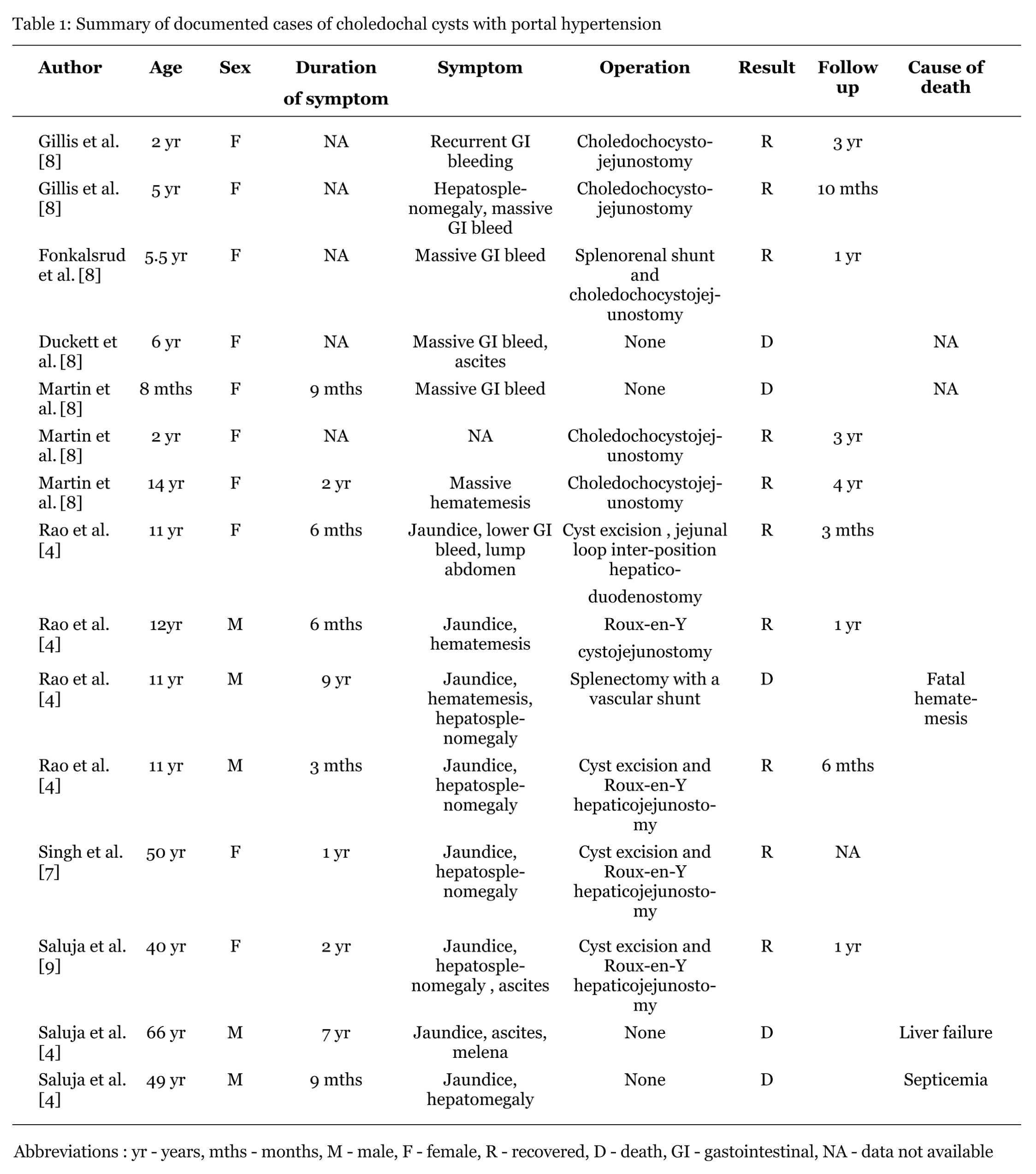
With advancement of imaging modality, incidence of adult choledochal cyst is on rise. Incidence in Asia is somewhat higher than in western countries. The reason for this geographical difference is still unclear. [1] [2] There is also an unexplained female preponderance with female:male ratio commonly reported as 4:1. The most widely accepted hypothesis regarding etiology is an anomalous arrangement of the pancreaticobiliary ductal junction. [3] [4] Choledochal cyst is a disease of infancy and childhood but about 20% are not diagnosed until adulthood. [5] [6] [7] Choledochal cysts in adults are more commonly associated with hepatobiliary pathology and complications of previous cyst related procedures. [1] [6] [7] The complications include cystolithiasis, hepaticolithiasis, cholangitis, calculous cholecystitis, pancreatitis, pancreatic duct abnormalities, malignancy and portal hypertension. Cystolithiasis is the most frequent complication in adults with choledochal cyst with a prevalence rate ranging from 2–72% [7]. The treatment of choice of choledochal cyst is excision of cyst with bilioenteric anastomosis. In conditions where complete excision of cyst is not possible due to adhesion with vital structures, partial excision of cyst with stripping of mucosa of the part of cyst left in-situ can be done as stripping of the mucosa removes the tissue with malignant potential. Portal hypertension is a rare complication of long standing choledochal cyst manifested clinically as hepatosplenomegaly, jaundice, hematemesis, melena and ascites. Portal hypertension in patients of choledochal cyst may be due to extrahepatic biliary obstruction leading to secondary biliary cirrhosis, recurrent inflammation leading to portal vein thrombosis, direct compression of portal vein by choledochal cyst or associate congenital hepatic fibrosis in patients with Caroli disease. [4] [7] [8] [9] Choledochal cyst complicated by portal hypertension should be differentiated from portal biliopathy. Portal biliopathy, a recent terminology, has been used to describe changes in the bile duct due to cavernous transformation in patients with portal hypertension. Such changes are more common in patients with extrahepatic portal vein occlusion. These biliary abnormalities are classified as varicoid, fibrotic or mixed. In the varicoid type there is irregular contour of the bile duct as a result of multiple smooth extrinsic compression of the cavernoma clearly seen in MRCP or magnetic resonance angiography. In the fibrotic type magnetic resonance scans show localized strictures with proximal dilatation. [10] The various case reports and case series previously documented in literature are summarized in Table 1. Gillis et al. reported two cases of choledochal cyst with portal hypertension in which choledochojejunostomy was performed with regression of features of portal hypertension at 10 months follow-up in one case and three years in the second case. [8] Martin et al. reported three cases of choledochal cyst with portal hypertension managed by them in which choledochojejunostomy was done in two cases with regression of symptoms of portal hypertension at three years follow-up in one case and four years in the other. In the third case, surgery was refused by the parents and the patient died [8]. Fonkalsrud et al. reported a case in which a choledochal cyst was missed on initial evaluation and a splenorenal shunt was done. Subsequently, the expected fall in portal pressure did not occur and on further exploration of abdomen a choledochal cyst was found and a choledochojejunostomy was performed with an immediate fall in portal pressure. At one year follow-up there was a complete regression of esophageal varices. [8] The case emphasized that a shunt procedure for portal decompression in complicated choledochal cyst with portal hypertension will not lead to regression of portal hypertension and only excision of cyst will cure the portal hypertension. Rao et al. presented a review of four cases of choledochal cyst with portal hypertension managed by them. In the first case, cyst excision with isolated jejunal loop interposition hepaticoduodenostomy was done with gradual regression of esophageal varices and congestive gastropathy at three months follow-up. In the second case, Roux-en-Y cystojejunostomy was done with regression of esophageal varices at three months follow-up. In the third case, there were extensive collaterals around the porta and splenectomy with a vascular shunt between inferior mesenteric vein and renal vein was done but the patient died while waiting for a definitive surgery due to fatal episode of hemetemesis. In the fourth case, Roux-en-Y hepaticojejunostomy was done with complete resolution of varices at six months follow-up. [4] Saluja et al. repoted three cases of choledochal cyst with portal hypertension managed by them. In the first case, Roux-en-Y hepaticojejunostomy was done and patient was well at one year follow-up. The second case was associated with alcoholic liver disease with Child Class C cirrhosis and the patient died of liver failure. In the third case, the patient initially underwent an ERCP with stenting followed by a repeat ERCP with removal of multiple stones after lithotripsy. Three months later patient developed cholangitis with renal failure and the patient died nine months after the diagnosis. [9] Singh et al. reported a case of choledochal cyst with portal hypertension managed by them in which Roux-en-Y hepaticojejunostomy was done. [7] In a retrospective study of 144 patients with choledochal cysts managed between January 1989 and June 2004 at a tertiary level referral hospital in North India, six patients had portal hypertension. Cyst excision was performed successfully in three out of six patients. In two patients an internal drainage was resorted to because of excessive bleeding from the collaterals in the hepatoduodenal ligament. One patient did not report for definitive surgery after a percutaneous biliary drainage for recurrent severe cholangitis. [11] It is evident from the review of literature that treatment of choledochal cysts complicated by portal hypertension has evolved from internal drainage of cysts to single stage excision of cyst with bilioenteric anastomosis. Endoscopic drainage may be considered as a temporary measure in patients who are unfit for surgery. In the presence of hypervascularity of the hepatoduodenal ligament and pericholedochal varices an attempt for cyst excision should be made rather than a shunt procedure for portal decompression as a shunt will not cure the portal hypertension and a second stage surgery for the excision of choledochal cyst will still be required. However, in the presence of extensive collaterals in the hepatoduodenal ligament, which is more commonly seen in associated portal vein thrombosis, portal decompression in the form of porto-systemic shunt should be done first followed by cyst excision 6–12 weeks later. [6] [7] [11] It should be kept in mind that in patients with Child Class C status a shunt may deteriorate liver function by diverting the portal blood flow and hence liver transplantation should be offered to such patients. | ||||||
| ||||||
|
| ||||||
|
Conclusion
| ||||||
|
Treatment of complicated choledochal cyst has evolved over the years from internal drainage to single stage excision. Single-stage excision of cyst with bilioenteric anastomosis is the treatment of choice for choledochal cyst with portal hypertension. In cases, where complete excision of cyst is not possible, partial excision of cyst with stripping of mucosa can be done regression of varices without any evidence of recurrence is a pointer for preference towards single stage procedure. | ||||||
|
Acknowledgements
| ||||||
|
I gratefully acknowledge Dr. Shehtaj Khan, Dr. Rajendra Prasad Bugalia, Dr. Mohit Jain, Dr. Ravindra Goyal who helped in the preparation of this manuscript. | ||||||
|
References
| ||||||
| ||||||
|
[HTML Abstract]
[PDF Full Text]
|
|
Author Contributions
Rahul Roy – Conception and design, Acquisition of data, Analysis and interpretation of data, Drafting the article, Critical revision of the article, Final approval of the version to be published Jyoti Bansal – Conception and design, Acquisition of data, Analysis and interpretation of data, Drafting the article, Critical revision of the article, Final approval of the version to be published Yeshwanth Rajagopal – Conception and design, Acquisition of data, Analysis and interpretation of data, Drafting the article, Critical revision of the article, Final approval of the version to be published Rajendra Mandia – Acquisition of data, Critical revision of the article, Final approval of the version to be published Raj Kamal Jenaw – Acquisition of data, Critical revision of the article, Final approval of the version to be published |
|
Guarantor of submission
The corresponding author is the guarantor of submission. |
|
Source of support
None |
|
Conflict of interest
Authors declare no conflict of interest. |
|
Copyright
© Rahul Roy et al. 2012; This article is distributed the terms of Creative Commons Attribution License which permits unrestricted use, distribution and reproduction in any means provided the original authors and original publisher are properly credited. (Please see Copyright Policy for more information.) |
|
|