|
|
|
|
Case Series
| ||||||
| Benign biliary stricture and its rare association–Mirizzi syndrome: A case series and literature review | ||||||
| CS Wong1, AK Al-Ajami2, JM Crotty3, SA Naqvi1 | ||||||
|
1Department of Surgery, Limerick University Hospital, Limerick, Co. Limerick, Ireland.
2Royal College of Surgeons in Ireland, Dublin, Ireland. 3Department of Radiology, Limerick University Hospital, Limerick, Co. Limerick, Ireland. | ||||||
| ||||||
|
[HTML Abstract]
[PDF Full Text]
[Print This Article]
[Similar article in Pumed] [Similar article in Google Scholar] 
|
| How to cite this article: |
| Wong CS, Al-Ajami AK, Crotty JM, Naqvi SA. Benign biliary stricture and its rare association-Mirizzi syndrome: A case series and literature review. International Journal of Case Reports and Images 2012;3(10):1–7. |
|
Abstract
|
|
Introduction:
Mirizzi syndrome is a rare variant of obstructive jaundice due to extrinsic compression of common bile duct (CBD) or common hepatic duct (CHD) by an impacted gallstone in the infundibulum (Hartmann's pouch) or neck of the gallbladder or in the cystic duct. The diagnosis of this rare condition is important because its presence is associated with an increased risk of bile duct injury when a standard cholecystectomy is carried out.
Case Series: A series of three similar cases of benign bile duct stricture secondary to cholecystolithiasis (Mirizzi syndrome) are reported. Their clinical symptoms, diagnosis and management and outcomes were not identical. Conclusion: To reach the final correct diagnosis of a rare variant of gallstone-related disease is always challenging. Recognition of several different clinical presentations of a same disease is important in order to avoid any complications during an operation. There should be a careful diagnostic approach towards Mirizzi syndrome before laparoscopic cholecystectomy is planned. | |
|
Key Words:
Jaundice, Benign bile duct stricture, Mirizzi syndrome, MRCP, ERCP
| |
|
Introduction
| ||||||
|
Gallstone disease is increasingly common in the Western world. Cholesterol stones account for the vast majority of gallstones in western countries. The spectrum of symptomatic gallstone disease may be varied depending on the location of gallstones in the biliary tract. This could lead to many different clinical manifestations which include acute or chronic cholecystitis, cholangitis, gallstone pancreatitis, and small bowel obstruction secondary to gallstone ileus. Mirizzi syndrome is a rare complication of gallstones. It was first described by Pablo Luis Mirizzi in 1948. [1] It is a rare form of obstructive jaundice which accounts only for 0.1% of all patients with gallstone disease. [2] It occurs in 0.3–3% of patients undergoing cholecystectomy. [3] Complications of Mirizzi syndrome include biliary enteric fistula and biliary stricture. The development of fistulae is uncommon, and when they occur, are either cholecystoduodenal or cholecystocolic. [4] [5] The most common cause of benign bile duct strictures is injury to the bile duct during cholecystectomy. Other causes may include chronic pancreatitis, common bile duct stones, acute cholangitis, biliary obstruction due to cholecystolithiasis (Mirizzi syndrome), posttransplantation stricture, primary sclerosing cholangitis (PSC), and biliary enteric anastomosis. While, pathophysiology of biliary obstruction in Mirizzi syndrome is usually due to extrinsic compression, those biliary strictures of the common hepatic or common bile duct related to the same syndrome are not well documented. It is important to rule out pancreaticobiliary malignancy causing stricture. In one study, it was found that biliary brush cytology had 56.2% sensitivity and 100% specificity in diagnosing biliary and pancreatic malignancy. [6] We report a case series of Mirizzi syndrome including three patients who presented with different demographic profile, clinical presentation, management and outcome. Preoperative recognition of this is important for a surgeon because laparoscopic treatment of Mirizzi syndrome has a relatively high rate of complication. [7] | ||||||
|
Case Series
| ||||||
|
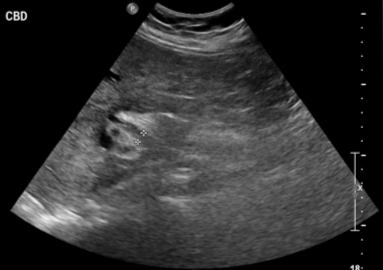
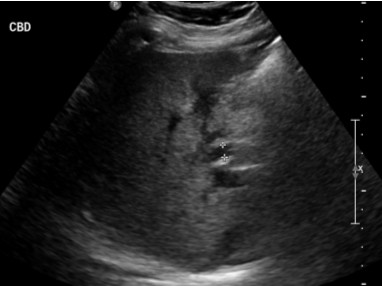
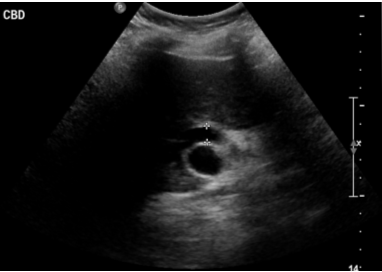
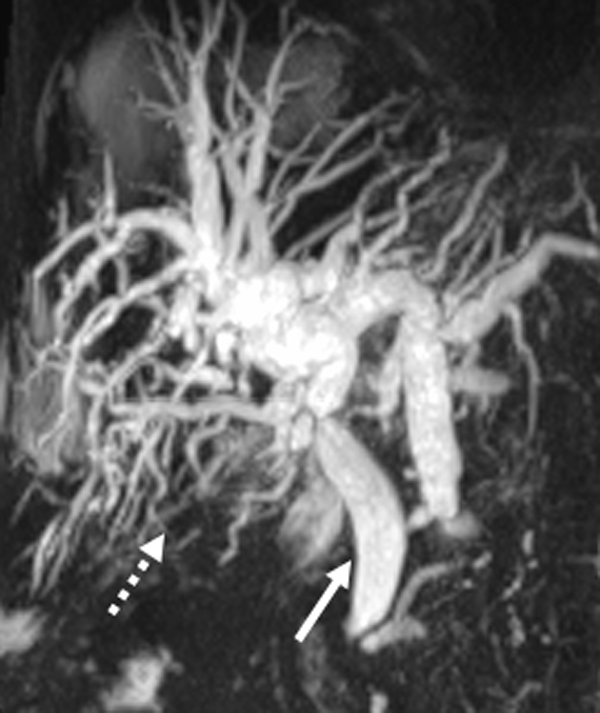
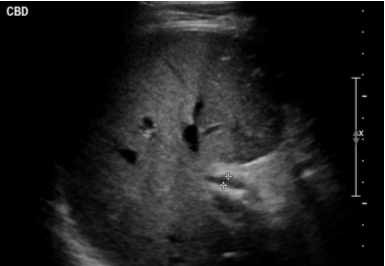
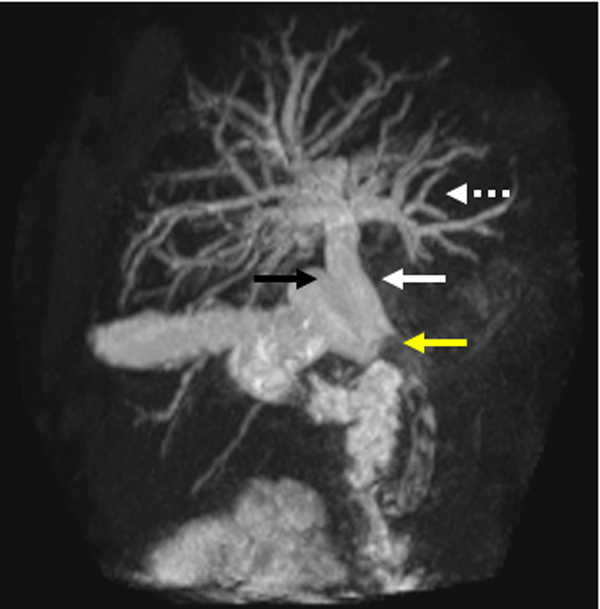
Case 1: A 51-year-old woman with background medical history of hypertension was presented to the surgical service with sudden onset of epigastric pain for four days. The pain was described as burning in nature which radiated to the back and usually occurred in the evening after eating meal. No relieving features. There was no previous history of jaundice, pale stool or dark colored urine. She denied any history of alcohol consumption. On clinical examination, her temperature was 36.0°C, pulse rate 81 beats per minute, blood pressure 139/70 mmHg, respiratory rate 20. Her abdomen was not distended but diffuse tenderness in the epigastric region on deep palpation. Murphy's sign was negative. Full blood count revealed an elevated WBC 13.60×10⁹/L, Hb 13.0 g/dL, Platelet 324×109/L. Serum sodium Na 138 mmol/L, serum potassium 3.1 mmol/L, urea 1.5 mmol/L, creatinine 60 mmol/L, bilirubin (total) 104 µmol/L, alkaline phosphatase (ALP) 202 IU/L, gamma-glutamyl transferase (a-GT) 320 IU/L, alanine transaminase (ALT) 274 IU/L, amylase 30 IU/L. C-Reactive Protein (CRP) 189 mg/L and erythrocyte sedimentation rate (ESR) 88 mm/h. Urine dipstick was negative for glucose, bilirubin, ketone, blood and nitrates, but with traces of protein and leukocytes. An ultrasound examination of the abdomen (Figure 1) scan showed a borderline dilated common bile duct (CBD) measuring between 6 and 8 mm. The intrahepatic ducts were dilated. There were multiple stones inside the gallbladder. The gallbladder wall was thickened and inflammed in appearance. The MRCP examination (Figure 2) confirmed multiple large gallstones and a diffusely gallbladder wall. There appeared to be a Mirizzi's-type compression the bile duct confluence with dilatation of the intrahepatic ducts. However, the distal CBD appeared normal with no visible dilation or intraductal calculi. She was initially managed conservatively with intravenous antibiotic and adequate analgesia. Endoscopic ultrasound (EUS) and endoscopic retrograde cholangiopancreatography (ERCP) were performed. Gallstones were identified within the gallbladder. The CBD measured 4.5 mm. Biliary tree stricture was found at the level between common hepatic duct and upper common bile duct. Biliary brush cytology (BBC) was performed. Amsterdam stent (10 French, 9 cm straight) was inserted into the biliary systems. Stricture dilatation was also performed. Subsequently, she had delayed (interval) cholecystectomy. Five months later, she was readmitted with a clinical diagnosis of mild pancreatitis (Glasgow Score of two for raised white cell count and mildly low serum calcium level). Laboratory investigation showed an elevated WBC 16.57×10⁹/L with predominantly neutrophilic 14.55×10⁹/L, Hb 14.8 g/dL, Platelet 318×109/L. Serum sodium 136 mmol/L, serum potassium 3.1 mmol/L, urea 3.9 mmol/L, creatinine 73 mmol/L, bilirubin (total) 87 µmol/L, ALP 239 IU/L, a-GT 692 IU/L, ALT 764 IU/L, and a very high serum amylase level 1408 IU/L. Calcium 1.94 mmol/L, lactate dehydrogenease (LDH) 527 IU/L, glucose 5.9 mmol/L and albumin 40 g/L. She was hypoxic but no derangement of metabolic component on the arterial blood gas (pH 7.37, pO2 9.5 kPa, pCO2 5.8 kPa, bicarbonate 24.5 mmol/L, and base excess –1.0 mmol/L). A repeat ultrasound abdomen (Figure 3) showed mildly dilated CBD, measuring 7 mm in diameter, with mild prominence of left intrahepatic ducts. A repeat MRCP (Figure 4) showed filling defects in the lower extrahepatic CBD with moderate distension of the upper tract. The appearances suggested the possibility of intraductal calculi. The ERCP was repeated and balloon dilatation performed. Biliary stricture was observed in the lower CBD. However, despite the MRCP appearance, no stones were retrievable during the procedure. Biliary brush cytology did not reveal any evidence of malignant cells. Cellular specimen composed of sheets of benign and reactive epithelial cells. Her symptoms had settled with supportive measures and discharge well. | ||||||
| ||||||
| ||||||
| ||||||
| ||||||
|
Case 2: An obese 90-year-old woman with severe chronic obstructive pulmonary disease, ischemic heart disease and hypothyroidism was admitted with jaundice, nausea and feeling unwell for one week. She also complained of having mild right upper quadrant pain associated with passing dark-colored urine and pale stool. She denied any recent of loss of appetite or loss of weight. She denied any history of alcohol consumption. On examination, she was afebrile, the temperature was 36.6°C, pulse rate 74 beats per minute, blood pressure 130/65 mmHg, respiratory rate 18. Right upper quadrant and epigastrium tenderness were elicited. Her abdomen was soft and Murphy's sign was negative. Full blood count revealed an elevated WBC 8.22×10⁹/L, Hb 13.7 g/dL, Platelet 258×109/L. Serum sodium 139 mmol/L, serum potassium 4.1 mmol/L, urea 4.7 mmol/L, creatinine 62 mmol/L, bilirubin (total) 171 µmol/L, ALP 508 IU/L, a-GT 604 IU/L, ALT 105 IU/L, amylase 53 IU/L. Urine dipstick was negative for urinary tract infection. Ultrasound examination of the abdomen (Figure 5) revealed a contracted gallbladder with shadowing of gallstones. The CBD measured 9.0 mm in diameter with moderate intrahepatic duct dilatation. MRCP (Figure 6) revealed a large calculus in the neck of the gallbladder which lay in close proximity to the common hepatic duct. There was an elongated stricture of the common hepatic duct with marked dilation of the intrahepatic biliary tree. The lower extra hepatic common bile duct was also distended but without visible filling defect distally. The pancreas and pancreatic duct appeared normal. The appearances were those of a stricture of the common hepatic duct causing marked intrahepatic ductal distension. It was not clear whether this was due to the Mirizzi's-type effect upon the bile duct from the adjacent gallbladder calculus or there was an intrinsic stricture of the duct. Cholangiography revealed a tight common hepatic duct stricture with proximal intrahepatic ductal dilation. Malignancy of the biliary tree was suspected. Biliary brush cytology was performed which reported a rare group of atypical ductal cells present in an inflammatory background, favoring a regenerative process. A Cotton Leung (10 French, 10 cm straight) biliary stent was inserted and biliary stricture dilatation was also performed. A further work-up showed she had elevated tumor markers [CA-199 97.3 U/mL (Reference range: 0–37 U/mL) and CA–125 117.0 U/mL (Reference range: 0–35 U/mL)]. Carcinoembryonic antigen (CEA) was of normal limits (3.3 ng/mL), reference range: 0–3.4 ng/mL. The CT examination of the abdomen showed large stones in the gallbladder. No discrete pancreatic head mass, lymphadenopathy, liver mass or other finding of note was seen. In view of her age and coexisting medical conditions, she was considered not fit to proceed with surgical treatment. After sometime, she suddenly deteriorated and died from acute heart failure. | ||||||
| ||||||
| ||||||
|
Case 3: A 45-year-old male was presented with a history of right upper quadrant pain radiating to the right scapula (Boas's sign) associated with dark-colored urine and pale stool. He was known to have gallstone disease as diagnosed two years back in the Philippines. He had no other significant past medical or surgical history. He denied any recent consumption of alcohol and no recent travel history. On examination, he was markedly jaundiced. His temperature was 36.6°C, pulse rate 83 beats per minute, blood pressure 115/72 mmHg, respiratory rate 16. Right upper quadrant tenderness was present but no sign of peritonitis. His abdomen was soft and Murphy's sign was negative. Full blood count revealed an elevated WBC 9.42×10⁹/L, Hb 12.7 g/dL, Platelet 427×109/L. Serum sodium 137 mmol/L, serum potassium 4.6 mmol/L, urea 3.5 mmol/L, creatinine 76 mmol/L, bilirubin (total) 155 µmol/L, ALP 234 IU/L, a-GT 330 IU/L, ALT 91 IU/L, amylase 52 IU/L. Ultrasound examination of the abdomen (Figure 7) indicated that there was a contracted gallbladder containing echogenic structures casting shadows consistent with gallstones. Bile ducts were of normal size with CBD measuring 5 mm. The MRCP examination (Figure 8) confirmed a large stone which was impacted at the level of a dilated cystic duct. There was marked intrahepatic duct dilatation. There was also an extensive column of stones in the common bile duct. The contracted gallbladder contained stones. The patient subsequently underwent ERCP and sphincterotomy was also performed. He did not improve as expected and ERCP was repeated. The CBD was grossly dilated proximally and parallel to this was a grossly dilated cystic duct. There was a large stone which appeared impacted at the confluence of the cystic duct and CBD. It was not possible to dislodge the stone by balloon trawling. A pigtail (7 French, 7 cm) stent was then placed. The patient's jaundice did not improve following this and his liver function tests remained elevated. A further repeat ERCP was then performed. The common hepatic duct appeared to be obstructed completely due to external compression by a gallstone in the cystic duct. The pigtail stent was removed and couple of biliary prostheses (10 cm in length, 7 mm in diameter) were inserted and successful biliary drainage achieved. The patient then underwent laparoscopic cholecystectomy which was converted to open cholecystectomy due to difficulties in identifying anatomical planes of dissection of the gallbladder intraoperatively. Histological analysis of the gallbladder confirmed severe chronic cholecystitis. The prosthesis stents were removed subsequently after five months. | ||||||
| ||||||
|
| ||||||
|
Discussion
| ||||||
|
Biliary strictures are uncommon. Their clinical presentation may, in fact, mimic the more common condition such as cholecystitis, choledocholithiasis, cancer of the bile duct and pancreatic cancer. Benign bile duct strictures may develop from chronic pancreatitis and iatrogenic injury to the bile duct after a laparoscopic cholecystectomy. The latter is not uncommon due to arising technical feasibility in the modern era of surgical advancement. There are numerous causes for benign bile duct strictures. Causes of benign biliary stricture can be divided into: (a) Congenital–biliary atresia, (b) Iatrogenic from bile duct injury at surgery–cholecystectomy, choledochotomy, gasterectomy, hepatic resection, transplantation and biliary-enteric anastomosis, (c) Inflammatory–CBD stones, cholangitis, chronic pancreatitis, parasitic, PSC and biliary obstruction due to cholecytolithiasis (Mirizzi syndrome), (d) Trauma and, (e) Idiopathic. These causes can also be further classified into benign or malignant. For example, cholangiocarcinoma and pancreatic cancer are associated with the malignant cause of biliary stricture. Therefore, it is important to rule out these in suspected groups of patients. Primary bile duct tumors appear at an average age of 60 years but may appear at any time between 20–80 years of age. There is no gender preference. Most malignant biliary tumors are adenocarcinomas located in the hepatic or CBDs. Radiological imaging is important in the investigation and diagnosis of bile duct strictures. Imaging modalities include ulrasonography, MRCP, ERCP, transhepatic cholangiography and CT cholangiography. Both direct visualization of the biliary tract (diagnosis) and extraction of any stones present in the biliary tract (therapeutic) can be performed during ERCP procedure. Sensitivity and specificity in making a diagnosis of bile duct stricture is therefore higher with ERCP. Management of benign stricture includes balloon dilatation and stent insertion. Complications of these procedures include cholangitis or further stricture formation. With an experienced endoscopist available, the outcome of such surgery is good, with 90% of patients having no further complications. Both the cases (Case 1 and Case 2) of biliary stricture demonstrated may appear secondary to Mirizzi syndrome. This is an unusual variant of a rare condition. Case 3 demonstrated a classical Mirizzi syndrome due to external compression of extrahepatic duct secondary to an impacted large cystic duct stone. Balloon dilation and insertion of a stent were performed in all the three cases. Case 1: This was a very interesting case. At the initial presentation, cholangiogram revealed 2.0 cm stricture at the level between the common hepatic ducts and upper common bile duct. A stent placement was carried out. She had delayed (interval, subsequent admission) cholecystectomy six weeks after her initial presentation of acute cholecystitis. The stent was removed post interval cholecytectomy. This patient was readmitted with a clinical evidence of gallstone pancreatitis five months post laparoscopic cholecystectomy. A repeat MRCP showed intraductal calculi in the distal CBD. At the repeat ERCP, stricture in the distal CBD was noted but no stones were seen. Balloon dilation was carried out without stent placement. This feature of stricture appears to be benign. Intraductal stone that was seen on the repeat MRCP could have been passed from biliary tree systems. In this case, we considered the following possibilities cause of biliary stricture: (a) Idiopathic benign common bile duct stricture, (b) Stricture secondary to Mirizzi syndrome and bile duct stone, (c) Iatrogenic stricture post ERCP, (d) Iatrogenic postoperative (cholecystectomy) stricture, (e) Intraductal retained stone (Post cholecystectomy Mirizzi syndrome). Post cholecystectomy Mirizzi syndrome due to retained calculi in the remnant cystic duct following cholecystectomy [8] [9] is very uncommon. The presenting symptom may be dyspepsia or pain. Abnormal liver function study, jaundice and cholangitis are other manifestations that indicate residual biliary disease. Choledocholithiasis, biliary stricture, and chronic pancreatitis are the most common causes of symptoms. Patients with suspicious findings should be studied by ERCP or transhepatic cholangiogram (THC). Case 2: In this case, a very old lady was admitted for obstructive jaundice secondary to biliary stricture. An ultrasound abdomen and MRCP revealed an impacted stone in the neck of the gallbladder, stricture of the common hepatic duct, and intrahepatic ductal distention. Malignant tumor of the bile duct is considered at presentation based on the clinical picture and epidemiological profile of the patient. Biliary brush cytology did not reveal any evidence of malignancy (i.e., cholangiocarcinoma) or inflammatory disease (i.e., PSC, ulcerative colitis). Association between Mirizzi syndrome and raised CA-199 is unknown. [10] [11] Some authors advocate that the elevated value of CA-199 is of no value in benign obstructive jaundice. [12] In the debilitated unfit patients at presentation, the only viable option may be percutaneous ultrasound-guided cholecystostomy. A temporary external biliary drainage may be achieved by passing a catheter percutaneously into intrahepatic duct. Stents may be passed through strictures at the time of ERCP and left to drain into the duodenum. When the general condition of the patients have improved, definitive surgery can be considered. Initial conservative management consists of intravenous fluid and electrolyte replacement, nasogastric suction, parenteral analgesia and systemic antibiotic is important to prevent further deterioration of seriously ill patients. Case 3: Gallstone disease is uncommon among males. This patient presented with classical manifestation of obstructive jaundice. MRCP indicated that the cystic duct was impacted with a large gallstone causing extrahepatic and intrahepatic ductal dilation. This is a classical picture of Mirizzi syndrome. Neither MRCP nor ERCP shows evidence of biliary strictures. He eventually had a biliary stent inserted to bypass the narrowed part of the duct and allow bile drainage. He underwent open cholecystectomy and subsequently recovered well. Association between biliary tree stricture and Mirizzi syndrome is not well documented in literature. Stricture secondary to inflammation process may be due to direct or indirect insult (e.g., pancreatitis), but the exact pathophysiology is unknown. The impacted stones, plus the associated chronic inflammation surrounding the biliary tree system, may cause a significant degree of narrowing and obstruction and subsequently strictures formation. | ||||||
|
Conclusion
| ||||||
|
Biliary stricture is rarely associated with Mirizzi syndrome. At onset of presentation, the mainstay of treatment is to relieve the strictures by performing biliary stent insertion or stricture dilatation. Further investigations are necessary to determine the 'true' cause of these strictures. Mirizzi syndrome is an uncommon spectrum of gallstone disease and diagnosis of this condition can be challenging. Surgery is the mainstay of therapy for the condition, therefore early recognition of its presence is essential to avoid bile duct injury. Interestingly, the syndrome itself can be manifested pre or post cholecystectomy treatment. | ||||||
|
References
| ||||||
| ||||||
|
[HTML Abstract]
[PDF Full Text]
|
|
Author Contributions:
CS Wong – Substantial contributions to conception and design, Acquisition of data, Analysis and interpretation of data, Drafting the article, Revising it critically for important intellectual content, Final approval of the version to be published AK Al-Ajami – Analysis and interpretation of data, Drafting the article, Final approval of the version to be published JM Crotty – Analysis and interpretation of data, Revising it critically for important intellectual content, Final approval of the version to be published SA Naqvi – Analysis and interpretation of data, Revising it critically for important intellectual content, Final approval of the version to be published |
|
Guarantor of submission:
The corresponding author is the guarantor of submission. |
|
Source of support:
None |
|
Conflict of interest:
Authors declare no conflict of interest. |
|
Copyright:
© CS Wong et al. 2012; This article is distributed the terms of Creative Commons Attribution License which permits unrestricted use, distribution and reproduction in any means provided the original authors and original publisher are properly credited. (Please see Copyright Policy for more information.) |
|
|