
 |

|
 |
|
Case Series
| ||||||
| Familial occurrence of Dyke-Davidoff-Masson syndrome in two African siblings with unexplained parotid enlargement | ||||||
| Musoni-Rwililiza E.1, Moshi C.2, Sebera F.3, Silverstein A.4,5,6, Harris R.D.2,7, Kanyandekwe S.1,8, Levy-Carrick N.C.9 | ||||||
|
1University of Rwanda College of Medicine and Health Sciences, Department of Psychiatry, Kigali, Rwanda.
2University Teaching Hospital of Kigali (CHUK), Department of Radiology, Kigali, Rwanda. 3Neuropsychiatric Hospital of Ndera, Department of Psychiatry, Kigali, Rwanda. 4Boston Children's Hospital, Department of Plastic Surgery, Boston, MA, USA. 5Harvard Medical School, Program in Global Surgery and Social Change, Boston, MA, USA. 6University of Miami Miller School of Medicine, Miami, FL, USA. 7Darmouth College Geisel School of Medicine, Hanover, NH, USA. 8University Teaching Hospital of Kigali (CHUK), Department of Psychiatry, Kigali, Rwanda. 9Brigham and Women's Hospital Department of Psychiatry, Harvard Medical School, Boston, MA, USA. | ||||||
| ||||||
|
[HTML Abstract]
[PDF Full Text]
[Print This Article]
[Similar article in Pumed] [Similar article in Google Scholar] 
|


| How to cite this article |
| Musoni-Rwililiza E., Moshi C., Sebera F., Silverstein A., Harris R.D., Kanyandekwe S., Levy-Carrick N.C. Familial occurrence of Dyke-Davidoff-Masson syndrome in two African siblings with unexplained parotid enlargement. Int J Case Rep Images 2016;7(6):354–359. |
|
Abstract
|
|
Introduction:
Dyke-Davidoff-Masson syndrome (DDMS) is a rare but well-described syndrome characterized by cerebral hemiatrophy, hemiparesis, seizures, and mental retardation. Though the etiology remains unknown, DDMS may be the result of a congenital vascular insult in intrauterine life or acquired as a result of trauma, infection, vascular abnormalities or intracranial hemorrhage in the perinatal period. In some case reports, DDMS has been associated with other diseases such as epidermoid tumors, arachnoid cysts, diabetes mellitus, adrenal insufficiency, hypopituitarism or hypothyroidism.
Case Series: We report the first case of siblings presenting with DDMS associated with parotid hypertrophy. Our case series describes a brother and sister, respectively 18- and 21-year-old, who were recently diagnosed with DDMS after the brother presented with bilateral parotid enlargement to a referral center in Kigali, Rwanda. Both patients endorse epilepsy, hemiparesis, and learning difficulties from a young age. Conclusion: The two cases' clinical and radiological findings are compatible with DDMS. Their comparable findings are suggestive of an underlying genetic component in disease development. Ultimately, the etiology of the parotid enlargement remains unknown. | |
|
Keywords:
Clinical neurology, Hemiplegia, Epilepsy, Mental retardation
| |
|
Introduction
|
|
Dyke-Davidoff-Masson syndrome (DDMS) is a rare but well-defined syndrome characterized by hemiparesis, seizures, facial asymmetry and mental retardation. It is also distinguished by radiologic findings including thickening of the skull, enlargement of the frontal sinus, elevation of the petrous ridge, ipsilateral falcine displacement and capillary malformations. The DDMS is thought to result from either a congenital vascular insult in intrauterine life or acquired as a result of trauma, infection, vascular abnormalities or intracranial hemorrhage in the perinatal period [1] [2]. We describe two siblings in Rwanda with DDMS presenting at ages 18 and 21, both manifesting also unexplained bilateral parotid enlargement. We submit our cases as the first familial instance of the syndrome reported from the African continent, as well as the first familial cases of DDMS manifesting parotid hypertrophy of unknown etiology. |
|
Case Series
|
|
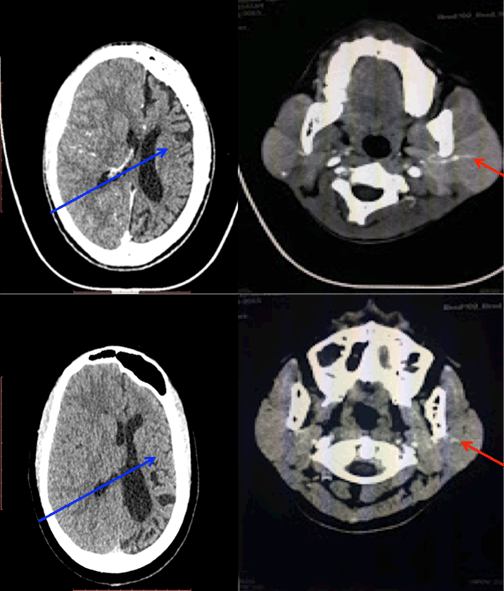
Case 1 On examination, the patient was well appearing, carefully groomed, with significant bilateral, symmetric parotid enlargement. Neurological examination was notable for right spastic hemiparesis (3/5) with ipsilateral atrophy. He showed a diminished naso-labial fold on the right. There was unilateral loss of sensation throughout the hemiparetic side, as well as positive Babinski and Hoffman signs. Despite his weakness and contraction of his right extremity, the patient could ambulate steadily and independently. He had limited use of his right hand. He was minimally verbal, but engageable, with evidence of significant intellectual limitations, including an inability to read and write, despite report of extensive tutorial efforts. The parotid enlargement was present since early childhood but never assessed. A few years prior to presentation, the parotid hypertrophy worsened, causing pain and discomfort. The ultrasound showed homogeneous hypertrophy of the parotid gland without visible focal lesion or hyper-vascularization. The cytopathology of the parotid gland revealed clusters of salivary gland cells and scattered small lymphocytes. Workup ruled out active infections including tuberculosis, syphilis, HIV; the inflammatory marker CRP was within normal limits. Clinical evaluation was negative for signs and symptoms of Sjögren's syndrome. White blood cell count was within normal limits. However, it was indicative of lymphocytosis at 61.1%. Amylase levels were elevated at 246/l (normal range 28--100 u/l). Additional testing for autoimmunologic markers is not available in this low resource setting. The patient's parotid hypertrophy did not respond to a course of antibiotics or a course of steroids. A phenytoin taper was initiated to assess for possible association with the parotid hypertrophy, but no regression was evident after three months of discontinuation. As shown in Figure 1, the patient's head CT scan revealed a diffuse atrophic left hemisphere with enlarged sulci and dilatation of the ipsilateral ventricle. The superior sagittal sinus and inter-hemispheric fissure were displaced across the midline into the left side. Computed tomography scan shown on bone windows/levels depicted variable degrees of left calvarial diploic space thickening and respective paranasal sinuses as well as mastoid air cell enlargement with hyperaeration. In addition, both parotid glands were enlarged, to a greater extent on the right side. Contrast-enhanced CT images showed homogeneous enhancement of the parotid glands. At age three, the patient's EEG revealed bilateral symmetric but dysrhythmic slow waves; when repeated at age 14 an EEG demonstrated asymmetric activity with slow waves in the left hemisphere. However, a recent study was reported as normal with symmetric alpha activity and regular rhythm. The DDMS was initially diagnosed on the basis of the radiologic findings, and confirmed on clinical examination given the presence of the characteristic signs of seizures, hemiparesis, intellectual delays and mild facial asymmetry. Case 2 On examination, the patient was well appearing, with less severe but visually present bilateral, symmetric parotid enlargement. Neurologic examination was notable for right spastic hemiparesis (4/5) with ipsilateral muscle atrophy, both notably more prominent than in her brother. Facial asymmetry was also limited to a diminished nasolabial fold on the right. Her right hand was in flexion with limited use. Despite the weakness and contractures, she also could ambulate steadily and independently. She was more difficult to engage than her brother, and her affect was notably flat. She was diagnosed DDMS in view of her consistent radiologic and clinical findings. |
|
|
|
Discussion
|
|
Both of our subjects displayed the characteristic clinical findings and radiological signs consistent with a diagnosis of DDMS. Rasmussen encephalitis and Sturge-Weber syndrome were both ruled out because the pattern of seizures was inconsistent with encephalitis and they lacked the typical skin lesion, respectively. Cases of DDMS have been reported across several continents, including one report of radiologic findings of a DDMS case in Rwanda in 2012 [3]. There is only one other case in literature reporting siblings with DDMS, though they exhibited marked dissimilarities in presentation-one with developmental delays, hemiparesis, and recurrent seizures, the other with seizures but no neurological deficits. Additionally, the radiological findings were not definitive for one of the siblings in this case [4]. In contrast, the siblings described in our report have relatively comparable findings. Notably, the elder sister has a more severe hemiparesis than her brother, consistent with the greater cerebral hemiatrophy and shifting of midline structures evident on CT findings. Etiology of the parotid hypertrophy remains elusive. Possible causes include infection, non-infectious inflammation, tumor, environmental factors and medication side effect. While multiple pathogens, viral and otherwise, can cause parotitis, we feel that only an immunosuppressed host, which our patients are not, would allow persistent infection for more than a decade. An autoimmune process cannot be absolutely discounted, but neither could we find clinical or laboratory evidence to support it. The normal cytopathology noted in Case 1 would seem to exclude the diagnosis of a tumor. With regards to environmental factors, in depth questioning revealed no other members of the patients' family or community with chronic parotid enlargement. Benign, reversible parotid hypertrophy as a side effect of phenytoin has been described by Brandenburg et al.[5] . The parotid hypertrophy in our Case 1 did not resolve after discontinuation of phenytoin, nor with a robust course of high-dose steroids. Thus, we have no explanation for the chronic parotid hypertrophy in our cases at this time. While it may not be directly associated with DDMS and instead a uniquely incidental finding, the nearly identical phenotypic manifestation suggests the possibility of an underlying genetic component should be considered. Interestingly, recent case reports describe association of DDMS with central hypothyroidism and secondary adrenal insufficiency [6], hypopituitarism and diabetes mellitus [7], epidermoid tumor and arachnoid cysts [8]. Thus, in light of these newly described associations, DDMS may be associated with other currently unknown co-morbidities. This suggests a need to be attentive to a broader range of clinical manifestations in diagnosing and treating future DDMS cases. |
|
Conclusion
|
|
In summary, we report the case of siblings with Dyke-Davidoff-Masson syndrome (DDMS) with associated parotid hypertrophy of unclear etiology. Elimination of phenytoin as a possible contributing factor did not bring about resolution of the abnormality, nor did a robust course of high-dose steroids. The presence of lymphocytes in the cytology raises the possibility of an immune-mediated process and deserves further attention. |
|
Acknowledgements
|
|
We are thankful to Munyandamutsa Naasson, Bukuru John, and Kalisa Louise for their cooperation |
|
References
|
|

|
[HTML Abstract]
[PDF Full Text]
|
|
Author Contributions
Emmanuel Musoni-Rwililiza – Substantial contributions to conception and design, Acquisition of data, Analysis and interpretation of data, Drafting the article, Revising it critically for important intellectual content, Final approval of the version to be published Crispin Moshi – Substantial contributions to conception and design, Acquisition of data, Analysis and interpretation of data, Drafting the article, Revising it critically for important intellectual content, Final approval of the version to be published Fidele Sebera – Substantial contributions to conception and design, Acquisition of data, Analysis and interpretation of data, Drafting the article, Revising it critically for important intellectual content, Final approval of the version to be published Allison Silverstein – Substantial contributions to conception and design, Acquisition of data, Analysis and interpretation of data, Drafting the article, Revising it critically for important intellectual content, Final approval of the version to be published Robert D. Harris – Substantial contributions to conception and design, Acquisition of data, Analysis and interpretation of data, Drafting the article, Revising it critically for important intellectual content, Final approval of the version to be published Simone Kanyandekwe – Substantial contributions to conception and design, Acquisition of data, Analysis and interpretation of data, Drafting the article, Revising it critically for important intellectual content, Final approval of the version to be published Nomi C. Levy-Carrick – Substantial contributions to conception and design, Acquisition of data, Analysis and interpretation of data, Drafting the article, Revising it critically for important intellectual content, Final approval of the version to be published |
|
Guarantor of submission
The corresponding author is the guarantor of submission. |
|
Source of support
None |
|
Conflict of interest
Authors declare no conflict of interest. |
|
Copyright
© 2016 Emmanuel Musoni-Rwililiza et al. This article is distributed under the terms of Creative Commons Attribution License which permits unrestricted use, distribution and reproduction in any medium provided the original author(s) and original publisher are properly credited. Please see the copyright policy on the journal website for more information. |
|
|
|
About The Authors
| |||
| |||
| |||
| |||
| |||
| |||
| |||
| |||

